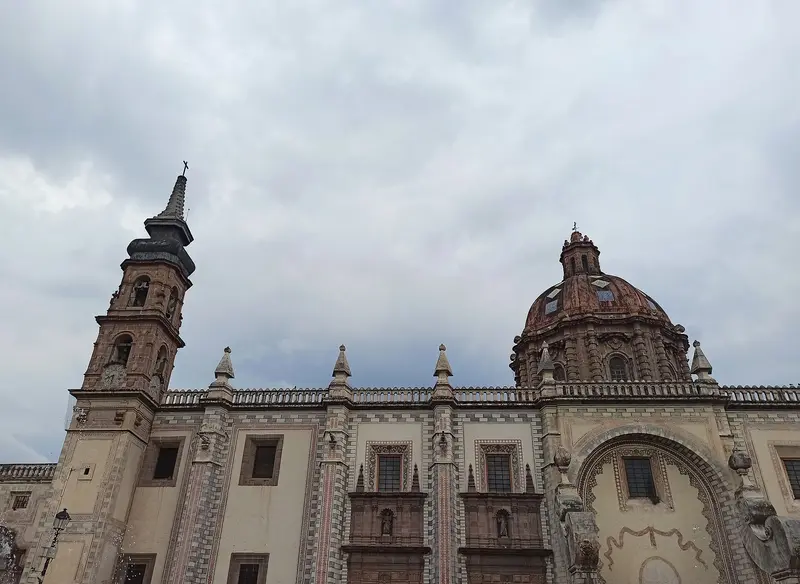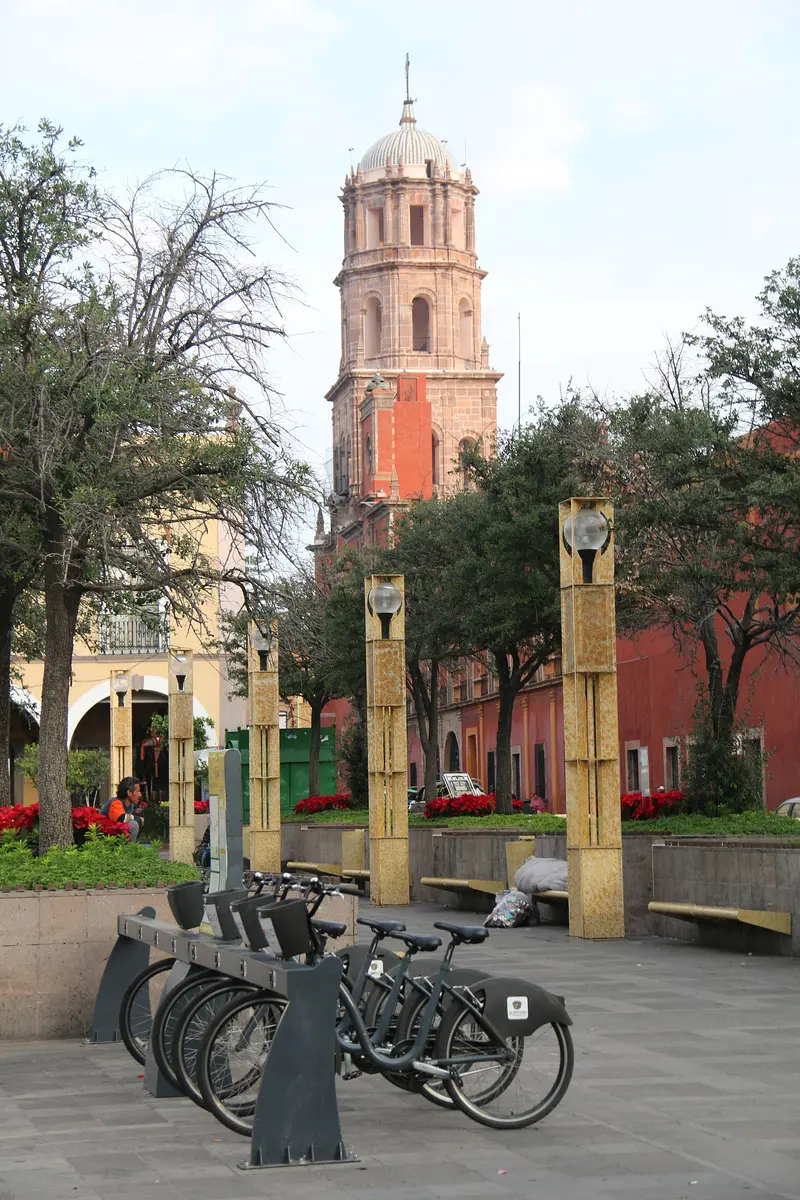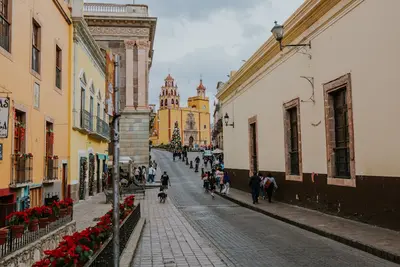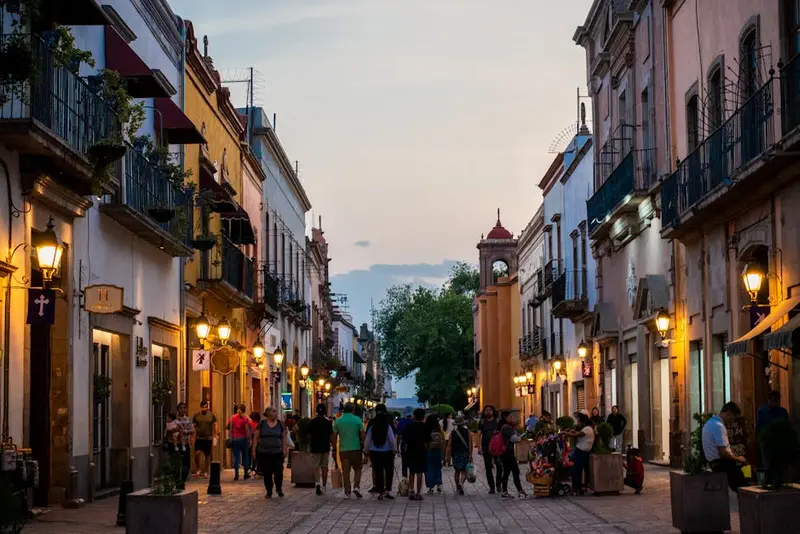
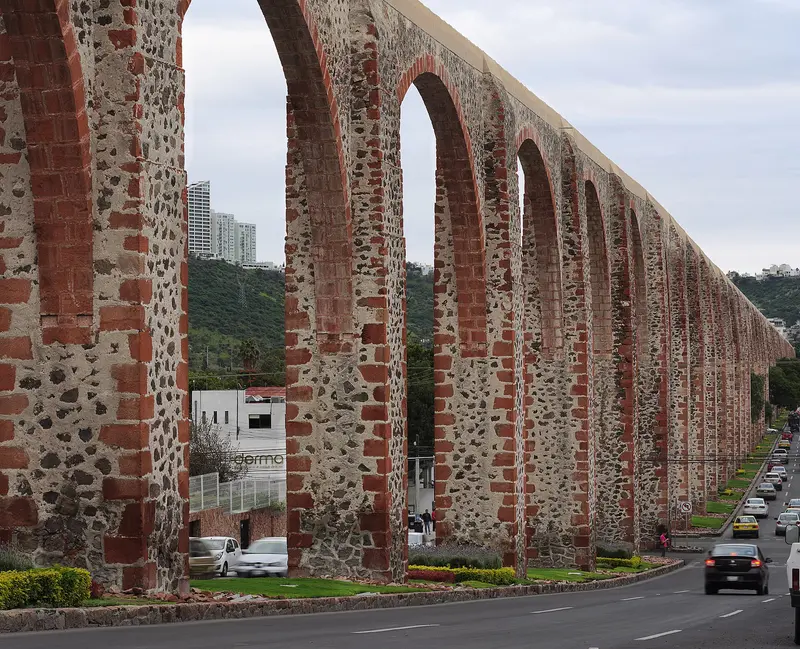
Santiago de Querétaro, the capital of the eponymous state, is characterized by its UNESCO World Heritage historic center, which harmoniously blends baroque splendor and colonial elegance. The impressive Acueducto de Querétaro, with its 74 arches, defines the cityscape and stands as a testament to outstanding historical engineering. In the heart of the city, the Plaza de Armas, surrounded by significant colonial buildings, invites visitors to linger. Visit the Templo de Santa Rosa de Viterbo, whose elaborate facade and altarpieces are impressive, and which played a key role in the Mexican Independence movement. A stroll through the Barrio de La Cruz district also reveals winding alleys, small squares, and traditional craftsmanship. For a visit, the dry season from October to April is recommended to best enjoy the mild climate and explore the city at a relaxed pace.
Places in Santiago de Querétaro
Discover the most important sights and attractions
Curated walking tours through the city's highlights — handpicked by experienced travel journalists.
Querétaros Historisches Herzschlag: Ein Spaziergang durch die Kolonialstadt
Entdecken Sie das UNESCO-Weltkulturerbe Santiago de Querétaro auf diesem angenehmen 2-stündigen Rundgang. Tauchen Sie ein in die reiche Geschichte, bewundern Sie prächtige Barockarchitektur und erleben Sie das pulsierende Leben der Stadt. Von historischen Plätzen bis zu ehrwürdigen Kirchen – ein unvergesslicher Einblick in Querétaros Seele.
Santiago de Querétaro is a city of immense historical significance for Mexico. Its founding dates back to the pre-Columbian era, largely shaped by the Otomí culture, before it fell under Spanish rule in the 16th century. The city played a pivotal role in Mexico's struggle for independence; it was here that the **Querétaro Conspiracy** took place, marking the beginning of the movement.The architecture of the historic center, a **UNESCO World Heritage site**, is an outstanding example of colonial urban planning. Magnificent Baroque and Neoclassical buildings, including monasteries, churches, and civic residences, line the cobblestone streets. The monumental aqueduct, a city landmark, testifies to the engineering prowess of the colonial era.Culturally, Querétaro preserves its diverse roots. Beyond Spanish influences, indigenous traditions remain vibrant, manifesting in handicrafts, local festivals, and regional cuisine. This blend of past and present shapes the city's unique cultural heritage.
Nightlife
At Your Destination
Santiago de Querétaro does not have a subway or metro, but the municipal bus system 'Qrobus' forms the backbone of public transport. These modern buses are an efficient and affordable way to explore the city; their use requires a rechargeable 'Qrobus' card, which is available at numerous points of sale and often replaces cash payments.For flexibility on shorter distances, rental bicycles and e-scooters are available via various sharing apps and can be an excellent choice, especially in the historic city center. Taxis and ride-sharing services like Uber and Didi are widely available and offer comfortable convenience, particularly for longer distances or in the evening. It is advisable to always book rides through the app to ensure transparency regarding prices and routes.Querétaro's charming Old Town is also very pedestrian-friendly, as many of its main attractions and squares are easily reachable on foot. For hassle-free mobility, it is recommended to have a local SIM card for using navigation and transport apps.
These places are nearby — perfect for additional days or a day trip.
Central Mexican Highlands
Welcome to the heart of Mexico, where the Central Mexican Highlands present themselves as a captivating region of timeless beauty and profound history. Here you'll immerse yourself in a world of colonial splendor, vibrant cultures, and gastronomy that will enchant your senses.Discover the charming cobblestone streets, architectural masterpieces, and vibrant markets that make this area an unforgettable destination for every history, culture, and culinary enthusiast.
San Miguel de Allende
San Miguel de Allende, a UNESCO World Heritage city in the Mexican highlands, captivates with colonial architecture and a vibrant art scene. The cityscape is defined by cobblestone streets, colorful facades, and the iconic, neo-Gothic Parroquia de San Miguel Arcángel at the Jardín Principal. The Fábrica La Aurora, a former textile factory, now houses art galleries and studios. San Miguel was significant in the War of Independence; the Museo Casa de Allende offers insights into this. For the best sunset views, many rooftop bars are recommended. Ideally, travel from April to June or September to November to experience pleasant temperatures and fewer visitors.
Barrio de Pastita
Ein traditionelles Viertel, das einen authentischen Einblick in das lokale Leben bietet, mit Märkten, kleineren Geschäften und einer entspannteren Stimmung.
El Centro Histórico
Das Herz Guanajuatos ist ein geschütztes Labyrinth aus Plätzen, Gassen und prächtigen Kolonialbauten, in dem das städtische Leben pulsiert.
Guanajuato
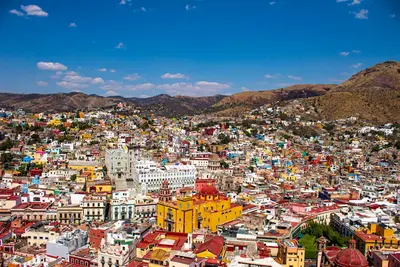
Guanajuato, a colorful UNESCO World Heritage site in Central Mexico, thrives on its silver mining history. The city is a labyrinth of narrow Callejones and underground tunnels. Discover the Teatro Juárez and the Basílica Colegiata. Enjoy spectacular views from the Monumento al Pípila. The Alhóndiga de Granaditas tells the story of the independence movement. For a tranquil experience of the Callejones, an early morning stroll is recommended; spring or autumn are ideal for your visit.