Fernweh
    ExploreTravel GuidesMy Trips
    de|en
    About FernwehImprintFAQPrivacy Policy
    ExploreTravel GuidesMy Trips
    Centro Histórico

    Centro Histórico

    City DistrictCulture
    1. Home
    2. Destinations
    3. Mexico
    4. Mexico City
    5. Centro Histórico
    Das pulsierende Herz der Stadt, wo die Geschichte Mexikos in prächtigen Kolonialbauten und präkolumbianischen Ruinen lebendig wird.

    Sehenswürdigkeiten

    Discover the most important sights and attractions

    Palacio de Bellas Artes

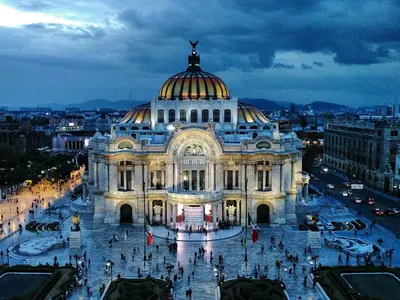
    The Palacio de Bellas Artes, in the heart of the Centro Histórico, is Mexico's most significant cultural center and an architectural masterpiece. You'll see an impressive blend of Neoclassicism and Art Nouveau on its exterior façade, designed by Adamo Boari, while the interior is styled in elegant Art Deco by Federico Mariscal. Construction began in 1904 but was interrupted by the Mexican Revolution and only completed in 1934. Inside, monumental murals by greats such as Diego Rivera, José Clemente Orozco, and David Alfaro Siqueiros await you, depicting important epochs of Mexican history. The palace also houses the National Museum of Architecture and the National Museum of Fine Arts. Our Tip: It's best to visit the palace in the morning to view the murals peacefully and avoid the largest crowds. For an iconic exterior view, head to the top floor of the Sears department store opposite, from where you'll have an excellent perspective of the dome and façade.
    Open in Google Maps

    Templo Mayor

    The Templo Mayor was the religious and ceremonial center of the Aztec capital Tenochtitlan and is dedicated to the gods Huitzilopochtli (war and sun) and Tlaloc (rain and fertility). Here you'll find the remains of the main Mexica temple, which was built in seven construction phases between the 14th and early 16th centuries. After the Spanish conquest, it was systematically destroyed, and its stones were used to build the cathedral you see right next to it today. The site was only rediscovered and excavated during construction work in 1978.Today, you can explore the different layers of the temple pyramid and marvel at the impressive architecture and the offerings found during excavations. The adjoining museum houses thousands of artifacts, including the monumental sculpture of Coyolxauhqui and the Tlaltecuhtli Stone, offering deep insights into Aztec cosmology and way of life. Our Tip: Visit the Templo Mayor first thing in the morning after opening to avoid the worst heat and crowds. Plan at least two to three hours to explore both the ruins and the museum at your leisure. For a good overview of the entire complex, the upper levels of the museum are ideal.
    Open in Google Maps

    Museo Nacional de Arte

    The Museo Nacional de Arte (MUNAL), located in the heart of Mexico City's Centro Histórico, is housed in a magnificent neoclassical building that originally served as the Palacio de la Secretaría de Comunicaciones y Obras Públicas and was inaugurated in 1910. The building's architecture alone, designed by Silvio Contri, is a sight in itself, particularly the imposing central staircase and the richly decorated halls.Inside, a comprehensive collection of Mexican art awaits you, spanning from the 16th to the mid-20th century. Here you'll find significant works by artists such as José María Velasco, Dr. Atl, Diego Rivera, and David Alfaro Siqueiros, which document the evolution of Mexican painting from the colonial period through academicism to modernism and post-revolutionary movements. The museum offers a deep insight into Mexico's cultural identity and its artistic expression.Our Tip: Visit MUNAL on a weekday morning to quietly enjoy the impressive halls and artworks and avoid the largest crowds. For an unforgettable photo opportunity, the majestic main staircase, an architectural masterpiece, is ideal. Plan at least two to three hours for your visit to fully appreciate the extensive permanent exhibition.
    Open in Google Maps

    Museo de Arte Popular

    The Museo de Arte Popular in Mexico City's Centro Histórico is a central institution dedicated to preserving and showcasing Mexican folk art and handicrafts. It promotes indigenous and mestizo art forms deeply rooted in the country's cultural identity. Here you'll find a comprehensive collection reflecting the enormous diversity and ingenuity of Mexican artisans.The exhibitions feature a wide range of objects: intricate ceramics, vibrant textiles, detailed wood sculptures, the iconic Alebrijes (fantastic creatures), traditional toys, and expressive masks. Each exhibit tells a story about regional customs, materials, and time-honored techniques. Particularly impressive are the colorful installations for Día de Muertos. The museum is housed in a beautifully restored Art Deco building, which was once a fire station and is architecturally noteworthy itself.Our Tip: Ideally, visit the museum on a weekday morning to avoid the largest crowds. Also, pay attention to the changing temporary exhibitions on the ground floor, which often offer unique insights into specific craft traditions.
    Open in Google Maps

    El Ángel de la Independencia

    The Angel of Independence, officially Monumento a la Independencia, is a central landmark of Mexico City and a monument to Mexican independence. It was inaugurated in 1910 under President Porfirio Díaz for the centenary of the start of the War of Independence. The imposing column is crowned by a gilded bronze statue of Nike, the goddess of Victory, holding a laurel wreath and a broken chain. At its base, you'll find statues of important heroes of the independence struggle. The Angel is not only an architectural masterpiece but also a significant meeting point for national celebrations, demonstrations, and sports victories, underscoring its role as a symbol of national identity. You'll see it majestically enthroned on a roundabout on Paseo de la Reforma, one of the city's most important avenues. For the best photo and to avoid the crowds, we recommend a visit in the early morning or late afternoon. From the surrounding sidewalks, you'll have an excellent perspective to capture the details of the sculptures.
    Open in Google Maps

    Essen & Trinken

    Accommodations in Centro Histórico

    Accommodations in Centro Histórico

    Find perfect stay in Centro Histórico

    Booking.com
    Search Hotels
    Agoda
    Search Hotels
    Airbnb
    Vacation Rentals
    Hotels.com
    Hotels Worldwide
    Hostelworld
    Hostels

    Locations nearby

    These places are nearby — perfect for additional days or a day trip.

    Mexico City

    Mexico City

    Willkommen in Mexico City, einer Metropole, die dich mit ihrer unermesslichen Geschichte, lebendigen Kultur und einer unvergleichlichen kulinarischen Szene sofort in ihren Bann ziehen wird. Tauche ein in eine Stadt, die alte Traditionen mit modernem Flair verbindet und dich an jeder Ecke überraschen wird.
    Mexico City

    Mexico City

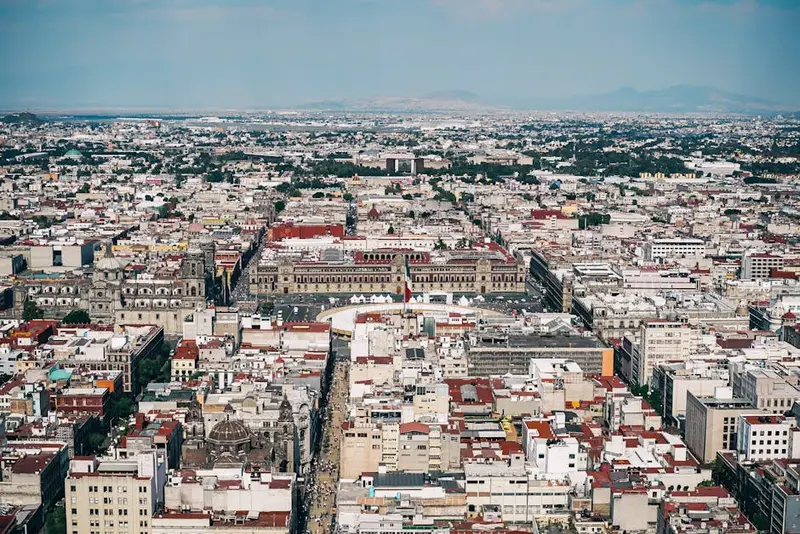
    Mexico City is a vibrant metropolis that blends indigenous roots with colonial history and modern life. Here you'll find the impressive Zócalo, one of the world's largest squares, surrounded by the Metropolitan Cathedral and the Palacio Nacional with murals by Diego Rivera. The Museo Nacional de Antropología in Chapultepec Park offers deep insights into Mexico's pre-Columbian history. Explore the charming district of Coyoacán with Casa Azul, Frida Kahlo's former home, for an authentic cultural experience. The city is renowned for its diverse gastronomy, from street food to upscale restaurants, and its vibrant art scene. For pleasant exploration, the dry season from November to April is recommended. A weekend visit to the floating gardens of Xochimilco offers unique insight into local tradition.
    Roma Norte

    Roma Norte

    Ein trendiges Viertel, bekannt für seine Art-déco-Architektur, entspannten Parks und eine blühende Gastronomieszene mit zahlreichen Cafés und Boutiquen.
    Condesa

    Condesa

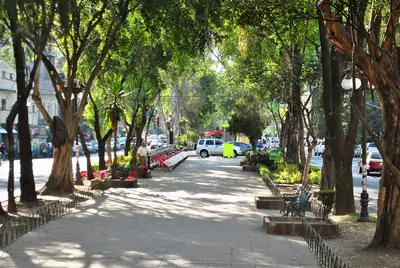
    Ein elegantes und grünes Viertel, das dich mit seinen baumgesäumten Alleen, Parks wie dem Parque México und einer entspannten, gehobenen Atmosphäre empfängt.
    Polanco

    Polanco

    Das luxuriöse Viertel der Stadt, bekannt für seine exklusiven Boutiquen, hochklassigen Restaurants und einige der besten Museen Mexikos.