


Fernweh
    ExploreTravel GuidesMy Trips
    de|en
    About FernwehImprintFAQPrivacy Policy
    ExploreTravel GuidesMy Trips
    Mexico City

    Mexico City

    Region
    1. Home
    2. Destinations
    3. Mexico
    4. Mexico City
    Willkommen in Mexico City, einer Metropole, die dich mit ihrer unermesslichen Geschichte, lebendigen Kultur und einer unvergleichlichen kulinarischen Szene sofort in ihren Bann ziehen wird. Tauche ein in eine Stadt, die alte Traditionen mit modernem Flair verbindet und dich an jeder Ecke überraschen wird.
    • Overview
    • Places in the region
    • Eat & drink
    • Culture
    • Nearby
    • Overview
    • Places in the region
    • Eat & drink
    • Culture
    • Nearby
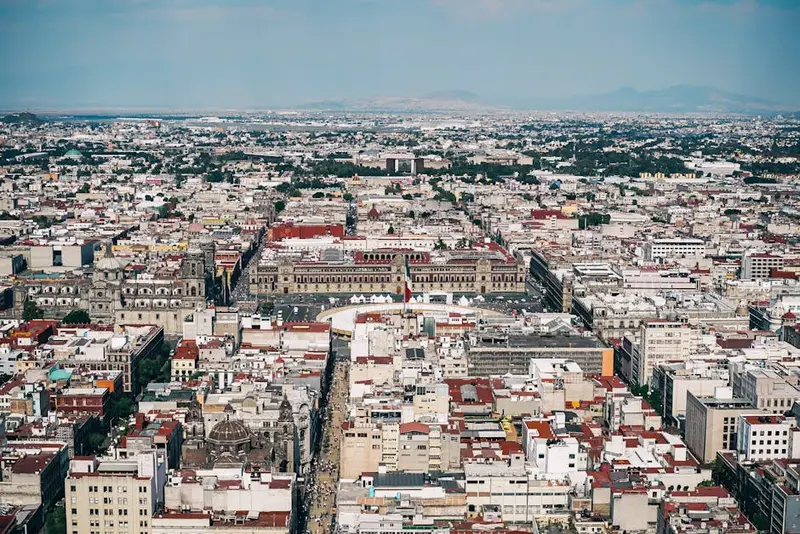
    Mexico City rises on the foundations of the Aztec capital Tenochtitlán, uniting pre-Columbian history with colonial architecture and modern flair. At the city's heart lies the Zócalo, flanked by the Palacio Nacional with Diego Rivera's murals and the Cathedral, right next to the ruins of the Templo Mayor. You should visit the sprawling Chapultepec Park, where the Museo Nacional de Antropología showcases Mexico's rich cultural heritage. The charming Coyoacán neighborhood, with the Blue House – the former residence of Frida Kahlo – offers insights into the local art scene. For pleasant weather and fewer visitors, a trip between October and May is recommended. Use the efficient Metro to explore the sprawling city.

    Places in Mexico City

    Centro Histórico

    Centro Histórico

    Das pulsierende Herz der Stadt, wo die Geschichte Mexikos in prächtigen Kolonialbauten und präkolumbianischen Ruinen lebendig wird.
    Condesa

    Condesa

    Ein elegantes und grünes Viertel, das dich mit seinen baumgesäumten Alleen, Parks wie dem Parque México und einer entspannten, gehobenen Atmosphäre empfängt.
    Coyoacán

    Coyoacán

    Ein charmantes Kolonialviertel im Süden der Stadt, das mit seinen Kopfsteinpflasterstraßen, Plazas und dem berühmten Frida Kahlo Museum eine einzigartige, künstlerische Ausstrahlung besitzt.
    Polanco

    Polanco

    Das luxuriöse Viertel der Stadt, bekannt für seine exklusiven Boutiquen, hochklassigen Restaurants und einige der besten Museen Mexikos.
    Roma Norte

    Roma Norte

    Ein trendiges Viertel, bekannt für seine Art-déco-Architektur, entspannten Parks und eine blühende Gastronomieszene mit zahlreichen Cafés und Boutiquen.

    Sights in Mexico City

    Discover the most important sights and attractions

    Palacio de Bellas Artes

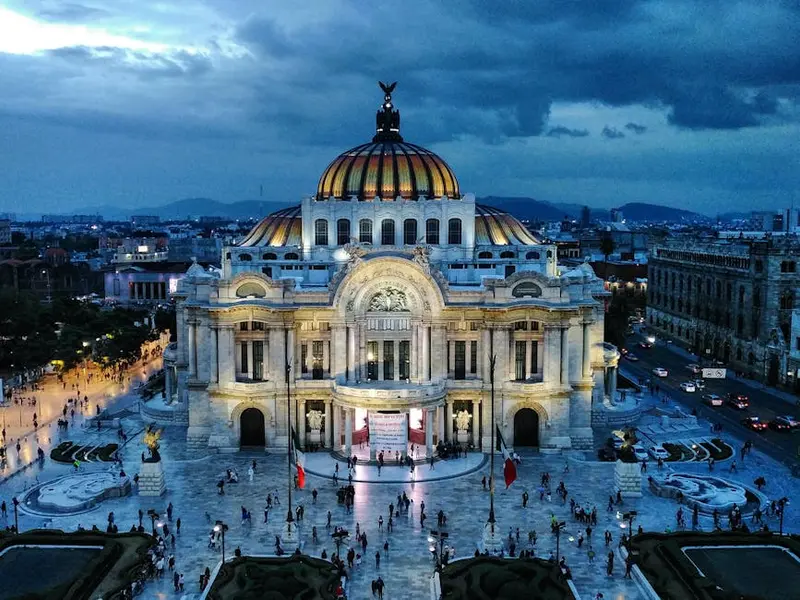
    The Palacio de Bellas Artes in Mexico City is the country's foremost cultural center and an architectural gem. Its complex construction began in 1904 in Art Nouveau by Adamo Boari, but was only completed in 1934 in Art Deco by Federico Mariscal, following the Mexican Revolution. This unique stylistic blend defines its white marble facade and opulent interiors.Inside, the palace houses the National Museum of Architecture and the National Theatre. You'll also discover world-famous murals by artists like Diego Rivera, David Alfaro Siqueiros, and José Clemente Orozco, visualizing key aspects of Mexican history and culture. Also, note the impressive Tiffany glass roof in the main hall.Our Tip: Visit the palace in the morning to quietly explore the artworks and architecture. For an excellent panoramic shot of the dome and facade, we recommend the café on the eighth floor of the Sears building directly opposite.
    Open in Google Maps

    Templo Mayor

    The Templo Mayor was the religious and cosmological center of the Aztec capital, Tenochtitlan. Here you'll find the remains of the main temple, dedicated to the deities Huitzilopochtli (War and Sun) and Tlaloc (Rain and Fertility). The excavation site, only rediscovered in 1978, reveals seven superimposed building phases, reflecting the expansion of the Aztec empire. As you explore the ruins, you'll see impressive stone sculptures, altars, and the foundations of former shrines. Right next door is the excellent museum, housing thousands of artifacts such as offerings, ceramics, and the famous Coyolxauhqui disk. Our Tip: Visit the site first thing in the morning after opening to avoid the largest crowds and the midday heat. Plan ample time for the museum, as it significantly complements the context of the ruins and allows for a deeper understanding.
    Open in Google Maps

    Museo Nacional de Arte

    The National Art Museum (MUNAL) in Mexico City is housed in a magnificent neoclassical building, the former Palace of the Secretariat of Communications and Public Works. It boasts an impressive collection of Mexican art from the 16th to the mid-20th century, offering you deep insight into the country's artistic evolution. Here you'll find works by artists such as José María Velasco, Gerardo Murillo (Dr. Atl), and early works by muralists like Diego Rivera and David Alfaro Siqueiros. The exhibitions are chronologically arranged, highlighting various epochs, from the colonial period and 19th-century academic art to early modernity. Particularly noteworthy is the building's architecture, with its imposing facade and elegant courtyard. Our Tip: Plan your visit for a weekday morning to avoid the biggest crowds and enjoy the art in peace. For stunning photos of the architecture, the central staircase is ideal.
    Open in Google Maps

    Museo de Arte Popular

    The Museum of Popular Art in Mexico City is dedicated to preserving and presenting the rich tradition of Mexican folk art, known as Arte Popular. It is housed in an impressive Art Deco building, originally a fire station, which is architecturally worth a visit in itself. Here you'll find a comprehensive collection of handicrafts from all regions of Mexico, reflecting the country's diversity and cultural richness. The exhibitions include ceramics, textiles, wood sculptures, traditional toys, colorful Alebrijes, and intricate paper crafts, including exhibits for Día de Muertos. Each piece tells a story about local customs, materials, and the skills of the artisans. You'll gain deep insight into the significance of these art forms for daily life and Mexico's identity. Our tip: Plan your visit on a weekday morning to avoid the crowds and view the exhibits in peace. The top floor often features temporary exhibitions that are well worth seeing. Don't forget to visit the museum shop to acquire authentic, high-quality souvenirs that come directly from the artisans.
    Open in Google Maps

    El Ángel de la Independencia

    The El Ángel de la Independencia is an iconic landmark of Mexico and a central monument in Mexico City. It was inaugurated in 1910 for the centenary of the start of the War of Independence and serves as a mausoleum for several heroes of Mexican independence. Perched atop a tall column is the gilded bronze statue of the winged goddess of Victory, Nike, holding a laurel wreath and a broken chain. At its base, you'll find allegorical statues representing Law, Justice, War, and Peace, as well as a lion led by a child. This monument is not only an architectural masterpiece but also an important gathering point for national celebrations and demonstrations. Our tip: Visit the Angel in the early morning to capture the best lighting for photos and avoid the largest crowds. The surrounding sidewalks of Paseo de la Reforma offer excellent perspectives for shots.
    Open in Google Maps

    Essen & Trinken

    Culture, Art & History

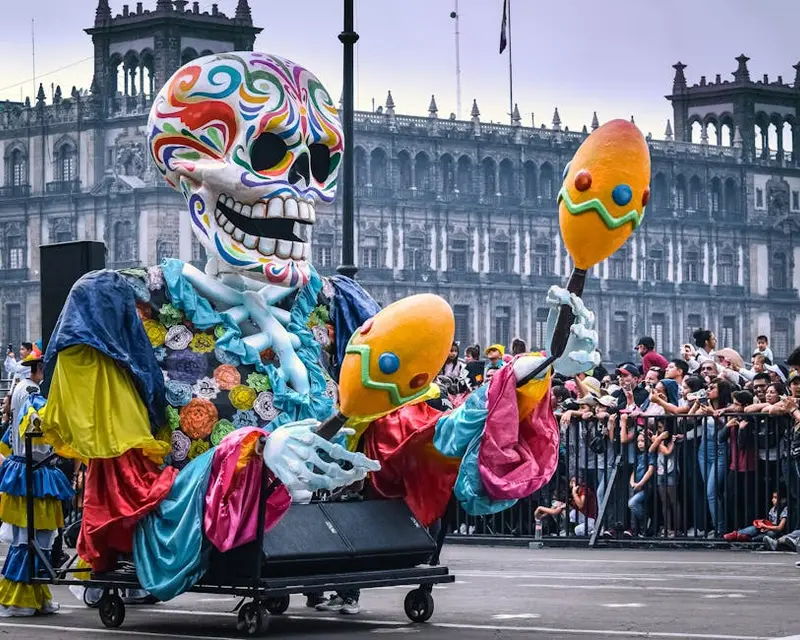
    Mexico City is a hub of culture, art, and history, with origins dating back to 1325, when it was founded as the Aztec capital Tenochtitlan. Following the Spanish conquest in 1521, today's Mexico City rose from its ruins, creating a unique fusion of pre-Columbian and colonial influences.The city's architecture reflects these layers, from the excavated remains of the Templo Mayor in the historic center to magnificent baroque cathedrals like the Catedral Metropolitana and neoclassical palaces. These historic structures contrast with modern architecture that shapes the skyline and showcases the city's constant evolution.Culturally, the city is characterized by its "Mestizaje" character, a rich blend of indigenous and Spanish traditions. This is expressed in vibrant murals by artists like Diego Rivera and David Alfaro Siqueiros, which adorn the walls of public buildings, as well as in traditional festivals such as the colorful Día de Muertos and lively Mariachi music, an integral part of urban life.

    Locations nearby

    These places are nearby — perfect for additional days or a day trip.

    Centro Histórico

    Centro Histórico

    Das pulsierende Herz der Stadt, wo die Geschichte Mexikos in prächtigen Kolonialbauten und präkolumbianischen Ruinen lebendig wird.
    Mexico City

    Mexico City

    Mexico City is a vibrant metropolis that blends indigenous roots with colonial history and modern life. Here you'll find the impressive Zócalo, one of the world's largest squares, surrounded by the Metropolitan Cathedral and the Palacio Nacional with murals by Diego Rivera. The Museo Nacional de Antropología in Chapultepec Park offers deep insights into Mexico's pre-Columbian history. Explore the charming district of Coyoacán with Casa Azul, Frida Kahlo's former home, for an authentic cultural experience. The city is renowned for its diverse gastronomy, from street food to upscale restaurants, and its vibrant art scene. For pleasant exploration, the dry season from November to April is recommended. A weekend visit to the floating gardens of Xochimilco offers unique insight into local tradition.
    Roma Norte

    Roma Norte

    Ein trendiges Viertel, bekannt für seine Art-déco-Architektur, entspannten Parks und eine blühende Gastronomieszene mit zahlreichen Cafés und Boutiquen.
    Condesa

    Condesa

    Ein elegantes und grünes Viertel, das dich mit seinen baumgesäumten Alleen, Parks wie dem Parque México und einer entspannten, gehobenen Atmosphäre empfängt.
    Polanco

    Polanco

    Das luxuriöse Viertel der Stadt, bekannt für seine exklusiven Boutiquen, hochklassigen Restaurants und einige der besten Museen Mexikos.