Fernweh: Home
    ExploreTravel GuidesPlan a tripMy tripLast visited
    de|en
    All Places & RegionsAll highlightsAbout FernwehFAQPrivacy PolicyImprint
    ExploreTravel GuidesPlan a tripMy tripLast visited
    Polanco

    Mexico

    Polanco

    Neighborhood

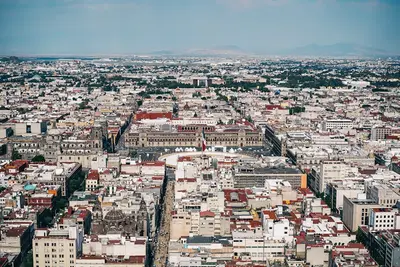
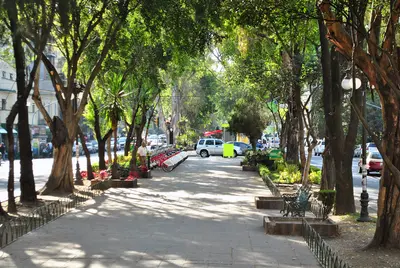
    Polanco, north of Chapultepec Park, is one of the city's most affluent neighborhoods. Avenida Presidente Masaryk is lined with luxury shops, while side streets feature embassies, hotels, and some of Mexico's most renowned restaurants.

    by Felix Gillen

    1. Home
    2. Destinations
    3. Mexico
    4. Mexico City
    5. Polanco
    Polanco, north of Chapultepec Park, is one of the city's most affluent neighborhoods. Avenida Presidente Masaryk is lined with luxury shops, while side streets feature embassies, hotels, and some of Mexico's most renowned restaurants. In the northwest, in Nuevo Polanco, are the Soumaya and Jumex museums.

    Sehenswürdigkeiten

    Discover the most important sights and attractions

    1Museo Soumaya

    The shimmering silver building at Plaza Carso in Nuevo Polanco houses the art collection of entrepreneur Carlos Slim, featuring European painting, a large Rodin collection, and Mexican art. Admission is free.

    Open in Google Maps

    2Bosque de Chapultepec

    The large city park borders Polanco to the south. Its first section features the Anthropological Museum, the Castillo, the Museum of Modern Art, the Tamayo Museum, and a lake with boat rentals. On Sundays, the park is full of families.
    Open in Google Maps

    3Museo Jumex

    The Museum of Contemporary Art, opened in 2013 opposite the Museo Soumaya, features exhibitions from Eugenio López Alonso's Colección Jumex, one of Latin America's leading contemporary art collections, including works by Gabriel Orozco, Andy Warhol, and Damien Hirst. The building is by David Chipperfield.
    Open in Google Maps

    Essen & Trinken

    1

    Hacienda de los Morales

    The estate on Calle Vázquez de Mella dates back to a 1647 Finca, which later became the Hacienda de los Morales; it has been a restaurant since 1967. Classic Mexican and international cuisine is served, with musicians playing at the tables. Popular for family celebrations.
    Show on Google Maps
    2

    Cantina La 20

    Large, modern cantina on Calle Andrés Bello with contemporary Mexican cuisine and a wide selection of Mexican distillates, also in cocktails. Mariachis play at the tables; evenings and weekends are loud and crowded.
    Show on Google Maps
    3

    Pujol

    Enrique Olvera's restaurant is one of Mexico's best known. A tasting menu of Mexican ingredients is served, known for the long-aged Mole madre; the bar offers a taco menu. Reservations required weeks in advance.
    Show on Google Maps
    4

    Quintonil

    Restaurant by Jorge Vallejo and Alejandra Flores, featuring a tasting menu that highlights vegetables, herbs, and ingredients from across Mexico. Upscale pricing, reservations long in advance.
    Show on Google Maps

    History & Culture

    Vom Hacienda-Land zum VillenviertelPolanco liegt auf dem Land der früheren Hacienda de San Juan de los Morales. Ab Ende der 1920er-Jahre wurde es parzelliert, nachdem der Paseo de la Reforma nach Westen verlängert worden war. Der Name geht auf einen Fluss zurück, der einst entlang der heutigen Avenida Campos Elíseos floss. Die ersten Villen entstanden im sogenannten colonial californiano, einem Stil mit Gartenhäusern im Kolonialgewand; ab den späten 1950er-Jahren kamen funktionalistische Bauten wie das Nationalkonservatorium hinzu.Straßen der Dichter und DenkerDie Straßen tragen Namen von Schriftstellern und Philosophen wie Homero, Horacio oder Molière. Von Anfang an siedelten sich hier jüdische, spanische, französische, deutsche und libanesische Familien an; mehrere Synagogen prägen bis heute das Viertel. Im Parque Lincoln, dem Zentrum der ersten Parzellierung, liegt das Freilichttheater Ángela Peralta.

    Getting Here & About

    Metro and MetrobúsPolanco and Auditorio Metro stations on Line 7 are located in the district. The Metrobús line on Paseo de la Reforma also ends in Polanco. A Metro ride costs 5 Pesos, a Metrobús ride 6 Pesos.Getting AroundYou can walk between Parque Lincoln, Masaryk, and the restaurants, as well as into the adjacent Chapultepec Park. To Nuevo Polanco, with its Soumaya and Jumex museums, or from Roma or Condesa, many visitors take an app-based taxi.

    Accommodations in Polanco

    Find perfect stay in Polanco

    Booking.com* (Affiliate link)
    Search Hotels
    Agoda* (Affiliate link)
    Search Hotels
    Airbnb
    Vacation Rentals

    * Affiliate link: if you book through it, we earn a small commission. The price stays the same for you.
    Nearby

    Condesa

    Condesa

    West of Roma, Condesa developed from the early 20th century on the land of the Hacienda of the Condesa de Miravalle. In the 1920s, the grounds of the former horse racetrack around today's Parque México were added. It is characterized by Art Deco residential buildings, wide green median strips, and the México and España parks. The district is quiet and green, but comes alive in the evenings with restaurants and bars on Avenidas Tamaulipas and Michoacán.
    Roma Norte

    Roma Norte

    Roma Norte emerged circa 1900 as a wealthy residential area. French-style villas, Art Nouveau, and Art Deco buildings line tree-lined streets like Avenida Álvaro Obregón and Calle Colima. Today, the district features cafés, galleries, bars, and top city restaurants, plus popular lodging.
    Centro Histórico

    Centro Histórico

    The Historic Centre of Mexico City has been a UNESCO World Heritage site since 1987. Around the Zócalo you'll find the Templo Mayor, Cathedral, and National Palace, while to the west, Madero pedestrian street leads to Bellas Artes and the Alameda. In the side streets, you'll discover colonial palaces, churches, markets, and traditional cafes; the major sights are detailed on the Mexico City page.
    Mexico City

    Mexico City

    Mexico City, the country's capital, is located at approximately 2,240 meters in a high valley surrounded by volcanoes, and its metropolitan area has nearly 22 million inhabitants. You travel here for the ruins of the Aztec capital Tenochtitlán beneath the colonial center, a UNESCO World Heritage site since 1987; for museums like the National Museum of Anthropology; and for a cuisine ranging from taco stands to tasting menus. Green residential neighborhoods like Roma and Condesa, the canals of Xochimilco, and day trips to Teotihuacán round out the stay.
    Coyoacán

    Coyoacán

    Coyoacán in southern Mexico City was an independent town even before its incorporation; Hernán Cortés established his first headquarters here after the conquest. Cobblestone streets, colonial houses, and tree-lined squares give the district a peaceful character. The most famous address is the Casa Azul, Frida Kahlo's home.

    Sources & method

    • Photos: Pexels. Each photo carries its credit.
    • Place data such as addresses and ratings comes from Google Maps.
    • The content is based on web research from public, traceable sources. How the content is made · The role of AI