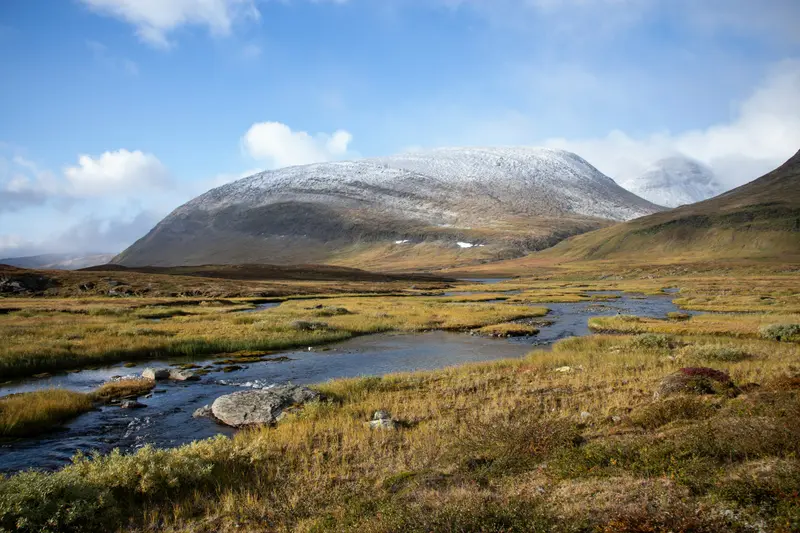
A round trip through Lapland with fells, Sámi culture, reindeer, and vast wilderness. Starting and ending in Luleå, which has its own airport: From there, the journey continues via Jokkmokk and Gällivare to Kiruna and Abisko on the shores of Torneträsk, leaving a week for hikes in the National Park and excursions to the lake. The return journey from Abisko to Luleå takes approximately five hours.
22 Days / 21 Nights
June to September
RV Friendly
6 stops
Why This Route?
For nature lovers who want to experience Fjäll, Sámi culture and the Midnight Sun with time for hikes.
Hidden Gems
Abiskojåkka Canyon right at the entrance to Abisko National Park
Ájtte, the Sámi and Mountain Museum in Jokkmokk
Dundret, Gällivare's local mountain with views over forests and moors
Itinerary
Stop 1 • 3 Nights
Luleå
City
Stunning nature and outdoors. For adventure seekers and Rich in culture and history.
Luleå, at the mouth of the Luleälv into the Gulf of Bothnia, is the gateway to North Sweden's wilderness. It combines university life with a vast archipelago of 1,312 islands, the world's largest brackish water archipelago. Just outside lies the UNESCO World Heritage site Gammelstads Kyrkstad, Northern Scandinavia's best-preserved church town.
Start: arrive at Luleå Airport and pick up your rental car or motorhome
4 Sights
5 Restaurants
Culture, Art & History in Luleå
From Gammelstad to the CoastLuleå was founded in the 1620s at what is now Gammelstad. Because post-glacial land uplift made the harbour too shallow, the town moved closer to the coast in 1649. Gammelstad retained its 1492 church, Northern Sweden's largest late medieval stone church, surrounded by 424 wooden houses. These served as accommodation for churchgoers who travelled from afar. Since 1996, the church town has been a UNESCO World Heritage site.TownscapeIn the centre, the Neo-Gothic cathedral dominates the townscape, while modern buildings like Kulturens Hus serve as a meeting place for concerts, art, and conferences.Life with the SeaIn winter, the bays freeze over, making ice skating on the sea a common everyday activity. Luleå University of Technology makes the city a modern knowledge hub.
Rich in culture and history. Perfect for an exciting city trip.
Jokkmokk, just north of the Arctic Circle in Swedish Lapland, is a centre of Sámi culture. At Ájtte, the Swedish Fjäll and Sámi Museum, you can learn about the Sámi way of life and the nature of the mountain region. The town is known for the Jokkmokk Winter Market, which has been held for over 400 years, always starting on the first Thursday in February and lasting three days; in 2027, the 422nd market will take place from February 4th to 6th. In winter, dog sledding tours and the Northern Lights are a draw; in summer, the Midnight Sun and hiking. For the market period, you should book your accommodation early.
3 Sights
4 Restaurants
Jokkmokk: Culture, Art, and History
Markt und KircheJokkmokk liegt im traditionellen Siedlungsgebiet der Sámi. Anfang des 17. Jahrhunderts ließ König Karl IX. in Lappland feste Kirch- und Marktplätze einrichten, um Handel und Steuern zu kontrollieren. In Jokkmokk wurde 1607 die erste Kirche fertiggestellt. Die heutige Alte Kirche ist eine achteckige Holzkirche: Das Original von 1753 brannte 1972 ab und wurde nach den alten Plänen rekonstruiert und 1976 wieder geweiht.Der WintermarktDer Jokkmokks marknad findet seit über 400 Jahren statt und ist das kulturelle Herzstück des Jahres, mit Handel, Joik, Rentierumzügen und Begegnungen.Duodji und ÁjtteDas samische Kunsthandwerk Duodji verbindet praktischen Nutzen mit künstlerischem Anspruch. Das Ájtte, Schwedisches Fjäll- und Samenmuseum, bewahrt dieses Erbe.
Gällivare, located north of the Arctic Circle in Swedish Lapland, has been a mining town since the construction of the ore railway in the late 19th century. Here you'll experience the nature of the fells, Sámi culture, and a community undergoing change: The neighbouring town of Malmberget is largely being abandoned due to ore mining. From Dundret, its local mountain, you can see the midnight sun in summer, and in winter, the chances for the Northern Lights are good.
3 Sights
3 Restaurants
Gällivare: History, Culture and Sami Heritage
Sámi Land and MiningThe area around Gällivare is traditional Sámi reindeer herding land. With the completion of the Iron Ore Line in 1888, iron ore mining in Malmberget grew significantly, and a housing shortage led workers to build simple homes themselves: thus the Kåkstan settlement emerged.A Community MovesBecause the mine is expanding, the Malmberget district is largely being abandoned. Many houses were demolished or relocated to safe ground.LaponiaWest of the town begins the UNESCO World Heritage site Laponia, inscribed in 1996 as a mixed natural and cultural heritage site. It encompasses four national parks and two nature reserves in the municipalities of Gällivare, Jokkmokk, and Arjeplog. Sámi communities still move here every summer with their reindeer herds into the Fjäll and manage the area jointly with authorities. Duodji (handicrafts) and Joik (traditional Sámi singing) are living parts of this culture.
Kiruna is located far north of the Arctic Circle and is inextricably linked to iron ore: The mine of the state-owned LKAB corporation in Mount Kiirunavaara is considered the world's largest and most modern underground iron ore mine. As mining operations advance beneath the city, a new center is emerging approximately three kilometers east of the old downtown, to which historical buildings will also be relocated. In summer, you can experience the Midnight Sun here; in winter, chances of seeing the Northern Lights are good, and the ICEHOTEL in Jukkasjärvi is just a short drive away.
Stunning nature and outdoors. Romantic atmosphere for couples and For adventure seekers.
Abisko is located on the southern shore of Torneträsk, about 195 kilometres north of the Arctic Circle, and is one of Sweden's most famous places for observing the Northern Lights. This small village is the starting point for Abisko National Park, the Aurora Sky Station on Mount Nuolja, and the long-distance hiking trail Kungsleden. In summer, the sun doesn't set for weeks, while in winter, long nights and snow characterize the landscape.
3 Sights
2 Restaurants
Abisko: History and Sámi Culture
Sami LandAbisko is situated in Sápmi, the traditional territory of the Sámi. Reindeer herding, fishing, and hunting have shaped the region for centuries, and Sami communities still use the fells as pasture land today.Railway, National Park, and ResearchThe area was developed in the early 20th century with the Iron Ore Line between Kiruna and Narvik. In 1909, the same year as Sweden's first nature conservation laws, Abisko National Park was established. The research station, founded in 1903 in nearby Vassijaure and located in Abisko since 1913, has belonged to the Royal Swedish Academy of Sciences since 1935, primarily studying Arctic climate and ecology.HandicraftsSami handicrafts, known as Duodji, include works made from wood, reindeer horn, leather, and textiles, and are still practiced today.
Stunning nature and outdoors. For adventure seekers and Rich in culture and history.
Luleå, at the mouth of the Luleälv into the Gulf of Bothnia, is the gateway to North Sweden's wilderness. It combines university life with a vast archipelago of 1,312 islands, the world's largest brackish water archipelago. Just outside lies the UNESCO World Heritage site Gammelstads Kyrkstad, Northern Scandinavia's best-preserved church town.
Return and departure: last night in Luleå before the flight home, hand back the vehicle at the airport
4 Sights
5 Restaurants
Culture, Art & History in Luleå
From Gammelstad to the CoastLuleå was founded in the 1620s at what is now Gammelstad. Because post-glacial land uplift made the harbour too shallow, the town moved closer to the coast in 1649. Gammelstad retained its 1492 church, Northern Sweden's largest late medieval stone church, surrounded by 424 wooden houses. These served as accommodation for churchgoers who travelled from afar. Since 1996, the church town has been a UNESCO World Heritage site.TownscapeIn the centre, the Neo-Gothic cathedral dominates the townscape, while modern buildings like Kulturens Hus serve as a meeting place for concerts, art, and conferences.Life with the SeaIn winter, the bays freeze over, making ice skating on the sea a common everyday activity. Luleå University of Technology makes the city a modern knowledge hub.