
RV Infrastructure
Good facilities for RVs (parking, hookups, etc.)
Campgrounds & RV Parks
Many campgrounds and RV parks available for motorhomes.
RV Routes
Routes and round trips specifically suitable for RVs.
Planning an RV trip to Sweden? Here are valuable tips, the best routes, campgrounds, and everything you need for an unforgettable motorhome journey.
Recommended RV Routes
Discover the best round trips and routes in Sweden that are perfect for RVs.
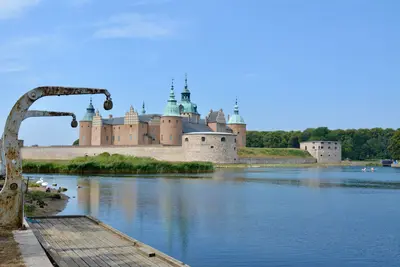
Southern Sweden Highlights
A relaxed route through Southern Sweden with Baltic Sea beaches, coastal towns, and the forests of Småland. From Malmö, the journey goes along the south coast via Ystad to Karlskrona, continuing to Kalmar and Öland, and via Växjö back to the west coast to Halmstad. It’s ideal for a first trip to Sweden and for families, as the stages are mostly short.
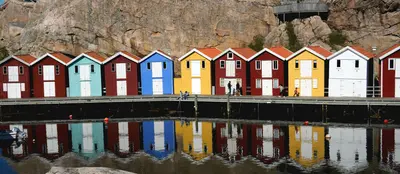
West Coast Road Trip
The route leads from Malmö and Helsingborg in Skåne up the west coast: via Halmstad and Varberg with their sandy beaches to Göteborg and further into the Bohuslän archipelago to Smögen and Fjällbacka. The E6 connects all locations, and the stages usually take less than two hours. In summer, the fish restaurants and bathing spots are open all day.
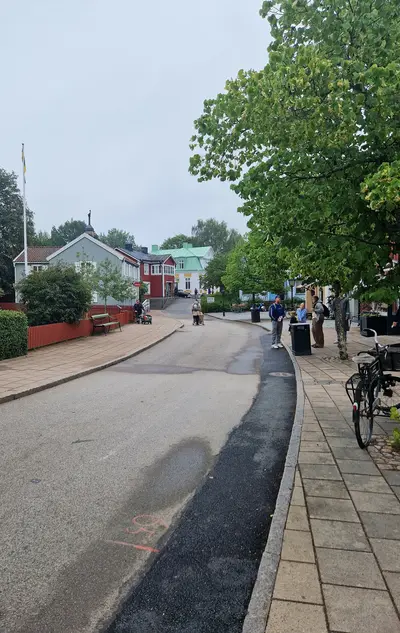
Småland & Astrid Lindgren
A family-friendly tour through forests, lakes, and red wooden houses in Småland: from the IKEA Museum in Älmhult to the glassworks around Kosta, on to Kalmar with its castle and to the island of Öland, then to Vimmerby for Astrid Lindgren's World and finally to Jönköping on Lake Vättern. The stages usually last one to two hours, the pace is relaxed.
Places & Regions for RVs
These places and regions in Sweden are particularly well-suited for RV travel.

Älmhult
Älmhult is a small town in southern Småland on Lake Möckeln. Here, Ingvar Kamprad opened the first IKEA furniture store in 1958, where today the IKEA Museum tells the company's story. North of the town lies Råshult, the birthplace of the naturalist Carl von Linné.

Kosta
Kosta is a small village in the forests of Småland and the historical heart of the Kingdom of Crystal. The glassworks has been active since 1742 and is Sweden's oldest continuously operating glassworks. You can watch the glassblowers at work, shop at the outlet, and observe elk and red deer in nearby wildlife parks.

Åmål
Åmål is a small town in Dalsland on the western shore of Lake Vänern. Gamla Staden survived the great town fire of 1901, and its wooden houses from the 18th and 19th centuries still shape its character today. At the guest harbor are the local heritage museum, tourist office, and old church.
Travel Climate for RV Trips
Important information about climate, weather, and the best travel time for your RV trip in Sweden.
12–18°C·40–70 mm(moderate rain)
Die Sommermonate Mai bis August bieten die angenehmsten Temperaturen und die längsten Tage für Outdoor-Aktivitäten. Allerdings muss mit höheren Niederschlagsmengen gerechnet werden, besonders im Juli und August. Trotzdem ist dies die beliebteste Reisezeit.
Das Klima in Schweden variiert stark zwischen dem Norden und dem Süden des Landes. Der Norden, insbesondere Lappland, erlebt lange, kalte Winter mit Temperaturen, die oft unter den Gefrierpunkt fallen, und kurze, milde Sommer. Der Süden hat mildere Winter und wärmere Sommer. Die Niederschläge sind über das ganze Jahr verteilt, wobei die Sommermonate tendenziell etwas feuchter sind.
Nördliches Schweden: Lange, schneereiche Winter und kurze Sommer. Geeignet für Winteraktivitäten wie Skifahren und Nordlichter-Beobachtung.
Südliches Schweden: Mildere Winter und wärmere Sommer. Ideal für Städtetrips und Erkundung der Küste.
Die beste Zeit für einen Besuch in Schweden hängt stark von den geplanten Aktivitäten ab. Für Winteraktivitäten sind die Monate Dezember bis März ideal, während die Sommermonate Juni bis August sich am besten für Outdoor-Aktivitäten wie Wandern und Radfahren eignen.
Seasons
Jan
Feb
Mar
Apr
May
Jun
Jul
Aug
Sep
Oct
Nov
Dec
Hauptsaison
Übergangszeit
Nebensaison
Best Time to Visit
▶Show detailed monthly data
| Month | Temp (°C) | Rain (mm) | Sun (h) |
|---|---|---|---|
| January | -3.0 | 50 | 2.0 |
| February | -3.0 | 40 | 3.0 |
| March | 1.0 | 40 | 5.0 |
| April | 6.0 | 35 | 7.0 |
| May | 12.0 | 40 | 8.0 |
| June | 16.0 | 50 | 9.0 |
| July | 18.0 | 70 | 8.0 |
| August | 17.0 | 70 | 7.0 |
| September | 13.0 | 60 | 5.0 |
| October | 7.0 | 60 | 3.0 |
| November | 2.0 | 55 | 2.0 |
| December | -1.0 | 50 | 1.0 |
Warning: In the winter months, it can get very cold. Many campgrounds are closed. Make sure your RV is winter-ready.
RV Tips for Sweden
Sweden with an RVSweden is well-suited for RV travel. You drive through forests, past lakes, and along the coast at your own pace; the roads are good and lightly trafficked outside of cities. Important to know: The Allemansrätten (every man's right / freedom to roam) applies to you on foot, with a tent, or a canoe, but not for RVs.Preparation and Traffic RulesWinter Tires: From December 1 to March 31, winter tires are mandatory in wintry road conditions. Stricter requirements apply to heavy vehicles over 3.5 t. Snow chains can be useful in the north.Daytime Running Lights: Low beam or daytime running lights must be switched on even during the day.Speed Limits: RVs up to 3.5 t may drive as fast as passenger cars; outside built-up areas, 70 km/h applies where no signs are posted. RVs over 3.5 t may not exceed 90 km/h on motorways and expressways; otherwise, truck limits apply. The blood alcohol limit is 0.2 per mille.Tolls and Fees: You pay tolls for the Öresund Bridge between Denmark and Sweden, with RVs charged depending on length or weight. A congestion charge applies in Stockholm and Gothenburg, and an infrastructure fee for the bridges in Motala, Sundsvall, and the Skurubron. For foreign vehicles, the service provider Epass24 handles billing.Wildlife Crossings: At dusk and at night, moose and reindeer can unexpectedly cross the road. Up-to-date information on entry, safety, and health can be found at the German Federal Foreign Office.Overnight Stays: Campsites, Pitches, and Rest AreasCampsites: Sweden has a dense network of campsites, often located by lakes or on the coast, offering electricity, sanitary facilities, and waste disposal services. Many are organized under the association SCR Svensk Camping. Prices vary widely depending on location and season.Pitches: Municipalities, harbors, and private providers operate pitches for RVs. They are usually cheaper than campsites but often offer only basic services.Wild Camping: According to the Swedish Environmental Protection Agency, Naturvårdsverket, parking an RV off-road is not part of the Allemansrätten. Therefore, you may not park in forests, meadows, or on beaches. Overnight stays are possible where parking is permitted, such as in rest areas (generally up to 24 hours), provided no signs or local rules prohibit it. Near residential homes, ask for permission beforehand. Leave no litter and dispose of wastewater only at designated disposal stations.Fires: Barbecues and campfires are often prohibited during dry conditions. Fire bans are issued by the respective provincial administration or municipality.Regions for RV ToursSouthern Sweden (Skåne, Småland, Öland): Gentle landscapes, red wooden houses, many lakes, and the island of Öland, which you reach via the Öland Bridge near Kalmar. Gotland is accessible by ferry from Nynäshamn or Oskarshamn.West Coast (Bohuslän): An archipelago coast north of Gothenburg with fishing villages, granite rocks, and seafood. Roads to coastal towns can be narrow, and pitches fill up quickly in summer.Central Sweden (Dalarna): Around Lake Siljan, you'll find lakes, forests, and traditions like the red Dala horse.Northern Sweden (Lapland): Vast wilderness, midnight sun in summer, and Northern Lights in winter. Distances are long, gas stations can be far apart, and some roads are gravel. Plan accordingly.
General RV Travel Tips
Planning Routes
Choose routes that are suitable for RVs. Pay attention to road width, height restrictions, and parking options.
Booking Campgrounds
Especially during peak season, you should book campgrounds in advance. Many RV parks are also available spontaneously.
Videos & Reportages
Get inspired by these videos and reportages about Sweden and get a first impression of RV routes and sights.

"Stockholm und Schärengarten: Mittsommer in Schwedens Hauptstadt"
Das Video zeigt die Mittsommerfeierlichkeiten in Schwedens Hauptstadt Stockholm und erkundet die einzigartige Natur des umliegenden Schärengartens, wo Einheimische die Zeit mit Familie und Freunden verbringen.