The route runs from Plasencia to Monfragüe National Park, then to the old towns of Trujillo and Cáceres. The journey ends at Mérida with its Roman theatre. Each leg takes an hour or less.
10 Days / 9 Nights
March–May & October
RV Friendly
5 stops
Why This Route?
For peace-seekers who want to experience nature, Roman towns and medieval old towns away from major destinations.
Hidden Gems
Monfragüe Castle above the Tagus with panoramic views over the National Park
Bujaco Tower in Cáceres' Plaza Mayor with views over the Old Town
Acueducto de los Milagros on the outskirts of Mérida, a Roman aqueduct with stork nests
Itinerary
Stop 1 • 2 Nights
Plasencia
City
Plasencia, in the north of Extremadura, combines a lively present with a lot of history. The city is surrounded by medieval walls, the old town features two interconnected cathedrals, and the Plaza Mayor is the meeting point for locals.
4 Sights
4 Restaurants
Culture, Art & History in Plasencia
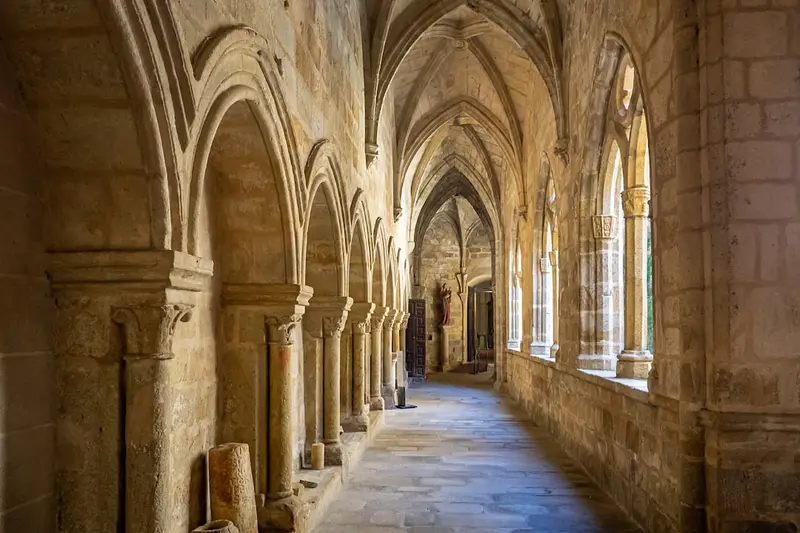
The northern Extremaduran city of Plasencia has a rich history, beginning with its founding in 1186 by King Alfonso VIII of Castile. Its motto is "Ut placeat Deo et hominibus" (That it may please God and men).The medieval city walls, with gates like the Puerta del Sol, bear witness to this era. At the heart of the old town stands the Catedral de Plasencia, an ensemble of the Romanesque-Gothic old and the unfinished new cathedral in Renaissance style. This combination showcases the evolution of architectural art from the 13th to the 16th century.Magnificent noble palaces such as the Palacio de Monroy or the Palacio del Marqués de Mirabel define the old town. Local traditions like the "Martes Mayor", a market day on the first Tuesday in August, and the Semana Santa preserve the cultural heritage and connect residents with their past.
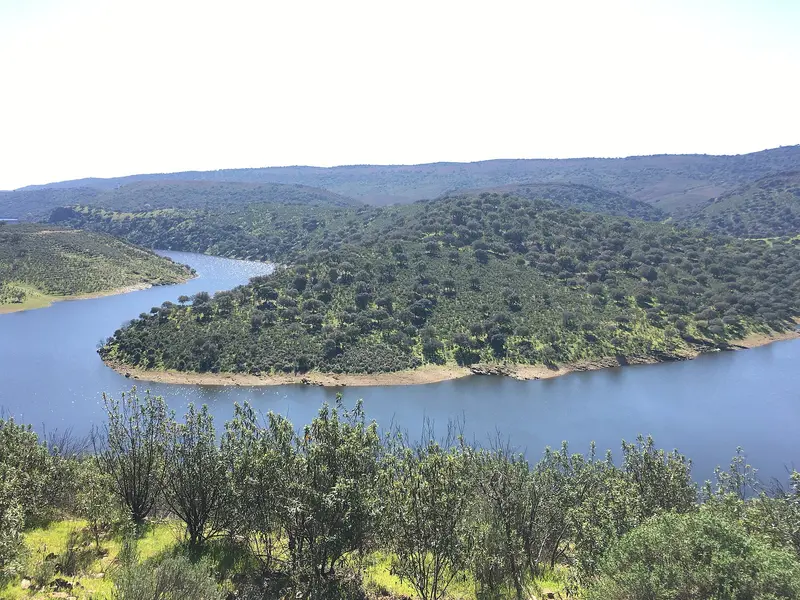
Monfragüe in Extremadura has been a National Park since 2007 and a UNESCO Biosphere Reserve since 2003. It is home to one of Europe's largest colonies of Cinereous Vultures, along with Griffon Vultures, Spanish Imperial Eagles, and Black Storks. The landscape comprises Dehesa, Mediterranean scrubland, steep rock faces, and the dammed Tajo and Tiétar rivers.
5 Sights
3 Restaurants
Monfragüe's Historical Heritage
Monfragüe's history is closely intertwined with its strategic location and natural surroundings. Early human traces date back to prehistoric times. The Castillo de Monfragüe, according to contemporary chronicles, was built in the 9th century during a period of Muslim rule, bearing witness to its past as a borderland.The structural elements preserved today largely stem from later expansions by knightly orders in the service of Alfons VIII: The round tower dates from the 12th century, the pentagonal one from the 15th. In the 15th century, Bishop Juan de Carvajal had the Puente del Cardenal built over the Tajo; later, Karl III founded the village of Villarreal de San Carlos to combat banditry along the route.The surrounding villages and the typical Dehesa landscape reflect a traditional way of life, shaped by livestock farming and agriculture. The regional cuisine thrives on products from the Dehesa.
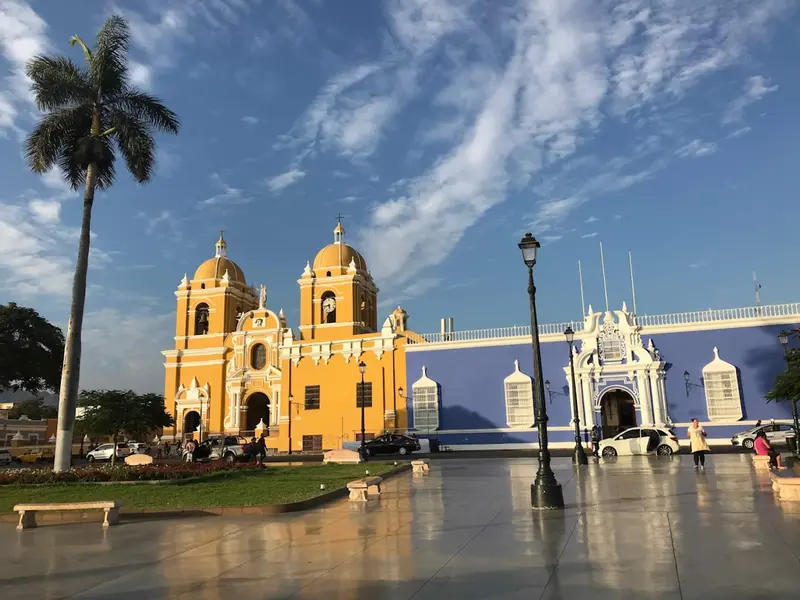
Trujillo, nestled in the vast landscape of Extremadura, takes you back to the age of the Spanish Conquistadors. Here Francisco Pizarro was born, and the city still displays the wealth of that epoch: a grand Plaza Mayor, noble palaces, and a castle on the granite hill above the old town.
5 Sights
5 Restaurants
Trujillo's rich history and architecture
Trujillo in Extremadura is a place of great historical significance, its roots reaching back to Roman times (Turgalium). Under Moorish rule, the fortress was built, and after the Reconquista in the 13th century, the city became a center of Christian Castile. Trujillo experienced its golden age in the 15th and 16th centuries, when many of its sons, including Francisco Pizarro and Francisco de Orellana, traveled as Conquistadors to the New World and brought back riches.This era profoundly shaped the townscape, particularly the architecture of the Plaza Mayor. Here stand Renaissance palaces such as the Palacio de los Marqueses de la Conquista and the Palacio de San Carlos, which bear witness to the former power and wealth. The medieval castle (Alcazaba) and the churches Santa María la Mayor and San Martín complete the historical ensemble.
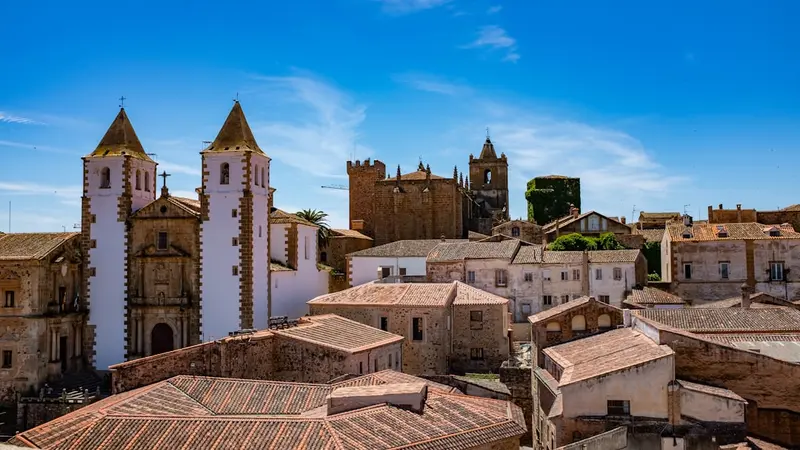
Cáceres boasts one of Spain's best-preserved old towns, designated a UNESCO World Heritage site. Stroll through cobblestone streets, past noble palaces, defensive towers, and Romanesque, Gothic, and Renaissance churches. Evenings, when the day visitors have departed, the upper town is especially tranquil.
5 Sights
5 Restaurants
Historic Cáceres: A Journey Through Epochs
The Old Town of Cáceres, a UNESCO World Heritage site since 1986, is a vibrant testament to its multifaceted history. The Romans founded the colony Norba Caesarina here in 34 BC. Under Moorish rule, the settlement developed into Hisn Qasras, before it was finally conquered by the Christians on April 23, 1229.The architecture reflects this evolution: A city wall with remnants from Roman and Moorish times encloses a labyrinth of cobblestone streets with numerous noble palaces, churches, and around thirty towers from the Islamic era. Romanesque, Gothic, and Renaissance elements characterize the townscape.The Semana Santa (Holy Week) is a highlight in the annual calendar; its processions through the narrow streets of the Old Town are recognized as a festival of international tourist interest. In the 15th century, a large Jewish community lived here until their expulsion in 1492; traces of it can be found in the Barrio de San Antonio.
Mérida, the former capital of the Roman province of Lusitania, takes you on an unparalleled journey through time. Its impressive archaeological sites, protected by UNESCO as a World Heritage site, make it an **open-air museum of Roman antiquity**. Discover a city where history comes alive and captivates you at every turn.
5 Sights
4 Restaurants
Mérida's Cultural Heritage: A Journey Through Time
Mérida, founded as Emerita Augusta by Emperor Augustus in 25 BC, is a city whose cultural and historical heritage is deeply rooted in Roman origins. As the capital of the Roman province of Lusitania, it grew into one of the most significant centers of the Empire on the Iberian Peninsula.
Due to its exceptionally well-preserved Roman monuments, the city was declared a UNESCO World Heritage site and today functions as a living open-air museum. Its architecture tells stories of ancient engineering and daily life over two millennia ago.
Beyond the dominant Roman era, the Visigothic period and subsequent Moorish rule also shaped the city's landscape and cultural traditions. This multifaceted history is reflected in the various architectural layers, making Mérida a unique destination for history enthusiasts.