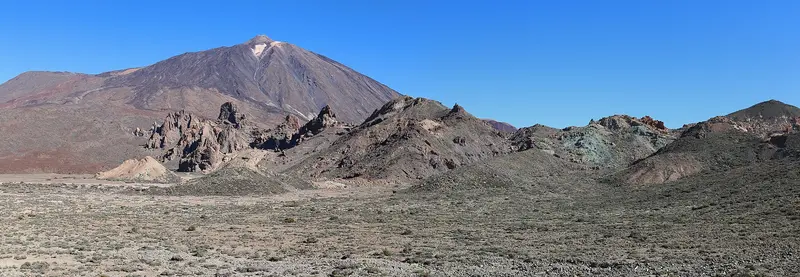
Ingo Mehling / Wikimedia Commons / CC BY-SA 4.0, mod.
Round trip · Spain
Tenerife and La Gomera: Teide, Anaga and Laurel Forest
by Felix Gillen
- 11 Days / 10 Nights
- Tenerife (La Laguna and Anaga) → La Gomera (Valle Gran Rey)
The route starts in Tenerife's green north, in the old town of La Laguna, your base for exploring the Anaga Mountains. You then take the TF-24 mountain road through La Esperanza about 55 km (34 miles) up into Teide National Park and spend the night at the Parador beside the Roques de García. From there you head west via Chío to Santiago del Teide or Los Gigantes, the gateway to Masca and the Teno Mountains. Los Gigantes is about 30 minutes from the port of Los Cristianos, the ferry to San Sebastián de La Gomera takes about 50 minutes, and the drive on to Valle Gran Rey a little over 50 minutes. Without a rental car you will struggle to reach the trailheads on either island; on La Gomera the Garajonay laurel forest and the deep valleys are the focus.
At a glance
- Duration
- 11 Days / 10 Nights
- Stops
- 4 · Tenerife (La Laguna and Anaga) → La Gomera (Valle Gran Rey)
- Arrival
- Flight · Teneriffa Süd (TFS)
- Best Time to Go
- March–May & September–November. These months are pleasantly warm for hiking, while July and August get hot in the south. The north is noticeably wetter in winter, and Teide can see snow and bitter cold
More on when to go
The cable car and the summit trail close in storms, snow or ice.
4 stops
Why This Route?
For hikers and nature lovers who want to see the Canary Islands beyond the beach resorts: laurel forest in Anaga, high mountains around Teide, gorges in the west, and on La Gomera a national park that has been a UNESCO World Heritage Site since 1986. A night inside the national park gets you to the cable car early and puts you under a very dark night sky in the evening.
Hidden Gems
- The Sendero de los Sentidos at Cruz del Carmen in Anaga, three short trails of about 350 meters to 1.2 kilometers through the laurel forest
- sunset behind the Roques de Anaga, best seen from the road above Playa de Benijo, since the path down to the beach was most recently closed because of rockfall risk
- the Mirador de Abrante near Agulo on La Gomera, a glass platform above the cliffs
Getting there and back
Round trip, returning to where you started
- Arrival
- Flight · Teneriffa Süd (TFS)Tenerife South handles most international flights and is close to the ferry port of Los Cristianos, where you return at the end. La Laguna is about 65 km (40 miles) away, roughly an hour by rental car; bus 10 runs to Santa Cruz in about 50 minutes, with buses or the tram onward from there. Tenerife North (TFN) is only about 5 km (3 miles) from La Laguna but is served mainly from mainland Spain and the other islands. Without flying, you can reach Tenerife on the car ferry from Huelva in about 32 to 35 hours.
- Departure
- Flight · Teneriffa Süd (TFS)The ferry from San Sebastián de La Gomera to Los Cristianos takes about 50 minutes; allow a little over 50 minutes from Valle Gran Rey to the port. The port of Los Cristianos is about 15 km (9 miles) from Tenerife South Airport.
Itinerary
Tenerife (La Laguna and Anaga)
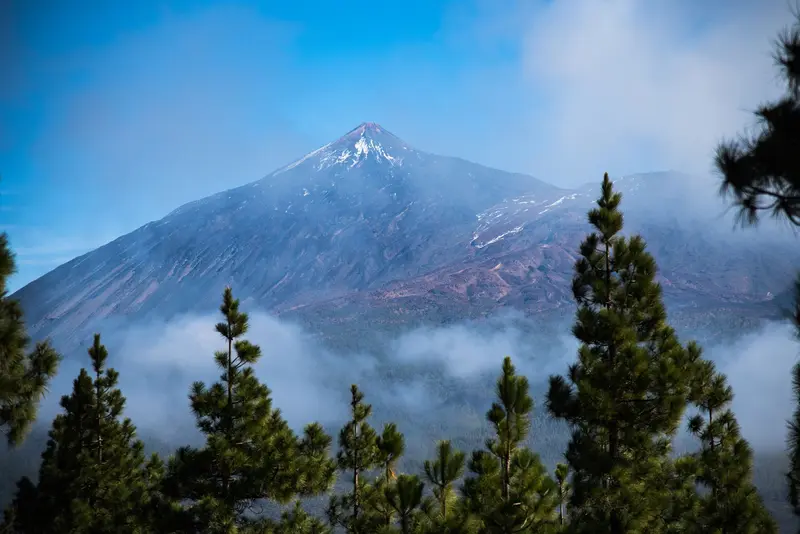
Tenerife is the largest and most populous island of the Canary Islands. Towering above it all is Teide, at 3,715 meters Spain's highest peak and the core of a UNESCO World Heritage National Park. The humid, green north, home to the World Heritage city of La Laguna, La Orotava, Puerto de la Cruz, and the Anaga Mountains, contrasts with the dry south, featuring major resorts like Costa Adeje, Playa de las Américas, and Los Cristianos. In the northwest lie the Teno Mountains, including Masca, and the cliffs of Los Gigantes.
From Tenerife South Airport it is about an hour's drive to La Laguna, whose old town has been a UNESCO World Heritage Site since 1999 and served as a model for many colonial cities in the Americas. From here the TF-12 takes you to the Cruz del Carmen visitor center in the Anaga Mountains, a UNESCO Biosphere Reserve since 2015.
5 Sights
Culture and Traditions
FestivalsThe Carnival of Santa Cruz is among the world's largest, recognized as a Festival of International Tourist Interest since 1980.In La Orotava, the Corpus Christi processions in May or June are a highlight of the year.In Candelaria, pilgrims venerate the patron saint of the Canary Islands on February 2nd and August 14th and 15th in the Basílica, consecrated in 1959.Colonial ArchitectureFollowing the 1496 conquest, cities with wooden balconies, courtyards, and noble palaces arose. The best-preserved are La Laguna, a World Heritage site since 1999, and La Orotava's old town with the Casa de los Balcones.CuisineTypical are Papas arrugadas, potatoes boiled in very salty water with Mojo, and Gofio, roasted grain flour still ground in traditional mills in La Orotava.
Teide National Park
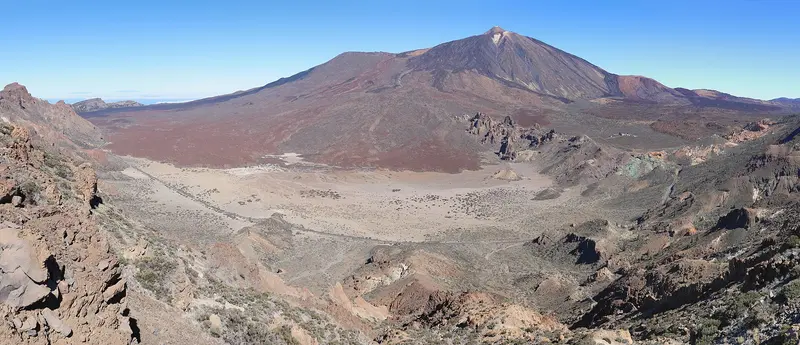
The Teide National Park (Parque Nacional del Teide) encompasses the central highlands of Tenerife around Mount Teide, which at 3,715 meters is the highest mountain in Spain. The park was established on January 22, 1954, covers approximately 190 square kilometers, and has been on the UNESCO World Heritage List since 2007. In 2023, it recorded over 4.4 million visits.Below the summit, the Caldera Las Cañadas unfolds, a vast plateau of lava flows, pumice, and rock pinnacles, overlooked by Pico Viejo, which at 3,135 meters is the second-highest volcano in the Canary Islands. Among the rocks grow endemic plants such as the red Teide bugloss, whose flower pyramids can reach up to three meters in height, and the Teide violet, which can be found all the way to the summit and is considered Spain's highest-growing flowering plant.The cable car takes you up to 3,555 meters in eight minutes; from there, paths lead to two viewpoints. For the final section to the crater, you need a pre-booked permit.
From La Laguna it is about 55 km (34 miles) on the TF-24 through La Esperanza to the cable car, which climbs from 2,356 m to 3,555 m (7,730 to 11,663 ft) in about eight minutes. The Telesforo Bravo trail to the 3,715 m (12,188 ft) summit requires a paid permit with a fixed time slot from the Tenerife ON portal; without one you stay at the upper station.
4 Sights
4 Restaurants
Volcanic Land and World Heritage
A World Heritage of LavaUNESCO added the National Park to its World Heritage List on June 28, 2007. It protects the Las Cañadas caldera, Teide and Pico Viejo, lava flows in black, red and ocher, and a flora adapted to high altitude and dryness.How High Is Teide?Many books state 3,718 meters. The Spanish Geographical Institute IGN, however, measured 3,715 meters in April 1983, and a GPS measurement by the Canary Island surveying company Grafcan confirmed this value in December 2011.Visitor Centers and Shepherd LifeThe Cañada Blanca Visitor Center, opened in June 2022 opposite the Roques de García, tells the story of human life in Las Cañadas since prehistory and of research in astronomy, geology, and vulcanology. The El Portillo Visitor Center focuses on the formation, climate, and adaptations of plants and animals, and is accompanied by a two-hectare botanical garden. The small Juan Évora Ethnographic Museum, housed in the restored home of the last inhabitant of Las Cañadas, illustrates how the shepherds lived here. East of Teide, near Izaña at about 2,370 meters, stands the Teide Observatory.
Tenerife (West: Masca and Teno)
Tenerife is the largest and most populous island of the Canary Islands. Towering above it all is Teide, at 3,715 meters Spain's highest peak and the core of a UNESCO World Heritage National Park. The humid, green north, home to the World Heritage city of La Laguna, La Orotava, Puerto de la Cruz, and the Anaga Mountains, contrasts with the dry south, featuring major resorts like Costa Adeje, Playa de las Américas, and Los Cristianos. In the northwest lie the Teno Mountains, including Masca, and the cliffs of Los Gigantes.
From the national park you drive down the TF-38 through Chío to Santiago del Teide or Los Gigantes in the west. The TF-436 road to Masca is narrow and full of hairpins; for the hike down the Barranco de Masca you book ahead at caminobarrancodemasca.com, ride the shuttle from Santiago del Teide and return by boat to Los Gigantes.
5 Sights
Culture and Traditions
FestivalsThe Carnival of Santa Cruz is among the world's largest, recognized as a Festival of International Tourist Interest since 1980.In La Orotava, the Corpus Christi processions in May or June are a highlight of the year.In Candelaria, pilgrims venerate the patron saint of the Canary Islands on February 2nd and August 14th and 15th in the Basílica, consecrated in 1959.Colonial ArchitectureFollowing the 1496 conquest, cities with wooden balconies, courtyards, and noble palaces arose. The best-preserved are La Laguna, a World Heritage site since 1999, and La Orotava's old town with the Casa de los Balcones.CuisineTypical are Papas arrugadas, potatoes boiled in very salty water with Mojo, and Gofio, roasted grain flour still ground in traditional mills in La Orotava.
La Gomera (Valle Gran Rey)
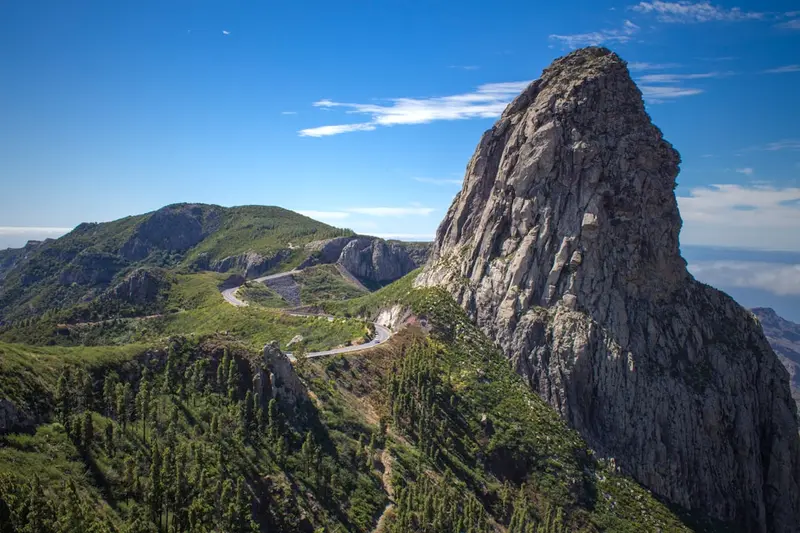
La Gomera is a green, almost circular island west of Tenerife. Deep ravines stretch from the center to the coast; above them lies the often fog-shrouded laurel forest of Garajonay National Park, a UNESCO World Heritage site since 1986. On the east coast, the capital San Sebastián greets you with ferry port, Torre del Conde and Columbus memories; in the west, the holiday valley Valle Gran Rey; in the north, the villages Hermigua and Agulo with Mirador de Abrante. The island is primarily a destination for hikers.
From Los Gigantes it is about 30 minutes to Los Cristianos, the ferry to San Sebastián takes about 50 minutes, and the drive across the island to Valle Gran Rey a little over 50 minutes; check beforehand whether your rental car may go on the ferry. In Garajonay National Park, a loop of about 10 km (6 miles) from Laguna Grande leads up the 1,487 m (4,879 ft) Alto de Garajonay, with views as far as Teide on clear days.
9 Sights
2 Restaurants
Whistled Speech and Traditions
Silbo GomeroUsing the whistled language Silbo, residents communicated across deep ravines: Spoken Spanish is replaced by whistles of varying pitch and duration. Since 1999, Silbo has been a compulsory subject in the island's schools, and in 2009, UNESCO included it in the list of intangible cultural heritage.ColumbusIn 1492, La Gomera was the last port before crossing the Atlantic; Columbus stayed for about a month and returned in 1493 and 1498.Festivals and CuisineThe Bajada de la Virgen de Guadalupe takes place every five years, most recently in 2023.Typical dishes include Almogrote, a spicy cheese spread, Miel de palma, a palm syrup, and Escaldón, a porridge made from Gofio.
Plan this route as your trip
All stops, trains and nights go into your trip planner. You adjust dates and places to stay afterwards.
This route is a suggestion from our research. Please check timetables, times in port, opening hours and prices before you book – what your tour operator or carrier says is what counts.
Fernweh is a free travel guide and trip planner: routes researched by people, taken over in one click, used day by day on the road. More about Fernweh
4 stops
Route Summary
Duration11 Days
Stops4 Places
TypeAdventure