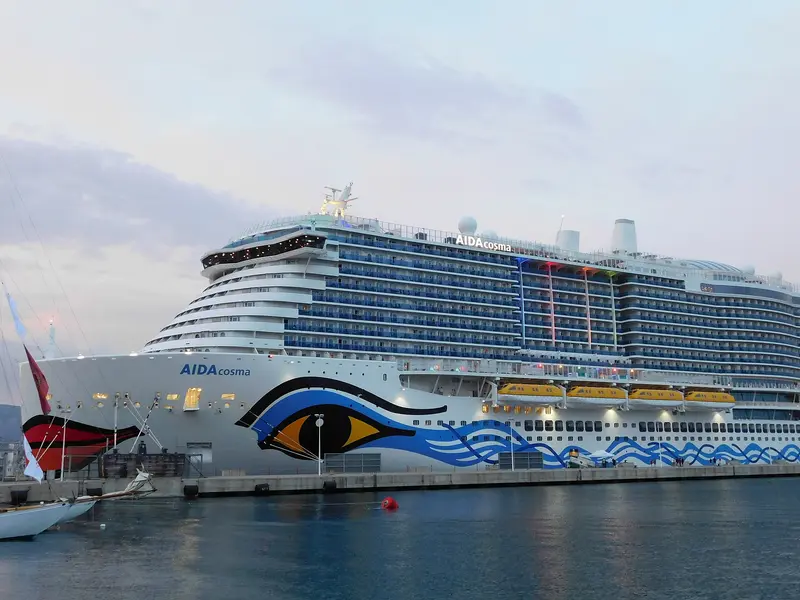
AK-Bino / Wikimedia Commons / CC BY-SA 4.0, mod.
Cruise · AIDA Cruises · AIDAcosma
AIDAcosma – Mediterranean with Corsica from Mallorca
by Felix Gillen
- 8 Days / 7 Nights
- Palma de Mallorca → Palma de Mallorca
- Sails May 1, 2027
In seven nights, the AIDAcosma sails from Mallorca to Liguria, to the coast of Lazio, to Corsica, and back via Barcelona. Two sea days are interspersed; on port days, you have ten to twelve hours. From La Spezia, you travel by regional train to the Cinque Terre; from Civitavecchia, by train to Rome; in Ajaccio, you walk from the port to the old town. This route illustrates how to explore each port without an excursion bus and where time might be short.
A cruise by AIDA Cruises
- You book the trip with AIDA Cruises. Fernweh does not sell trips.
- “Plan Trip” adds the ports, times in port and sea days to your trip planner, with the way there and back.
- For every port you find tips for going ashore on your own.
At a glance
- Duration
- 8 Days / 7 Nights
- Stops
- 6 · Palma de Mallorca → Palma de Mallorca
- Countries on the route
- Spain, Italy, France
- Arrival
- Flight · Palma de Mallorca (PMI)
- Ship
- AIDAcosma (AIDA Cruises)
- Sailings
- May 1, 2027, May 15, 2027, Jun 12, 2027, Sep 4, 2027
- Best Time to Go
- May, June and September
More on when to go
In summer, it gets hot and crowded in Rome and the Cinque Terre, early May and September are more pleasant.
6 stops
Why This Route?
The route packs four country coasts into one week without you packing your suitcase once: the villages of Cinque Terre, Rome, Corsica's capital, and Barcelona. The ports are well connected by train, shuttle, or on foot, so you won't need expensive excursions. In Ajaccio, the ship stays until 10 PM, so you'll see the sun set behind the Îles Sanguinaires and eat dinner in the old town.
Hidden Gems
- Ajaccio Central Market: the morning market near the harbor featuring Brocciu, charcuterie, and Corsican honey
- Pointe de la Parata: the headland facing the Îles Sanguinaires, reachable by city bus from Ajaccio
- Mercat de Santa Caterina in Barcelona: the market hall in the El Born neighborhood, calmer than the Boqueria
- Forte Michelangelo in Civitavecchia: the Renaissance fortress by the harbor, if you're not heading to Rome
Getting there and back
Round trip, returning to where you started
- Arrival
- Flight · Palma de Mallorca (PMI)From the airport, a 20-min taxi to the cruise terminal; EMT Airport Bus A1 for the city. The ship departs 10 PM. Boarding closes beforehand, so don't fly in too close. It docks in Palma at 5 AM. Return flights are the same day.
- Departure
- Flight · Palma de Mallorca (PMI)
Itinerary
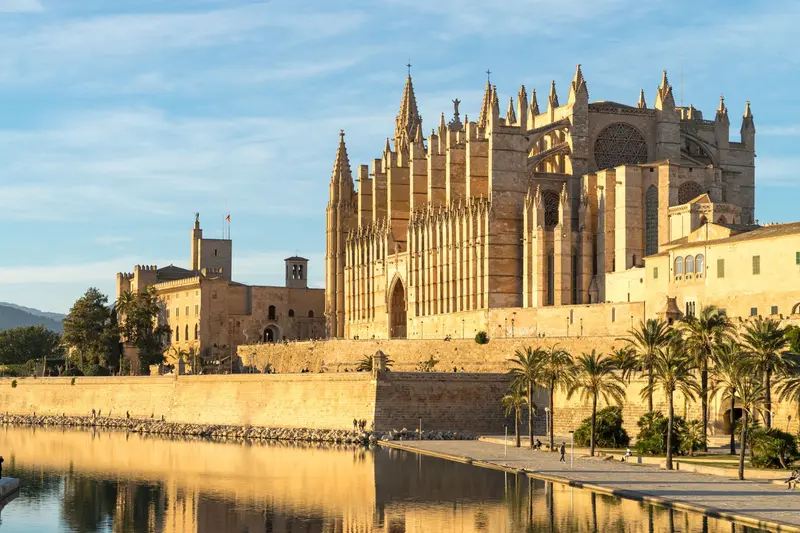
Palma de Mallorca
The capital of the Balearic Islands is situated on a wide bay in the southwest of Mallorca. Gothic churches and palaces, museums of modern art, and lively market halls make it much more than just an arrival point for a beach holiday.
Evening embarkation, departure 10 PM, followed by a day at sea. Your travel documents show the ship's terminal. Beforehand, it's worth a stroll through the old town alleys to La Seu Cathedral and along Parc de la Mar.
11 Sights
5 Restaurants
Custom
Sant Sebastià: The City Patron's FestivalThe highlight of the festival calendar is the Feast of the Patron Saint Sant Sebastià on January 20th. On the night before, the Revetla, Foguerons (bonfires where people grill publicly) burn in many squares of the old town, accompanied by concerts. The program also includes a Correfoc with fire-devils, giant figures, and Xeremiers, musicians with the Mallorcan bagpipes.Miró and Contemporary ArtJoan Miró lived and worked in Palma from 1956 until his death in 1983. His studios are now part of the Fundació Pilar i Joan Miró, housing around 2,500 of his works. Modern and contemporary art is also displayed at Es Baluard, which opened in 2004 in a bastion of the Renaissance city wall.Market HallsThe market halls offer a great insight into daily life. The Mercat de l'Olivar, located between Plaça d'Espanya and Carrer Sant Miquel, has existed since 1951 and features fish, meat, and vegetable stalls, as well as tapas bars. The Mercat de Santa Catalina, in the district of the same name, is considered Palma's oldest municipal market.
Departs 22:00 · 1 day at sea after
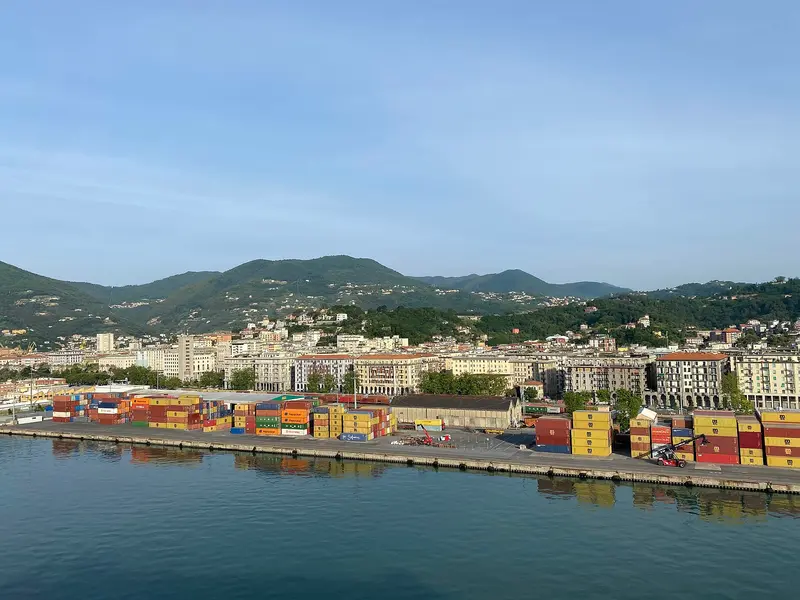
La Spezia
La Spezia lies on the Gulf of Poets in eastern Liguria and is since the 19th century one of Italy's great naval ports. The Naval Museum at the Arsenal tells about it.From La Spezia Centrale station, regional trains travel in a few minutes to the villages of Cinque Terre, first to Riomaggiore.
From the cruise terminal, you walk 20 to 30 minutes on a flat path to La Spezia Centrale train station, about two kilometers. Regional trains to the Cinque Terre run several times per hour; it takes about ten minutes to Riomaggiore, continuing to Manarola, Corniglia, Vernazza, and Monterosso. Depart early; from late morning, trains and villages become crowded. Plan your return with a buffer for the 6 PM departure.
In port 07:00–18:00
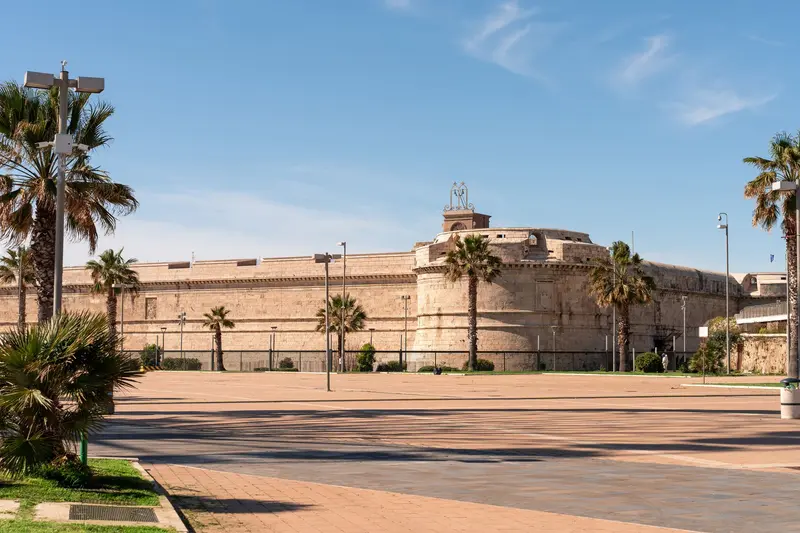
Civitavecchia (Rome)
Civitavecchia is Rome's port, located about 80 kilometers northwest of the capital on the Lazio coast. Emperor Trajan had the port built in the 2nd century, and above it stands the Renaissance fortress Forte Michelangelo.From the seaside train station, regional trains travel in about an hour to Roma San Pietro.
Rome is about 80 kilometers away. A free port shuttle brings you from the berth to Largo della Pace at the port exit in 10-15 minutes; from there, it's a 15-20 minute walk along the sea to the train station. Regional trains on the FL5 line run roughly every 30 minutes, taking 50-60 minutes to Roma San Pietro, 15 minutes on foot from St. Peter's Square. Intercity trains do not stop there. Plan on about two hours each way and take a return train that leaves you an hour's buffer. If you're staying, visit Forte Michelangelo fortress at the port.
In port 08:00–20:00
Ajaccio
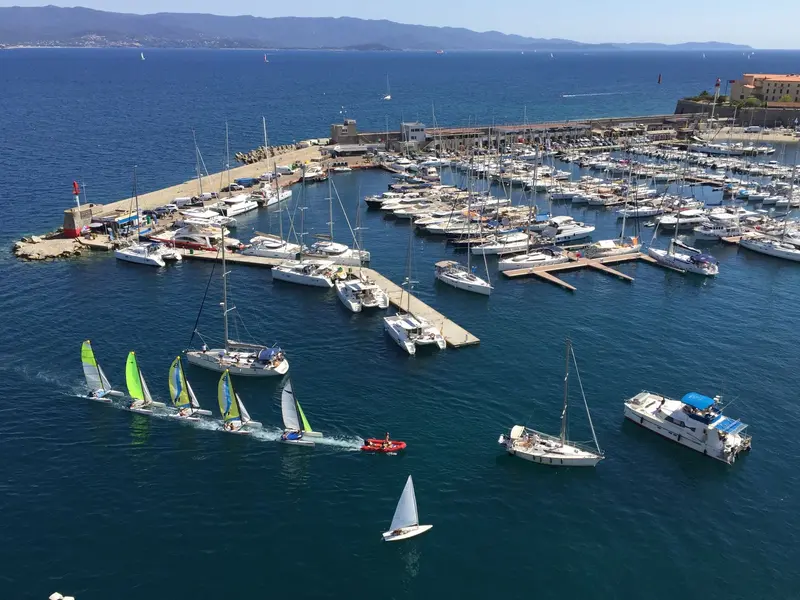
Ajaccio, Napoleon's birthplace, offers historical and cultural highlights. Visit the Maison Bonaparte and the Cathedral of Notre-Dame-de-l'Assomption. The Vieille Ville, with its market at Place Foch, invites you to stroll. The Musée Fesch presents a significant collection of Italian painting, bequeathed by Napoleon's uncle. The harbor promenade, with views of the Îles Sanguinaires, is particularly charming at sunset; avoid the summer high season.
From the port, you walk a few minutes to Place Foch and the Old Town. Morning, head to the Marché central near the port, then to Maison Bonaparte, Napoleon's birthplace, and the cathedral a few minutes further. In the afternoon, take the city bus along the coast to Pointe de la Parata before the Îles Sanguinaires, about half an hour; check return times. As the ship only departs at 10 PM, you can have dinner in the Old Town. After that, a sea day.
2 Sights
4 Restaurants
Ajaccio Cultural Heritage
Ajaccio's history is deeply connected to its location on the Gulf of Ajaccio. Traces of settlement date back to antiquity, yet the Genoese founded today's city in 1492 as a fortified site, forming the Old Town's foundation and making Ajaccio a vital trading post.Its architecture reflects this Genoese past: narrow streets, colorful facades, and the citadel characterize the historic center. French influences appear mainly in 19th-century larger squares and boulevards. Napoleon Bonaparte, born here in 1769, is a central figure in the city's history. His birthplace, the Maison Bonaparte, is now a national museum.Like all of Corsica, Ajaccio maintains a strong, distinct identity. This is evident in the Corsican language (Corsu), traditional music—especially polyphonic singing—and religious festivals and processions, such as the Good Friday procession.
In port 09:30–22:00 · 1 day at sea after
Barcelona
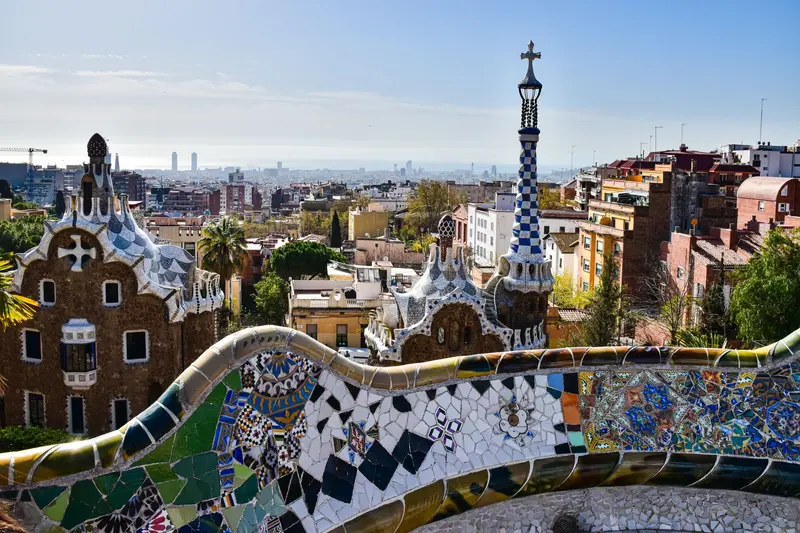
Barcelona, the capital of Catalonia and Spain's second-largest city, sits right on the Mediterranean and combines a Gothic old town, a city beach and the buildings of Catalan Modernisme. You come above all for Antoni Gaudí's works such as the Sagrada Família, Park Güell and Casa Batlló, for the tapas bars and market halls, and for Barceloneta beach in the middle of the city.The Barri Gòtic holds the cathedral and medieval lanes; next door in El Born you find Santa Maria del Mar, the Picasso Museum and small shops. La Rambla is the best-known promenade but also the most crowded. Gràcia, with its many small squares, is quieter.Good to knowTickets: Book timed slots for the Sagrada Família, Park Güell and Casa Batlló online; on-site tickets often sell out.Tourist tax: Since April 2026 the per-person, per-night tax is much higher than before: 8.40 euros in a four-star hotel, 12 euros in a five-star hotel. The city plans further increases up to 2029.Pickpocketing: For general safety advice, see the FCDO travel advice linked on the country page.When to go: Spring and autumn are pleasant; July and August are hot and very crowded.
Large ships dock at the Moll Adossat terminals, three to four and a half kilometers from the center. On foot, it's 25 to 45 minutes without shade, so take the T3 port bus, which reaches the Columbus Monument at the end of La Rambla in about ten minutes. From there, walk through the Barri Gòtic to El Born and the Mercat de Santa Caterina.
15 Sights
2 Restaurants
History, Modernism, and Traditions
From Barcino to the Catalan CapitalThe Romans founded the city as Barcino; remnants of the city walls can be seen in the Barri Gòtic. In the Middle Ages, Barcelona was a Mediterranean trading power; the Cathedral and Santa Maria del Mar date from this period. Catalan language and identity continue to shape the city today, with street signs and menus usually appearing first in Catalan.ModernismeAround 1900, with the urban expansion of Eixample, Catalan Art Nouveau emerged. Besides Gaudí, Lluís Domènech i Montaner built the Palau de la Música Catalana and the Hospital de Sant Pau, and Josep Puig i Cadafalch built the Casa Amatller directly next to Casa Batlló. Several constructions by Gaudí and Domènech are UNESCO World Heritage sites.TraditionsCastells: At city festivals like La Mercè in September, clubs build multi-story human towers.Sardana: The Catalan circle dance is performed on some weekends in front of the Cathedral.Sant Jordi: On April 23rd, roses and books are given as gifts; La Rambla and Passeig de Gràcia are full of stalls.Picasso spent his youth in Barcelona; the Museu Picasso primarily exhibits these early works. The Fundació Joan Miró on Montjuïc is dedicated to the painter born in Barcelona.
In port 06:00–18:00
Palma de Mallorca
The capital of the Balearic Islands is situated on a wide bay in the southwest of Mallorca. Gothic churches and palaces, museums of modern art, and lively market halls make it much more than just an arrival point for a beach holiday.
Arrival at 5 AM, disembarkation in the morning. The airport is about 20 minutes by taxi. If time allows, have breakfast at Mercat de l'Olivar near Plaça d'Espanya.
11 Sights
5 Restaurants
Custom
Sant Sebastià: The City Patron's FestivalThe highlight of the festival calendar is the Feast of the Patron Saint Sant Sebastià on January 20th. On the night before, the Revetla, Foguerons (bonfires where people grill publicly) burn in many squares of the old town, accompanied by concerts. The program also includes a Correfoc with fire-devils, giant figures, and Xeremiers, musicians with the Mallorcan bagpipes.Miró and Contemporary ArtJoan Miró lived and worked in Palma from 1956 until his death in 1983. His studios are now part of the Fundació Pilar i Joan Miró, housing around 2,500 of his works. Modern and contemporary art is also displayed at Es Baluard, which opened in 2004 in a bastion of the Renaissance city wall.Market HallsThe market halls offer a great insight into daily life. The Mercat de l'Olivar, located between Plaça d'Espanya and Carrer Sant Miquel, has existed since 1951 and features fish, meat, and vegetable stalls, as well as tapas bars. The Mercat de Santa Catalina, in the district of the same name, is considered Palma's oldest municipal market.
Arrives 05:00
Plan this route as your trip
All stops, trains and nights go into your trip planner. You adjust dates and places to stay afterwards.
This route is a suggestion from our research. Please check timetables, times in port, opening hours and prices before you book – what your tour operator or carrier says is what counts.
Fernweh is a free travel guide and trip planner: routes researched by people, taken over in one click, used day by day on the road. More about Fernweh
6 stops
Route Summary
Duration8 Days
Stops6 Places
TypeCulture