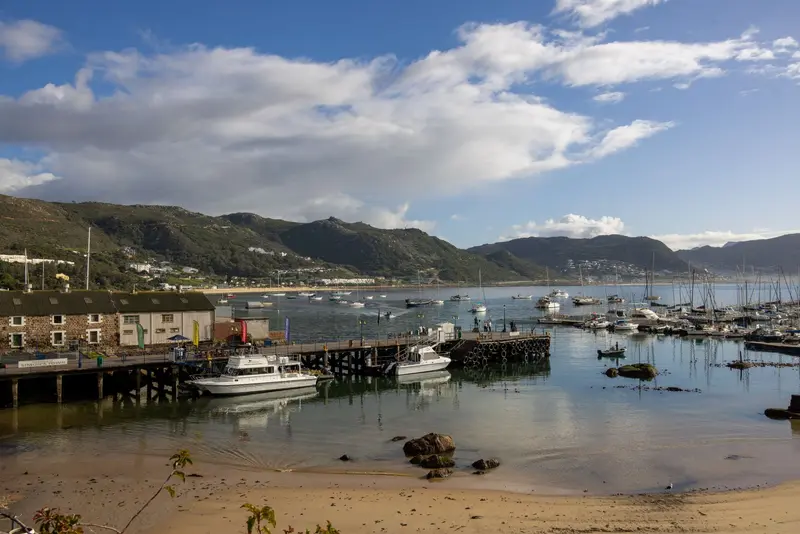
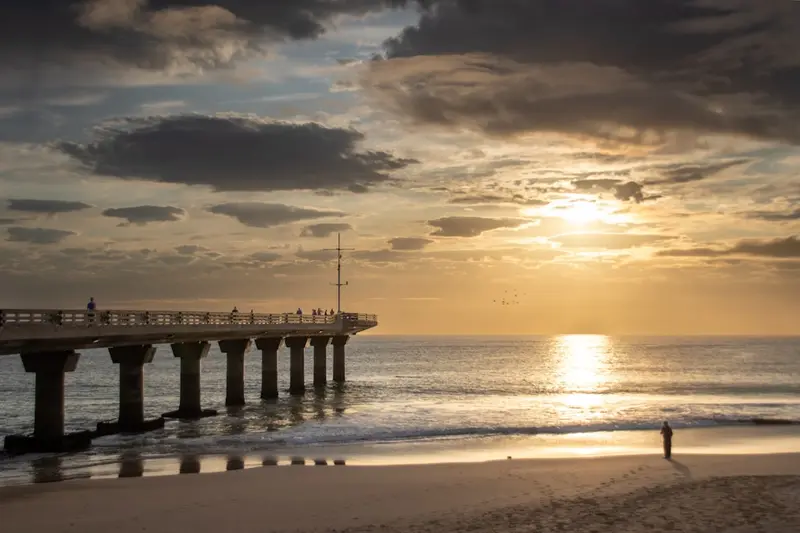
The route follows the coast from Cape Town, via Hermanus, Mossel Bay, and Knysna, to Plettenberg Bay and Gqeberha. Along the way are lagoons, beaches, and the Tsitsikamma section of the Garden Route National Park. The stages are short and the infrastructure is good, even with children.
16 Days / 15 Nights
October–April
6 stops
Why This Route?
Short stages, good roads and abundant accommodation make it the easiest entry for self-drivers in South Africa.
Hidden Gems
Viewpoint at East Head of Knysna Heads
Beach and lagoon of Nature's Valley
Kranshoek Trail on the cliffs near Plettenberg Bay
Itinerary
Stop 1 • 3 Nights
Kapstadt
City
Route highlight. Perfect for unwinding and relaxation and Culinary highlights.
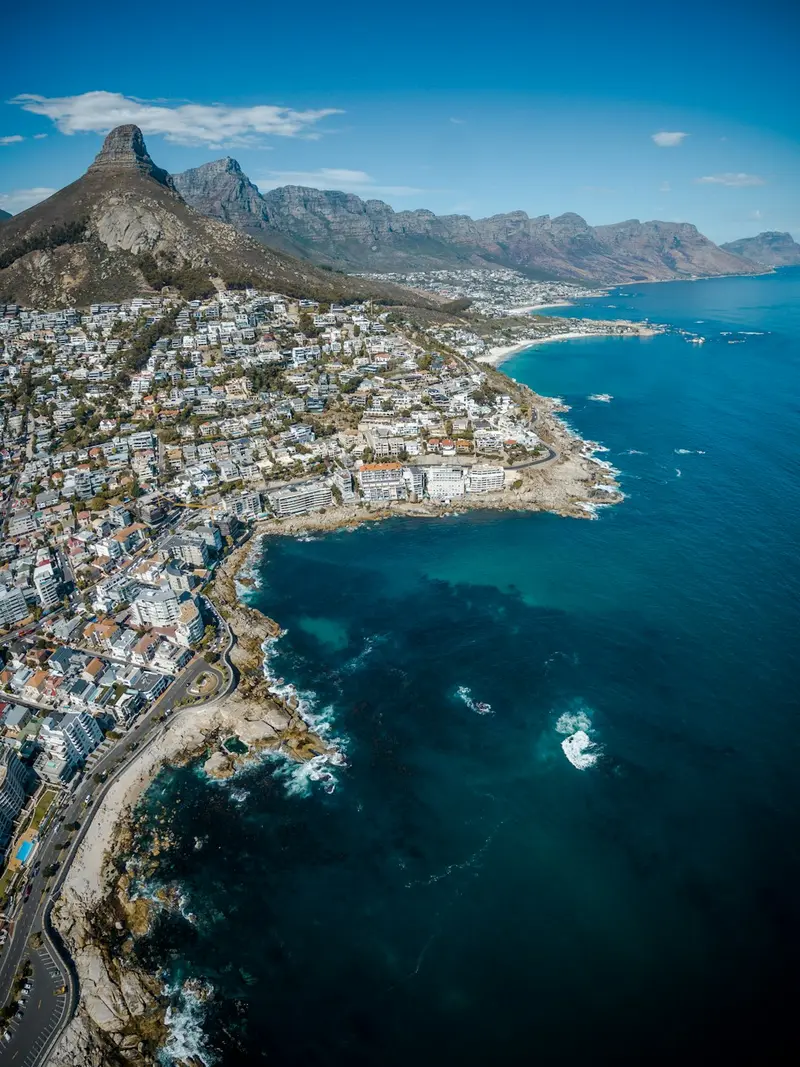
Cape Town is situated between Table Mountain and the Atlantic Ocean and, with approximately 4.8 million inhabitants in its metropolitan area, is South Africa's second-largest city. The city combines colonial history, the memory of Apartheid on Robben Island, and a vibrant restaurant and art scene with beaches, hiking trails, and wine regions right on its doorstep.
7 Sights
12 Restaurants
Cape Town's Culture, Art & History
Kapstadt ist ein Schmelztiegel der Kulturen, dessen Geschichte tief in der Kolonialzeit verwurzelt ist. Im 17. Jahrhundert von der Niederländischen Ostindien-Kompanie gegründet, entwickelte sich die Stadt aus einer Versorgungsstation zu einem bedeutenden Hafen. Diese Epoche prägte die einzigartige Kap-Holländische Architektur, sichtbar in den Giebelhäusern und Weingütern der Region.Die kulturelle Identität Kapstadts ist eng mit der Ankunft von Sklaven aus Asien und Afrika sowie der indigenen Bevölkerung der Khoisan verbunden. Das bunte Bo-Kaap-Viertel mit seinen farbenfrohen Häusern zeugt von der reichen malaiischen Tradition und ist ein lebendiges Zeugnis dieser multikulturellen Vergangenheit. Die Apartheid-Ära hinterließ tiefe Narben, doch die Stadt hat sich zu einem Symbol für Widerstand und Versöhnung entwickelt.Heute spiegelt sich die kulturelle Vielfalt in einer dynamischen Kunstszene wider, von modernen Galerien und Street Art bis hin zu traditionellen Musik- und Tanzformen. Die Küche ist ebenfalls ein Spiegelbild der Geschichte, mit Einflüssen aus der malaiischen, afrikanischen und europäischen Küche, die die lokalen Traditionen prägen.
For adventure seekers. Perfect for unwinding and relaxation and Route highlight.
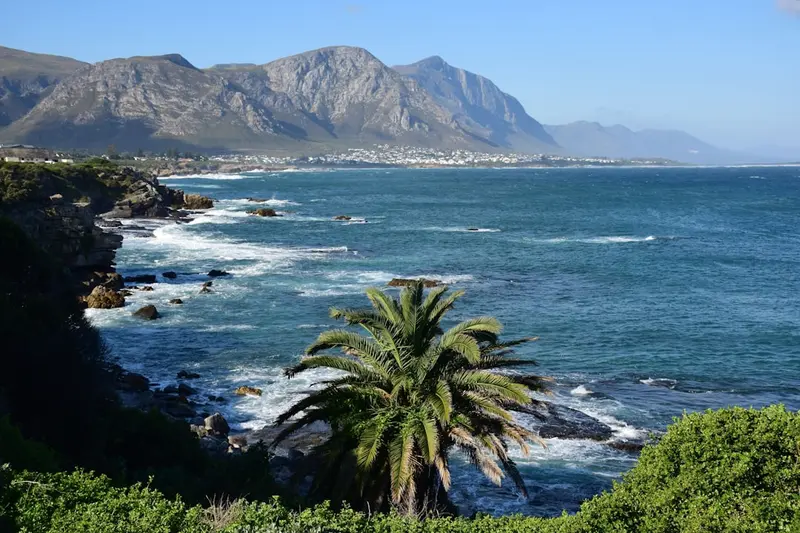
Hermanus, situated on Walker Bay about an hour and a half's drive southeast of Cape Town, is renowned as one of the world's best spots for land-based whale watching. From around June to November, Southern Right Whales arrive in the bay for mating and calving, often just a few dozen meters from the cliffs.
6 Sights
5 Restaurants
Fisher village to whale-watch site
Hermanus originated in the 19th century as a fishing village and was originally called Hermanuspietersfontein, after a teacher and shepherd who found a spring here. The town long relied on fishing and whaling, but today thrives on tourism and the whales, which have returned in large numbers since the hunting ban. The town boasts many galleries and handicraft shops.
Rich in culture and history. For adventure seekers and Perfect for an exciting city trip.
Mossel Bay is the western starting point of the Garden Route. Bartolomeu Dias landed here in 1488, and from Cape St Blaize, you'll see whales off the coast in winter.
2 Sights
5 Restaurants
Culture & History
In the caves of Pinnacle Point, researchers found traces of human behavior around 164,000 years old. In 1488, Bartolomeu Dias landed here as the first known European, meeting the Khoikhoi. The bay later became a seafarers' stop, hence the Post Office Tree tradition.
Culinary highlights. Perfect for unwinding and relaxation and Perfect for an exciting city trip.
Knysna is located on a large lagoon, its outlet to the sea formed by two sandstone cliffs, the Knysna Heads. Surrounding it are South Africa's largest continuous forests.
3 Sights
5 Restaurants
Culture and History
Knysna grew in the 19th century thanks to the timber trade from its surrounding forests. The Thesen family shaped the town with shipbuilding and timber processing, hence the name Thesen Island. Today, the town is home to many artisans and galleries.
Perfect for unwinding and relaxation. For adventure seekers and Perfect for an exciting city trip.
Plettenberg Bay, or Plett for short, is the Garden Route's most popular seaside resort. Long sandy beaches, the hiking trails in Robberg Nature Reserve, and whales in the bay define the town.
3 Sights
4 Restaurants
Culture & History
Portuguese navigators called the bay Bahia Formosa, beautiful bay. It received its current name at the end of the 18th century, after the governor of the Cape Colony, Joachim van Plettenberg. Until 1916, Beacon Island hosted a whaling station; today, a hotel stands there. Finds in the Nelson Bay Cave on Robberg show that people lived here as early as the Stone Age.
Gqeberha, until 2021 Port Elizabeth, is the largest city of the Eastern Cape and lies on Algoa Bay. For most, it is the starting point for the Addo Elephant National Park, plus beaches and an interesting city center.
4 Sights
3 Restaurants
Culture & History
In 1820, British settlers landed here; Governor Rufane Donkin named the city after his deceased wife Elizabeth. In 2021, it was officially renamed Gqeberha, after the Xhosa name of the Baakens River. The city's townships, including New Brighton, were important centers of resistance against Apartheid.