Fernweh: Home
    ExploreTravel GuidesPlan a tripMy tripLast visited
    de|en
    All Places & RegionsAll highlightsAbout FernwehFAQPrivacy PolicyImprint
    ExploreTravel GuidesPlan a tripMy tripLast visited
    • Neighborhoods & highlights
    • Eat & drink
    • Culture
    • Nightlife
    • Getting around
    • Accommodation
    • Plan trip
    • Nearby
    Đà Lạt
    P. Hughes / Wikimedia Commons / CC BY 4.0

    Vietnam

    Đà Lạt

    CityNatureCulture

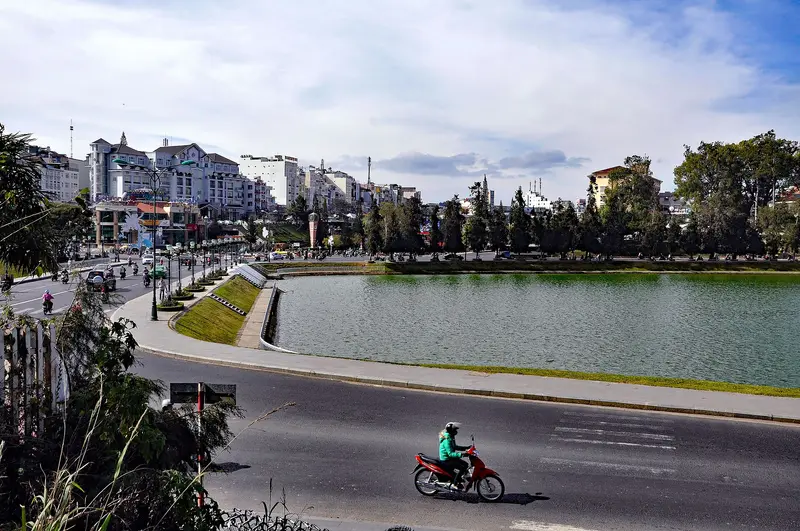
    Đà Lạt sits at about 1,500 meters (4,900 ft) on the Lâm Viên Plateau in the Central Highlands and, with average temperatures between 14 and 23 °C (57 to 73 °F), is Vietnam's cool mountain retreat.

    by Felix Gillen

    1. Home
    2. Destinations
    3. Vietnam
    4. Central Vietnam
    5. Đà Lạt
    Đà Lạt sits at about 1,500 meters (4,900 ft) on the Lâm Viên Plateau in the Central Highlands and, with average temperatures between 14 and 23 °C (57 to 73 °F), is Vietnam's cool mountain retreat. The physician and scientist Alexandre Yersin explored the plateau in 1893, and soon afterwards the French built a hill station here: the first hotel opened in 1907, the urban planner Ernest Hébrard laid out the town, and Đà Lạt was officially founded in 1916.At its heart lies Xuân Hương Lake, created by the French in 1919 by damming the Cam Ly River. Around it, colonial-era villas, pine-covered hills and vegetable and flower fields spread across the slopes. The Art Deco railway station, the summer residence of the last emperor, Bảo Đại, and the warren-like Crazy House show how varied the city's architecture is. Since the 2025 administrative reform, Đà Lạt has been the seat of the enlarged Lâm Đồng province.The dry season runs from November to April; from May to October it rains often.

    Sights in Đà Lạt

    Discover the most important sights and attractions

    Đà Lạt Station
    Museum

    1Đà Lạt Station

    Đà Lạt Station, an Art Deco structure from 1938 by Moncet and Reveron, protected as a national monument since 2001. It was the terminus of the Tháp Chàm cog railway, whose operations ceased mid-1960s due to war. Today, a nostalgic train runs about seven kilometers from here to Trại Mát, where you can visit the Linh-Phước Pagoda; departures are irregular.
    Open in Google Maps
    Crazy House (Hằng Nga)
    Attraction

    2Crazy House (Hằng Nga)

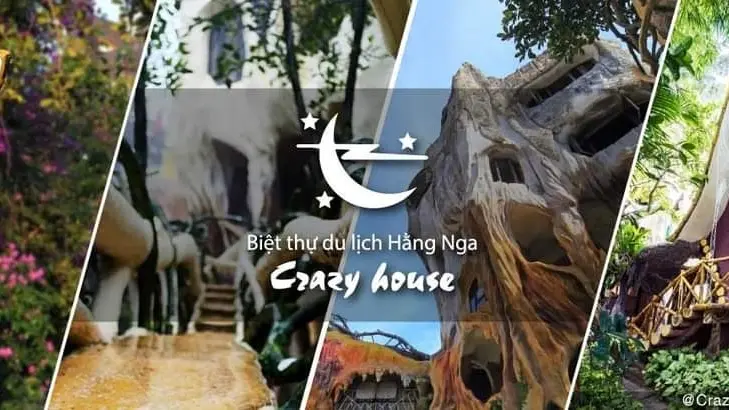
    Opened in 1990, the Hằng Nga Guesthouse, better known as Crazy House, looks like a tangle of knotted tree trunks. Its owner, Hằng Nga, is the daughter of former President Trường Chinh, which explains why the house could bypass typical building regulations. It serves as both a guesthouse and a tourist attraction; from its roof, you can gaze over the city.
    Open in Google Maps
    Xuân Hương Lake
    Attraction

    3Xuân Hương Lake

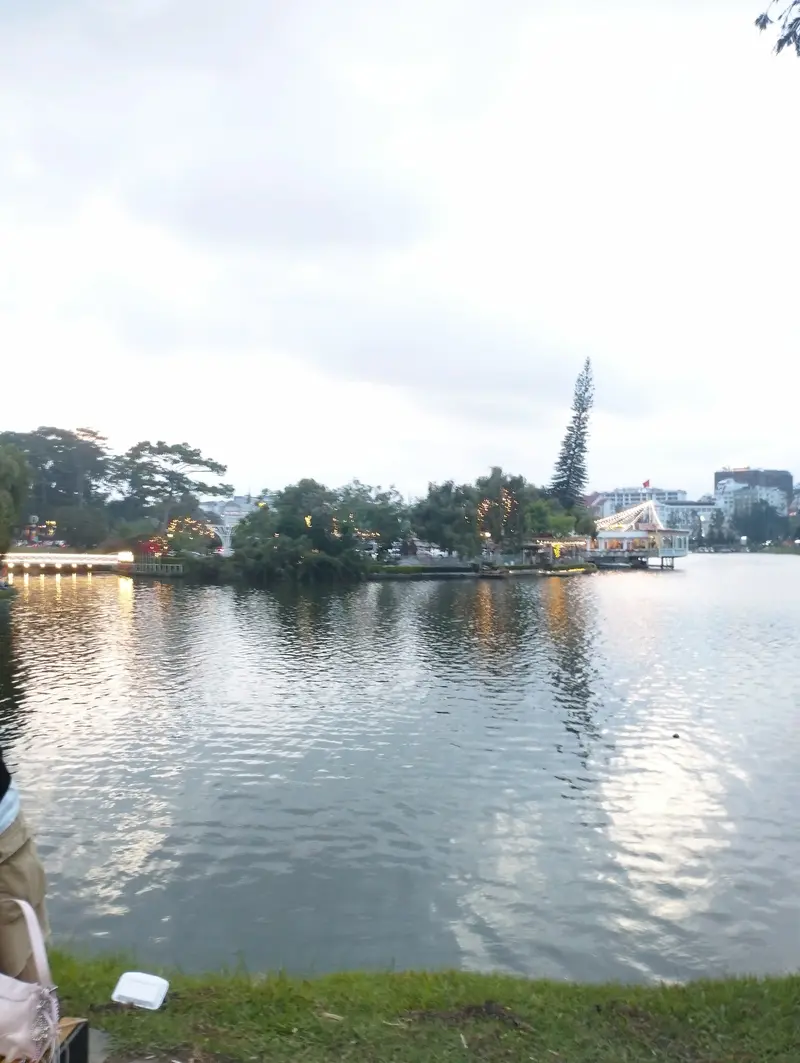
    The French created the lake in the heart of the city in 1919 by damming the Cam-Ly River; they named it “Grand Lac”. The lakeside path is about seven kilometers long and is ideal for walking and cycling.
    Open in Google Maps
    Chùa Linh Phước
    Place of Worship

    4Chùa Linh Phước

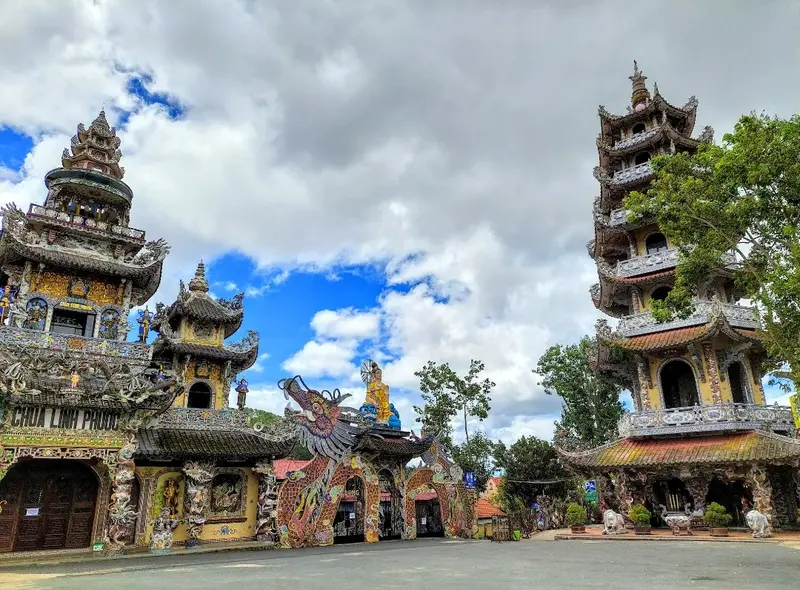
    Linh Phuoc Pagoda in Trại Mát village, eight kilometers from the center, is covered throughout with glass and ceramic shard mosaics. A 49-meter-long dragon of over 12,000 recycled beer bottles; its seven-story bell tower 37 meters high. The most convenient way to get here is by nostalgic train from Đà Lạt station, stopping in Trại Mát for about half an hour.
    Open in Google Maps

    Restaurants in Đà Lạt

    1

    Góc Hà Thành

    This relaxed spot on Trương-Công-Định Street near the market features bamboo decor and caters well to foreign guests. It's known for Vietnamese dishes like coconut curry and mango chicken.
    Show on Google Maps
    2

    Dã Quỳ

    The restaurant on Phan Dinh Phung Street serves moderately priced traditional clay pot dishes and hotpots; the menu also features Bò né, pan-fried beef, and Bánh mì chảo.
    Show on Google Maps

    Culture and History

    French Mountain StationFollowing Yersin's exploration, researchers requested Governor-General Paul Doumer to establish a mountain resort on the plateau. This spawned a city with villas, hotels, and schools. The 1938 Art Deco train station served as the terminus for the rack railway from Tháp Chàm, operating from 1933 until its wartime closure in the mid-1960s; it has been a protected national monument since 2001. Emperor Bảo Đại commissioned an Art Deco summer residence here between 1933 and 1938.Highland PeoplesLong before the French arrived, ethnic minorities inhabited the plateau. The Lâm-Đồng Museum displays crafts and tools of the Ma, K'Ho, and Churu people. In Lát village at the foot of Langbiang, you can experience the life of these mountain communities.FestivalsThis cool city celebrates its climate and agriculture: The calendar includes a Tea Culture Week, a Cherry Blossom Festival, and a Gong Festival.

    Nightlife

    1

    Maze Bar (100 Roofs Café)

    The bar at 57 Phan-Bội-Châu Street, about 100 meters from the market, is a multi-story labyrinth of dim passages, uneven floors, dead ends, and stairs leading nowhere. Locals call it Đường Lên Trăng, the Way to the Moon; at the top, a rooftop garden with city views awaits. No entrance fee, but a minimum of one drink is required.
    Show on Google Maps

    Getting there and around locally

    Getting ThereAirplane: Lien Khuong Airport (DLI) is located about 30 kilometers south of the city; the drive takes 40 to 50 minutes. After a roughly five-month runway renovation, it has been back in operation since August 19, 2026. Flights from Ho Chi Minh City take about 50 minutes, from Da Nang just over an hour, and from Hanoi almost two hours.Bus: From Ho Chi Minh City, it's about 300 kilometers and a six to eight-hour journey; from Nha Trang, it's approximately 140 kilometers and three to four hours. The final kilometers lead over winding mountain passes, where fog and occasional landslides can impede traffic.Train: Da Lat has no connection to the national rail network; the closest station on the North-South line is Nha Trang.In the CityThe seven-kilometer-long lakeside promenade along Xuan Huong Lake is perfect for walking and cycling. For more distant destinations like Truc Lam or Trai Mat, take a taxi or a motorbike taxi (xe ôm). A nostalgic train departs from the old station, traveling about seven kilometers to Trai Mat, though departures are irregular.

    Accommodations in Đà Lạt

    Find perfect stay in Đà Lạt

    Booking.com* (Affiliate link)
    Search Hotels
    Agoda* (Affiliate link)
    Search Hotels
    Airbnb
    Vacation Rentals

    * Affiliate link: if you book through it, we earn a small commission. The price stays the same for you.

    Plan your trip to Đà Lạt

    Save places, build a route and plan your city trip, all in one place.

    1. 1
      Sunrise over alpine peaks and a sea of clouds
      1234

      Round trip

      12 days · 4 stops

      Saved

      Pick a route

      Pick a ready-made one or save places and plan your own.

      Open bookmarks
    2. 2

      Trip to Đà Lạt

      Live
      • 1Đà Lạt Station3 days
      • 2Crazy House (Hằng Nga)4 days
      • 3Xuân Hương Lake5 days
      Budget

      Plan your trip

      The planner sorts stops, days and budget. Plan together in real time.

      Start trip planning
    3. 3
      9:41 No signal
      Đà Lạt
      Available offline

      Use it on the road

      Download the guide to your phone and use it on site, even offline.

    Nearby

    Nha Trang

    Nha Trang

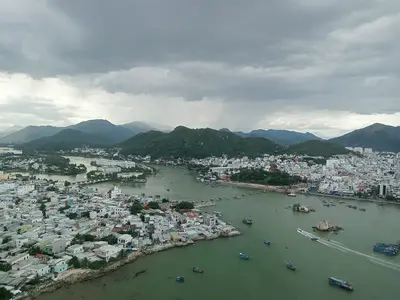
    Nha Trang is the most famous beach city on Vietnam's south-central coast and was the capital of Khánh Hòa province until the administrative reform in 2025. The beach, promenade, and hotels line Trần Phú Boulevard, while off the coast are islands such as Hòn Tre, connected by a cable car, and the Hòn Mun marine protected area.Behind the beach scenery lies a long history. On a granite hill above the Cái River stand the Po Nagar Towers, which the Cham people built between the 7th and 13th centuries for the mother goddess Po Ina Nagar. The bacteriologist Alexandre Yersin lived and researched here; his former home is now a museum. At Cầu Đá port, the Oceanographic Institute, founded in 1922, showcases a large collection of marine animals.The rainy season here is shorter than in the rest of the country and falls between September and December.
    Thảo Điền

    Thảo Điền

    Thảo Điền lies east of the city center on a peninsula surrounded on three sides by the Saigon River. The former village in erstwhile District 2 now belongs to Thủ Đức City and has developed into a residential area with villas and apartment complexes since its founding in 1997.In the 1970s, many journalists lived here, which is why the district was called "Làng Báo chí," or Press Village. Metro Line 1 has a Thảo Điền station, making it easy to reach the district from Bến Thành Market.
    Center (former District 1)

    Center (former District 1)

    The center in former District 1 is Ho Chi Minh City's colonial heart, where most attractions are within easy walking distance. Although the districts officially ceased to exist in 2025, many still refer to it as "District 1" in daily life.On Đồng Khởi Street stands the 1900 Opera House; a few minutes away are the brick Notre-Dame Cathedral and the Central Post Office (1886-1891). Further southwest lies Bến Thành Market with its clock tower, the starting point of Metro Line 1, and to the northwest, the Independence Palace.
    Ho Chi Minh City

    Ho Chi Minh City

    Ho Chi Minh City, still called Saigon by many, is Vietnam's largest city and the economic hub of the south. You'll come for its blend of French colonial architecture, war history, street food stalls on every corner, and a pace that will captivate you from the very first evening.As of July 1, 2025, there are no longer any districts in Vietnam; the city is divided into Wards (phường) and has simultaneously incorporated the former provinces of Bình Dương and Bà Rịa-Vũng Tàu. However, in daily life and on many signs, the old district names persist, which is why they are helpful for orientation.Former District 1: The city center, home to the grand avenue Đồng Khởi, the Opera House, Central Post Office, Cathedral, and Bến Thành Market. Today, it belongs to the Wards Sài Gòn, Bến Thành, Tân Định, and Cầu Ông Lãnh.Former District 3: Quieter streets with villas, cafés, and street food stalls, plus the War Remnants Museum. Today, these are the Wards Bàn Cờ, Xuân Hòa, and Nhiêu Lộc.Chợ Lớn: The historic Chinese quarter in former Districts 5 and 6, featuring assembly halls, temples, and the Bình Tây Market.Thảo Điền: On the other side of the Saigon River in former District 2, popular with expats, with cafés, restaurants, and a Metro Line 1 station. Today, it is part of Ward An Khánh.Two to three days are sufficient for the main sights. The city also serves as the usual starting point for tours into the Mekong Delta.
    Chợ Lớn

    Chợ Lớn

    Chợ Lớn is the historic Chinese Quarter of Ho Chi Minh City, extending across the former Districts 5 and 6. It is considered the world's largest Chinatown by area and has always been home to the Hoa, Vietnamese of Chinese descent.The French founded Chợ Lớn as a separate city in 1865, and it was merged with Saigon in 1931. Its centerpiece is the Bình Tây Market, built between 1928 and 1930 and the largest and oldest preserved market in the district. Most religious sites are of Chinese origin, including the Thiên Hậu Temple at 710 Nguyễn Trãi Street and several assembly halls.

    Sources & method

    • Photos: Wikimedia Commons, Google Maps. Each photo carries its credit.
    • Place data such as addresses and ratings comes from Google Maps.
    • The content is based on web research from public, traceable sources. How the content is made · The role of AI