Fernweh
    ExploreTravel GuidesMy Trips
    de|en
    About FernwehImprintFAQPrivacy Policy
    ExploreTravel GuidesMy Trips
    Puy de Dôme

    Puy de Dôme

    CityMountainsNatureCultureFor Families
    1. Home
    2. Destinations
    3. France
    4. Auvergne-Rhône-Alpes
    5. Puy de Dôme
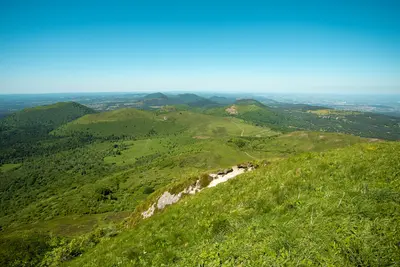
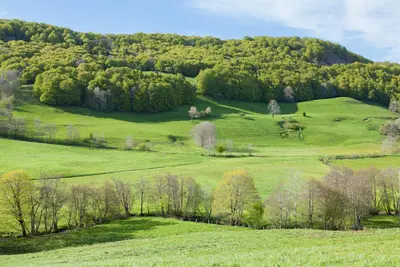
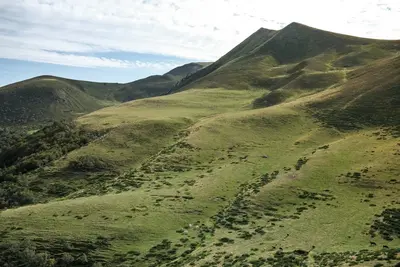
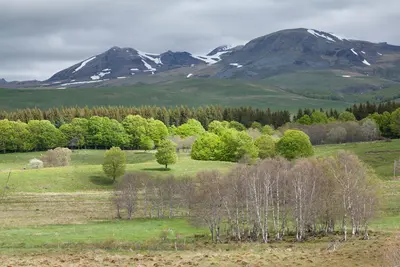
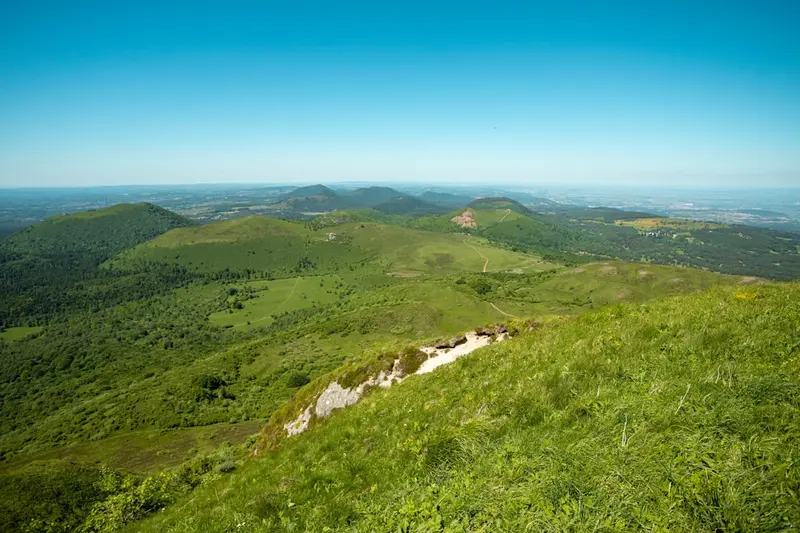
    Discover the Puy de Dôme, a majestic, dormant volcano in the heart of France and the centerpiece of the UNESCO World Heritage site Chaîne des Puys. Ascend this iconic mountain, either on foot or comfortably aboard the panoramic train, and be enchanted by breathtaking 360-degree panoramas over a unique volcanic landscape. Up here, you'll not only feel the history dating back to a Roman Temple of Mercury, but also experience pure, unadulterated nature in all its splendor.
    • Neighborhoods & highlights
    • Walking tours
    • Eat & drink
    • Culture
    • Getting around
    • Accommodation
    • Plan trip
    • Nearby
    • Neighborhoods & highlights
    • Walking tours
    • Eat & drink
    • Culture
    • Getting around
    • Accommodation
    • Plan trip
    • Nearby

    Overview

    The Puy de Dôme is the most prominent volcano in the Chaîne des Puys, a UNESCO World Heritage site in Auvergne, France. You reach the summit comfortably with the *Panoramique des Dômes* cog railway or via marked hiking trails. From there, you'll enjoy a vast 360-degree panoramic view over the unique volcanic landscape. Historically significant are the visible foundations of a *Roman Mercury temple* on the summit. This spot offers an excellent opportunity to explore the region's geological history. To avoid the largest crowds, a visit in the early morning or late afternoon is recommended; windproof clothing is advisable due to changing conditions.

    Places in Puy de Dôme

    Discover the most important sights and attractions

    Sights in Puy de Dôme

    1Gipfel des Puy de Dôme & Panoramique des Dômes

    Der Puy de Dôme ist der höchste Gipfel der Chaîne des Puys, einer Kette erloschener Vulkane, die seit 2018 zum UNESCO-Weltnaturerbe gehört. Seine historische Bedeutung ist immens: Auf dem Gipfel stand einst ein bedeutender römischer Merkur-Tempel, dessen Fundamente du heute noch erkunden kannst. Wissenschaftlich ist der Berg ebenfalls relevant, da Blaise Pascal hier im 17. Jahrhundert wegweisende Experimente zum Luftdruck durchführte.Du erreichst den Gipfel bequem mit dem Panoramique des Dômes, einer modernen Zahnradbahn, die dich durch die einzigartige Vulkanlandschaft hinaufbringt. Oben erwartet dich ein spektakulärer 360-Grad-Panoramablick über die gesamte Chaîne des Puys und die weite Ebene der Limagne. Neben den römischen Ruinen findest du ein Informationszentrum, das die Geologie und Geschichte der Region beleuchtet.Unser Tipp: Um die Ruhe des Gipfels zu genießen und Menschenmassen zu vermeiden, plane deinen Besuch früh am Morgen oder am späten Nachmittag. Für ein ungestörtes Foto der Vulkankette mit dem Puy de Dôme im Vordergrund bietet sich der Aussichtspunkt am Col de Ceyssat an. Denke an wind- und wetterfeste Kleidung, da die Bedingungen auf dem Gipfel oft wechselhaft sind.
    Open in Google Maps

    2Tempel des Merkur

    Der Tempel des Merkur auf dem Puy de Dôme ist ein beeindruckendes Zeugnis der gallo-römischen Geschichte. Du findest hier die Überreste eines der größten Bergheiligtümer des Römischen Reiches, das dem Gott Merkur geweiht war. Seine strategische Lage auf dem höchsten Punkt der Chaîne des Puys unterstreicht seine Bedeutung als Pilgerstätte und spirituelles Zentrum. Archäologische Ausgrabungen haben gezeigt, dass der Tempel auf einem bereits bestehenden keltischen Heiligtum errichtet wurde, was die kulturelle Kontinuität und die tiefe Verwurzelung des Ortes als sakralen Raum verdeutlicht. Heute siehst du die gut erhaltenen Fundamente und einige rekonstruierte Mauern, die einen lebendigen Eindruck von der einstigen Größe und Komplexität der Anlage vermitteln. Von hier oben genießt du zudem eine spektakuläre Rundumsicht über die Vulkanlandschaft der Auvergne. Unser Tipp: Nutze die Zahnradbahn Panoramique des Dômes für die bequeme Auffahrt. Besuche den Tempel am besten früh morgens oder spät nachmittags, um die Ruhe der Stätte und das besondere Licht für Fotos einzufangen und den größten Besucherandrang zu vermeiden.
    Open in Google Maps

    3Chaîne des Puys – Faille de Limagne (UNESCO-Welterbe)

    Die Chaîne des Puys – Faille de Limagne ist ein außergewöhnliches UNESCO-Welterbe in der französischen Region Auvergne, das ein einzigartiges Beispiel für kontinentales Rifting und die damit verbundene vulkanische Aktivität darstellt. Du entdeckst hier eine beeindruckende Kette von rund 80 erloschenen Vulkanen, die sich über etwa 45 Kilometer erstreckt. Der markanteste Punkt ist der Puy de Dôme, der höchste Vulkan der Kette, von dessen Gipfel du eine atemberaubende 360-Grad-Aussicht über die gesamte Vulkanlandschaft und die Limagne-Ebene genießt. Die Landschaft ist geprägt von Kegelvulkanen, Maaren und Lavaströmen, die die geologische Geschichte der Erde eindrucksvoll dokumentieren. Die Faille de Limagne, eine tektonische Verwerfung, bildet die östliche Begrenzung dieser vulkanischen Kette und ist entscheidend für das Verständnis der regionalen Geologie. Unser Tipp: Für die beste Aussicht und um Menschenmassen zu vermeiden, empfiehlt sich ein Besuch am frühen Morgen oder späten Nachmittag, besonders außerhalb der Hochsaison. Den Gipfel des Puy de Dôme erreichst du bequem mit der Zahnradbahn oder über ausgewiesene Wanderwege.
    Open in Google Maps

    4Vulcania – Europäischer Park für Vulkanismus

    Vulcania, der Europäische Park für Vulkanismus, liegt eingebettet in die beeindruckende Landschaft des Puy de Dôme in Frankreich, einer Region, die durch ihre Kette erloschener Vulkane, die Chaîne des Puys, geprägt ist. Dieser 2002 eröffnete Themenpark widmet sich der umfassenden Darstellung des Vulkanismus und der Erdgeschichte. Du findest hier eine Vielzahl interaktiver Ausstellungen, beeindruckende dynamische Simulatoren und lehrreiche Filme, die die Entstehung und Funktionsweise von Vulkanen weltweit und insbesondere in der Auvergne verständlich machen. Die Architektur des Parks ist selbst ein Highlight, da ein Großteil der Anlagen unterirdisch in einem ehemaligen Vulkankrater integriert ist, was ein einzigartiges und immersives Erlebnis schafft. Du erhältst tiefe Einblicke in die geologischen Prozesse, die unsere Erde formen, und verstehst die Bedeutung der lokalen Vulkankette als UNESCO-Weltnaturerbe. Unser Tipp: Um die Menschenmassen zu umgehen und das Erlebnis voll auszukosten, empfiehlt sich ein Besuch direkt nach der Öffnung am Morgen oder außerhalb der Hauptsaison. Plane mindestens vier bis fünf Stunden ein, um die wichtigsten Attraktionen und Ausstellungen in Ruhe zu erkunden.
    Open in Google Maps

    5Gipfel des Puy de Dôme & Panoramique des Dômes

    The summit of Puy de Dôme, a striking volcano of the Chaîne des Puys, offers you an unparalleled panoramic view over the impressive volcanic landscape of Auvergne, a UNESCO World Natural Heritage site. You can easily reach it with the Panoramique des Dômes, a rack railway that gently transports you to an altitude of 1,465 metres. Historically, this location is of great importance: Blaise Pascal conducted his famous experiment on atmospheric pressure here in 1648. Additionally, at the summit, you'll find the remains of a Gallo-Roman Temple of Mercury, whose foundations are still visible today, emphasizing the mountain's spiritual significance in antiquity. Once at the top, several viewing platforms and a visitor centre await you, explaining the geology and history of the region. Our Tip: Visit the summit in the early morning or late afternoon to avoid the largest crowds and make optimal use of the soft light for photos of the expansive landscape. Note that the weather at the summit can change quickly; an extra layer of clothing is advisable.
    Open in Google Maps

    6Tempel des Merkur

    The Temple of Mercury on the summit of Puy de Dôme is an impressive testament to Roman architecture and religious worship in Gaul. Built in the 2nd century AD, this monumental temple was dedicated to the god Mercury and served as a significant pilgrimage center. Its strategic location on the highest point of the Chaîne des Puys underlines the spiritual importance of the site for the Gallo-Roman population.Today, you can see the well-preserved foundations and partially reconstructed walls of the once enormous sanctuary. Excavations have revealed the temple's dimensions, which during its heyday was among the largest of its kind. From up here, you also enjoy a spectacular 360-degree view of the surrounding volcanic landscape of Auvergne, which is a UNESCO World Natural Heritage site.Our Tip: To enjoy the tranquility of the site and the view undisturbed, we recommend a visit in the early morning or late afternoon. Access is convenient via the Panoramique des Dômes, a cog railway that takes you directly to the summit. Plan enough time to explore the archaeological remains and let the vastness of the landscape impress you.
    Open in Google Maps

    City walks in Puy de Dôme

    Curated walking tours through the city's highlights — handpicked by experienced travel journalists.

    Schwarz und Lebendig: Das Historische Herz von Clermont-Ferrand

    Tauchen Sie ein in die reiche Geschichte und einzigartige Architektur von Clermont-Ferrand, der Hauptstadt des Départements Puy-de-Dôme. Dieser Spaziergang führt Sie durch das historische Zentrum, geprägt von den dunklen Vulkansteinen der Auvergne, von prächtigen Plätzen bis hin zu beeindruckenden Kathedralen und versteckten Gassen. Erleben Sie das pulsierende Stadtleben und die kulturelle Vielfalt, die sich deutlich vom Naturerlebnis des Puy de Dôme abhebt.

    ~2 Std. 30 Min.
    In Google Maps öffnen
    Stopps (6)

    Restaurants & Cafes

    Culture, Art, and History at Puy de Dôme

    The Puy de Dôme, a striking volcano in the Auvergne, is not only a natural wonder but also a place of profound history and culture. Already in Gallo-Roman times, the mountain held immense significance; a monumental temple, dedicated to the god Mercury, once stood here, its remains still visible today, bearing witness to the religious reverence of this site. After the fall of the Roman Empire, the mountain lost some of its central importance, yet remained a prominent landmark and later a setting for scientific pioneers.In the 17th century, Blaise Pascal conducted his famous barometer experiments here, which significantly contributed to the understanding of atmospheric pressure and established the Puy de Dôme as the cradle of modern atmospheric research. Architecturally, the remains of the Mercury temple and the modern radio and television antenna on the summit shape the image today, a curious blend of antiquity and technology. The region maintains a strong connection to its volcanic landscape, which is reflected in local narratives and the awareness of its geological uniqueness. This historical and scientific rootedness makes the Puy de Dôme a symbolic place of the Auvergne.

    Getting around here

    The Puy de Dôme is superbly accessible. The best and most convenient way to reach the summit is the Panoramique des Dômes, a modern rack railway that gently transports visitors uphill year-round. The base of the mountain is also easily accessible by car or regional buses.

    Accommodations in Puy de Dôme

    Accommodations in Puy de Dôme

    Find perfect stay in Puy de Dôme

    Booking.com
    Search Hotels
    Agoda
    Search Hotels
    Airbnb
    Vacation Rentals
    Hotels.com
    Hotels Worldwide
    Hostelworld
    Hostels

    Campgrounds in Puy de Dôme

    Find perfect campground in Puy de Dôme

    Search via Google Maps
    Campgrounds nearby (15km)
    Camping.info
    Find Campgrounds
    Park4Night
    RV Parks & Camping

    Plan your trip to Puy de Dôme

    Save places, build a route and plan your city trip — all in one place.

    Save places

    Bookmark sights, restaurants and neighborhoods you're interested in.

    Build your route

    Turn your bookmarks into a route — define order, days and budget.

    Refine with AI

    Let Mein Fernweh suggest experiences and put together a tailored daily plan.

    Start trip planningOpen bookmarks

    Locations nearby

    These places are nearby — perfect for additional days or a day trip.

    Regional Natural Park of the Auvergne Volcanoes

    Regional Natural Park of the Auvergne Volcanoes

    The Parc Naturel Régional des Volcans d'Auvergne is a unique volcanic landscape in the heart of France. Here you'll find the Chaîne des Puys, a chain of over 80 extinct volcanoes, including the striking Puy de Dôme, which offers vast panoramic views. The region is characterized by gentle volcanic hills, deep blue crater lakes, and extensive forests, ideal for diverse hikes. This landscape is a testament to millions of years of geological activity that has shaped a unique flora and fauna. In traditional villages, you can sample local specialities such as Saint-Nectaire cheese and learn about the regional heritage. The best time for hiking is from May to October, and an early start in the morning helps to enjoy the tranquility of nature and avoid crowds.
    Clermont-Ferrand

    Clermont-Ferrand

    Nestled in the heart of Auvergne, Clermont-Ferrand is the gateway to the Chaîne des Puys, a unique chain of extinct volcanoes, and renowned for its impressive black lava stone cathedral.
    Lac Chambon

    Lac Chambon

    The Lac Chambon, nestled in the gentle hills of the Massif du Sancy in the heart of Auvergne, is a true gem of volcanic origin. Here you'll find an idyllic retreat, perfect for families, hikers, and water sports enthusiasts, with its charming beaches, clear waters, and picturesque setting.
    Mont-Dore

    Mont-Dore

    Immerse yourself in the charming atmosphere of Mont-Dore, a historic spa town amidst the breathtaking Parc Naturel Régional des Volcans d'Auvergne. Surrounded by extinct volcanoes and lush valleys, this picturesque place offers you a perfect blend of alpine beauty, soothing thermal springs, and authentic French flair – an ideal starting point to explore the spectacular nature of the Sancy Massif.
    Salers

    Salers

    Nestled in the heart of the green landscape of Cantal in Auvergne, Salers, one of France's 'Most Beautiful Villages', awaits you as a true jewel of medieval architecture. Stroll through the cobblestone streets of this picturesque village and let its well-preserved towers, dark lava stone mansions, and unique atmosphere transport you back to a bygone era.