Fernweh: Home
ExploreGuideDestinationsMy tripsMy trip
de|en
All Places & RegionsRound tripsNight trains in EuropeAll highlightsAbout FernwehFAQPrivacy PolicyImprint
Download on the App StoreGet it on Google Play
ExploreGuideDestinationsMy tripsMy trip
    • Neighborhoods & highlights
    • Recommendations
    • Tours
    • Eat & drink
    • Culture
    • Getting around
    • Accommodation
    • Plan trip
    • Nearby
    Bath

    Photo by Hulki Okan Tabak on Unsplash

    Great Britain

    Bath

    City

    Bath owes its fame to its hot springs, claimed by the Roman Baths to be Britain's only natural ones.

    by Felix Gillen

    1. Home
    2. Destinations
    3. Great Britain
    4. Bath
    Bath owes its fame to its hot springs, claimed by the Roman Baths to be Britain's only natural ones. From the 1st century, the Romans built a thermal complex here; by the 18th, it had become an elegant spa town with grand Georgian buildings of golden Bath Stone. The entire city has been a UNESCO World Heritage site since 1987, and since 2021, part of the "Great Spa Towns of Europe". A full day suffices for the Roman Baths, Abbey, Royal Crescent, and Circus.
    Great Britain travel guideRound trips in Great BritainPlan a trip with Bath

    Contents

    • Neighborhoods & highlights
    • Recommendations
    • Tours
    • Eat & drink
    • Culture
    • Getting around
    • Accommodation
    • Nearby

    Sights in Bath

    Discover the most important sights and attractions

    Roman Baths

    Photo by Liam Hoban Thrush on Pexels

    Museum

    1Roman Baths

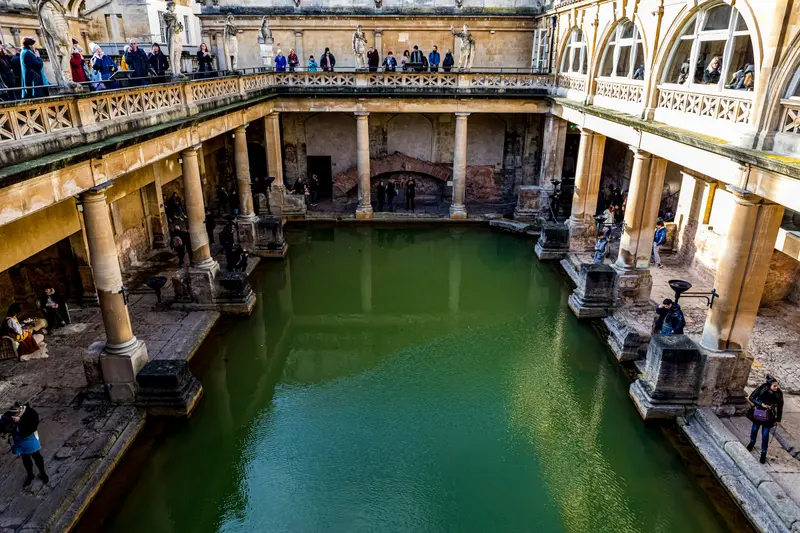
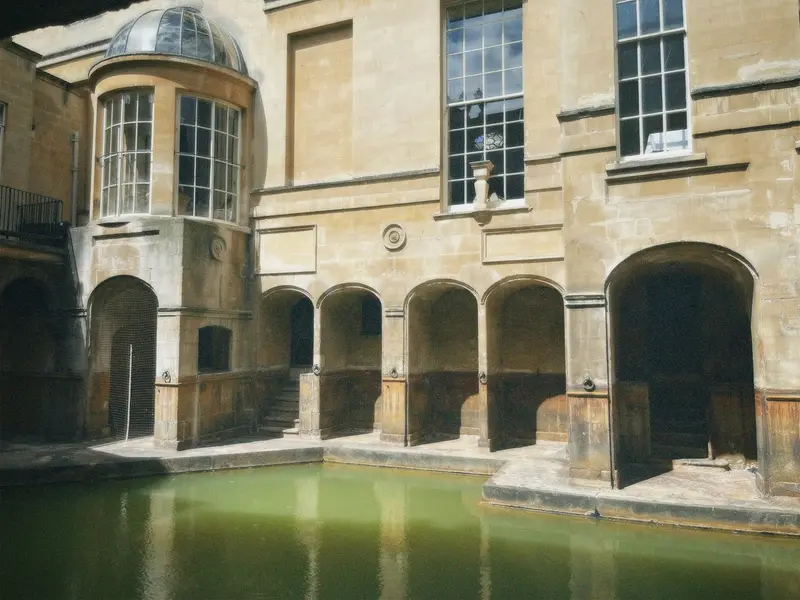
    The Roman Baths comprise Britain's only natural hot springs. The Romans began construction in the 60s or 70s AD and expanded the complex for about 300 years; the buildings above date from the 18th century. Adjacent is the Pump Room on the site of a Roman Temple of Minerva.Admission: Adults from November 1 to December 18, 2026: advance booking weekdays £23.50, weekends £26.50; at the door £2 more; guided tours an additional £8.Tip: Booking online in advance is strongly recommended.
    Open in Google Maps
    Bath Abbey

    Julian Herzog / Wikimedia Commons / CC BY 4.0, mod.

    Church

    2Bath Abbey

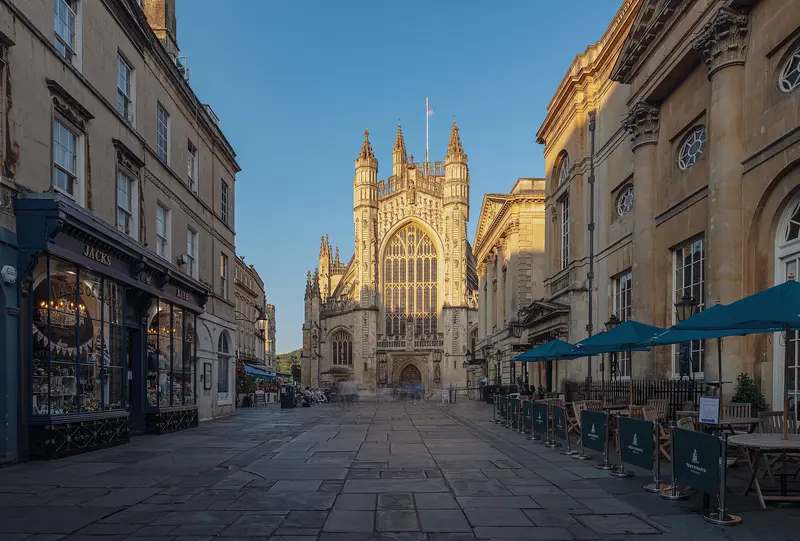
    The Abbey Church next to the Roman Baths stands on the site of an 8th-century church. Bishop Oliver King had it rebuilt from 1500, and it was completed shortly before the dissolution of the Priory in 1539. Its fan vaulting by master builders Robert and William Vertue is famous.
    Open in Google Maps
    Royal Crescent

    Mike Peel / Wikimedia Commons / CC BY-SA 4.0, mod.

    Historic Landmark

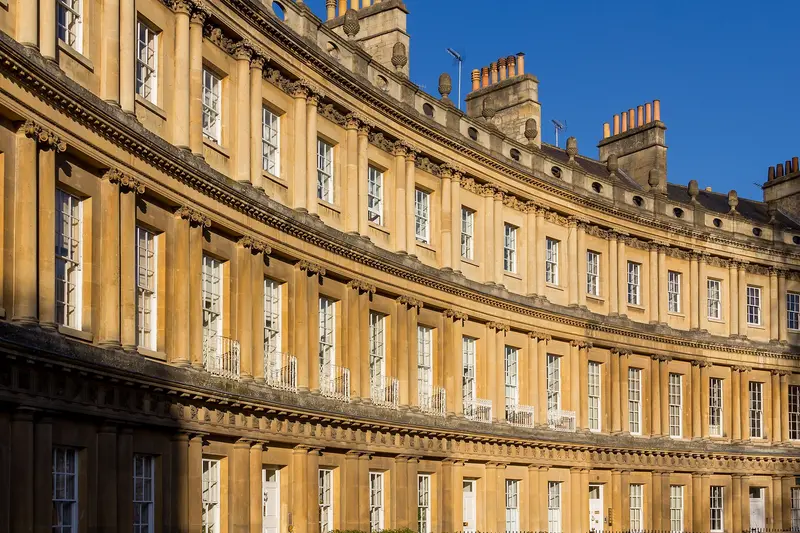
    3Royal Crescent

    The crescent of houses was built from 1767 to 1774, designed by John Wood the Younger. The uniform facade unites around 30 houses, behind which each buyer had their section designed by their own architect. At No. 1 Royal Crescent, a museum has been established.
    Open in Google Maps
    Pulteney Bridge

    Diego Delso / Wikimedia Commons / CC BY-SA 4.0, mod.

    Attraction

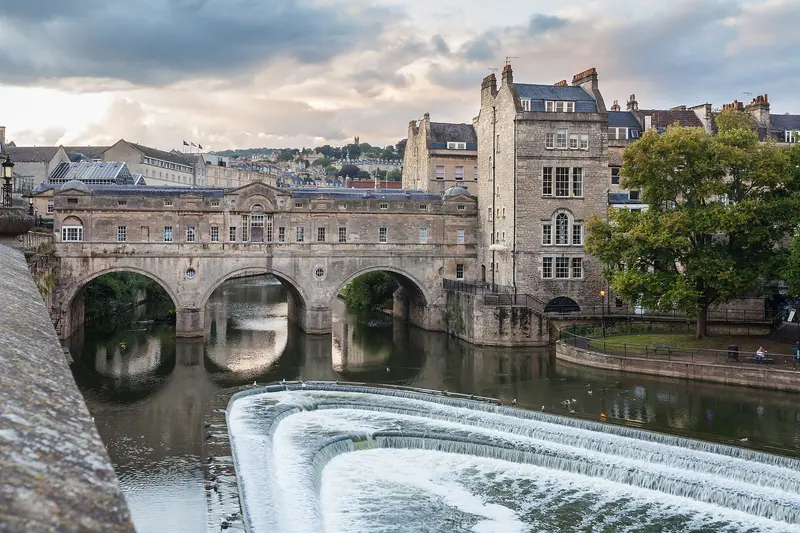
    4Pulteney Bridge

    Robert Adam built the bridge around 1770 with three arches over the Avon. Inspired by a never-realised design by Palladio for the Rialto Bridge, it features shops on both sides and is one of the few surviving bridges of its kind in Europe.
    Open in Google Maps
    The Circus

    “The Circus, Bath - geograph.org.uk - 2220588” by Chris Denny / Wikimedia Commons / CC BY-SA 2.0, mod.

    Historic Landmark

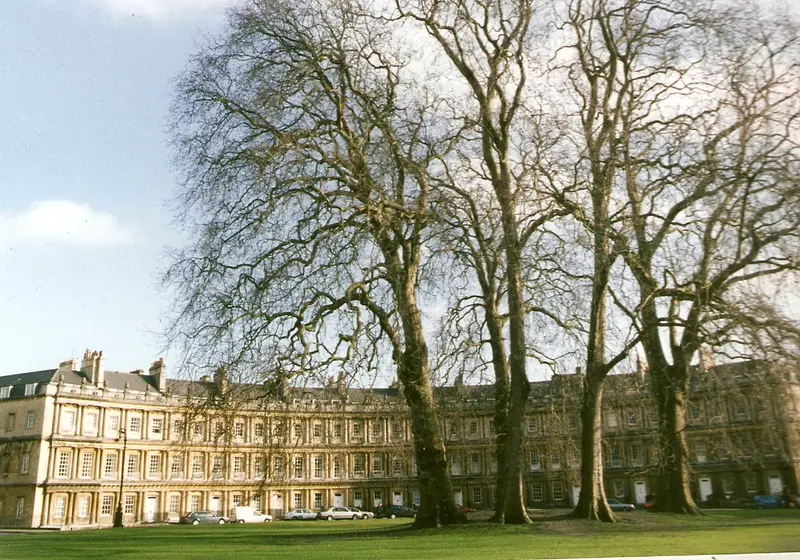
    5The Circus

    Three curved terraces, planned by John Wood the Elder around 1760, form a closed circle, modeled on the Colosseum. Floor by floor, Doric, Ionic, and Corinthian columns ascend.
    Open in Google Maps
    Thermae Bath Spa

    “Thermae Bath Spa rooftop pool” by NH53, Simple Bob / Wikimedia Commons / CC BY 2.0, mod.

    Spa

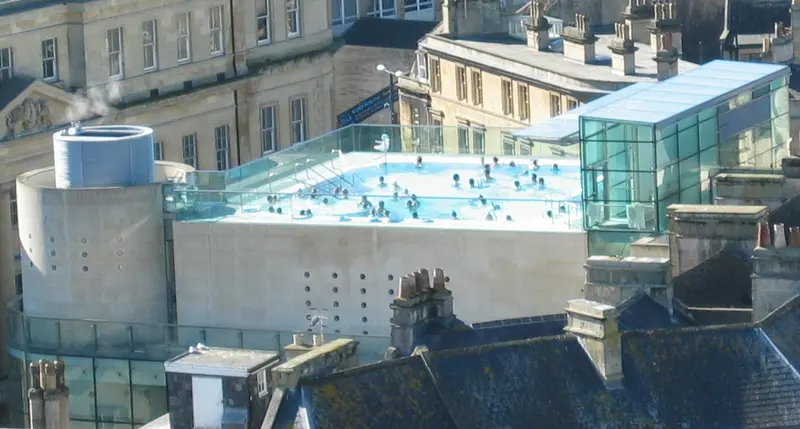
    6Thermae Bath Spa

    In the thermal bath, opened 2006, you can today bathe in Bath's warm spring water, serving the Romans almost 2,000 years ago.
    Open in Google Maps

    Tours & experiences in Bath

    Search tours for Bath on GetYourGuide* (Affiliate link)On GetYourGuide, with reviews from other travellers

    * Affiliate link: if you book through it, we earn a small commission. The price stays the same for you.

    Restaurants in Bath

    1

    The Olive Tree

    The restaurant in the basement of The Queensberry hotel holds a Michelin star (2026 Guide). Head Chef Chris Cleghorn prepares modern cuisine with a distinctive, personal style, according to the Michelin Guide.
    Show on Google Maps
    2

    The Beckford Bottle Shop

    Wine bar with bistro cuisine in Saville Row, awarded a Bib Gourmand by the Michelin Guide. The menu features small dishes and sharing plates in a modern British style.
    Show on Google Maps
    3

    The Chequers

    Gastropub on Rivers Street near the Royal Crescent, Guide Michelin Bib Gourmand. The cuisine blends traditional British dishes with international influences.
    Show on Google Maps

    Culture and History

    Roman City and Spa TownAround the hot springs, the Romans developed a thermal complex that expanded over 300 years. In the 18th century, architects like John Wood the Elder and the Younger, Robert Adam, and Thomas Baldwin made Bath an elegant spa town; dating from this period are the Circus, Royal Crescent, Pulteney Bridge, Pump Room, and Assembly Rooms, which burned down in the 1942 air raids.Bath StoneThe golden-coloured limestone, used to build almost the entire city, came from the mines of Combe Down and Bathampton Down, owned by Ralph Allen. The city has been a UNESCO World Heritage Site since 1987, and since 2021 also part of the “Great Spa Towns of Europe” with eleven spa towns in seven countries.

    Exploring locally

    In the CityThe city centre attractions are close together and easily accessible on foot, from the Abbey Churchyard with its Roman Baths and Abbey to the Royal Crescent.By CarBath has a Clean Air Zone; private cars and motorbikes are exempt (taxis pay). Park & Ride is handier, with three city-edge sites: Newbridge, Odd Down, and Lansdown, open daily. Park free if you bus into town.

    Accommodations in Bath

    Find perfect stay in Bath

    Booking.com* (Affiliate link)
    Search Hotels
    Agoda* (Affiliate link)
    Search Hotels
    Airbnb
    Vacation Rentals

    * Affiliate link: if you book through it, we earn a small commission. The price stays the same for you.

    Campgrounds in Bath

    Find perfect campground in Bath

    Search via Google Maps
    Campgrounds nearby (15km)
    Camping.info
    Find Campgrounds
    Park4Night
    RV Parks & Camping

    Plan your trip to Bath

    Save places, build a route and plan your city trip, all in one place.

    1. 1
      Sunrise over alpine peaks and a sea of clouds
      1234

      Round trip

      12 days · 4 stops

      Saved

      Pick a route

      Pick a ready-made one or save places and plan your own.

      Open bookmarks
    2. 2

      Trip to Bath

      Live
      • 1Roman Baths3 days
      • 2Bath Abbey4 days
      • 3Royal Crescent5 days
      Budget

      Plan your trip

      The planner sorts stops, days and budget. Plan together in real time.

      Start trip planning
    3. 3
      9:41 No signal
      Bath
      Available offline

      Photo by Hulki Okan Tabak on Unsplash

      Use it on the road

      Download the guide to your phone and use it on site, even offline.

    Nearby

    Castle Combe

    Castle Combe

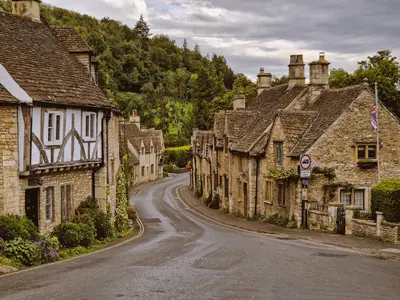
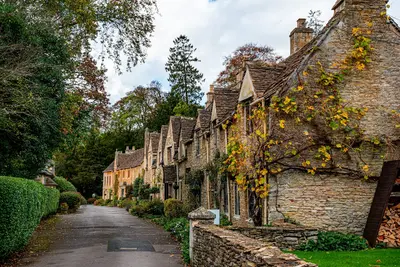
    Castle Combe lies in a wooded valley of the Bybrook on the southern edge of the Cotswolds in Wiltshire, about 20 kilometres north of Bath. The village is small; most houses date from the 14th to 17th centuries, when the place thrived on the cloth trade. Since the decline of this trade, little has changed: There are no new buildings, no power lines above the main street, and no TV aerials on the facades.Sights include the Market Cross, St Andrew's Church with its medieval clock, and the view from the bridge over the Bybrook. The castle that gave the village its name has disappeared, save for its earthworks. The village can be explored in an hour; come early or late, as it's crowded during the day.

    Adrian Limani·Pexels

    Stonehenge and Salisbury

    Stonehenge and Salisbury

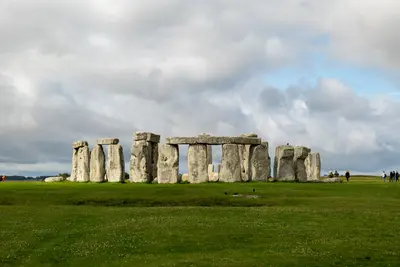
    The prehistoric stone circle of Stonehenge stands on Salisbury Plain in southwest England. By train from London, you can reach nearby Salisbury in just over 1 hour 20 minutes. It was built in several phases: the bank and ditch around 3100 BC, the Sarsen stone circle around 2600 to 2400 BC, and the Bluestones from the Preseli Hills in Wales around 2400 to 2200 BC.Together with Avebury, Stonehenge has been a UNESCO World Heritage site since 1986. The site is aligned with the sunrise at the summer solstice and the sunset at the winter solstice. Salisbury is worth a stop in its own right: its cathedral boasts the tallest church spire in Britain at 123m and preserves one of four surviving original copies of the Magna Carta from 1215.

    Eren Cebeci·Pexels

    Bibury

    Bibury

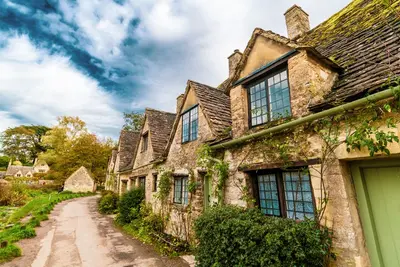
    Bibury is a small village on the River Coln in the southern Cotswolds, about ten kilometres northeast of Cirencester. In the 19th century, the artisan William Morris called it "the most beautiful village in England," a reputation that still draws visitors from across the globe.Its most famous motif is Arlington Row, a row of stone houses built around 1380 as a wool store and converted into weavers' houses in the 17th century. Also featured are the riverside trout farm, St Mary's Church with Anglo-Saxon components, and paths through the river meadows. The village is small and can be explored in an hour; mornings and evenings are the calmest.

    Samuel Sweet·Pexels

    Cardiff

    Cardiff

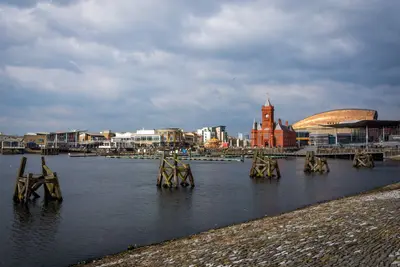
    Cardiff has only been the official capital of Wales since 1955, having been an insignificant coastal town until the 19th century. Coal from the valleys to its north then transformed the city into the world's largest coal port. The Bute family, controlling the docks and mines, was for a time considered Britain's richest family.This wealth is reflected in the opulently designed Cardiff Castle and the Coal Exchange in the Bay, where the first million-pound contract was allegedly signed in 1904. After coal exports ceased, the docks fell into disrepair; since the 1990s, Cardiff Bay has been transformed by a dam into a freshwater basin and revitalized with cultural buildings like the Wales Millennium Centre.The city centre is compact and easily walkable, crisscrossed by covered Victorian shopping arcades. On rugby match days at the Principality Stadium, located right in the city centre, Cardiff becomes a single human tide.

    Balazs Bezeczky·Pexels

    Cotswolds

    Cotswolds

    The Cotswolds are a hilly landscape in southwest England, roughly two hours west of London by car, and the country's largest Area of Outstanding Natural Beauty. They are known for their villages and market towns of honey-coloured limestone, which the medieval wool trade made rich, for dry stone walls, sheep pastures, and country gardens.The most famous places are overcrowded in summer and on weekends. Those who arrive early in the day, walk from village to village, or travel outside of peak season will experience the area much quieter.

    Unsplash

    Your next steps

    Bath is in Great Britain. Ways to carry on from here.

    • More in Great Britain

      Highlights, areas, routes and the best time to travel for all of Great Britain.

      Great Britain travel guide
    • Round trips in Great Britain

      Ready-made routes through Great Britain, with stops, nights and a map.

      See the routes

    Sources & method

    • Photos: Wikimedia Commons, Unsplash, Pexels. Each photo carries its credit.
    • Place data such as addresses and ratings comes from Google Maps.
    • The content is based on web research from public, traceable sources. How the content is made · The role of AI