Fernweh: Home
ExploreGuideDestinationsMy tripsMy trip
de|en
All Places & RegionsRound tripsNight trains in EuropeAll highlightsAbout FernwehFAQPrivacy PolicyImprint
Download on the App StoreGet it on Google Play
ExploreGuideDestinationsMy tripsMy trip
    • Places & highlights
    • Tours
    • Eat & drink
    • Culture
    • Getting around
    • Accommodation
    • Nearby
    Stonehenge and Salisbury

    Photo by Eren Cebeci on Pexels

    Great Britain

    Stonehenge and Salisbury

    Point of InterestCulture

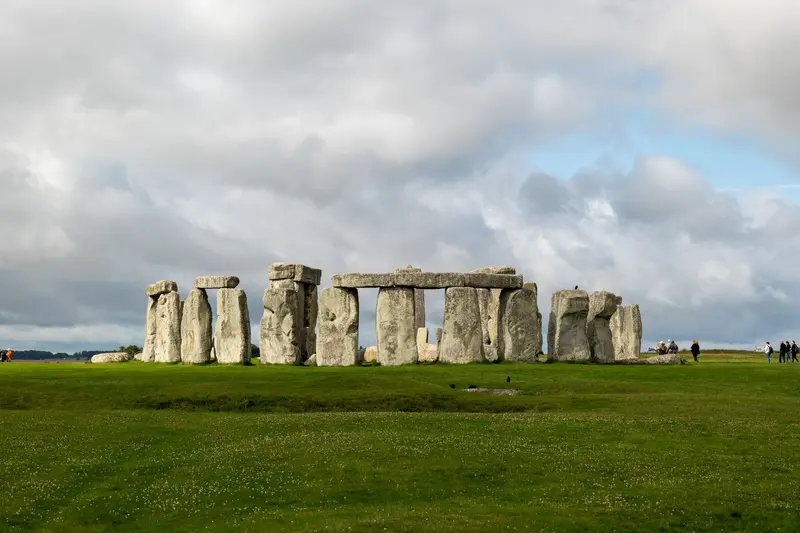
    The prehistoric stone circle of Stonehenge stands on Salisbury Plain in southwest England. By train from London, you can reach nearby Salisbury in just over 1 hour 20 minutes.

    by Felix Gillen

    1. Home
    2. Destinations
    3. Great Britain
    4. Stonehenge and Salisbury
    The prehistoric stone circle of Stonehenge stands on Salisbury Plain in southwest England. By train from London, you can reach nearby Salisbury in just over 1 hour 20 minutes. It was built in several phases: the bank and ditch around 3100 BC, the Sarsen stone circle around 2600 to 2400 BC, and the Bluestones from the Preseli Hills in Wales around 2400 to 2200 BC.Together with Avebury, Stonehenge has been a UNESCO World Heritage site since 1986. The site is aligned with the sunrise at the summer solstice and the sunset at the winter solstice. Salisbury is worth a stop in its own right: its cathedral boasts the tallest church spire in Britain at 123m and preserves one of four surviving original copies of the Magna Carta from 1215.
    Great Britain travel guideRound trips in Great BritainPlan a trip with Stonehenge and Salisbury

    Contents

    • Places & highlights
    • Tours
    • Eat & drink
    • Culture
    • Getting around
    • Accommodation
    • Nearby

    Sights in Stonehenge and Salisbury

    Discover the most important sights and attractions

    Old Sarum

    Charlesdrakew / Wikimedia Commons / public domain

    Castle

    1Old Sarum

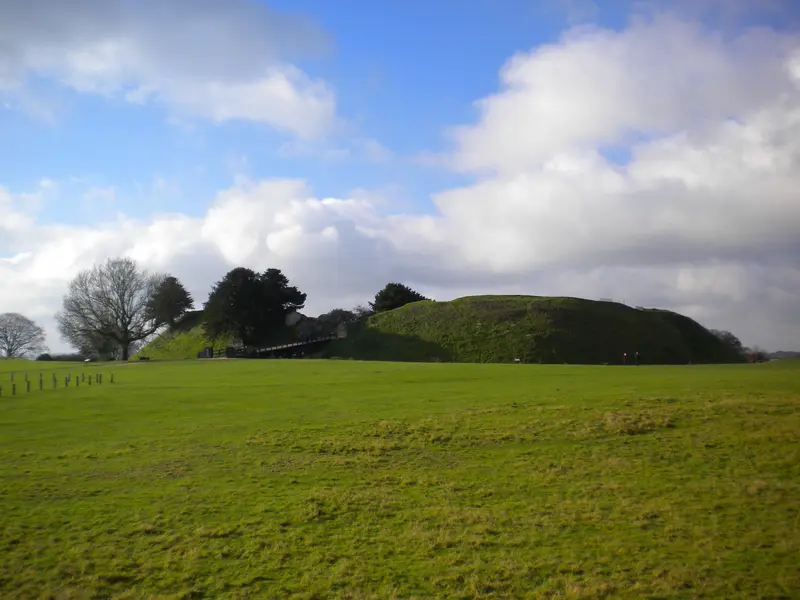
    About 3 km north of Salisbury lies the city's cradle: an Iron Age hill fort from around 400 BC, within it a Norman motte from 1069 and the foundations of the first cathedral, consecrated in 1092. The site became infamous as a 'rotten borough'; in 1831, it had only 11 voters. Managed by English Heritage, admission charged; the Stonehenge Tour Bus stops here.
    Open in Google Maps
    Stonehenge

    Diego Delso / Wikimedia Commons / CC BY-SA 4.0, mod.

    Historic Landmark

    2Stonehenge

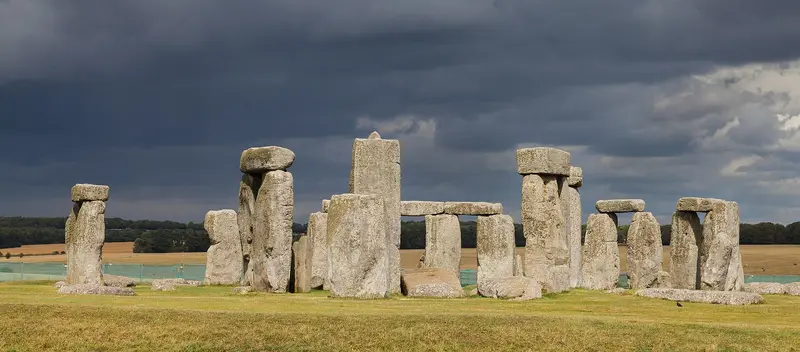
    The stone circle is about 3 km west of Amesbury: Its 25-tonne sarsen stones come from West Woods, 26 km away, while the bluestones originate from Wales' Preseli Hills, 230 km distant. A shuttle bus runs from the visitor centre to the stones in about 10 minutes. Open daily 9:30 AM-5 PM. Timed tickets purchased online by midnight the day before save up to 15%. Busiest times are between 11 AM and 2 PM. For the Winter Solstice on December 22, 2026, the site opens around 1 PM.
    Open in Google Maps
    Salisbury Cathedral

    Diego Delso / Wikimedia Commons / CC BY-SA 4.0, mod.

    Church

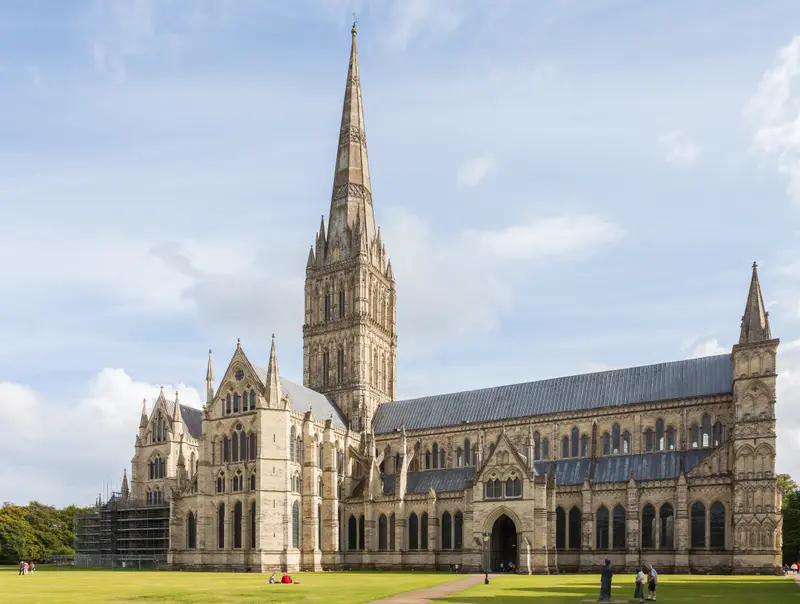
    3Salisbury Cathedral

    The foundation stone was laid on April 28, 1220, the tower and spire were completed by 1330; at 123 m, it is the tallest church spire in Great Britain. The cathedral preserves one of the four surviving originals of the Magna Carta from 1215, the Chapter House was erected from 1263. The mechanical clock from around 1386 is considered the oldest working of its kind, the Cathedral Close is the largest in the country.
    Open in Google Maps
    Historic Landmark

    4Woodhenge and Durrington Walls

    Approximately 3 km northeast of Stonehenge, a timber post circle stood from around 2470 to 2000 BCE, discovered in 1926 via aerial photos; today, concrete markers indicate the postholes. Directly adjacent lies the large Henge of Durrington Walls. A quiet detour if the stone circle's crowds are too much.
    Open in Google Maps

    Tours & experiences in Stonehenge and Salisbury

    Search tours for Stonehenge and Salisbury on GetYourGuide* (Affiliate link)On GetYourGuide, with reviews from other travellers

    * Affiliate link: if you book through it, we earn a small commission. The price stays the same for you.

    Restaurants in Stonehenge and Salisbury

    World Heritage Stone Age

    Construction PhasesAround 3100 BCE, the bank and ditch were created; around 2600 to 2400 BCE, the Sarsen stone circle; around 2400 to 2200 BCE, the Bluestones from Wales were erected. A 2024 study assigned the Altar Stone to the Orcadian Basin in northeast Scotland, approximately 700 km away.Sun and World HeritageThe monument is aligned with the sunrise at the summer solstice and the sunset at the winter solstice. Since 1986, Stonehenge and Avebury together have formed a UNESCO World Heritage site.

    Arrival, Tickets and Tips

    ArrivalBy train from London to Salisbury in about 1 hour 20 to 1 hour 40 minutes, with around 60 services per day.From Salisbury, the Stonehenge Tour Bus runs from the city centre and train station via Old Sarum to the Visitor Centre, year-round except 25 and 26 December; combination tickets are available with entry to Stonehenge and the Cathedral.If travelling by car, you must pre-book parking at the Visitor Centre; vehicles parked on the A303 will be towed.TicketsBooking online by midnight the day before saves up to 15%; the time slot indicates your earliest entry.Open daily 9:30 AM to 5 PM; it is busiest between 11 AM and 2 PM.Local AreaAvebury, the world's largest megalithic stone circle, is located approximately 27 km north; the village stands in the middle of the henge, alongside Silbury Hill and West Kennet Long Barrow.

    Accommodations in Stonehenge and Salisbury

    Find perfect stay in Stonehenge and Salisbury

    Booking.com* (Affiliate link)
    Search Hotels
    Agoda* (Affiliate link)
    Search Hotels
    Airbnb
    Vacation Rentals

    * Affiliate link: if you book through it, we earn a small commission. The price stays the same for you.

    Campgrounds in Stonehenge and Salisbury

    Find perfect campground in Stonehenge and Salisbury

    Search via Google Maps
    Campgrounds nearby (15km)
    Camping.info
    Find Campgrounds
    Park4Night
    RV Parks & Camping

    Nearby

    Bath

    Bath

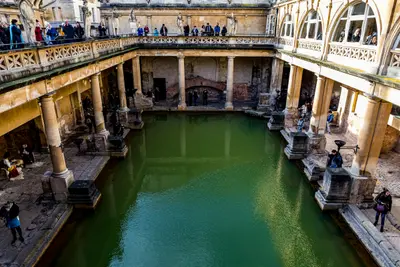
    Bath owes its fame to its hot springs, claimed by the Roman Baths to be Britain's only natural ones. From the 1st century, the Romans built a thermal complex here; by the 18th, it had become an elegant spa town with grand Georgian buildings of golden Bath Stone. The entire city has been a UNESCO World Heritage site since 1987, and since 2021, part of the "Great Spa Towns of Europe". A full day suffices for the Roman Baths, Abbey, Royal Crescent, and Circus.

    Hulki Okan Tabak·Unsplash

    Castle Combe

    Castle Combe

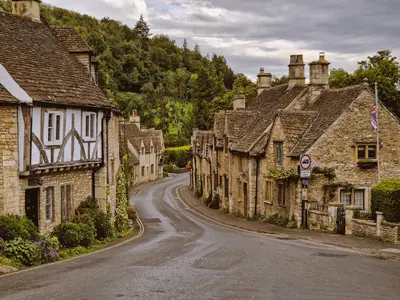
    Castle Combe lies in a wooded valley of the Bybrook on the southern edge of the Cotswolds in Wiltshire, about 20 kilometres north of Bath. The village is small; most houses date from the 14th to 17th centuries, when the place thrived on the cloth trade. Since the decline of this trade, little has changed: There are no new buildings, no power lines above the main street, and no TV aerials on the facades.Sights include the Market Cross, St Andrew's Church with its medieval clock, and the view from the bridge over the Bybrook. The castle that gave the village its name has disappeared, save for its earthworks. The village can be explored in an hour; come early or late, as it's crowded during the day.

    Adrian Limani·Pexels

    Bibury

    Bibury

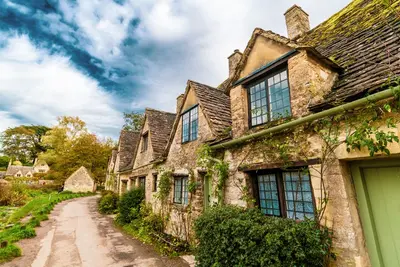
    Bibury is a small village on the River Coln in the southern Cotswolds, about ten kilometres northeast of Cirencester. In the 19th century, the artisan William Morris called it "the most beautiful village in England," a reputation that still draws visitors from across the globe.Its most famous motif is Arlington Row, a row of stone houses built around 1380 as a wool store and converted into weavers' houses in the 17th century. Also featured are the riverside trout farm, St Mary's Church with Anglo-Saxon components, and paths through the river meadows. The village is small and can be explored in an hour; mornings and evenings are the calmest.

    Samuel Sweet·Pexels

    Portsmouth

    Portsmouth

    Portsmouth has been home to the Royal Navy for centuries. At the Historic Dockyard, you'll find Nelson's flagship HMS Victory, the ironclad HMS Warrior, and the remains of the Tudor-era Mary Rose.Next door, the Spinnaker Tower soars above Gunwharf Quays, and in Old Portsmouth, you can walk along the old fortifications at the harbour entrance.

    Sebastien Devocelle·Pexels

    Isle of Wight

    Isle of Wight

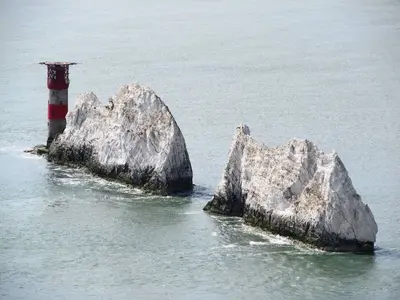
    The Isle of Wight lies off the coast of Hampshire, separated from the mainland by the Solent strait. Across roughly 380 square kilometres, you'll find chalk cliffs like the Needles, sandy beaches in the east, a wild southwest coast with dinosaur finds, and Victorian seaside resorts like Ryde, Shanklin, and Ventnor.Depending on the route, ferries take ten to sixty minutes. The island can be easily explored without a car, by bus, bike, or on foot along the coastal path.

    London Aaga Bits - LAB·Pexels

    Your next steps

    Stonehenge and Salisbury is in Great Britain. Ways to carry on from here.

    • More in Great Britain

      Highlights, areas, routes and the best time to travel for all of Great Britain.

      Great Britain travel guide
    • Round trips in Great Britain

      Ready-made routes through Great Britain, with stops, nights and a map.

      See the routes
    • Plan a trip with Stonehenge and Salisbury

      The Guide asks about season, length and who is coming, and suggests a trip with Stonehenge and Salisbury.

      Plan the trip

    Sources & method

    • Photos: Wikimedia Commons, Pexels. Each photo carries its credit.
    • Place data such as addresses and ratings comes from Google Maps.
    • The content is based on web research from public, traceable sources. How the content is made · The role of AI