Fernweh
    ExploreTravel GuidesMy Trips
    de|en
    All Places & RegionsAbout FernwehImprintFAQPrivacy Policy
    ExploreTravel GuidesMy Trips
    Castle Combe

    Castle Combe

    CityCulture
    1. Home
    2. Destinations
    3. Great Britain
    4. Cotswolds
    5. Castle Combe
    Castle Combe, often hailed as one of England's most beautiful villages, is nestled in the Cotswolds and captivates with its unspoiled aesthetic. Here you'll find historic stone houses that blend harmoniously into the landscape, and the River Bybrook gently winding through the valley. Main attractions include the historic 14th-century Market Cross and St. Andrew's Church with its unique faceless clock tower. The village has preserved its character for centuries, having been a wool trade hub from the 17th to 19th centuries and later largely spared from modern developments. Explore the narrow lanes and discover small bridges that define the village's charm. For a peaceful experience, a visit outside peak season is recommended, ideally on a weekday morning. Parking is limited, so early arrival or using public transport is advisable.
    • Neighborhoods & highlights
    • Eat & drink
    • Food culture
    • Culture
    • Getting around
    • Excursions
    • Accommodation
    • Plan trip
    • Nearby
    • Neighborhoods & highlights
    • Eat & drink
    • Food culture
    • Culture
    • Getting around
    • Excursions
    • Accommodation
    • Plan trip
    • Nearby

    Overview

    Castle Combe, nestled in the picturesque Cotswolds, is a remarkably well-preserved English village. You'll find a collection of historic stone houses whose traditional design blends harmoniously into the Bybrook river valley. Key attractions include the 14th-century Market Cross in the village centre and St. Andrew's Church, famed for its unusual faceless clock tower. The village was once a significant wool trade hub from the 17th to 19th centuries, its present charm largely due to being untouched by modern development. Explore the narrow lanes winding around the central square, and discover the small bridges crossing the Bybrook. For a quieter experience, visit outside peak season, ideally on a weekday morning, as village parking is limited.

    Places in Castle Combe

    Discover the most important sights and attractions

    Sights in Castle Combe

    Castle Combe - Water Lane

    Castle Combe - Water Lane

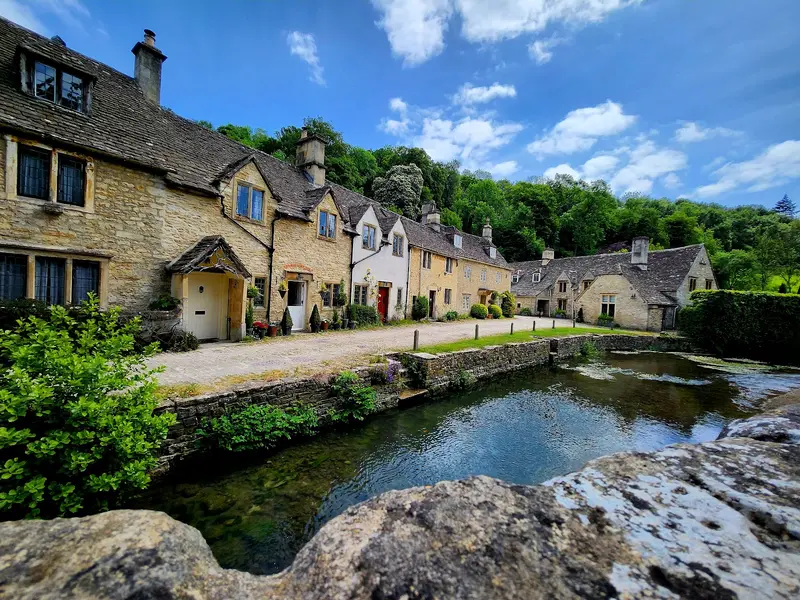
    Water Lane in Castle Combe is an iconic spot in this picturesque village, often called one of England's most beautiful. Here you experience the quintessential Cotswolds architecture and landscape. Water Lane leads you to a historic stone bridge spanning the small River Bybrook.From this vantage point, a classic view of the village unfolds, with its honey-coloured stone houses nestling gently into the hillside, and the distinctive church spire rising above the rooftops. The significance of this location lies in its remarkable preservation. Castle Combe has maintained its traditional character for centuries, free from modern interventions that would disturb its historic appearance.Water Lane is a testament to this timelessness and a popular spot for photographers and visitors wanting to capture the idyllic atmosphere of a traditional English village. Here you can enjoy the tranquility and admire the carefully preserved details of the old architecture that make the village so unique. It is a place that impressively reflects the history and charm of the region.
    Open in Google Maps
    St Andrew's Church

    St Andrew's Church

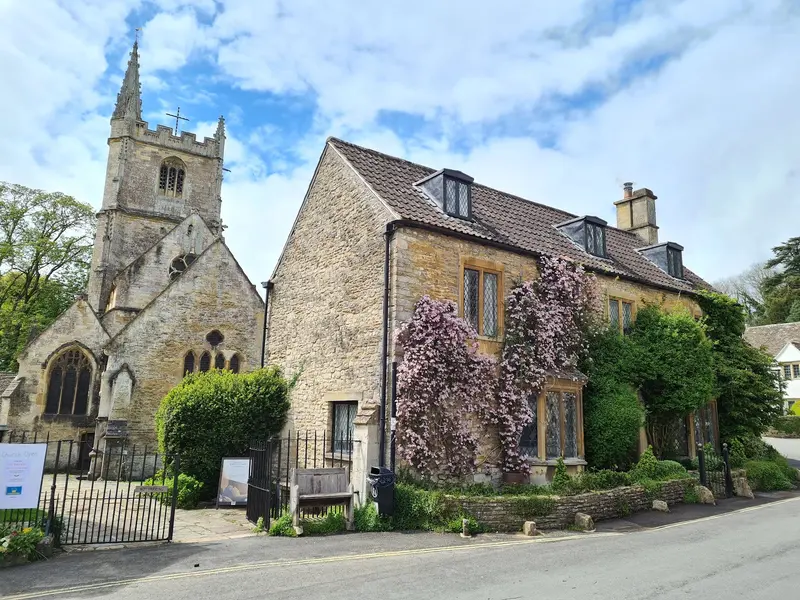
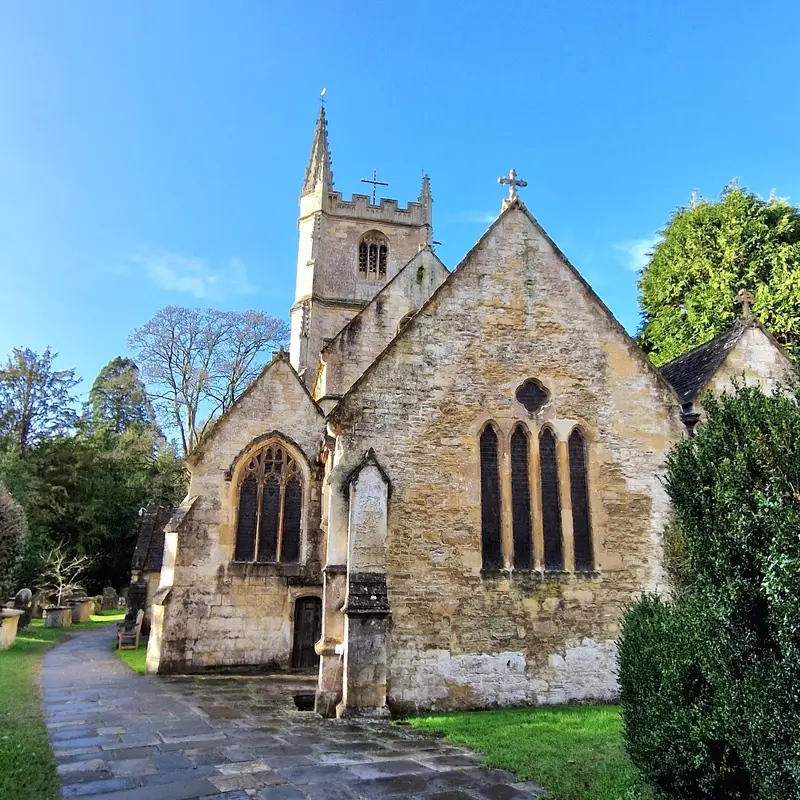
    St Andrew's Church is an integral part of the picturesque village of Castle Combe. Here you'll find a historic building that has evolved over centuries, harmoniously blending various architectural styles. Particularly noteworthy is the baptismal font, whose origins trace back to the Norman period, making it an early testament to the church's history. Inside, a tranquil atmosphere awaits, where you can admire the meticulously crafted details of its furnishings. The church also houses a remarkable historic clock, considered one of the oldest working clocks in Great Britain. The surrounding churchyard, with its old gravestones and a prominent stone cross, invites contemplation and offers charming views of the traditional village architecture. St Andrew's Church serves not only as a place of worship but also as a significant cultural heritage, reflecting the village's long and rich history.
    Open in Google Maps
    The Market Cross

    The Market Cross

    The Market Cross in Castle Combe is a central landmark, highlighting the village's historical importance as a trading hub. These market crosses served as crucial meeting points for local trade and public announcements in medieval England. You will find this striking stone structure at the heart of the village, where bustling activity once took place. It stands as a characteristic example of its architectural style, reflecting the economic activity that shaped Castle Combe. Visitors can admire its well-preserved structure and soak in the atmosphere of a historic marketplace. The Market Cross is an integral part of Castle Combe's picturesque ensemble, a village renowned for its unspoiled beauty and well-preserved historical fabric.
    Open in Google Maps

    Restaurants in Castle Combe

    Food & Drink

    The culinary scene in Castle Combe focuses on traditional English cuisine, which you primarily experience in the village's historic pubs. Here you'll enjoy hearty classics and local specialties, often prepared with fresh regional ingredients that perfectly complement the rural character of the Cotswolds.

    Local specialities

    In Castle Combe you'll find local restaurants, cafés and markets with regional specialities. Taste your way through the dishes typical of the region.

    Castle Combe: History, Architecture, and Traditions

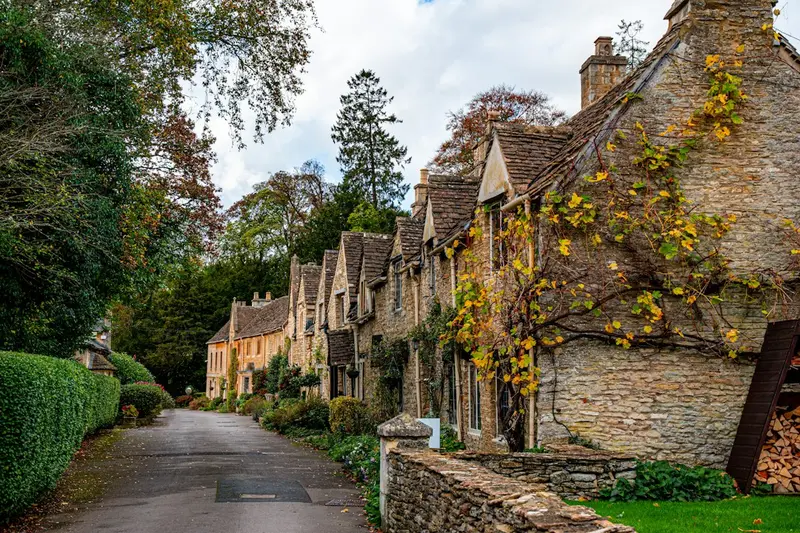
    Castle Combe represents an exceptionally well-preserved medieval village in the Cotswolds, with historical roots dating back to Anglo-Saxon times. After the Norman Conquest, a castle was built, whose remnants underscore the strategic importance of the location. The village experienced its heyday during the wool trade era from the 14th to the 17th century, growing into a prosperous market town and acquiring its characteristic building stock.The village's architecture is significantly shaped by the local, golden-hued Cotswold stone, which lends the buildings their unmistakable aesthetic. Typical features include slate or thatch roofs, intricate stonework, and the harmonious integration of the structures into the surrounding landscape. Of particular note are St. Andrew's Church, with its Norman origins and later extensions, and the historic Market Cross, which recalls Castle Combe's former importance as a trading hub. The luxurious Manor House, once the seat of the village lords, also ranks among the architectural highlights.A special cultural characteristic of Castle Combe is its almost complete preservation from modern development, which makes the village a living open-air museum. This has made it an extremely popular filming location for historical films and television series, solidifying its reputation as "the prettiest village in England." Its small size and the respectful approach to its historical heritage ensure that old traditions, even if not explicitly celebrated as festivals, continue to thrive within the untouched village structure and its unhurried way of life.

    Getting around here

    In Castle Combe, one of the **most picturesque villages** in the Cotswolds, getting around is relaxed and quaint; urban transport such as metro or tram is naturally non-existent here. The village is a paradise for **pedestrians**, as all sights and charming corners can be effortlessly and best explored on foot to fully soak in the idyllic atmosphere. Public bus connections are extremely limited and irregular, primarily serving as links to nearby towns like Chippenham, making precise advance planning essential and rendering special tickets or apps hardly practical.For exploring the **surrounding landscape**, a bicycle is an excellent choice, whereas e-scooters are not relevant to village life. Taxis can be ordered from larger towns such as Bath or Chippenham, but ride-sharing services are quite rare in this rural area. The greatest **flexibility** is offered by your own car, though the historic centre is car-free and parking can be found on the village outskirts. Experience Castle Combe best on foot to fully appreciate its timeless charm.

    Excursions & Activities

    Recommended activities

    Around Castle Combe there are rewarding day trips and activities – from sights and nature to the surrounding area.

    Accommodations in Castle Combe

    Accommodation

    Places to stay

    In and around Castle Combe there are places to stay across different categories and price ranges – from simple to comfortable.

    Accommodations in Castle Combe

    Find perfect stay in Castle Combe

    Booking.com
    Search Hotels
    Agoda
    Search Hotels
    Airbnb
    Vacation Rentals
    Hotels.com
    Hotels Worldwide
    Hostelworld
    Hostels

    Campgrounds in Castle Combe

    Find perfect campground in Castle Combe

    Search via Google Maps
    Campgrounds nearby (15km)
    Camping.info
    Find Campgrounds
    Park4Night
    RV Parks & Camping

    Plan your trip to Castle Combe

    Save places, build a route and plan your city trip — all in one place.

    Save places

    Bookmark sights, restaurants and neighborhoods you're interested in.

    Build your route

    Turn your bookmarks into a route — define order, days and budget.

    Refine with AI

    Let Mein Fernweh suggest experiences and put together a tailored daily plan.

    Start trip planningOpen bookmarks

    Locations nearby

    These places are nearby — perfect for additional days or a day trip.

    Bibury

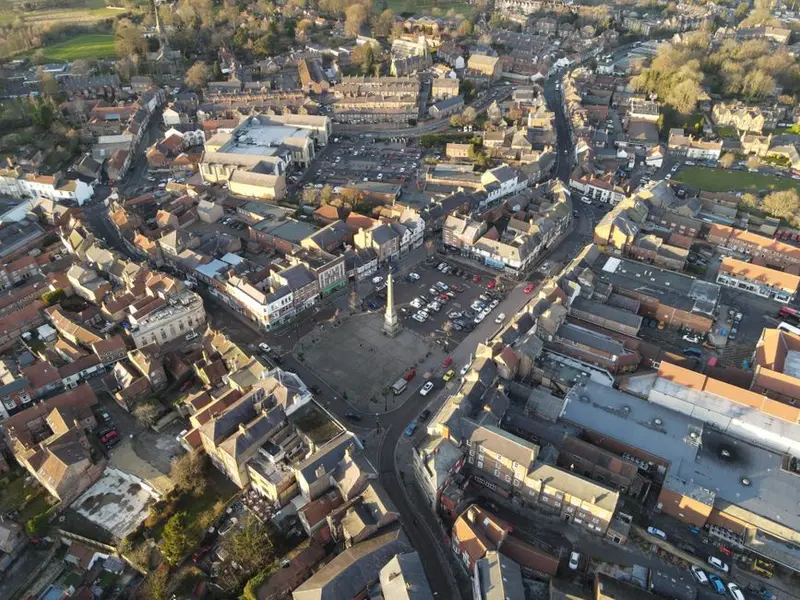
    Bibury

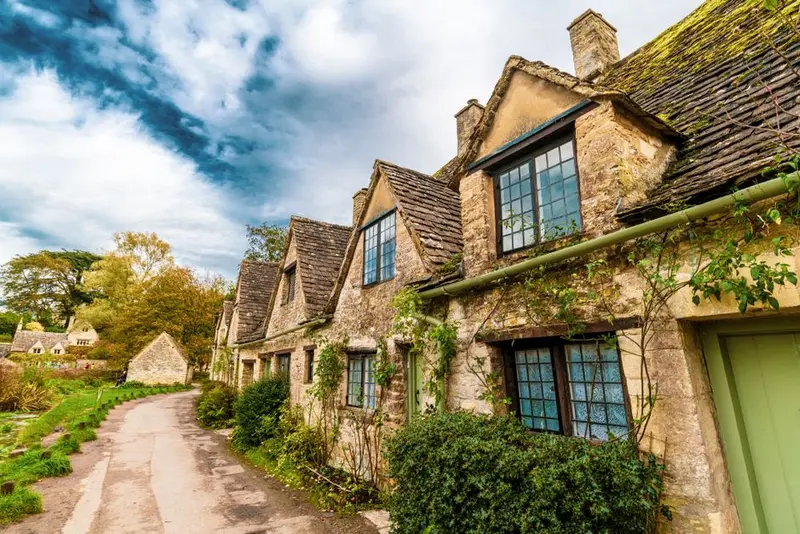
    Bibury, located in the heart of the Cotswolds, is considered the epitome of a traditional English village. Here you will find the world-famous Arlington Row, a picturesque row of 17th-century stone cottages that once served as weavers' cottages and are now a national monument. The idyllic River Coln flows gently through the village and feeds the historic Bibury Trout Farm, one of Britain's oldest fish farms. The architecture reflects the region's rich history, with St. Mary's Church serving as further testament to its Anglo-Saxon origins. For an authentic experience away from the largest crowds, a visit in the early morning hours or outside the summer months is recommended. A stroll along the river offers insights into the pristine nature and rural culture of this special place.
    Cotswolds

    Cotswolds

    The Cotswolds, a region of exceptional natural beauty in Southwest England, enchant you with their gentle, green hills and picturesque villages of honey-coloured stone. This idyllic landscape is the perfect place to escape daily life and enjoy British rural romance to the fullest.
    Bourton-on-the-Water

    Bourton-on-the-Water

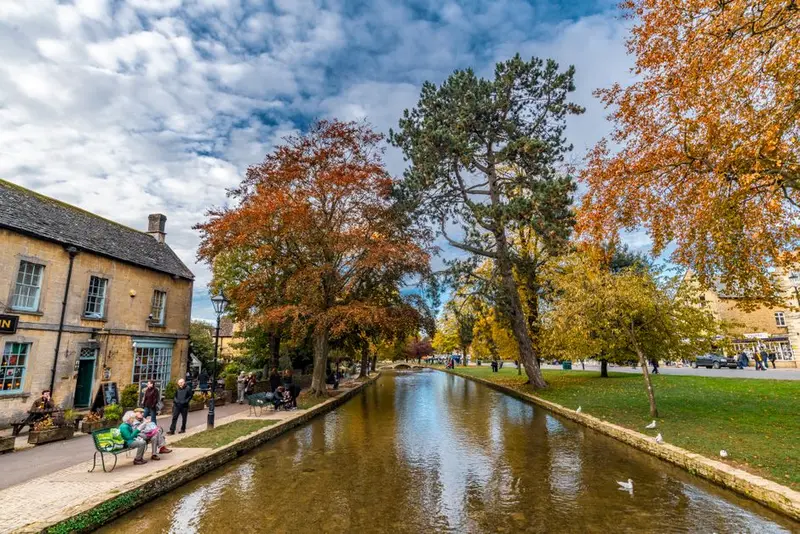
    Bourton-on-the-Water, often known as "the Venice of the Cotswolds," captivates with the gently flowing River Windrush and its low stone bridges. This picturesque village in Gloucestershire presents an English idyll with its honey-coloured Cotswold stone houses. Visit the Cotswold Motoring Museum with its historic vehicle collection and the meticulously detailed Model Village. Stroll along the river and through the alleys, where you'll find charming tea rooms and traditional shops. The Birdland Park and Gardens also offers a variety of exotic birds. To enjoy the tranquility of the place, a visit in spring or autumn is recommended; come early in the morning to avoid the crowds.
    Stow-on-the-Wold

    Stow-on-the-Wold

    Perched on a hill, Stow-on-the-Wold is a historic market town with a large market square, old inns, and a unique door in the church.
    Chipping Campden

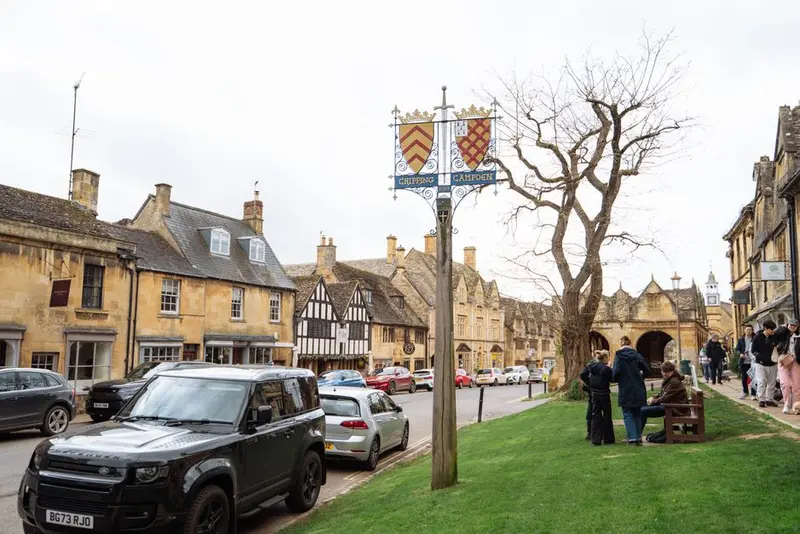
    Chipping Campden

    Chipping Campden, a jewel of the Cotswolds, captivates with its historic High Street and characteristic honey-coloured stone houses. Its centrepiece is the historic 17th-century Market Hall, a testament to the once flourishing wool trade era. The impressive St. James' Church with its magnificent bell tower and the picturesque Almshouses are other key sights you shouldn't miss. The town was a centre of the wool trade in the Middle Ages and later an important hub for the Arts and Crafts movement, whose legacy is reflected in many details. You can perfectly explore the surroundings on the Cotswold Way, which leads directly through the town. A visit in late spring or early autumn is ideal to avoid the crowds and experience the gardens in their full glory.