Fernweh
    ExploreTravel GuidesMy Trips
    de|en
    All Places & RegionsAbout FernwehImprintFAQPrivacy Policy
    ExploreTravel GuidesMy Trips
    Cotswolds

    Cotswolds

    Region
    1. Home
    2. Destinations
    3. Great Britain
    4. Cotswolds
    The Cotswolds, a region of exceptional natural beauty in Southwest England, enchant you with their gentle, green hills and picturesque villages of honey-coloured stone. This idyllic landscape is the perfect place to escape daily life and enjoy British rural romance to the fullest.
    • Overview
    • Places in the region
    • Eat & drink
    • Food culture
    • Culture
    • Getting around
    • Excursions
    • Accommodation
    • Nearby
    • Overview
    • Places in the region
    • Eat & drink
    • Food culture
    • Culture
    • Getting around
    • Excursions
    • Accommodation
    • Nearby
    The Cotswolds, an 'Area of Outstanding Natural Beauty' in Southwest England, are renowned for their rolling hills and honey-coloured limestone villages. The region was shaped by its historical wool trade, visible in the architecture of its market towns and churches. Visit Bibury with Arlington Row, Bourton-on-the-Water, and Chipping Campden for an authentic feel. A rental car is essential for flexible exploration of the expansive landscape, gardens, and pubs. Spring or autumn is ideal for enjoying the nature without the summer tourist crowds.

    Places in Cotswolds

    Bibury

    Bibury

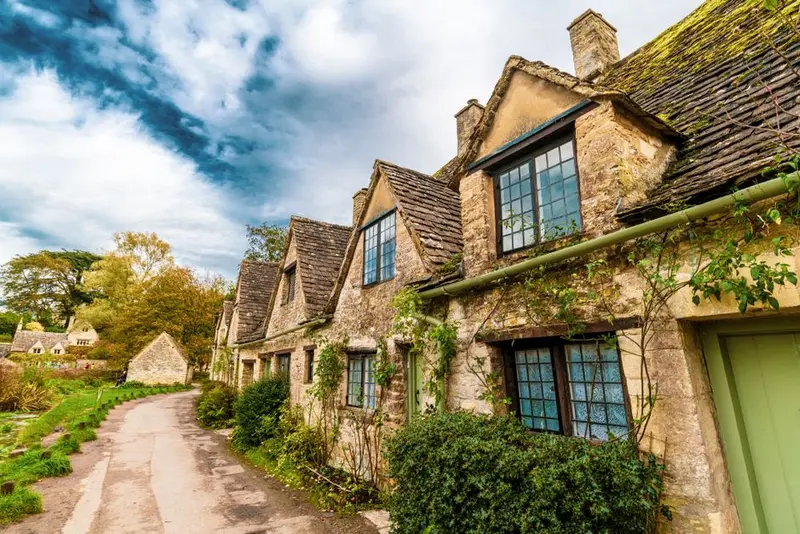
    Bibury, located in the heart of the Cotswolds, is considered the epitome of a traditional English village. Here you will find the world-famous Arlington Row, a picturesque row of 17th-century stone cottages that once served as weavers' cottages and are now a national monument. The idyllic River Coln flows gently through the village and feeds the historic Bibury Trout Farm, one of Britain's oldest fish farms. The architecture reflects the region's rich history, with St. Mary's Church serving as further testament to its Anglo-Saxon origins. For an authentic experience away from the largest crowds, a visit in the early morning hours or outside the summer months is recommended. A stroll along the river offers insights into the pristine nature and rural culture of this special place.
    Bourton-on-the-Water

    Bourton-on-the-Water

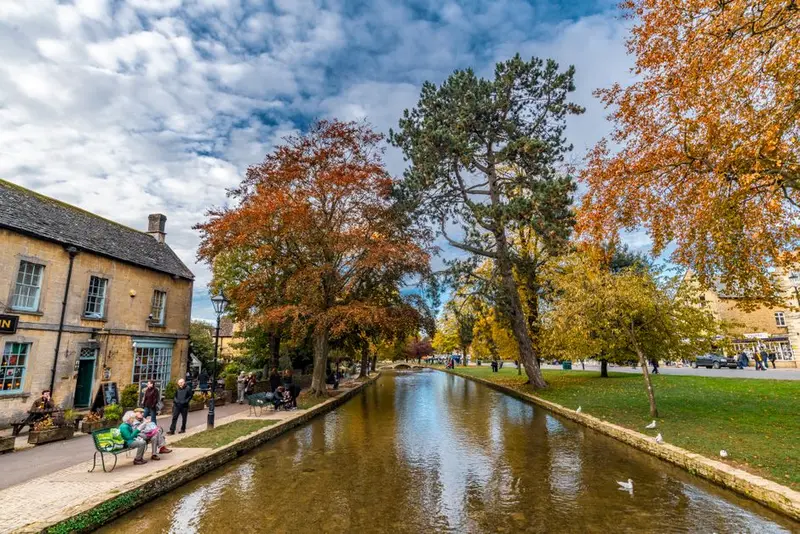
    Bourton-on-the-Water, often known as "the Venice of the Cotswolds," captivates with the gently flowing River Windrush and its low stone bridges. This picturesque village in Gloucestershire presents an English idyll with its honey-coloured Cotswold stone houses. Visit the Cotswold Motoring Museum with its historic vehicle collection and the meticulously detailed Model Village. Stroll along the river and through the alleys, where you'll find charming tea rooms and traditional shops. The Birdland Park and Gardens also offers a variety of exotic birds. To enjoy the tranquility of the place, a visit in spring or autumn is recommended; come early in the morning to avoid the crowds.
    Castle Combe

    Castle Combe

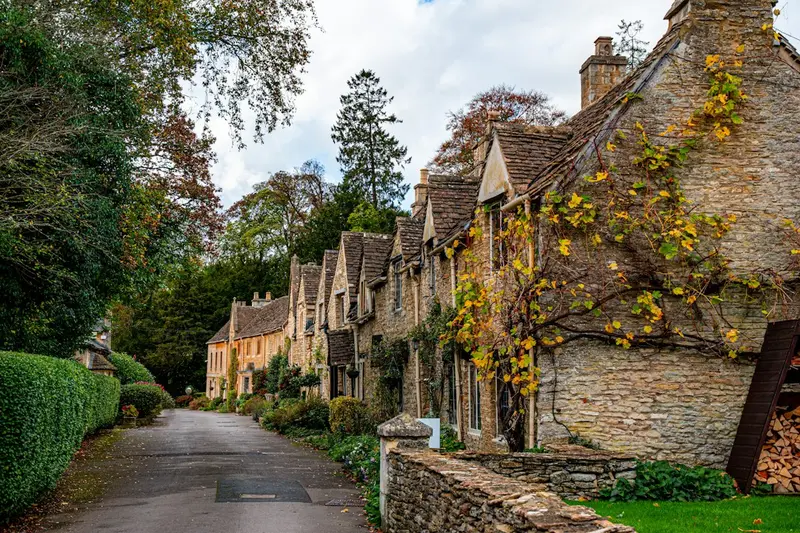
    Castle Combe, often hailed as one of England's most beautiful villages, is nestled in the Cotswolds and captivates with its unspoiled aesthetic. Here you'll find historic stone houses that blend harmoniously into the landscape, and the River Bybrook gently winding through the valley. Main attractions include the historic 14th-century Market Cross and St. Andrew's Church with its unique faceless clock tower. The village has preserved its character for centuries, having been a wool trade hub from the 17th to 19th centuries and later largely spared from modern developments. Explore the narrow lanes and discover small bridges that define the village's charm. For a peaceful experience, a visit outside peak season is recommended, ideally on a weekday morning. Parking is limited, so early arrival or using public transport is advisable.
    Chipping Campden

    Chipping Campden

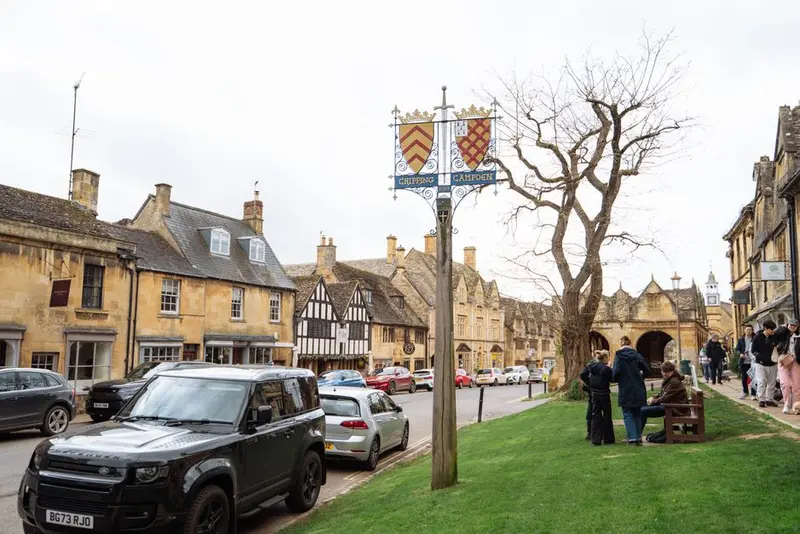
    Chipping Campden, a jewel of the Cotswolds, captivates with its historic High Street and characteristic honey-coloured stone houses. Its centrepiece is the historic 17th-century Market Hall, a testament to the once flourishing wool trade era. The impressive St. James' Church with its magnificent bell tower and the picturesque Almshouses are other key sights you shouldn't miss. The town was a centre of the wool trade in the Middle Ages and later an important hub for the Arts and Crafts movement, whose legacy is reflected in many details. You can perfectly explore the surroundings on the Cotswold Way, which leads directly through the town. A visit in late spring or early autumn is ideal to avoid the crowds and experience the gardens in their full glory.
    Stow-on-the-Wold

    Stow-on-the-Wold

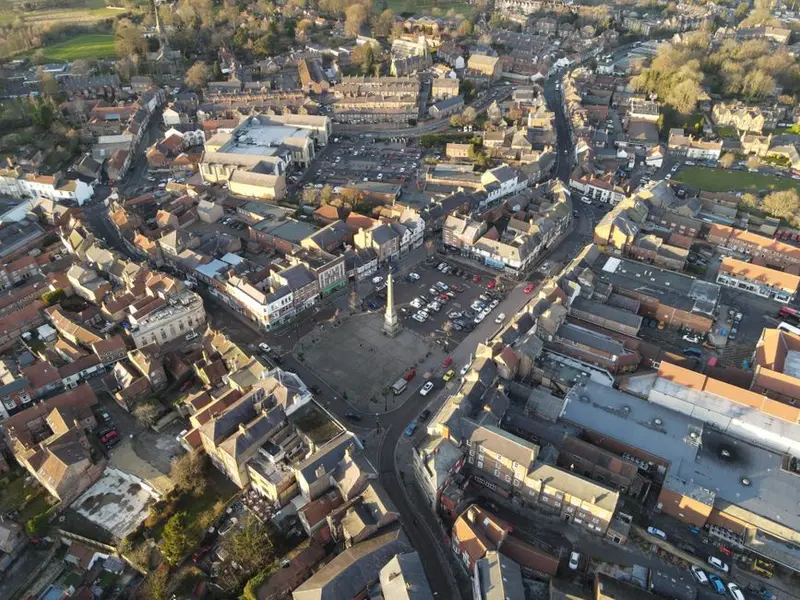
    Perched on a hill, Stow-on-the-Wold is a historic market town with a large market square, old inns, and a unique door in the church.

    Sights in Cotswolds

    Discover the most important sights and attractions

    Church of St Peter and St Paul, Northleach

    Church of St Peter and St Paul, Northleach

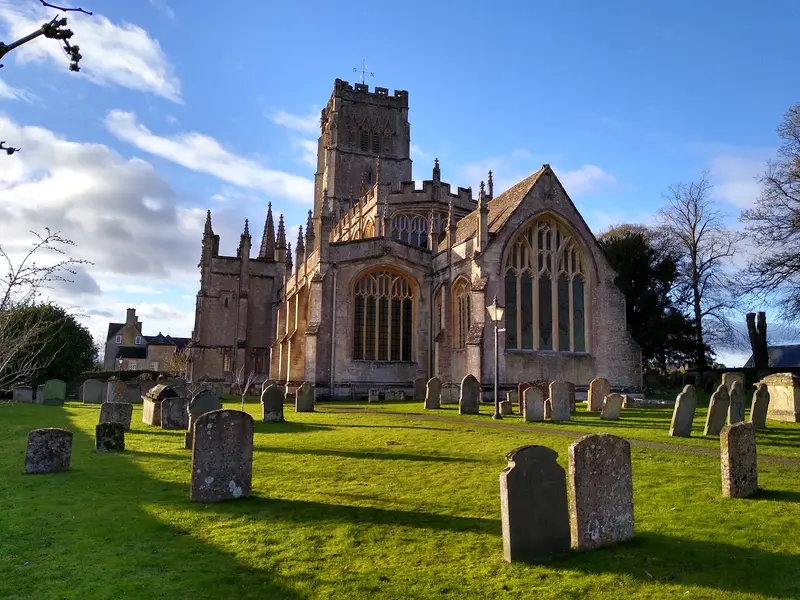
    The Church of St Peter and St Paul in Northleach is an outstanding example of a so-called wool church in the Cotswolds. These imposing sacred buildings bear witness to the former wealth generated by the flourishing medieval wool trade in this region. They were often financed by prosperous wool merchants whose donations made their construction and furnishing possible.Here you'll find impressive architecture typical of the Late Gothic period, often with a focus on the so-called Perpendicular Style. Characteristic features include the large, light-filled windows that illuminate the interior, and the intricate stonework you can admire on the facades and inside. Within the church, you can often discover historical gravestones and brass effigies, commemorating former benefactors and important community figures. The spacious nave and tall tower highlight the place's former significance. A visit offers a deep insight into the local history and economic development of the Cotswolds.
    Open in Google Maps
    Broadway Tower

    Broadway Tower

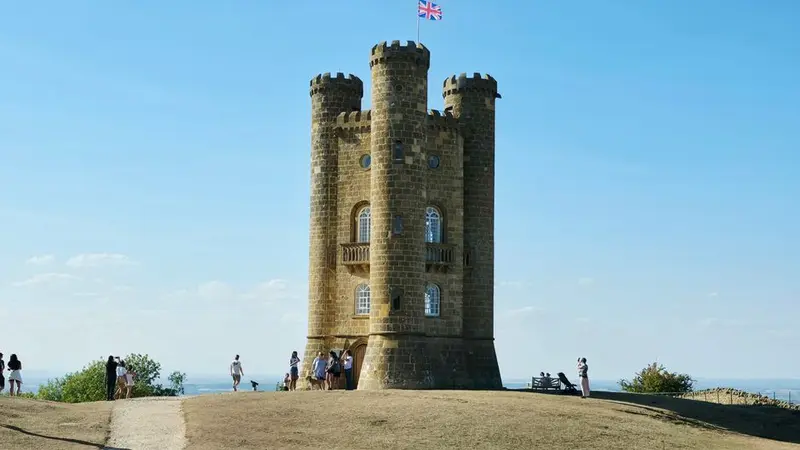
    The Broadway Tower stands on Broadway Hill, at 312 metres the second-highest point in the Cotswolds. It is a folly, meaning a structure without practical purpose: Capability Brown designed it; it was erected in 1798 for the Countess of Coventry, who wanted to know if a beacon on this hill could be seen from her estate 35 kilometres away. It could.The tower, styled like a Norman castle, later served William Morris as a retreat; parts of his considerations on heritage preservation were developed here. From the rooftop platform, on clear days, the view extends over up to 16 counties. In the surrounding parkland, red deer and Ardennes horses graze, alongside a preserved Royal Observer Corps nuclear bunker from the Cold War.
    Open in Google Maps

    Sudeley Castle

    Sudeley Castle near Winchcombe is England's only private estate on whose grounds an English queen is buried: Katherine Parr, Henry VIII's sixth wife, died here in 1548 and rests in St Mary's Chapel.The estate, built of honey-coloured Cotswold stone, was razed during the Civil War and lay in ruins for two centuries before the Dent brothers restored it starting in 1837. The contrast remains: The ruins of the Tithe Barn stand as open stonework next to the inhabited wings. Several distinctly designed gardens surround the house, including the Queen's Garden, framed by yew hedges and featuring old rose varieties.
    Open in Google Maps
    Blenheim Palace

    Blenheim Palace

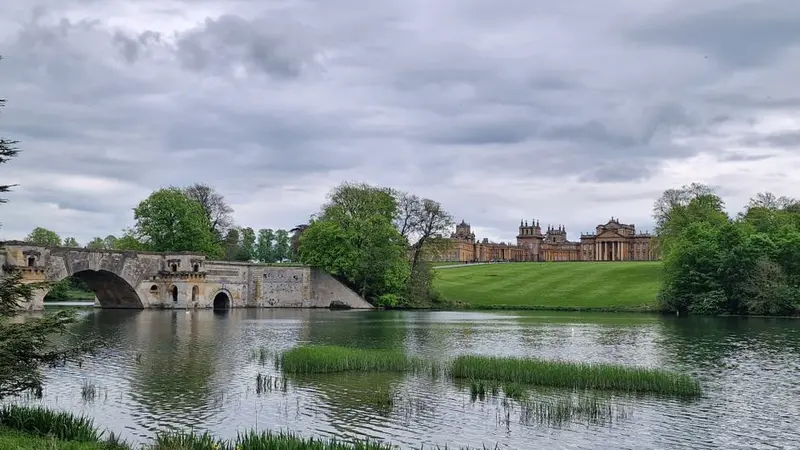
    Blenheim Palace, located near Woodstock on the eastern edge of the Cotswolds, stands as England's sole country house to bear the title of 'Palace' without having served as a royal or episcopal residence. Parliament presented it to the first Duke of Marlborough following his decisive victory over French and Bavarian forces at Blindheim in 1704, an event from which its distinctive name is derived.John Vanbrugh conceived it as a monument, designed in the form of a grand dwelling. Predictably, its monumental scale rendered it rather unhomely, leading to considerable and fierce disputes between the patron and the Duchess. The extensive parkland was crafted by Capability Brown, who ingeniously dammed the Glyme valley to create a magnificent lake. Winston Churchill was born here in 1874; a permanent exhibition commemorates his life. The entire estate has been inscribed on the World Heritage List since 1987.
    Open in Google Maps

    Chedworth Roman Villa

    The Roman Villa of Chedworth, hidden in a wooded Cotswolds valley, is among the largest of its kind in Britannia. In 1864, a gamekeeper digging for a ferret unearthed mosaic stones, triggering its excavation.Surviving are floor mosaics with seasonal depictions, two bath suites with hot and cold baths, and the underfloor heating hypocausts. A modern protective structure spans the most sensitive areas, with walkways leading over them. Recent finds suggest parts of the villa were still in use in the 5th century, well after Roman rule ended. The Nymphaeum spring on the slope watered the complex.
    Open in Google Maps

    Restaurants in Cotswolds

    Food and Drink in the Cotswolds

    The Cotswolds have developed a vibrant food scene in the past two decades, thanks to London weekenders. This elevates quality and prices alike.

    Gastropub

    The typical form of good dining in the region: an old village pub with a fireplace and open kitchen, where regional ingredients are carefully but simply prepared. Reservations are necessary on weekends; on Sundays, the roast is usually sold out by early afternoon.

    Single Gloucester and Double Gloucester

    Two cheeses from the same county: Single, from semi-skimmed milk, young and mild; Double, from whole milk, stronger and orange-coloured with Annatto. At the Cheese Rolling on Cooper's Hill near Brockworth, every year on Whitsun a wheel of Double Gloucester rolls down a steep hill, pursued by volunteers.

    Lamb from the Hills

    The Cotswolds owed their wealth to sheep farming. The old Cotswold Lion breed was near extinction, revived since the 1960s. Lamb is served regionally year-round, best in early summer.

    Bakewell Pudding and Pastries

    Tea rooms are a fixture in villages. Scones with Clotted Cream, Victoria Sponge, and fruit cake are served. Many close by late afternoon; arrive later and you'll find them shut.

    Beers and Ciders

    Hook Norton in the north has been brewing since 1849 in a tower brewery that still operates with a steam engine. Joining them is Donnington near Stow-on-the-Wold, whose beer is almost exclusively served in its own pubs, along with a growing number of small cider producers.

    Culture, Art & History of the Cotswolds

    The Cotswolds boast a rich history, deeply rooted in the Roman and, above all, the medieval eras. The Romans already valued the region, as evidenced by the remains in Corinium Dobunnorum (modern-day Cirencester). However, the Cotswolds experienced their heyday from the 14th to the 16th century, thanks to the flourishing wool trade that brought immense wealth to the region. This prosperity is still evident today in the magnificent "Wool Churches", such as those in Chipping Campden or Northleach, which represent impressive examples of Gothic architecture.The architecture of the Cotswolds is unmistakably shaped by the local golden-yellow limestone, which lends its characteristic charm to the villages and towns. Historic market towns like Stow-on-the-Wold and picturesque villages such as Bibury or Castle Combe present a harmonious unity of traditional cottages, manor houses, and dry stone walls, seamlessly blending into the gentle rolling hills. These buildings reflect not only the prosperous past but also a deep connection to local materials and artisanal traditions.In the late 19th and early 20th centuries, the region became a hub for the Arts and Crafts movement, drawn by its natural beauty and rich artisanal heritage. Artists and craftspeople like William Morris settled here, fostering the revival of traditional skills. To this day, the Cotswolds cultivate local traditions such as Morris dancing and the intricate craft of dry stone walling, which significantly shape the region's cultural fabric. The region preserves its rural character and cultural identity through this continuous appreciation of its history and craftsmanship.

    On the Road in the Cotswolds

    Rail at the EdgesThe Cotswolds lack a central train line, but have them on their fringes: Moreton-in-Marsh and Kingham are on the London Paddington to Worcester route, Stroud and Kemble in the southwest, and Cheltenham and Bath serve as larger hubs. From these stations, individual towns can be reached by bus or taxi.Buses are InfrequentBuses run between villages, but with few services a day and a heavily reduced weekend schedule. Those relying on them will plan their day around the timetable, not vice versa.Car, Bike and On FootA rental car is the practical solution; distances are short and country roads are good. However, parking is a problem on weekends in Bibury, Bourton-on-the-Water, and Castle Combe. The region is good for cycling, though it’s hillier than the image of gentle rolling hills suggests. The Cotswold Way spans 164 kilometers from Chipping Campden to Bath and can be walked in stages.

    Tours from the Cotswolds

    Bath

    At the southern end of the Cotswold Way is located Britain's only city with hot springs. The Roman bath complex is largely preserved; above it, a Georgian city stands, built from the same limestone as the Cotswold villages, with the Royal Crescent as its most famous building. Bath is a World Heritage site in its entirety.

    Oxford

    Just under an hour's drive east, home to the English-speaking world's oldest university. The colleges, Radcliffe Camera and Bodleian Library can be explored in a day; the river and Port Meadow provide a contrast.

    Stratford-upon-Avon

    Shakespeare's birthplace lies north of the Cotswolds and can be reached in an hour. Besides the five Shakespeare houses, the Royal Shakespeare Company performs year-round in its riverside theatres.

    Forest of Dean and Wye Valley

    West of the Cotswolds, beyond the Severn, begins an ancient oak and beech forest with a mining history. The adjoining Wye Valley marks the border with Wales, passing Tintern Abbey and the view from Symonds Yat.

    Accommodation

    Places to stay

    In and around Cotswolds there are places to stay across different categories and price ranges – from simple to comfortable.

    Locations nearby

    These places are nearby — perfect for additional days or a day trip.

    Bibury

    Bibury

    Bibury, located in the heart of the Cotswolds, is considered the epitome of a traditional English village. Here you will find the world-famous Arlington Row, a picturesque row of 17th-century stone cottages that once served as weavers' cottages and are now a national monument. The idyllic River Coln flows gently through the village and feeds the historic Bibury Trout Farm, one of Britain's oldest fish farms. The architecture reflects the region's rich history, with St. Mary's Church serving as further testament to its Anglo-Saxon origins. For an authentic experience away from the largest crowds, a visit in the early morning hours or outside the summer months is recommended. A stroll along the river offers insights into the pristine nature and rural culture of this special place.
    Bourton-on-the-Water

    Bourton-on-the-Water

    Bourton-on-the-Water, often known as "the Venice of the Cotswolds," captivates with the gently flowing River Windrush and its low stone bridges. This picturesque village in Gloucestershire presents an English idyll with its honey-coloured Cotswold stone houses. Visit the Cotswold Motoring Museum with its historic vehicle collection and the meticulously detailed Model Village. Stroll along the river and through the alleys, where you'll find charming tea rooms and traditional shops. The Birdland Park and Gardens also offers a variety of exotic birds. To enjoy the tranquility of the place, a visit in spring or autumn is recommended; come early in the morning to avoid the crowds.
    Stow-on-the-Wold

    Stow-on-the-Wold

    Perched on a hill, Stow-on-the-Wold is a historic market town with a large market square, old inns, and a unique door in the church.
    Chipping Campden

    Chipping Campden

    Chipping Campden, a jewel of the Cotswolds, captivates with its historic High Street and characteristic honey-coloured stone houses. Its centrepiece is the historic 17th-century Market Hall, a testament to the once flourishing wool trade era. The impressive St. James' Church with its magnificent bell tower and the picturesque Almshouses are other key sights you shouldn't miss. The town was a centre of the wool trade in the Middle Ages and later an important hub for the Arts and Crafts movement, whose legacy is reflected in many details. You can perfectly explore the surroundings on the Cotswold Way, which leads directly through the town. A visit in late spring or early autumn is ideal to avoid the crowds and experience the gardens in their full glory.
    Oxford

    Oxford

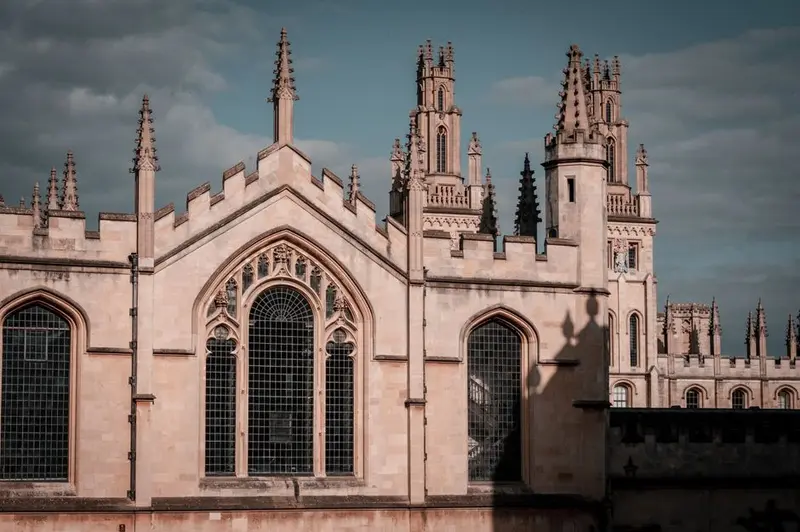
    Oxford, the "City of Dreaming Spires", is world-renowned for its prestigious university and impressive architecture. Here you'll find a unique blend of centuries-old tradition and vibrant student life. Among its most prominent sights are the venerable colleges like Christ Church and Magdalen College, the Bodleian Library and the iconic Radcliffe Camera. The Ashmolean Museum offers a rich collection of art and archaeology, while the historic Covered Market showcases local specialities and crafts. The city, home to the oldest university in the English-speaking world, breathes history through its cobblestone streets. To authentically experience the academic atmosphere, a visit outside of term time is recommended, when student numbers are lower. A stroll through the college gardens or a relaxed punting tour on the River Cherwell will complete the experience and offer you new perspectives on the city.