Epirus, in northwestern Greece, stretches from the Pindos Mountains to the Ionian Sea coast. The mountains are home to the stone villages of Zagorochoria, the Vikos Gorge, and old arched bridges, while coastal towns include Parga and Sivota. Its capital is Ioannina, situated on Lake Pamvotis, featuring an Ottoman-influenced castle town. May, June, and September are ideal for hiking, while summer is best for swimming.
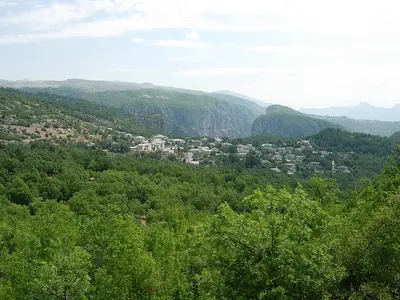
Epirus is one of Greece's most sparsely populated and predominantly mountainous regions. To the north are the approximately 45 villages of Zagorochoria with stone houses, mule tracks, and arched bridges, with the Vikos Gorge in Vikos-Aoos National Park situated between them. Further east lies Metsovo on the Katara Pass.Ioannina, with around 110,000 inhabitants, is the largest city and a starting point for the mountainous region; nearby lies the Oracle of Dodona. On the coast, you'll find seaside resorts like Parga and Sivota, and near Preveza, the Roman ruins of Nikopolis. For Zagori and Ioannina, you'll need at least three to four days; with the coast, rather a week.
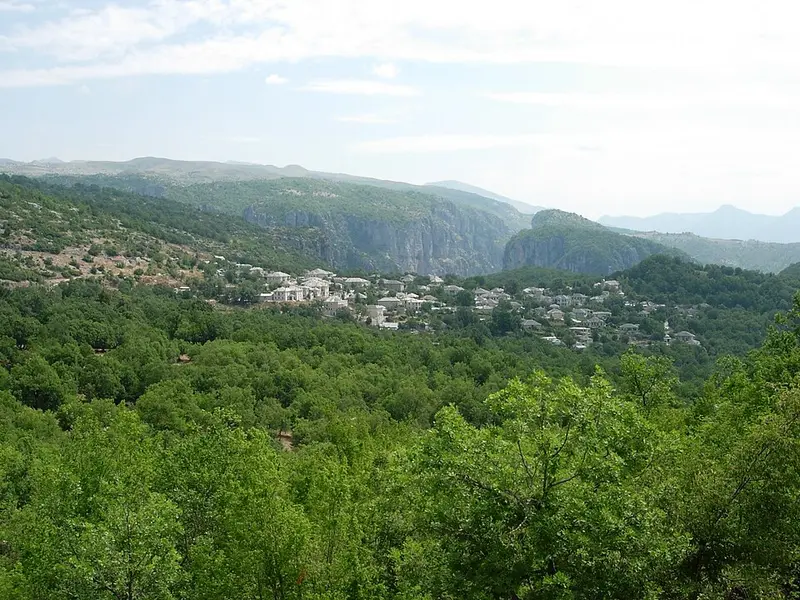
Monodendri sits at 1,060 meters in Central Zagori, 41 kilometers north of Ioannina, directly on the edge of the Vikos Gorge. The stone village serves as a starting point for traversing the gorge and for its viewpoints above.
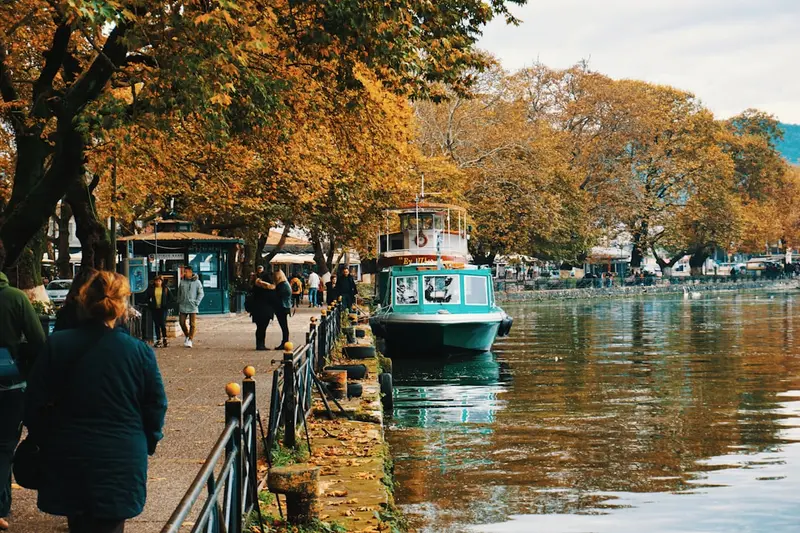
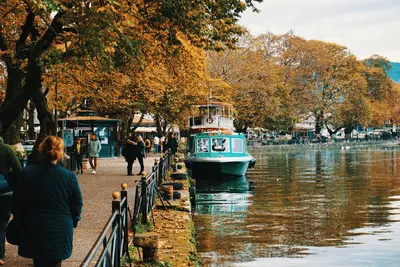
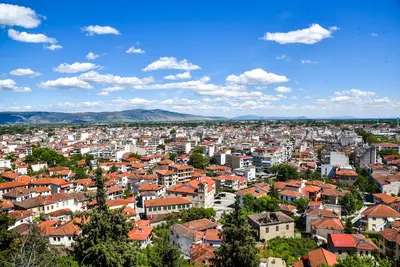
Ioannina is the capital of Epirus and lies at an altitude of around 480 metres on the western shore of Lake Pamvotida. The walled old town, the Kastro, was the seat of Ali Pascha, who ruled the region from here around 1800.
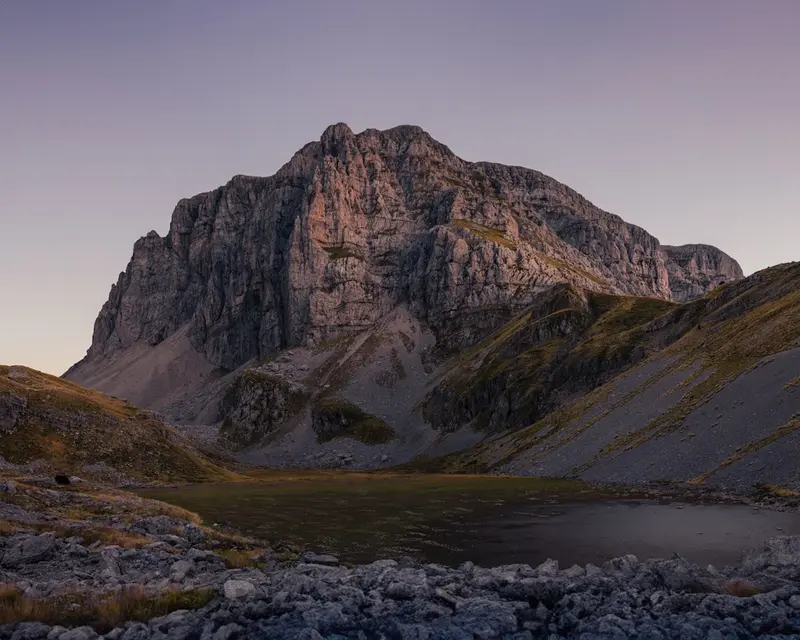
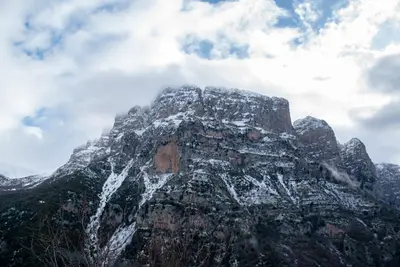
Papingo consists of the two stone villages of Megalo and Mikro Papingo at the foot of the Astraka rock faces in the Vikos-Aoos National Park. From here, hiking trails lead up into the Tymfi Massif, and between the villages are the rock pools of Ovires.
Discover the most important sights and attractions
Vikos Gorge
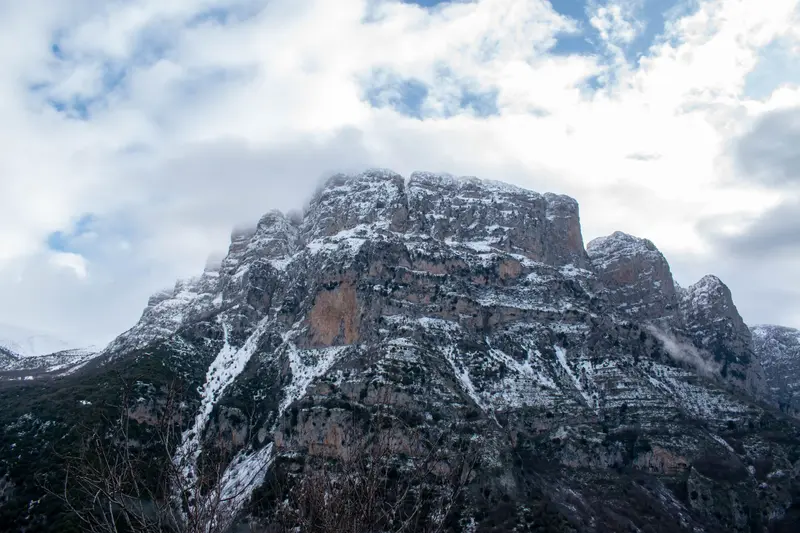
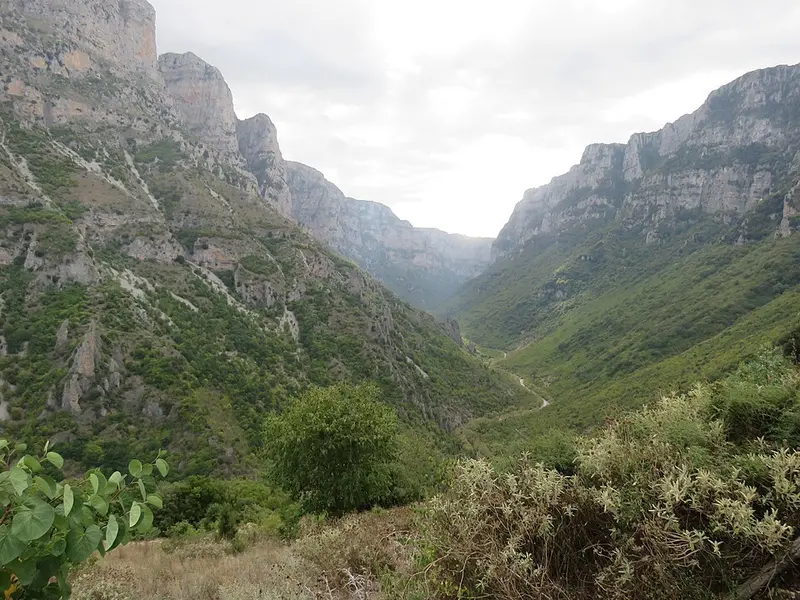
The Voidomatis has carved a roughly 20-kilometer-long gorge into the limestone of the Pindos; at its deepest point, the walls plummet over 1,000 meters. The classic traverse takes six to seven hours from Monodendri to the springs of the Voidomatis near Vikos and is steep and rocky in places. Those who just want to look can drive to the Oxya viewpoint or to the terrace of the Agia Paraskevi Monastery near Monodendri. In spring, the river carries a lot of water; in high summer, the upper part dries out.
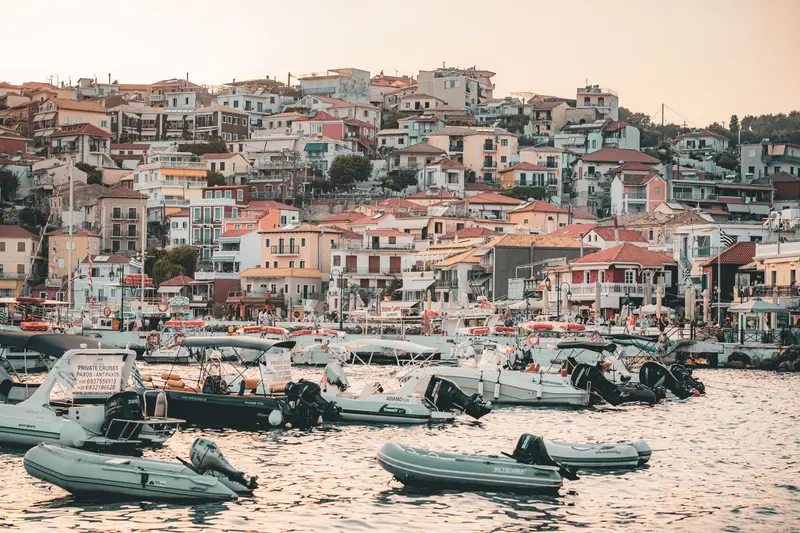
Parga lies as a semicircle of flat houses around a bay; above it stands the 16th-century Venetian castle. Until 1819, the town was under Venetian and then British influence, before it was sold to Ali Pascha and the population fled to Corfu. From the harbor, boats go to Valtos beach and the Sarakiniko sandbar; Paxos is reachable in just over an hour. In August, the old town is busy; in June and September, it's much quieter.
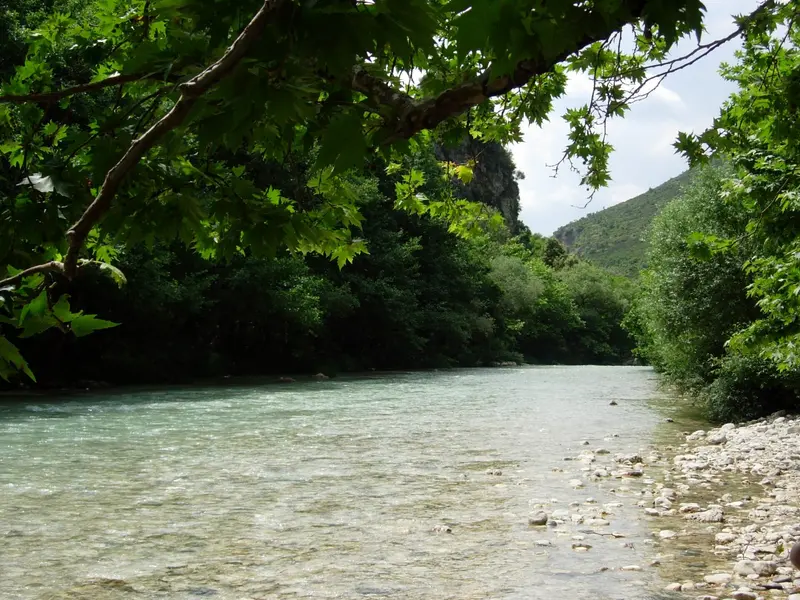
At Glyki, the Acheron emerges from the rock, and even in high summer, its water is barely above 12 degrees Celsius. In antiquity, it was considered the river of the underworld, across which Charon ferried the dead. Further downstream lay the Nekromanteion, an oracle of the dead. Today, visitors wade through its shallow bed between the rock walls; sturdy shoes with good grip are advisable. Providers in Glyki organize rafting, kayaking, and horseback riding along the banks.
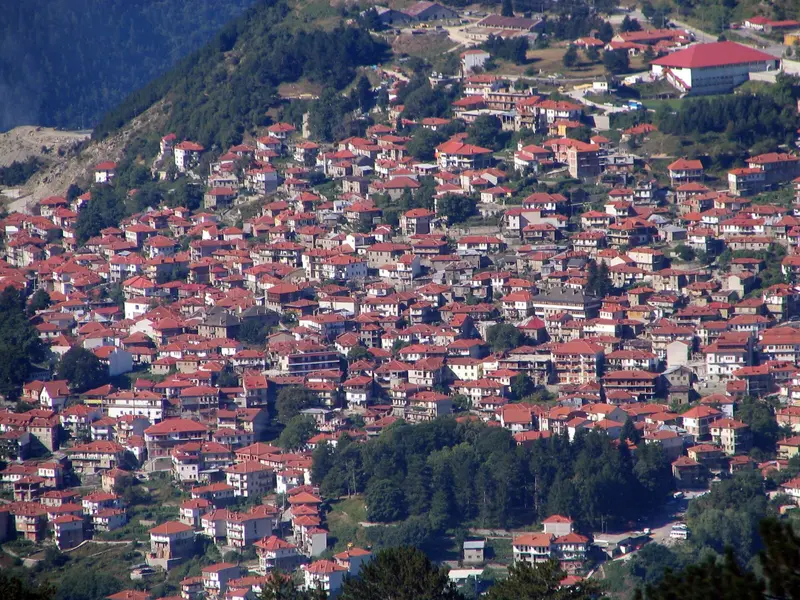
Metsovo is located at around 1,150 meters on the Katara Pass and is the main town of the Aromanians, whose language is still spoken here. Wealthy merchant families endowed the town with schools, museums, and a cheese dairy, and the stone houses appear correspondingly well-kept. The Archontiko Tositsa shows how such a family lived in the 18th century; the Galerie Averoff is filled with Greek painting from the 19th and 20th centuries. The town is known for its smoked Metsovone cheese and for a small ski resort above the town.
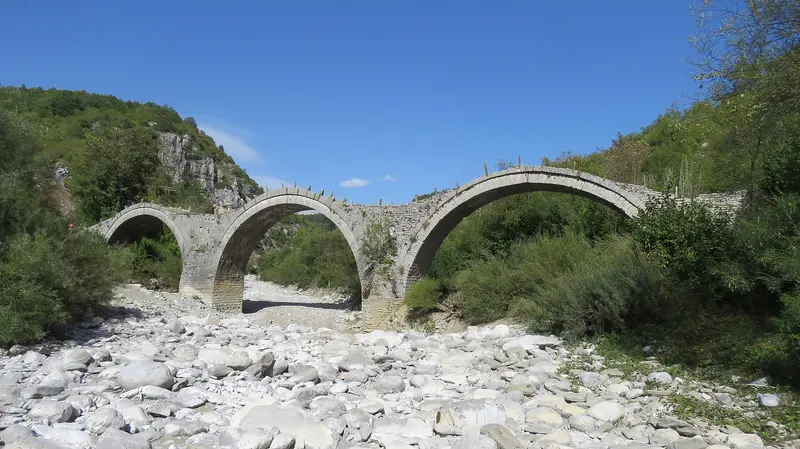
Around Kipoi stand some of the most famous of the many stone arch bridges, often funded by wealthy local merchants in the 18th and 19th centuries. The three-arched Kalogeriko Bridge, also known as Plakidas Bridge, sweeps like a wave over the stream and is reachable from the road in just a few minutes. Nearby lie other bridges such as Kontodimou and Lazaridi; marked paths connect several of them. The well-known single-arched Kokkori Bridge is located a little further south near Koukouli.
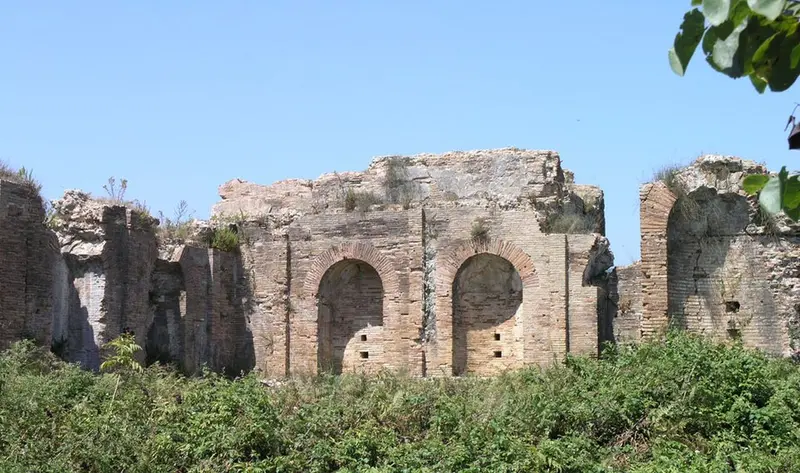
Octavian founded Nikopolis as a victory city after his triumph over Antonius and Cleopatra at Actium in 31 BC. The site is vast: Roman city walls, an aqueduct, an odeon, and a theatre are scattered across the plain north of Preveza. Early Christian basilicas feature floor mosaics with well-preserved animal and plant images. The modern museum on site contextualizes the finds, and you'll need a car for the distances between the sections.
The Castello is situated in Parga's Old Town, below the Venetian Castle, and belongs to the Zigouris Hotel Group. The cuisine is Mediterranean, combining Greek with Italian recipes. From the outdoor tables, you overlook the sea, and in the evenings, it also serves as a wine bar.
Koutouki tou Nikola is a tavern in Metsovo, run by the Dasoulas family. The menu features local cuisine from the mountain town, which is known in the region for its cheese and wines.
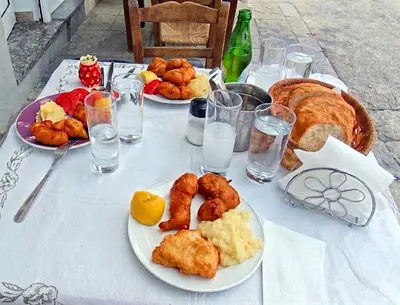
The cuisine of Epirus is mountain cuisine and is one of the most distinctive in Greece: much dairy farming, hand-stretched phyllo, wild herbs, and little fish, even though the coast is near.
Pita in all variations
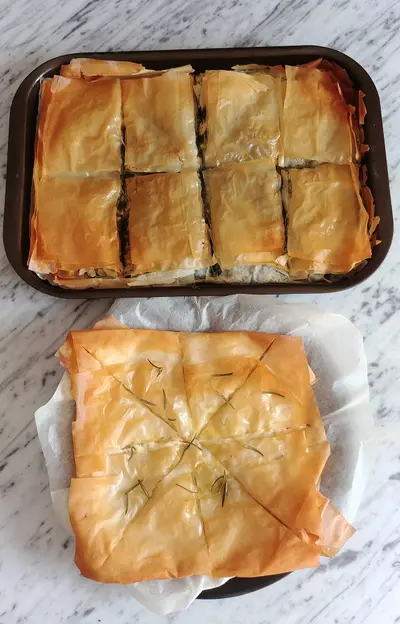
Epirus is considered the home of Greek Pita. The dough is hand-stretched paper-thin and filled with cheese, wild herbs, leeks, pumpkin, or meat. Every village has its variation; in Ioannina, you can get several kinds fresh from the oven.
Cheese from the Pindos
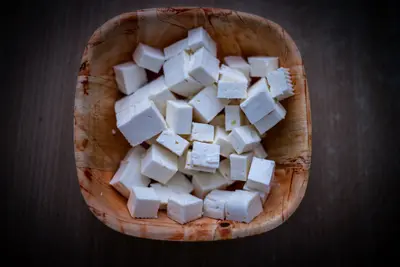
From the milk of mountain sheep, Feta, the semi-hard Metsovone from Metsovo, and the smoked Kefalotyri are produced. Metsovone is made following Italian tradition and is one of Greece's few smoked cheeses.
Tsipouro, an evening companion
In the North, pomace brandy is not a digestif, but the basis for an entire evening. With every carafe, small plates appear, often unbidden.
Trout and lake fish from the Pamvotida
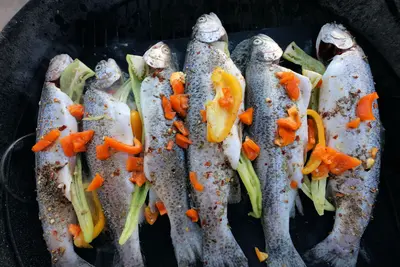
Lake Ioannina provides eel, carp, and frog, served in the eateries of the island settlement. Trout is farmed in the mountain streams of Pindos, appearing on almost every village menu.
Best Time to Visit
When is the best time for your trip?
May
June
September
October
19–24°C·25–90 mm(moderate rain)
Diese Monate bieten ideale Bedingungen für Reisen in den Epirus. Im Mai und Juni ist das Wetter warm und sonnig, perfekt für Strände und Erkundungen, bevor die größte Sommerhitze und Menschenmassen einsetzen. September und Oktober sind ebenfalls sehr angenehm, mit milden Temperaturen und noch warmem Meerwasser, ideal für Outdoor-Aktivitäten und Kulturerlebnisse, während der Tourismus abnimmt. Der Herbst färbt zudem die Berglandschaft wunderschön.
Epirus im Nordwesten Griechenlands weist ein vielfältiges Klima auf, das stark von der Topographie geprägt ist. Man unterscheidet grundsätzlich zwischen den Küstenregionen entlang des Ionischen Meeres und dem bergigen Landesinneren.Küstenregionen (z.B. Parga, Syvota, Preveza): Hier herrscht ein typisch mediterranes Klima mit heißen, trockenen Sommern und milden, feuchten Wintern. Die Sommermonate (Juni bis August) sind sehr sonnig mit hohen Temperaturen, die oft über 30°C liegen können. Die Meerestemperaturen sind dann ideal zum Schwimmen. Winter sind regenreich, aber selten frostig.Bergregionen (z.B. Zagori, Ioannina): Das Klima im Landesinneren ist kontinentaler geprägt. Die Sommer sind wärmer als an der Küste, aber weniger schwül, mit oft kühleren Nächten, insbesondere in höheren Lagen. Die Winter sind deutlich kälter, mit häufigem Schneefall und Frost, was die Region zu einem Ziel für Wintersport macht. Die Niederschlagsmengen sind hier generell höher als an der Küste.Die oben angegebenen monatlichen Durchschnittswerte stellen eine Mischung aus diesen regionalen Unterschieden dar, tendieren aber leicht zu den für den Tourismus relevanteren Küsten- und tiefergelegenen Inlandregionen. Reisende sollten je nach geplanter Aktivität und genauer Destination die spezifischen lokalen Wetterbedingungen beachten.
Seasons
Jan
Feb
Mar
Apr
May
Jun
Jul
Aug
Sep
Oct
Nov
Dec
Trockenzeit
Übergangssaison
Regenzeit
Best Time to Visit
▶Show detailed monthly data
Month
Temp (°C)
Rain (mm)
Sun (h)
January
9.0
145
3.5
February
10.0
120
4.0
March
12.0
95
5.5
April
16.0
60
7.0
May
20.0
40
9.5
June
24.0
25
11.0
July
27.0
15
12.0
August
27.0
18
11.5
September
23.0
50
9.0
October
19.0
90
6.5
November
14.0
130
4.0
December
11.0
155
3.0
Cultural Heritage and History of Epirus
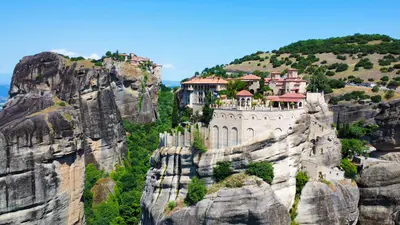
Epirus boasts a deeply rooted history, dating back to antiquity. The region was home to ancient Greek tribes such as the Molossians, Thesprotians, and Chaonians. The Oracle of Dodona, one of the oldest and most significant in the Greek world, attests to Epirus' spiritual importance.Following its incorporation into the Roman Empire, significant cities like Nikopolis emerged, whose extensive ruins still demonstrate Roman architecture and planning today. The Byzantine era left numerous monasteries and churches, while the long Ottoman rule, particularly in Ioannina, produced a unique blend of oriental and local architectural styles, visible in the city's fortress and mosques.Epirus' cultural identity is well-defined, manifesting itself in its characteristic polyphonic folk music, traditional dances, and the famous silversmithing craft of Ioannina. These vibrant traditions reflect the region's multifaceted history, ranging from ancient origins through Roman and Byzantine influences to the Ottoman era.
Exploring locally
Getting There and Main RoutesEpirus is off the beaten path but well connected. Ioannina Airport has domestic connections; Preveza, on the coast, is larger with charter flights. The Egnatia Odos motorway crosses the region from west to east, cutting travel time to Thessaloniki to about three hours. The Ionia Odos links south towards Patras. KTEL buses operate between cities, but only a few times a week to the mountain villages.In the MountainsFor the Zagorochoria and Pindos mountains, you need your own vehicle. The roads are narrow, winding, and occasionally snowy in winter; snow chains should then be in the car. Between the villages run old paved mule tracks, the Kalderimia, partly restored and marked. They are often a more direct connection than the road.