Fernweh: Home
    ExploreTravel GuidesPlan a tripMy tripLast visited
    de|en
    All Places & RegionsAll highlightsAbout FernwehFAQPrivacy PolicyImprint
    ExploreTravel GuidesPlan a tripMy tripLast visited
    • Neighborhoods & highlights
    • Walking tours
    • Eat & drink
    • Food culture
    • Culture
    • Getting around
    • Accommodation
    • Plan trip
    • Nearby
    Trikala

    Greece

    Trikala

    CityCulture

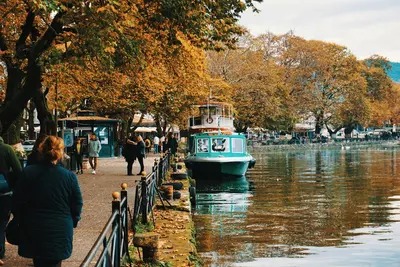
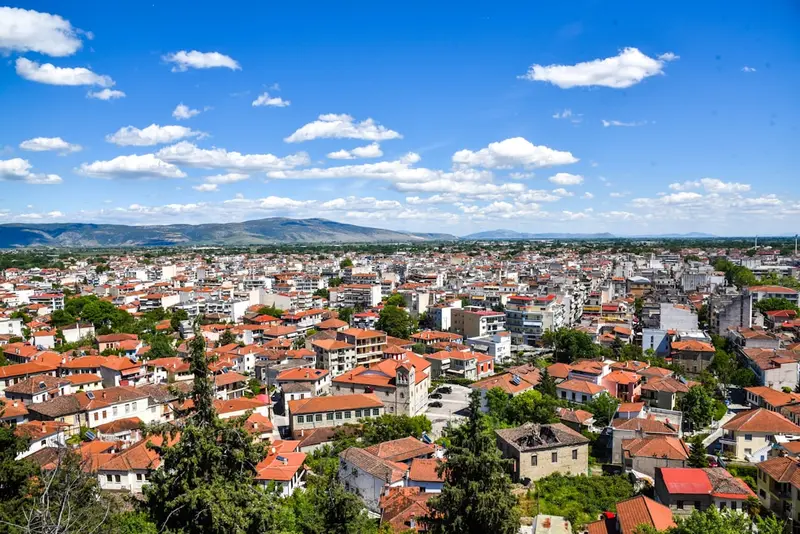
    Trikala is located in the west of the Thessalian plain at the foot of the Pindos Mountains. The Lithaios river flows through the city, with life unfolding along its banks.

    by Felix Gillen

    1. Home
    2. Destinations
    3. Greece
    4. Thessaly
    5. Trikala
    Trikala is located in the west of the Thessalian plain at the foot of the Pindos Mountains. The Lithaios river flows through the city, with life unfolding along its banks. The castle on the hill, the old Varousi quarter, and the Ottoman Koursoum Mosque tell tales of Byzantine and Ottoman times.The city is a good base for Meteora, located about 20 kilometers away, and can be explored on foot or by bike in half a day.

    Sights in Trikala

    Discover the most important sights and attractions

    The Central Lithaios Shore

    1The Central Lithaios Shore

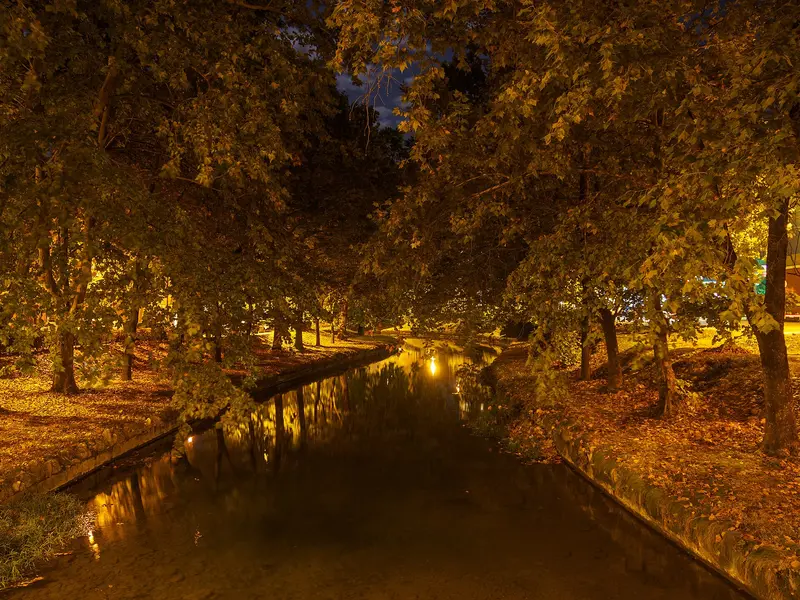
    The Lithaios runs right through Trikala, dividing the city into the old quarter by the castle hill and the modern lower town. Several bridges cross it within a short distance; the most famous is the pedestrian bridge in the center with its cast-iron railing.Both banks are developed as promenades and planted with plane trees. Here, most of the city's cafés and Tsipouradika are located, and this is where Trikala meets for a stroll in the late afternoon.The river carries varying amounts of water depending on the season; in mid-summer, it can shrink to a trickle. The riverside paths are the most practical starting point for a tour, as the Castle, Varousi, and Mosque can each be reached in ten to fifteen minutes.
    Open in Google Maps

    2Tsitsanis Mosaic

    The mosaic in the centre commemorates Vassilis Tsitsanis, born in Trikala in 1915 and one of Rebetiko's most important composers. He composed several hundred songs, including “Synnefiasmeni Kyriaki,” created during the occupation period and still part of the standard repertoire today.Tsitsanis brought Rebetiko from the port taverns to a broad audience, shaping Greek popular music in the post-war decades. In his birthplace, his name adorns streets, squares, and establishments.Also worth visiting is the Tsitsanis Museum, housed in the former 1895 prison building, a few minutes' walk away in the city centre.
    Open in Google Maps
    Castle of Trikala

    3Castle of Trikala

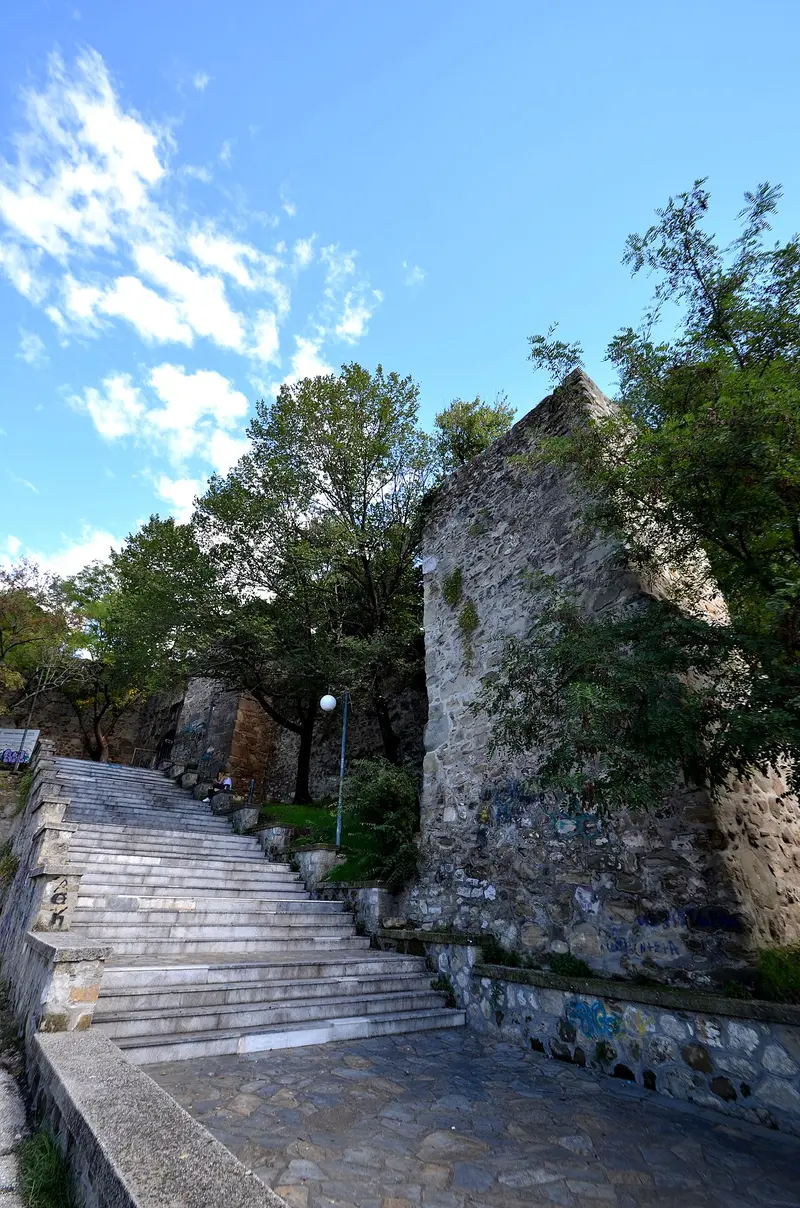
    The Castle of Trikala stands on the hill above the city, where the Acropolis of Trikki was located in antiquity. According to Procopius, the first construction dates back to Emperor Justinian in the 6th century, but its current form was largely acquired during the Palaiologan period in the 14th century, with later expansions by the Ottomans.On the east side stands the Clock Tower, which the Ottomans erected in the mid-17th century. It was destroyed in World War II and rebuilt after the war. Today, the castle grounds are laid out as a park, with paths under old trees and views across the plain to the Pindos mountains.The ascent from the river takes about fifteen minutes on foot and leads through the Varousi quarter.
    Open in Google Maps
    Varousi

    4Varousi

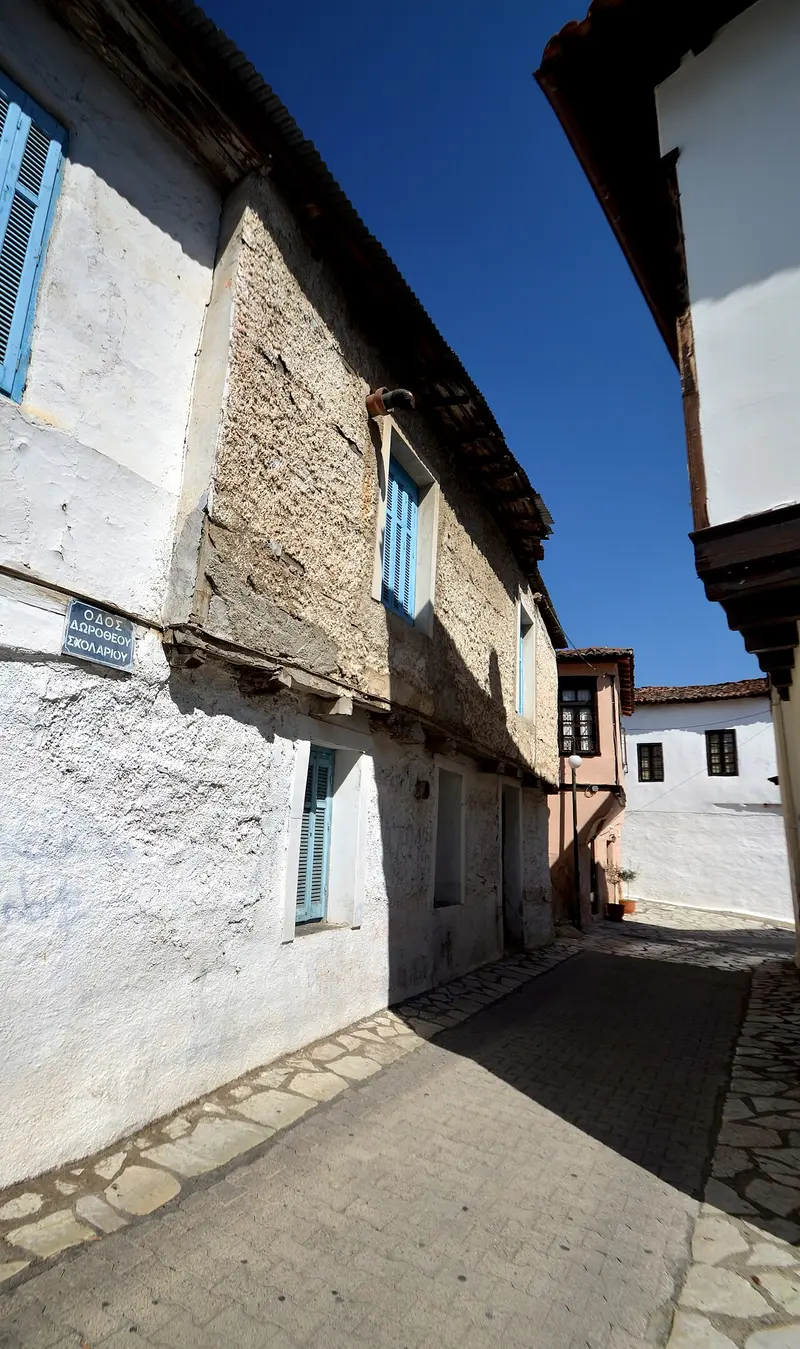
    Varousi is the old quarter on the slope between the castle and the river, where the Christian population of Trikala lived until the end of Ottoman rule. Well-preserved houses from the 18th and 19th centuries feature wooden bay windows, courtyards, and high walls facing the street.The architectural style follows the same logic as in other cities in the region: closed to the outside, open to the inside. Some of the houses are restored, while others stand empty, lending the district an authentic character.Nestled among the alleyways are several small churches, including Agios Stefanos and Agia Episkepsi. A forty-minute tour is sufficient, and it can be combined with the ascent to the castle.
    Open in Google Maps
    Koursoum Mosque (Osman Shah Mosque)

    5Koursoum Mosque (Osman Shah Mosque)

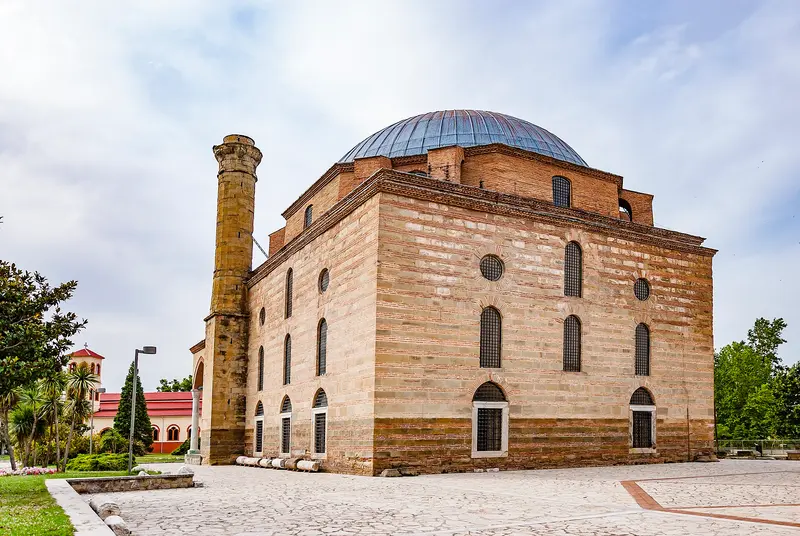
    The Koursoum Mosque, also known as the Osman Shah Mosque, was built in the second half of the 16th century and is attributed to the workshop of the Ottoman court architect Mimar Sinan. Its founder was Osman Shah, a relative of Sultan Süleyman, whose tomb stands next to the mosque.The building is a single-chambered domed structure of unusual diameter, supported by a transition zone of squinches. The epithet Koursoum, meaning lead, refers to the lead plates that covered the dome.After decades of decay, the mosque was restored and now serves as an event venue. It is located southwest of the city center and is reachable on foot from the river promenade in a good ten minutes.
    Open in Google Maps
    Matsopoulos Mill

    6Matsopoulos Mill

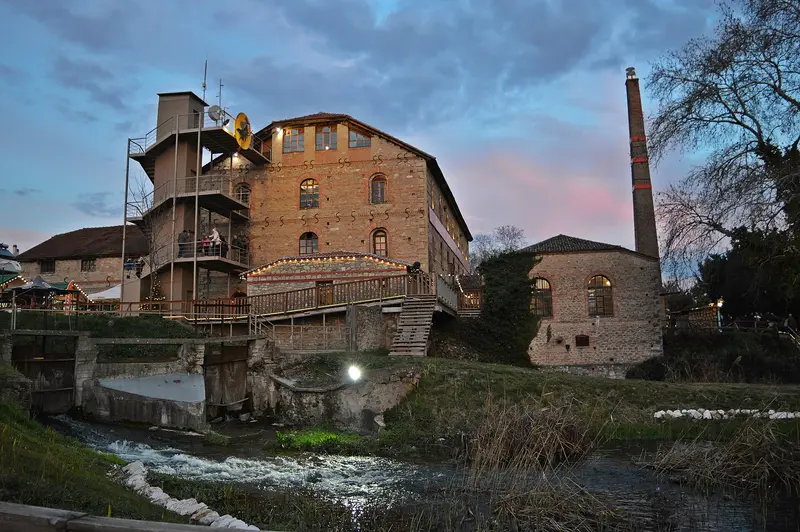
    The Matsopoulos Mill was built in 1884 and is considered the first industrial grain mill in Greece. It operated until the mid-20th century. The brick complex is located near the city center and is one of the few preserved industrial monuments in the region.The city has transformed the site into Matsopoulos Park. In the mill building, an industrial museum shows the old production lines, plus spaces for culture and events, and a café.The site is primarily known for the Mill of the Elves, a large Christmas park which only opens during Advent and the Christmas season. During this period, access roads are heavily congested on weekends.
    Open in Google Maps

    City walks in Trikala

    Curated walking tours through the city's highlights, handpicked by experienced travel journalists.

    Historic Charm on the Lithaios: A Walk Through Trikala

    Discover the historic and picturesque charm of Trikala on this 2-hour city walk. From the Ottoman past to the Byzantine fortress walls and the idyllic Varousi district, experience the soul of this unique Greek town, always accompanied by the gentle Lithaios River.

    ~2 Std.
    Open in Google Maps
    Stops (6)

    Dining & Drinks

    1

    Μπασδέκης Παραδοσιακό Ψητοπωλείο

    Basdekis is a traditional Psitopoleio, a grill house, located in the center of Trikala south of the Lithaios river. The menu features charcoal-grilled meats, accompanied by the usual side dishes and salads. Such grill houses are an everyday part of life in Trikala and are primarily visited by locals.
    Show on Google Maps
    2

    Taverna To Chani

    The Taverna To Chani is in the southern part of Trikala. The menu offers Greek tavern dishes, grills, oven dishes, and sharing Mezedes.
    Show on Google Maps
    3

    Παλιά Ιστορία

    The tavern **Palia Istoria** is located north of the Lithaios in Trikala. It serves Greek tavern cuisine, including grilled dishes, oven-baked specialties, and Mezedes, which are often ordered here to accompany Tsipouro.
    Show on Google Maps

    Food and Drink in Trikala

    Trikala is a market town in the West Thessalian plain, and its cuisine is equally down-to-earth: meat, pites, pulses, along with cheese from the Pindos villages to the west. Also notable is the high concentration of sweet shops around the river, for which the city is regionally renowned.

    Psitopolia

    Grill houses are standard in Trikala, often with street sales for souvlaki and gyros in pita bread. Payment is per skewer, with side dishes charged separately.

    Pites from Pindus

    Puff pastry pockets with cheese, leek, or wild herbs come from the local mountain cuisine and are available all day in bakeries. They are sold by weight, not by piece.
    Loukoumades

    Loukoumades

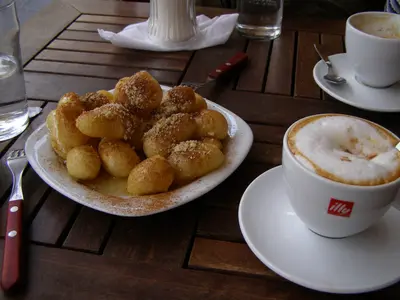
    Honey-cinnamon fried dough balls have their own shop category in Trikala. They are freshly made and eaten at once; takeout isn't recommended.

    Halva from Farsala

    The halva from the Thessalian town of Farsala differs markedly from the familiar sesame halva: it's semolina-based, soft, jelly-like, and sold in pieces. Several shops in Trikala carry it.

    River Tsipouro

    Along the riverside streets of the Lithaios, eateries line up where small plates are served with Tsipouro. Business starts in the late afternoon and stretches into the evening.

    History and Culture

    Ancient TrikkiAncient Trikki was closely associated with the cult of the healing god Asklepios. Homer already mentions the city, and ancient authors describe its Asklepios sanctuary as one of the oldest.Byzantines and OttomansThe castle dates back to the 6th century. Following the Ottoman conquest in the late 14th century, Trikala became an administrative centre; the Koursoum Mosque and the clock tower date from this period. In the Varousi quarter, houses from the 18th and 19th centuries with wooden bay windows and courtyards can be found. Thessaly has belonged to Greece since 1881.MusicTrikala is the birthplace of the Rebetiko composer Vassilis Tsitsanis. A museum in the former prison commemorates him.

    Out & About Locally

    On Foot and By BikeThe centre is flat and compact. Burg, Varousi and the Mosque are a ten to fifteen-minute walk from the riverside promenade. Trikala has a well-developed cycling network for Greek standards.Bus and TaxiCity buses connect the centre with the outskirts. Taxis are available and an option for trips to Kalambaka.Getting There and ExcursionsTrikala is located on the Palaiofarsalos–Kalambaka railway line; trains continue to Kalambaka at the foot of Meteora.KTEL buses connect Trikala with Kalambaka, Athens and Thessaloniki.

    Accommodations in Trikala

    Find perfect stay in Trikala

    Booking.com* (Affiliate link)
    Search Hotels
    Agoda* (Affiliate link)
    Search Hotels
    Airbnb
    Vacation Rentals

    * Affiliate link: if you book through it, we earn a small commission. The price stays the same for you.

    Campgrounds in Trikala

    Find perfect campground in Trikala

    Search via Google Maps
    Campgrounds nearby (15km)
    Camping.info
    Find Campgrounds
    Park4Night
    RV Parks & Camping

    Plan your trip to Trikala

    Save places, build a route and plan your city trip, all in one place.

    1. 1
      Sunrise over alpine peaks and a sea of clouds
      1234

      Round trip

      12 days · 4 stops

      Saved

      Pick a route

      Pick a ready-made one or save places and plan your own.

      Open bookmarks
    2. 2

      Trip to Trikala

      Live
      • 1The Central Lithaios Shore3 days
      • 2Tsitsanis Mosaic4 days
      • 3Castle of Trikala5 days
      Budget

      Plan your trip

      The planner sorts stops, days and budget. Plan together in real time.

      Start trip planning
    3. 3
      9:41 No signal
      Trikala
      Available offline

      Use it on the road

      Download the guide to your phone and use it on site, even offline.

    Nearby

    Meteora

    Meteora

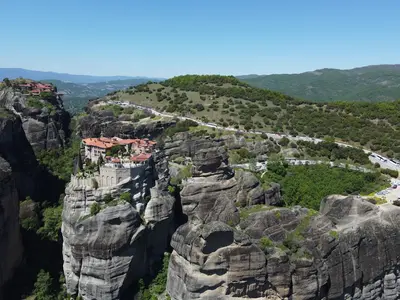
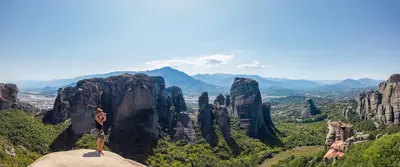
    Meteora lies on the edge of the Thessalian plain above the small town of Kalambaka. Orthodox monasteries stand on tall conglomerate rock towers, the first of them built in the 14th century. Six are inhabited and open to visitors, including the Great Meteoron and Varlaam. The site has been a UNESCO World Heritage Site since 1988. Come early in the morning or late in the afternoon and wear clothing that covers shoulders and knees.
    Larissa

    Larissa

    Larissa is the capital of the Thessaly region and lies in the middle of the wide Thessalian plain on the Pinios. The city is predominantly modern, yet its historical layers lie close together on and around Frourio Hill: the Hellenistic First Ancient Theatre, an early Christian basilica, and the Ottoman market hall Bezesteni.You come for the Diachronic Museum, the lively pedestrian zone, and Alkazar Park by the river. In midsummer, it gets very hot in the plain; spring and autumn are more pleasant.
    Thessaly

    Thessaly

    Thessaly lies between the Pindus Mountains and the Aegean Sea and consists largely of a vast plain that supplies Greece with grain and cotton. On its fringes stand the monastery rocks of Meteora, the Pelion Peninsula rises above the coast, and Mount Olympus marks its northern border. Anyone driving from Athens to Thessaloniki crosses the region in two hours; those who turn off will find mountain villages, bathing coves, and towns largely untouched by tourism.
    Epirus

    Epirus

    Epirus, in northwestern Greece, stretches from the Pindos Mountains to the Ionian Sea coast. The mountains are home to the stone villages of Zagorochoria, the Vikos Gorge, and old arched bridges, while coastal towns include Parga and Sivota. Its capital is Ioannina, situated on Lake Pamvotis, featuring an Ottoman-influenced castle town. May, June, and September are ideal for hiking, while summer is best for swimming.
    Ioannina

    Ioannina

    Ioannina is the capital of Epirus and lies at an altitude of around 480 metres on the western shore of Lake Pamvotida. The walled old town, the Kastro, was the seat of Ali Pascha, who ruled the region from here around 1800. Mosques, an old synagogue, and Byzantine churches recall the Muslims, Jews, and Christians who lived here. The large university ensures bustling cafés, and the city is a good starting point for the Zagorochoria and the Vikos Gorge.

    Sources & method

    • Photos: Wikimedia Commons, Unsplash. Each photo carries its credit.
    • The content is based on web research from public, traceable sources. How the content is made · The role of AI