Fernweh: Home
ExploreGuideDestinationsMy tripsMy trip
de|en
All Places & RegionsRound tripsNight trains in EuropeAll highlightsAbout FernwehFAQPrivacy PolicyImprint
Download on the App StoreGet it on Google Play
ExploreGuideDestinationsMy tripsMy trip
    • Places in the region
    • Culture
    • Getting around
    • Nearby
    Brands

    Photo by Francesco Ungaro on Pexels

    Italy

    Brands

    Region

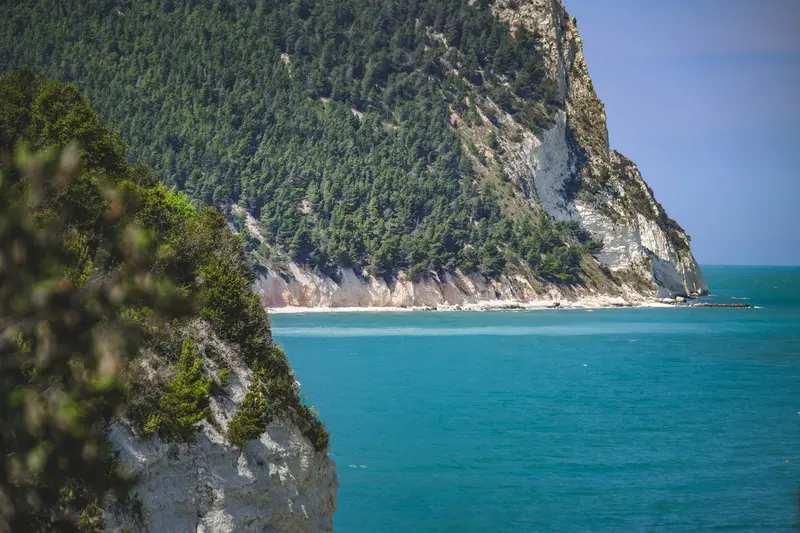
    Le Marche lies on the Adriatic between Emilia-Romagna and Abruzzo, bordered to the west by Tuscany and Umbria. Its 173 km coastline features sandy beaches and the cliffs of Monte Conero.

    by Felix Gillen

    1. Home
    2. Destinations
    3. Italy
    4. Brands
    Le Marche lies on the Adriatic between Emilia-Romagna and Abruzzo, bordered to the west by Tuscany and Umbria. Its 173 km coastline features sandy beaches and the cliffs of Monte Conero. The hinterland offers hills with medieval towns, and to the south are the Monti Sibillini, including the 2,476 m high Monte Vettore.The capital is the port city of Ancona. Popular destinations include the Renaissance city of Urbino (UNESCO World Heritage site since 1998), the Frasassi Caves, the pilgrimage site of Loreto, the Piazza del Popolo in Ascoli Piceno, and the opera festival in the Sferisterio Arena in Macerata.
    Italy travel guideRound trips in ItalyPlan a trip with Brands

    Contents

    • Places in the region
    • Culture
    • Getting around
    • Nearby

    More places in Brands

    Urbino

    Marian Luzi·Unsplash

    Urbino

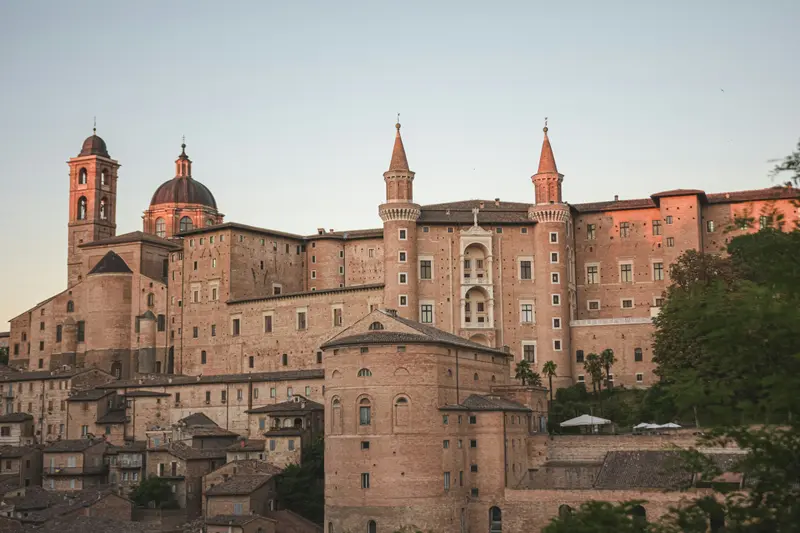
    Urbino is a small university town on two hills in the hinterland of Le Marche, about an hour by bus from Pesaro on the Adriatic. Under Federico da Montefeltro (1444-1482), it became a key center of the Italian Renaissance; its almost unchanged historic center and city walls have been a UNESCO World Heritage site since 1998.The main attraction is the Palazzo Ducale, housing the Galleria Nazionale delle Marche. You can also visit Raphael's birthplace, where he was born in 1483. The university, founded in 1506, still brings youthful energy to the steep streets.

    Sights in Brands

    Discover the most important sights and attractions

    Attraction

    Piazza del Popolo in Ascoli Piceno

    The approximately 2,500 m² square was paved with travertine at the end of the 15th century, and its arcades date from 1509. It is lined by the Palazzo dei Capitani del Popolo, the Church of San Francesco, and the historic Caffè Meletti. The light-colored stone makes the square glow especially in the evening.
    Open in Google Maps
    Sferisterio in Macerata

    Guido Linke, Freiburg / Wikimedia Commons / CC BY-SA 4.0, mod.

    Point of Interest

    Sferisterio in Macerata

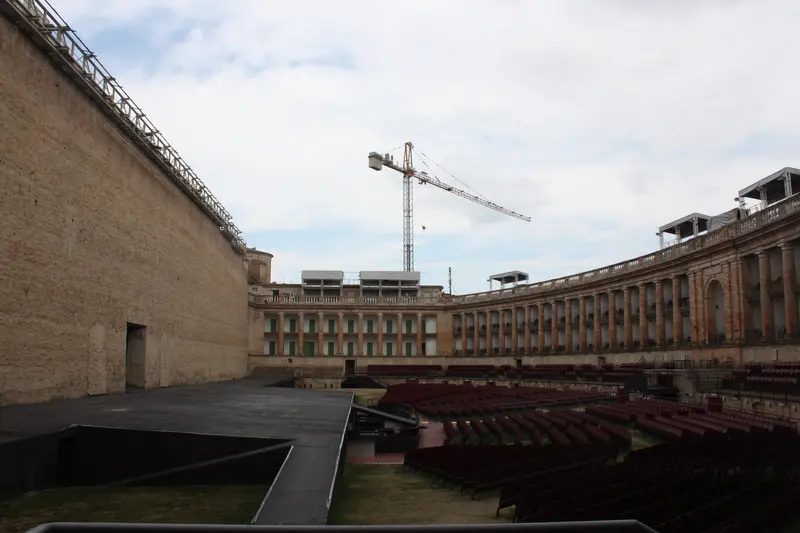
    The Neoclassical Arena was built from 1823 by Ireneo Aleandri for the ball game Pallone col bracciale; its rear wall is 88 m long and features 56 columns. Since 1921, opera has been performed here, today as part of the Macerata Opera Festival in July and August (in 2026 from July 17th to August 9th) with more than 3,000 seats.
    Open in Google Maps
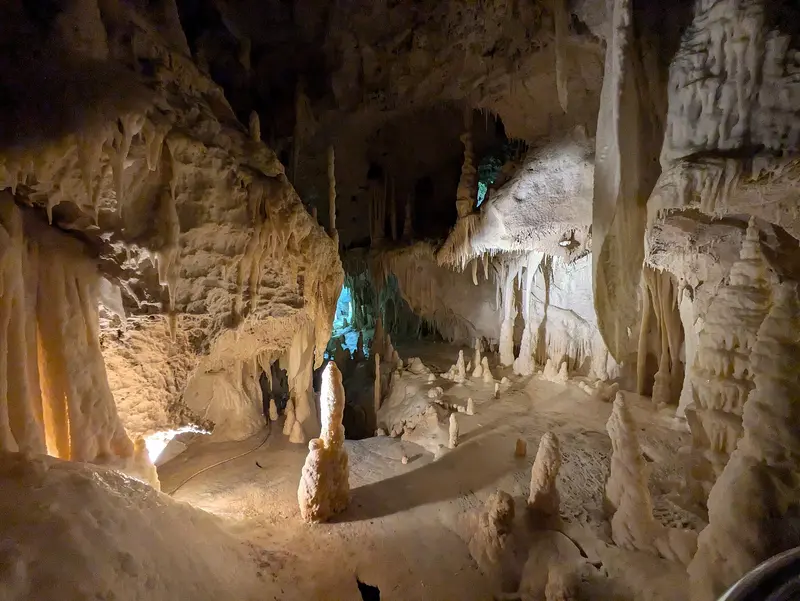
    Grotte di Frasassi

    Accurimbono / Wikimedia Commons / CC BY-SA 4.0, mod.

    Attraction

    Grotte di Frasassi

    The Genga stalactite cave system was discovered on September 25, 1971. Its largest hall, the Abisso Ancona, measures about 180 × 120 m and is almost 200 m high. Tickets are purchased at the San Vittore delle Chiuse car park; a shuttle runs from there to the entrance; Admission 20€, children 6 to 14 years 14€. In winter, only two tours run on weekdays; check times in advance on frasassi.com.
    Open in Google Maps
    Museum

    Casa Leopardi in Recanati

    The poet Giacomo Leopardi was born in 1798 at the family palace in Recanati. The main highlight is the library, housing over 20,000 volumes collected by his father Monaldo. Closed Mondays; Library and Museum €10; with the private apartments €20.
    Open in Google Maps

    Culture and Landscape

    Renaissance and PilgrimageUnder Federico da Montefeltro (ruler 1444 to 1482), Urbino became a center of the Renaissance, and Raphael was born here in 1483. Loreto is one of Italy's most important pilgrimage sites: The Basilica della Santa Casa was built starting in 1468, and Bramante designed the marble casing around the Holy House. In Recanati, the poet Giacomo Leopardi was born in 1798.Nature Between Sea and MountainsMount Conero (572 m) is the only coastal mountain on the Adriatic between Trieste and Gargano and has been a regional park with 18 hiking trails since 1987. To the south, the Marche and Umbria regions share the Monti Sibillini National Park (established 1993, 697 km²).Open-Air OperaThe Sferisterio in Macerata was built starting in 1823 for a traditional ball game and has been an opera stage since 1921. The Macerata Opera Festival takes place in July and August.

    Getting There & Around

    Getting ThereAncona Airport has the Castelferretti-Falconara Aeroporto train stop, from there it's about a 20-minute journey to Ancona.The Adriatic railway line connects Pesaro, Senigallia, Ancona and the coastal towns to the south.Getting AroundUrbino has no train station: buses run from Pesaro station in about an hour.For the hinterland, Frasassi, Monti Sibillini and the Conero bays, a car is practical.

    Nearby

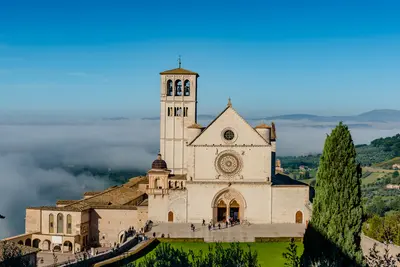
    Assisi

    Assisi

    Assisi is on Monte Subasio's west slope, above the Umbrian Plain. It's the birthplace of St. Francis and St. Clare, and a major Italian pilgrimage site. The Basilica of San Francesco and other Franciscan sites have been UNESCO World Heritage since 2000. The Old Town runs along the slope between the western Basilica and Santa Chiara in the east.

    Duc Tinh Ngo·Pexels

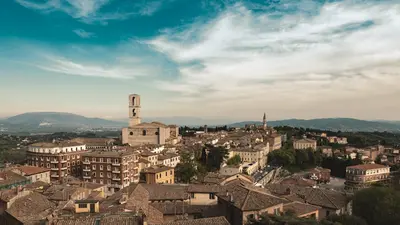
    Perugia

    Perugia

    Perugia is the capital of Umbria and stretches across several hills. The city dates back to the Etruscan Phersna; a city gate and fountain from that era are preserved. At its center are the Piazza IV Novembre with the Fontana Maggiore, the Cathedral, and the Palazzo dei Priori with the Galleria Nazionale dell'Umbria. Perugia is home to the University of Perugia.

    Unsplash

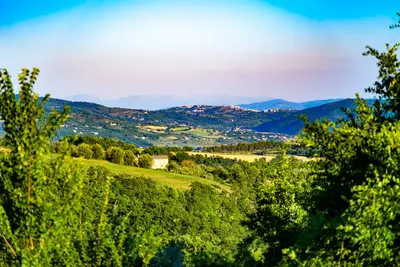
    Umbria

    Umbria

    Umbria in central Italy is the Apennine Peninsula's only landlocked region. Around 850,000 people live here; Perugia is its capital. The landscape shifts between hills, the Tiber Valley, Lake Trasimeno, and the mountains bordering Marche, where Monte Vettore, at 2,476 meters, is the highest peak. Numerous towns sit on hills, retaining their medieval character, including Assisi, Orvieto, Gubbio, Todi, and Spoleto.

    Unsplash

    Spoleto

    Spoleto

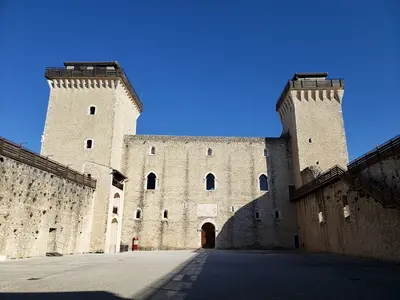
    Spoleto is located in Umbria on a hillside below the Rocca Albornoziana. The city was a Roman colony and, under the Lombards, the capital of a duchy. Among its most famous buildings are the Cathedral with frescoes by Filippo Lippi, the Ponte delle Torri, and the Roman Theatre. Every summer, it hosts the Festival dei Due Mondi.

    Unsplash

    Rimini

    Rimini

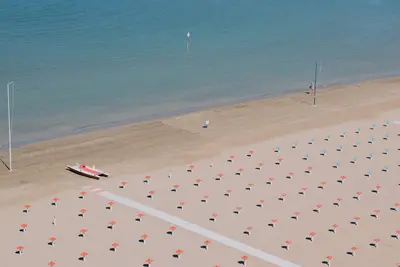
    Rimini, located on the Adriatic Sea in southern Emilia-Romagna, is known primarily as a seaside resort with some 15 kilometers of sandy beach. The city also features an old town with Roman structures, the Renaissance Tempio Malatestiano, and the Borgo San Giuliano district. Film director Federico Fellini was born in Rimini in 1920; the Fellini Museum is dedicated to him.

    Unsplash

    Your next steps

    Brands is in Italy. Ways to carry on from here.

    • More in Italy

      Highlights, areas, routes and the best time to travel for all of Italy.

      Italy travel guide
    • Round trips in Italy

      Ready-made routes through Italy, with stops, nights and a map.

      See the routes
    • Plan a trip with Brands

      The Guide asks about season, length and who is coming, and suggests a trip with Brands.

      Plan the trip

    Sources & method

    • Photos: Wikimedia Commons, Pexels. Each photo carries its credit.
    • Place data such as addresses and ratings comes from Google Maps.
    • The content is based on web research from public, traceable sources. How the content is made · The role of AI