Fernweh
    ExploreTravel GuidesMy Trips
    de|en
    About FernwehImprintFAQPrivacy Policy
    ExploreTravel GuidesMy Trips
    Noirmoutier

    Noirmoutier

    CityNatureBeachCulinaryFor Families
    1. Home
    2. Destinations
    3. France
    4. Pays de la Loire
    5. Noirmoutier
    Welcome to the 'Island of Mimosas', Noirmoutier, a unique gem off the French Atlantic coast that will enchant you with its incomparable blend of wild beaches, fragrant pine forests, and shimmering salt pans. Here, discover not only the famous tidal road Passage du Gois, but also charming villages and excellent cuisine that brings the best of the sea to your table, ideal for a relaxing yet varied holiday.
    • Neighborhoods & highlights
    • Walking tours
    • Eat & drink
    • Culture
    • Getting around
    • Accommodation
    • Plan trip
    • Nearby
    • Neighborhoods & highlights
    • Walking tours
    • Eat & drink
    • Culture
    • Getting around
    • Accommodation
    • Plan trip
    • Nearby

    Overview

    Noirmoutier, an island off France's Atlantic coast, stands out with its diverse nature and maritime culture. Here you'll discover expansive sandy beaches, fragrant pine forests, and the characteristic salt marshes that significantly shape the landscape. An unforgettable experience is the Passage du Gois, a tidal road passable at low tide, connecting the island to the mainland; be sure to plan your visit according to current tide times. The island's capital, Noirmoutier-en-l'Île, invites you to linger with its charming harbor, medieval château, and typical white houses. Explore the traditional Marais Salants, where salt production is a centuries-old tradition and significantly influences the local economy. The regional cuisine is known for fresh seafood and the unique "Bonnotte" potato. The island is excellent for exploring by bike, allowing you to discover its diverse landscapes and hidden coves.

    Places in Noirmoutier

    Discover the most important sights and attractions

    Sights in Noirmoutier

    1Passage du Gois

    The Passage du Gois is a globally unique, four-and-a-half-kilometre-long tidal road connecting the mainland near Beauvoir-sur-Mer with the island of Noirmoutier. For centuries, this historic connection was the only access to the island before a bridge was built in 1971. You can only cross the Passage at low tide, as it completely disappears below sea level at high tide. Along the route, you'll find refuge poles that serve as safe havens if the water rises unexpectedly quickly.The Passage offers a fascinating natural experience, allowing you to literally walk or drive on the seabed. Many visitors also use the low tide to collect mussels and oysters. The Passage also gained renown through the Tour de France, which used it multiple times as a spectacular stage. Our practical tip: Be sure to check the exact tide times before your visit; these are posted at both ends of the Passage or can be accessed online. Plan enough time and be aware that the road is safely passable for only about 1.5 hours before and after the lowest low tide. For impressive photos, a visit is recommended just before the water covers or uncovers the road again.
    Open in Google Maps

    2Château de Noirmoutier

    The Château de Noirmoutier, an impressive medieval fortress, majestically overlooks the town of Noirmoutier-en-l'Île. Its origins date back to the 12th century when it was built by the monks of Saint-Philibert to protect the island from raids, particularly by the Vikings. Over the centuries, the castle played a crucial role in the region's defensive history, including during the Wars of Religion and the Wars of the Vendée. Today, you can climb the well-preserved keep, which offers you a breathtaking panoramic view over the island, the harbour, and the surrounding salt marshes. Inside, the Château houses a museum that illuminates the island's rich history, its maritime traditions, and local life. It is a fascinating journey through time, offering you a deep insight into the significance of this strategic structure. Our Tip: It's best to visit the castle in the morning to avoid the largest crowds and enjoy the tranquility of its historic walls. The view from the top of the keep is ideal for unforgettable photos.
    Open in Google Maps

    3Bois de la Chaize & Plage des Dames

    The Bois de la Chaize and the Plage des Dames form an iconic landscape on Noirmoutier Island. This ancient oak forest became the preferred location in the 19th century for wealthy families, who built their impressive Belle Époque-style villas here. This still shapes the area's unique ambience today. The Plage des Dames, nestled within this forest, is famous for its historic bathing cabins on stilts and the old wooden pier, which testifies to the early development of seaside tourism. Here you will find a unique blend of natural beauty and architectural heritage. Stroll through the shady forest, discover the hidden villas, and enjoy the tranquility on the beach. For the best photos of the bathing cabins and the pier, a visit at high tide in the morning is recommended, when the light is soft and the crowds are still sparse. A walk along the coastal paths also offers picturesque views of the sea and the coast.
    Open in Google Maps

    4Les Marais Salants (Salzgärten)

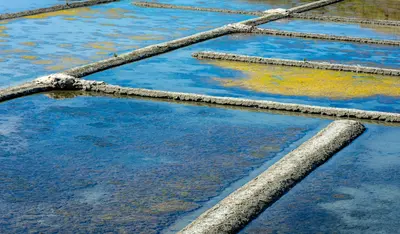
    The Noirmoutier salt marshes, Les Marais Salants, shaped the island for centuries. Their history dates to the 7th century, when monks used seawater for salt extraction. They're a living testament to traditional craft, vital to local economy and culture. A complex system of shallow basins, "œillets", crystallizes seawater into salt via evaporation. Watching "sauniers" (salt farmers) is fascinating, as they harvest prized Fleur de Sel (the fine salt flower). Basin colors vary from deep blue to reddish hues based on salt concentration and light, creating a unique backdrop. Our Tip: Visit the salt marshes between May and September, when the salt harvest is in full swing. Many sauniers offer tours to learn the process and buy salt directly. For best photos, early morning or late afternoon is ideal: light is softer, colors glow most intensely. Stay on paths to protect these sensitive ecosystems.
    Open in Google Maps

    5Passage du Gois

    Die Passage du Gois ist eine weltweit einzigartige, viereinhalb Kilometer lange Gezeitenstraße, die die Insel Noirmoutier mit dem Festland verbindet. Sie verschwindet zweimal täglich bei Flut vollständig unter den Wassermassen des Atlantiks. Diese historische Verbindung war über Jahrhunderte die einzige Landverbindung zur Insel, bevor 1971 eine Brücke gebaut wurde. Bei Ebbe befährst oder begehst du eine surreale Landschaft aus Schlickbänken und Muschelfeldern, die bei Flut vom Meer bedeckt sind. Entlang der Strecke stehen Rettungspfeiler als Zufluchtsorte, falls du von der schnell steigenden Flut überrascht wirst. Die Passage ist auch ein beliebter Ort für die Muschelfischerei.Wichtiger Tipp: Informiere dich unbedingt vor deinem Besuch über die genauen Gezeitenzeiten, die lokal aushängen. Plane deine Überquerung so, dass du sicher zurückkehren kannst. Für beeindruckende Fotos und weniger Menschenmassen empfiehlt sich ein Besuch kurz nach Beginn oder vor Ende der Ebbe, idealerweise am frühen Morgen oder späten Nachmittag.
    Open in Google Maps

    6Château de Noirmoutier

    Das Château de Noirmoutier, eine imposante Festung aus dem 12. Jahrhundert, thront majestätisch über der Insel Noirmoutier und zählt zu den besterhaltenen mittelalterlichen Schlössern der Vendée. Seine Geschichte ist eng mit der strategischen Bedeutung der Insel verbunden; es diente über Jahrhunderte als Verteidigungsanlage und spielte eine wichtige Rolle während des Hundertjährigen Krieges, der Religionskriege und der Kriege der Vendée. Im 19. Jahrhundert wurde es zudem zeitweise als Gefängnis genutzt, was seine bewegte Vergangenheit zusätzlich prägt.Heute beherbergt das Schloss ein Museum, das dir die lokale Geschichte der Insel, ihre maritime Tradition und die Entwicklung der Festung näherbringt. Du kannst den gut erhaltenen Bergfried erklimmen und die begehbaren Wehrmauern erkunden. Von dort oben genießt du einen atemberaubenden Panoramablick über die Stadt Noirmoutier-en-l'Île, den Hafen und die umliegende Landschaft bis zum Meer. Die architektonische Struktur des Schlosses, mit seinen dicken Mauern und dem zentralen Bergfried, zeugt von seiner ursprünglichen Wehrhaftigkeit.Für einen Besuch empfiehlt es sich, die frühen Morgenstunden oder den späten Nachmittag zu wählen, um den größten Besucherandrang zu vermeiden. Ein besonders stimmungsvolles Foto des Schlosses gelingt dir vom Hafen aus, wo sich seine Silhouette im Wasser spiegelt. Plane etwa 1,5 bis 2 Stunden für die Erkundung ein, um die Ausstellungen und die Aussicht in Ruhe zu genießen.
    Open in Google Maps

    City walks in Noirmoutier

    Curated walking tours through the city's highlights — handpicked by experienced travel journalists.

    Noirmoutier-en-l'Île: Historischer Charme und Maritimes Flair

    Entdecken Sie Noirmoutier-en-l'Île auf diesem zweistündigen Spaziergang, der Sie zu den wichtigsten Sehenswürdigkeiten und charmantesten Ecken führt. Von der imposanten Burg bis zum lebhaften Hafen erleben Sie die einzigartige Atmosphäre dieser Inselstadt an der französischen Atlantikküste.

    In Google Maps öffnen
    Stopps (7)

    Restaurants & Cafes

    History and Cultural Heritage of Noirmoutier

    Noirmoutier, often called "L'île aux mimosas," boasts a rich history deeply intertwined with the sea and the land. The island was already settled in Roman times and, from the 7th century onwards, with the founding of Saint-Philbert Abbey, played a crucial role as an early Christian center and a refuge from Norman raids.Its strategic location led to the construction of the medieval Château de Noirmoutier and shaped its development through centuries of conflicts, including the Vendée Wars. The island's architecture is characterized by traditional white houses with blue shutters, reflecting its maritime heritage.Local traditions to this day include the ancient art of salt harvesting in the salt marshes and the cultivation of the famous Bonnotte potato, both central pillars of local identity. Cultural peculiarities are also evident in the deep connection to the "Passage du Gois," a road passable at low tide, which is not only a transport route but a symbol of the island's status.Crafts and art on Noirmoutier are often inspired by maritime life and the island's unique nature.

    Getting around here

    Noirmoutier Island is excellent for active exploration. While the **bicycle** is the most popular and efficient way to discover its picturesque paths and coastal strips, a **car** is recommended to flexibly reach more remote places or the entire island. Local bus services are rather limited and focused on a few main routes.

    Accommodations in Noirmoutier

    Accommodations in Noirmoutier

    Find perfect stay in Noirmoutier

    Booking.com
    Search Hotels
    Agoda
    Search Hotels
    Airbnb
    Vacation Rentals
    Hotels.com
    Hotels Worldwide
    Hostelworld
    Hostels

    Campgrounds in Noirmoutier

    Find perfect campground in Noirmoutier

    Search via Google Maps
    Campgrounds nearby (15km)
    Camping.info
    Find Campgrounds
    Park4Night
    RV Parks & Camping

    Plan your trip to Noirmoutier

    Save places, build a route and plan your city trip — all in one place.

    Save places

    Bookmark sights, restaurants and neighborhoods you're interested in.

    Build your route

    Turn your bookmarks into a route — define order, days and budget.

    Refine with AI

    Let Mein Fernweh suggest experiences and put together a tailored daily plan.

    Start trip planningOpen bookmarks

    Locations nearby

    These places are nearby — perfect for additional days or a day trip.

    Pornic

    Pornic

    Welcome to Pornic, a charming coastal town on the Côte de Jade in the Pays de la Loire region! This picturesque town entices you with its historic port, its imposing castle, and an abundance of fine sandy beaches. Discover a perfect blend of Breton flair and a sunny Atlantic coast, ideal for relaxation and authentic holiday experiences.
    La Baule-Escoublac

    La Baule-Escoublac

    La Baule-Escoublac is a renowned seaside resort on the French Atlantic coast, famous for its nine-kilometer-long sandy beach, the Plage de La Baule. This destination developed into an elegant holiday spot in the late 19th and early 20th centuries, and still impresses today with magnificent Belle Époque villas. Along the promenade, you'll find numerous boutiques, restaurants, and the historic Casino Barrière, a hub of social life. Away from the beach, the Parc des Dryades invites you for strolls, offering a green oasis of calm. The architecture of the villas in the La Baule-les-Pins district bears witness to the splendor of bygone eras and is worth a walk. For a relaxed visit, the off-season in spring or autumn is recommended to enjoy the lively coast in peace. A visit to La Baule's market offers the opportunity to discover regional specialties of Brittany.
    Guérande

    Guérande

    Guérande is an impressive medieval town, its fully preserved ramparts defining its historic character. You can walk along the 1.3-kilometer long fortifications, enjoying panoramic views over the old town and the surrounding salt marshes. In the heart of the old town are the Porte Saint-Michel, which houses a museum, and the imposing Collegiate Church of Saint-Aubin. The region is world-renowned for its Marais Salants, the salt marshes of Guérande, where the high-quality Fleur de Sel has been harvested for centuries. A guided tour through the salt pans offers deep insights into the traditional work of the Paludiers. For a relaxed experience of the town and salt marshes, a visit in spring or autumn is recommended.
    Nantes

    Nantes

    Nantes, the former capital of Brittany, presents itself as a dynamic and creative metropolis on the Loire. The city combines its rich maritime and industrial heritage with a vibrant art scene, especially on the Île de Nantes. A highlight is **Les Machines de l'île**, where you can experience the Grand Éléphant and the impressive Carousel of Marine Worlds. The imposing **Château des Ducs de Bretagne** offers deep insights into regional history. Stroll through the historic Bouffay quarter and discover the elegant shopping arcade Passage Pommeraye. To optimally grasp the city's diversity, follow the green line of the "Voyage à Nantes" tour. For a relaxed experience, a visit in spring or autumn is recommended to avoid crowds.
    Pays de la Loire

    Pays de la Loire

    The Pays de la Loire stretches along the lower course of the Loire to the Atlantic coast, a region rich in history, magnificent castles, and vibrant cities. From the world-famous Loire castles that line the river landscape, to its rugged coastlines and charming islands, this region offers a fascinating blend of cultural heritage and natural beauty.