Fernweh: Home
    ExploreTravel GuidesPlan a tripMy tripLast visited
    de|en
    All Places & RegionsAll highlightsAbout FernwehFAQPrivacy PolicyImprint
    ExploreTravel GuidesPlan a tripMy tripLast visited
    Hattuşa
    Rita1234 / Wikimedia Commons / CC BY-SA 3.0

    Turkey

    Hattuşa

    Point of InterestUNESCOCulture

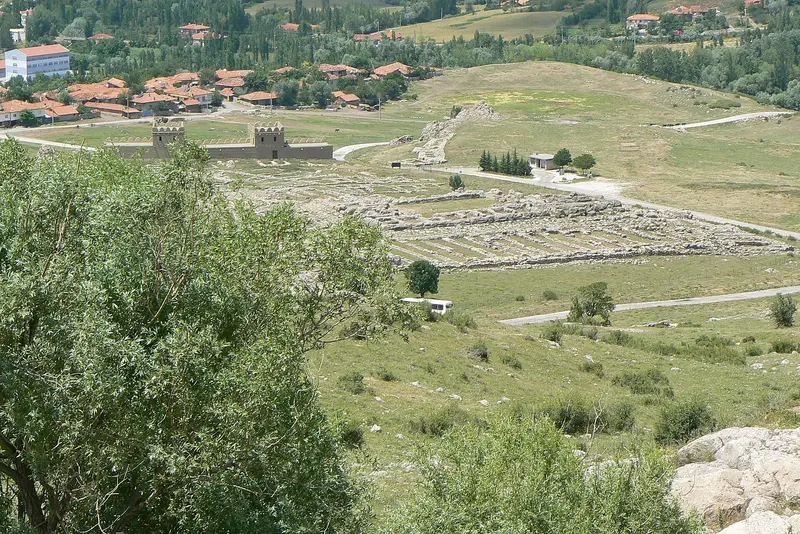
    From approximately 1650 BC, Hattuşa served as the Hittite capital and has been on the UNESCO World Heritage List since 1986. The ruins are situated near Boğazkale in Çorum Province, approximately two hours by car east of Ankara.

    by Felix Gillen

    1. Home
    2. Destinations
    3. Turkey
    4. Central Anatolia
    5. Hattuşa
    From approximately 1650 BC, Hattuşa served as the Hittite capital and has been on the UNESCO World Heritage List since 1986. The ruins are situated near Boğazkale in Çorum Province, approximately two hours by car east of Ankara. City walls, the Lion and Sphinx Gates, the Great Temple, and the Yazılıkaya rock sanctuary reveal how the Hittites built and worshipped their gods.

    Sights in Hattuşa

    Discover the most important sights and attractions

    Ruined city of Hattuşa with Great Temple
    Attraction

    1Ruined city of Hattuşa with Great Temple

    The Hittite capital, at its height, spanned about 1.8 sq km; over 6 km of walls encircled the Lower and Upper Cities. In the Lower City lies the Great Temple, the city's largest sanctuary, with two cult rooms for the Weather God of Hatti and the Sun Goddess of Arinna. The royal palace stood on Büyükkale, the castle hill. A circular road leads through the grounds.
    Open in Google Maps
    Yerkapı with Sphinx Gate
    Point of Interest

    2Yerkapı with Sphinx Gate

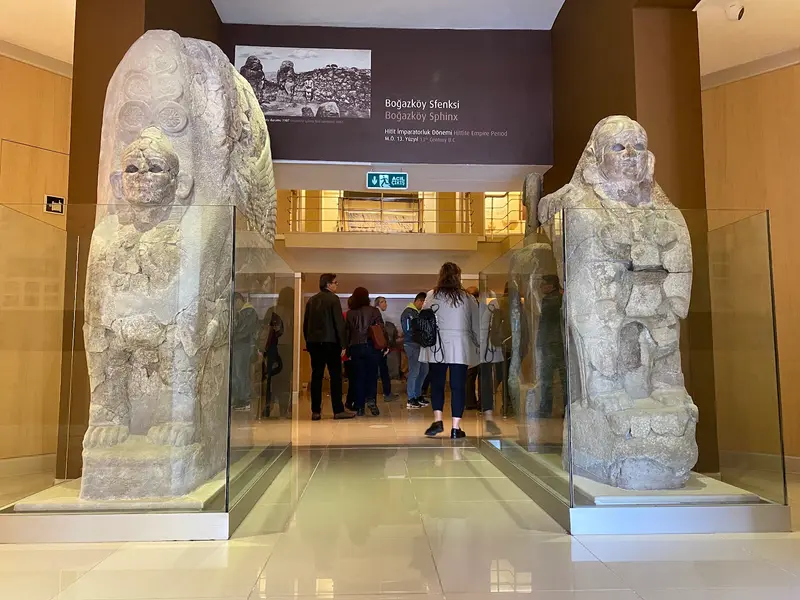
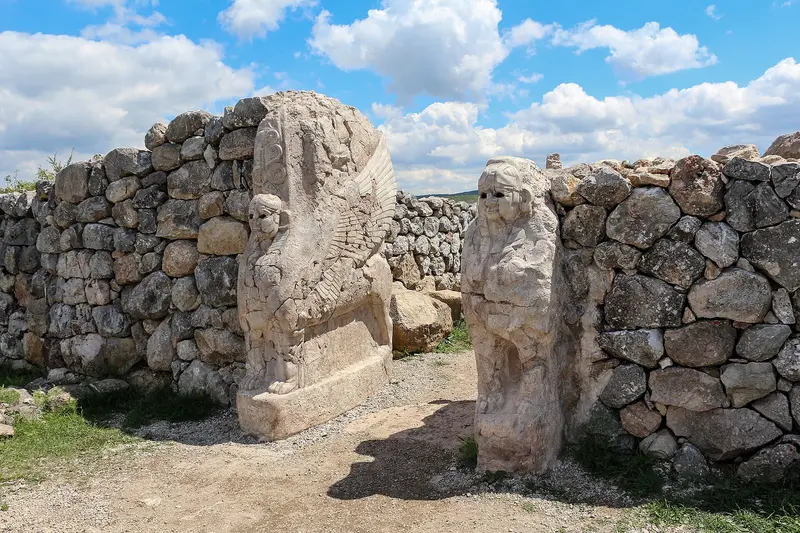
    Under the Sphinx Gate in the south of the Upper City runs a roughly 70-meter-long tunnel made of large stone blocks, over which an earth rampart was piled up. You can traverse it and climb back into the city via the stairs on the rampart. One of the gate's two sphinxes returned in 2011 from the Berlin Pergamon Museum and stands today in the Museum of Boğazkale.
    Open in Google Maps
    Liongate
    Point of Interest

    3Liongate

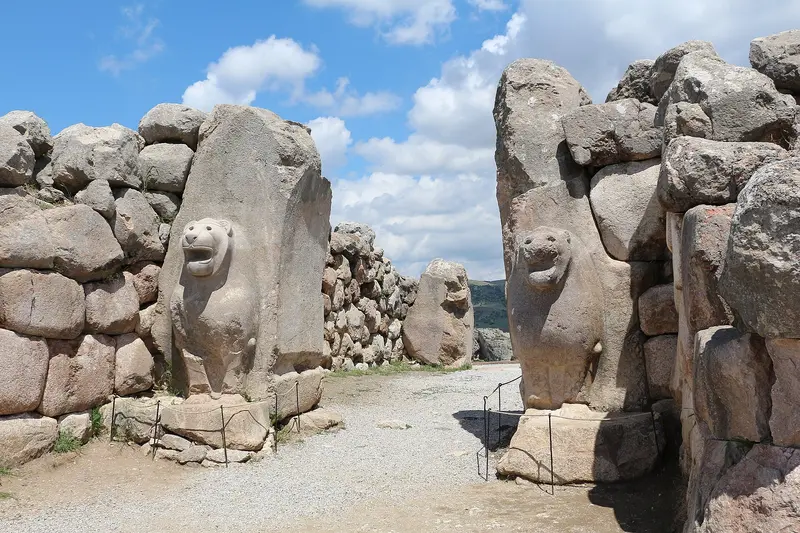
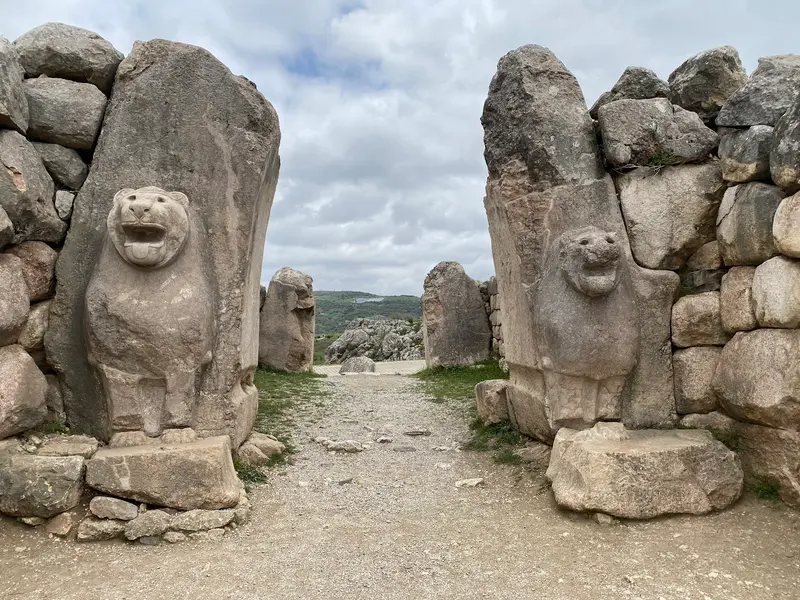
    The gate in the southwest of the Upper City is Hattuşa's landmark. Two stone lions flank the passage on the outside. The blocks are joined without mortar, some upper stones were never smoothed, the gate possibly remained unfinished.
    Open in Google Maps
    Yazılıkaya Rock Sanctuary
    Point of Interest

    4Yazılıkaya Rock Sanctuary

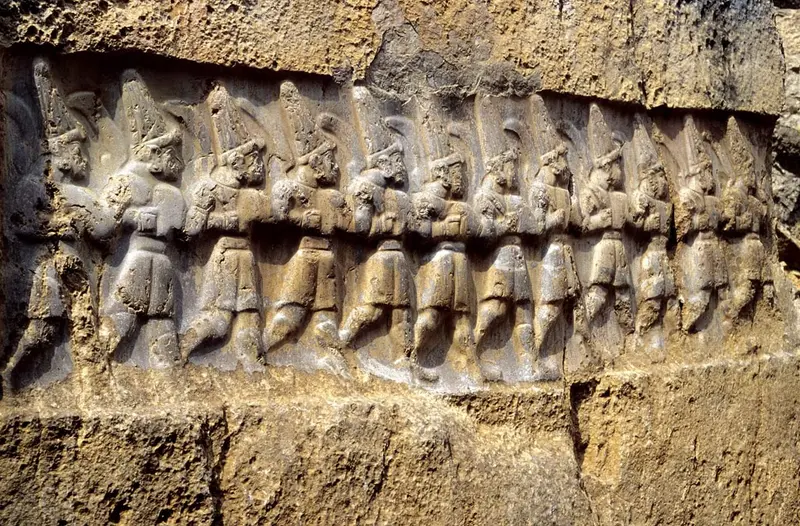
    Approximately two kilometers from Hattuşa lies the open-air sanctuary with two rock chambers. Its reliefs depict gods, goddesses, and kings, including a series of twelve underworld gods. Most of the reliefs were created in the late 13th century BC, primarily under King Tudhaliya IV.
    Open in Google Maps
    Boğazköy Museum
    Museum

    5Boğazköy Museum

    The small, modern museum in town is a good start before the tour; labels are also in English. Since 2011, both Sphinxgate sphinxes stand side by side here again. Most finds from Hattuşa, however, are in Ankara's Museum of Anatolian Civilizations and the Çorum Museum.
    Open in Google Maps

    Restaurants in Hattuşa

    1

    Odak Restaurant

    Restaurant with an attached guesthouse in Boğazkale, close to the entrance of the Hittite capital Hattuša. Ideal for a stop before or after your visit.
    Show on Google Maps
    2

    Aşıkoğlu Restaurant

    Restaurant of the eponymous hotel on Hitit Caddesi, the main street of Boğazkale. It is known for wood-fired Pide, and also offers set menus. Reviews are mixed, but as a lunch stop before exploring Hattuša, it's one of the few options in town.
    Show on Google Maps

    Food and Drink

    Boğazkale belongs to the province of Çorum, whose cuisine is known for elaborate festive dishes and roasted chickpeas.

    Çorum Leblebisi

    Roasted chickpeas, the province's most famous specialty.

    İskilip Dolması

    Festive dish that cooks for 12 to 15 hours and is served with a vinegar Cacık.

    Çorum Mantısı

    Thin pastry sheets with a filling of cheese, minced meat and spices, often with garlic yogurt.

    Culture & History

    Capital of the HittitesTraces of settlement date back to the 6th millennium BCE. Around 1650 BCE, King Hattušili I moved the capital here, and around 1200 BCE, it was destroyed during the collapse of the late Bronze Age. Numerous temples also made Hattuşa the religious center of the empire.The Archive on ClayAround 30,000 clay tablets from Hattuşa form the core of the Hittite legacy. One of them records the peace treaty between the Hittites and Egypt after the Battle of Kadesh. Many finds are displayed today at the Museum of Anatolian Civilizations in Ankara.RediscoveryIn 1834, the Frenchman Charles Texier was the first European to visit the ruins; later excavations uncovered the present site. The two sphinxes from the South Gate came to Germany; one returned in 1924, the other in 2011 from the Pergamon Museum. Today, it stands in the Museum of Boğazkale.

    Arrival & On the Go

    Getting ThereBy car, the drive from Ankara takes about two hours. Without a car, take a bus from Ankara towards Samsun, getting off at Sungurlu (30 kilometers away). From there, the dolmuş to Boğazkale runs only infrequently. Alternatively, a taxi is an option. The nearest airport is Amasya-Merzifon.On-siteCircular Route: An asphalt road leads through the grounds. On foot, the loop via the Lion Gate and Yerkapı is almost five kilometers long and covers an elevation of around 210 meters.Yazılıkaya: This rock sanctuary is located about two kilometers outside the site and is most easily reached by car.Museum: The local museum displays finds from Hattuşa. Please check current opening hours before your visit.TipStart your visit at the Boğazkale Museum to gain a better understanding of the ruins. The selection of restaurants in the village is limited; bring water and snacks.
    Accommodations in Hattuşa

    Find perfect stay in Hattuşa

    Booking.com* (Affiliate link)
    Search Hotels
    Agoda* (Affiliate link)
    Search Hotels
    Airbnb
    Vacation Rentals

    * Affiliate link: if you book through it, we earn a small commission. The price stays the same for you.

    Campgrounds in Hattuşa

    Find perfect campground in Hattuşa

    Search via Google Maps
    Campgrounds nearby (15km)
    Camping.info
    Find Campgrounds
    Park4Night
    RV Parks & Camping

    Nearby

    Central Anatolia

    Central Anatolia

    Central Anatolia is the highland in the heart of Turkey, stretching from the capital Ankara to Konya in the south. Here lie Hattuşa, the capital of the Hittites, Seljuk buildings and the Mevlana Museum in Konya, as well as Atatürk's Mausoleum in Ankara. High-speed trains connect the major cities with Istanbul.
    Ankara

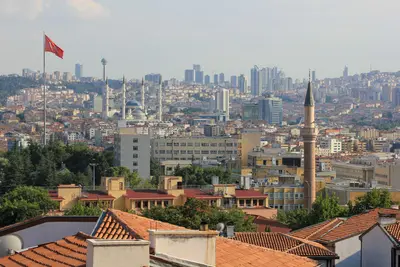
    Ankara

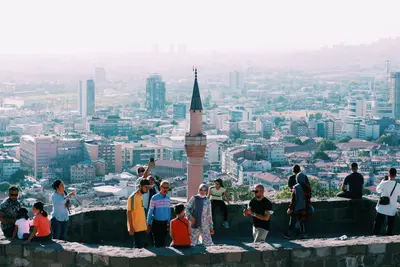
    Ankara has been the capital of Turkey since October 13, 1923, and with approximately 5.9 million inhabitants, it is the country's second-largest city after Istanbul. Here you'll find Atatürk's Mausoleum and the Museum of Anatolian Civilizations, featuring artifacts from the Hittite era; by high-speed train, you're about four hours from Istanbul. The old town of Ulus, with its Citadel and Hamamönü, is located in the north, while the modern center Kızılay and the nightlife streets around Tunalı Hilmi and Kavaklıdere are further south.
    Cappadocia

    Cappadocia

    Cappadocia lies in Anatolia's heart, about an hour's flight from Istanbul, on a high plateau over 1,000 meters. Fairy chimneys, rock-cut churches with Byzantine frescoes, and underground cities make it one of Turkey's most famous destinations. Göreme National Park and Cappadocia's Rock Sites are UNESCO World Heritage Sites since 1985.
    Göreme

    Göreme

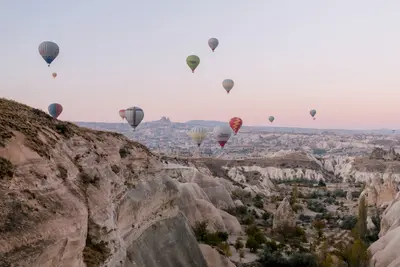
    Göreme is a town with around 2,000 inhabitants in the center of Cappadocia, surrounded by valleys full of fairy chimneys. Here you'll find the open-air museum with its rock-cut churches and hiking trails through Rose, Red, and Love Valley, above which hot-air balloons glide at sunrise. Many old cave houses are now hotels; Uçhisar and Çavuşin can be reached on foot through the valleys.
    Ürgüp

    Ürgüp

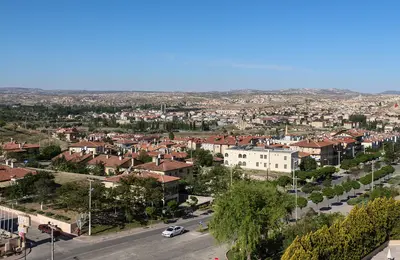
    Ürgüp is a small town with just under 25,000 inhabitants in the heart of Cappadocia and is considered the main center for regional viticulture. Ottoman-era stone houses, cave hotels in the rock faces, and the Temenni Wish Hill define the center. At the western entrance to the town stand the Üç Güzeller Fairy Chimneys; a few kilometers south lies the village of Mustafapaşa with its Greek mansions.

    Sources & method

    • Photos: Wikimedia Commons, Google Maps. Each photo carries its credit.
    • Place data such as addresses and ratings comes from Google Maps.
    • The content is based on web research from public, traceable sources. How the content is made · The role of AI