Fernweh: Home
    ExploreTravel GuidesPlan a tripMy tripLast visited
    de|en
    All Places & RegionsAll highlightsAbout FernwehFAQPrivacy PolicyImprint
    ExploreTravel GuidesPlan a tripMy tripLast visited
    • Overview
    • Places in the region
    • Food culture
    • Culture
    • Getting around
    • Round trips
    • Nearby
    Cappadocia

    Turkey

    Cappadocia

    Region

    Cappadocia lies in Anatolia's heart, about an hour's flight from Istanbul, on a high plateau over 1,000 meters.

    by Felix Gillen

    1. Home
    2. Destinations
    3. Turkey
    4. Cappadocia
    Cappadocia lies in Anatolia's heart, about an hour's flight from Istanbul, on a high plateau over 1,000 meters. Fairy chimneys, rock-cut churches with Byzantine frescoes, and underground cities make it one of Turkey's most famous destinations. Göreme National Park and Cappadocia's Rock Sites are UNESCO World Heritage Sites since 1985.
    OverviewThe landscape was formed from the deposits of the volcanoes Erciyes, Hasan Dağı, and Göllüdağ. Wind and water have shaped the soft tuff into valleys, rock cones, and fairy chimneys, with hard top layers remaining as caps. The core tourist area is located in Nevşehir Province around Göreme, Uçhisar, Ürgüp, and Avanos; the Ihlara Valley in the southwest belongs to Aksaray Province.Best Time to Visit and Getting ThereThe climate is continental: summers are hot and dry, winters cold and often snowy. Balloons only launch in calm weather; in 2025, according to the aviation authority, this was the case on 223 days. The closest airports are Kayseri and Nevşehir Kapadokya.What Awaits YouValleys: Hiking trails through Rose, Red, and Love Valleys lead to rock-cut churches and viewpoints.Balloon Rides: At sunrise, balloons float for about an hour over the fairy chimneys.Underground Cities: Derinkuyu and Kaymaklı demonstrate how inhabitants protected themselves from attacks underground.Wine and Pottery: Ürgüp is the center of viticulture, Avanos that of pottery.
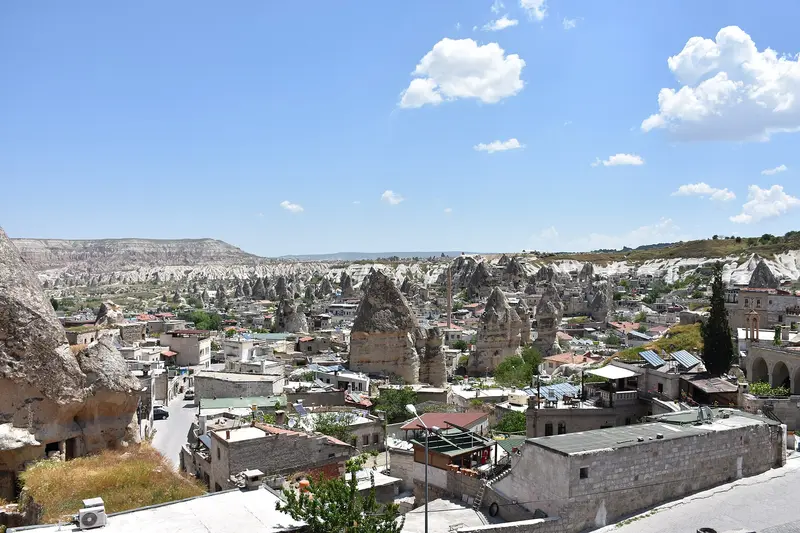
    Göreme
    MusikAnimal / Wikimedia Commons / CC BY-SA 4.0

    Place 1 of 4

    Göreme

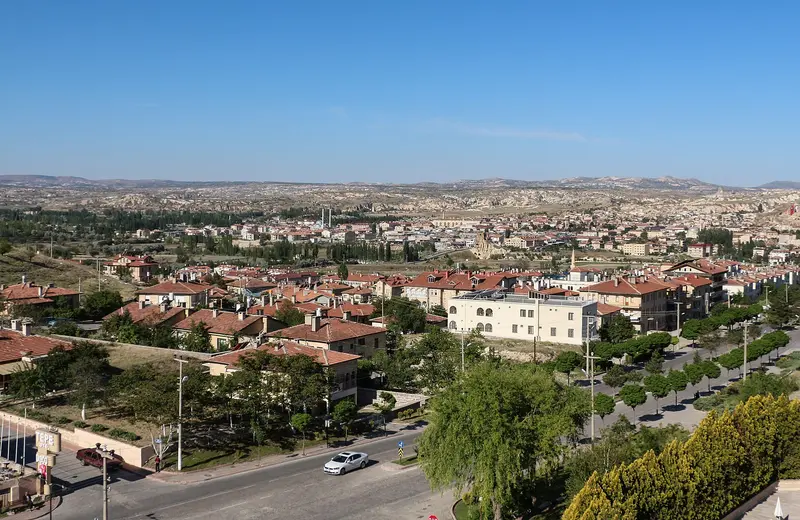
    Göreme is a town with around 2,000 inhabitants in the center of Cappadocia, surrounded by valleys full of fairy chimneys.

    Discover
    Ürgüp
    Bernard Gagnon / Wikimedia Commons / CC BY-SA 3.0

    Place 2 of 4

    Ürgüp

    Ürgüp is a small town with just under 25,000 inhabitants in the heart of Cappadocia and is considered the main center for regional viticulture. Ottoman-era stone houses, cave hotels in the rock faces, and the Temenni Wish Hill define the center.

    Discover
    Ihlara Valley

    Place 3 of 4

    Ihlara Valley

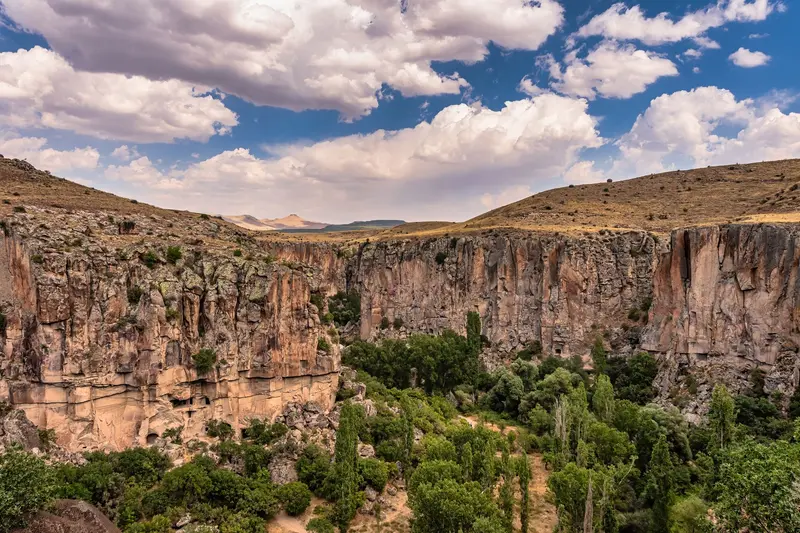
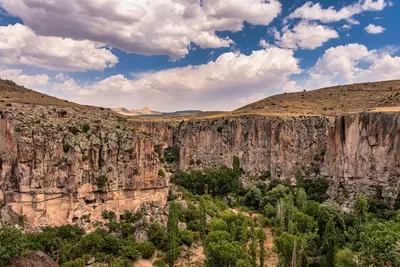
    The Ihlara Valley is a gorge up to 150 metres deep in the southwest of Cappadocia, about an hour and a half by car from Göreme. The Melendiz River carved it into the tuff of the Hasan Dağı volcano, and around 50 rock churches lie in its walls.

    Discover
    Derinkuyu

    Place 4 of 4

    Derinkuyu

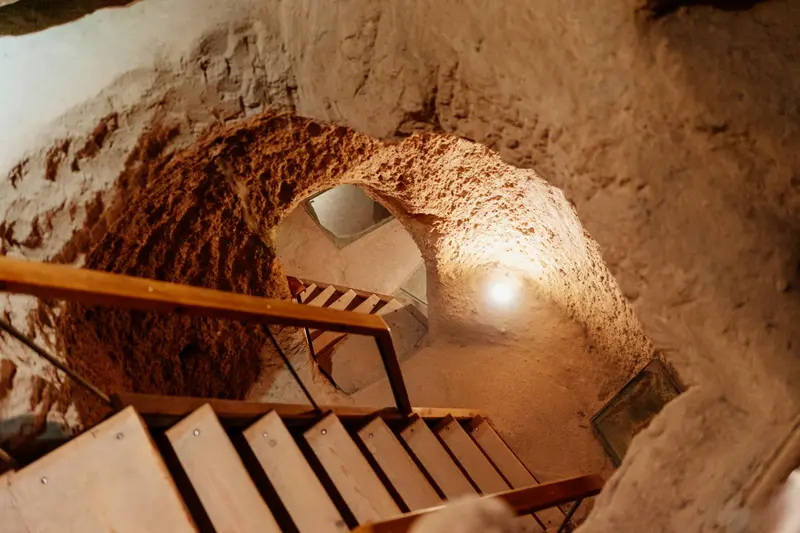
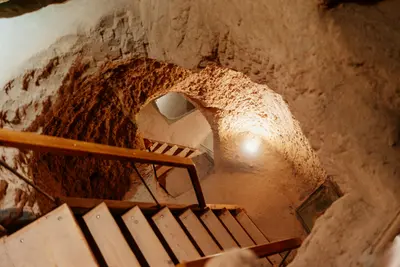
    Derinkuyu is located in southern Cappadocia on the road from Nevşehir to Niğde and is known for its underground city. Its passages, halls, and stables extend approximately 85 meters deep, where up to 20,000 people once found refuge.

    Discover

    Eating & Drinking

    Cappadocia's cuisine features clay pots, apricots, and grapes from the region.

    Testi Kebab

    Meat and vegetables cook for hours in a sealed clay pot, cracked open tableside. Since 2021, the dish is registered as a geographical indication for Nevşehir.

    Nevşehir Mantısı

    Small dumplings with minced meat, served with garlic yogurt, spicy butter, sumac and mint.

    Apricot Ragout

    Meat with dried apricots, braised in a clay pot over a wood fire.

    Wine from the Emir grape

    The white Emir grape grows on the volcanic soils of Cappadocia. Öküzgözü, Kalecik Karası, Boğazkere and Narince are also cultivated.

    Culture & History

    From the Hittites to ByzantiumIn the late Bronze Age, the region was part of the Hittite heartland. The name Cappadocia first appears as Old Persian Katpatuka in inscriptions by Darius I. In the 4th century, the Cappadocian Church Fathers shaped early Christian thought.Monasteries in the RockGöreme was a center of monasticism from approximately 300 to 1200. Hundreds of churches and monasteries were carved into the tufa, many frescoes dating from the 9th to 11th centuries. The underground cities were primarily expanded during the Arab-Byzantine wars.Population Exchange and CraftsUntil 1924, Greek Orthodox families lived in towns like Ürgüp and Mustafapaşa; they were resettled to Greece with the Treaty of Lausanne. Their stone houses still shape the townscapes today. In Avanos, potters have been processing the clay of the Kızılırmak for millennia.

    Getting Here & Around

    Getting ThereKayseri Airport (ASR) has the most connections; the drive to Göreme takes about an hour. From the smaller Nevşehir Kapadokya Airport (NAV), it's around 40 minutes, but it has fewer flights. Overnight buses from Istanbul take approximately ten hours to Cappadocia.Local TransportDolmuş: Minibuses connect Göreme with Ürgüp, Avanos, Nevşehir, and Ortahisar. Ask about the last bus back.Rental Car or Tour: For the Ihlara Valley, about a one-and-a-half-hour drive from Göreme, and the underground cities, a car or guided tour is practical.TipIn summer, hike early in the morning or late in the afternoon and take enough water with you. For a balloon ride, allow a buffer day, as flights are canceled for wind or rain.
    Round trips through this region

    Turkey classics: Istanbul, Aegean and Cappadocia

    Turkey classics: Istanbul, Aegean and Cappadocia

    The route connects the stops that most first-time visitors come to Turkey for: Istanbul, Troy, Ephesus, the travertine terraces of Pamukkale, the Antalya Riviera, Konya, and the valleys of Cappadocia. You cover these stages by long-distance bus, train, or rental car; for the return journey to Istanbul, a domestic flight from Kayseri is recommended.

    15 Days
    7 stops
    Open jaw

    Nearby

    Göreme

    Göreme

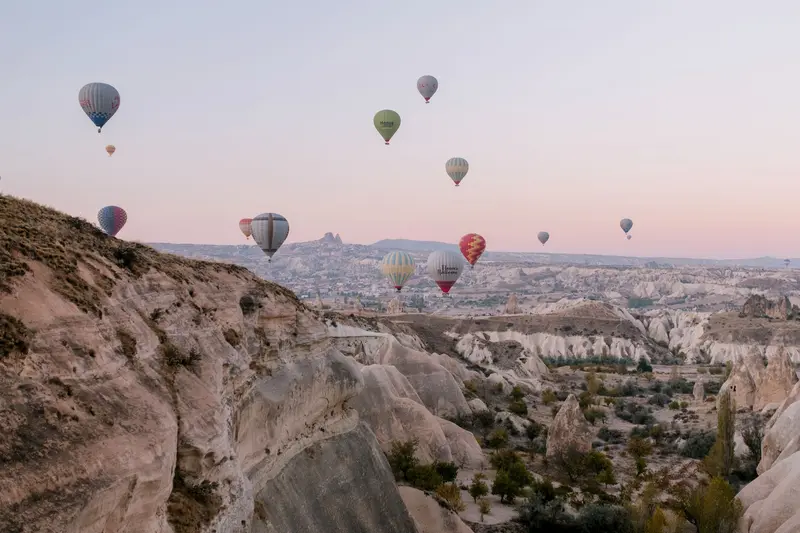
    Göreme is a town with around 2,000 inhabitants in the center of Cappadocia, surrounded by valleys full of fairy chimneys. Here you'll find the open-air museum with its rock-cut churches and hiking trails through Rose, Red, and Love Valley, above which hot-air balloons glide at sunrise. Many old cave houses are now hotels; Uçhisar and Çavuşin can be reached on foot through the valleys.
    Ürgüp

    Ürgüp

    Ürgüp is a small town with just under 25,000 inhabitants in the heart of Cappadocia and is considered the main center for regional viticulture. Ottoman-era stone houses, cave hotels in the rock faces, and the Temenni Wish Hill define the center. At the western entrance to the town stand the Üç Güzeller Fairy Chimneys; a few kilometers south lies the village of Mustafapaşa with its Greek mansions.
    Derinkuyu

    Derinkuyu

    Derinkuyu is located in southern Cappadocia on the road from Nevşehir to Niğde and is known for its underground city. Its passages, halls, and stables extend approximately 85 meters deep, where up to 20,000 people once found refuge. A few kilometers north lies the second major underground city, Kaymaklı; both belong to the UNESCO World Heritage Site of Göreme.
    Ihlara Valley

    Ihlara Valley

    The Ihlara Valley is a gorge up to 150 metres deep in the southwest of Cappadocia, about an hour and a half by car from Göreme. The Melendiz River carved it into the tuff of the Hasan Dağı volcano, and around 50 rock churches lie in its walls. A hiking trail follows the water for about 14 kilometres from Ihlara via Belisırma to the rock monastery of Selime.
    Hattuşa

    Hattuşa

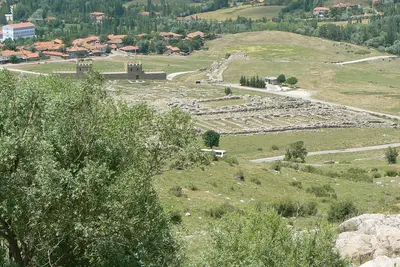
    From approximately 1650 BC, Hattuşa served as the Hittite capital and has been on the UNESCO World Heritage List since 1986. The ruins are situated near Boğazkale in Çorum Province, approximately two hours by car east of Ankara. City walls, the Lion and Sphinx Gates, the Great Temple, and the Yazılıkaya rock sanctuary reveal how the Hittites built and worshipped their gods.

    Sources & method

    • Photos: Pexels. Each photo carries its credit.
    • The content is based on web research from public, traceable sources. How the content is made · The role of AI