Fernweh
    ExploreTravel GuidesMy Trips
    de|en
    About FernwehImprintFAQPrivacy Policy
    ExploreTravel GuidesMy Trips
    Kgalagadi Transfrontier Park

    Kgalagadi Transfrontier Park

    City
    1. Home
    2. Destinations
    3. South Africa
    4. Northern Cape
    5. Kgalagadi Transfrontier Park
    Immerse yourself in the untouched wilderness of the Kgalagadi Transfrontier Park, where the vibrant red dunes of the Kalahari meet vast savannas, creating a breathtaking backdrop for an unparalleled safari experience. This cross-border park, a unification of South Africa's Kalahari Gemsbok National Park and Botswana's Gemsbok National Park, is a paradise for big cats and desert animals, promising you unforgettable encounters with nature in its purest form.
    • Neighborhoods & highlights
    • Eat & drink
    • Culture
    • Getting around
    • Accommodation
    • Plan trip
    • Nearby
    • Neighborhoods & highlights
    • Eat & drink
    • Culture
    • Getting around
    • Accommodation
    • Plan trip
    • Nearby

    Overview

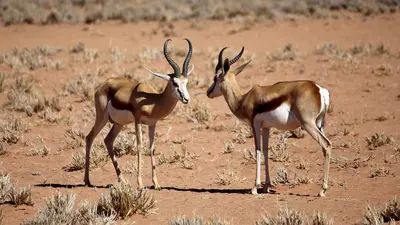
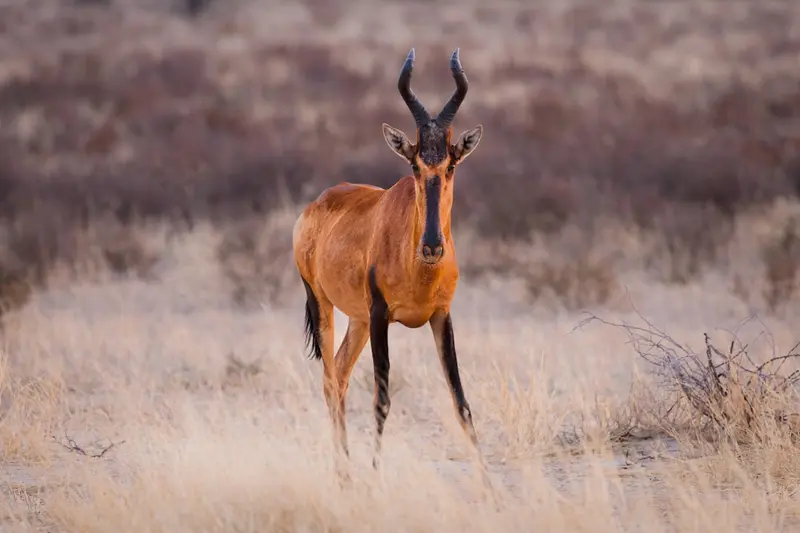
    The Kgalagadi Transfrontier Park, a transfrontier conservation area in South Africa and Botswana, impresses with its unspoiled landscapes and the distinctive red dunes of the Kalahari. You will experience a unique ecosystem, shaped by the fossil riverbeds of the Auob and Nossob, which serve as central attractions for wildlife. The park is known for its populations of big cats, especially the majestic Kalahari lions, as well as for large herds of gemsboks and springboks. At the numerous waterholes along the riverbeds, you will find the best viewing opportunities, particularly during the cooler morning and evening hours. The dry season from May to October is ideal for a visit, as the animals then concentrate around the remaining water sources. For self-drivers, it is essential to carry sufficient water and fuel to safely navigate the remoteness.

    Places in Kgalagadi Transfrontier Park

    Discover the most important sights and attractions

    Sights in Kgalagadi Transfrontier Park

    Twee Rivieren Rest Camp

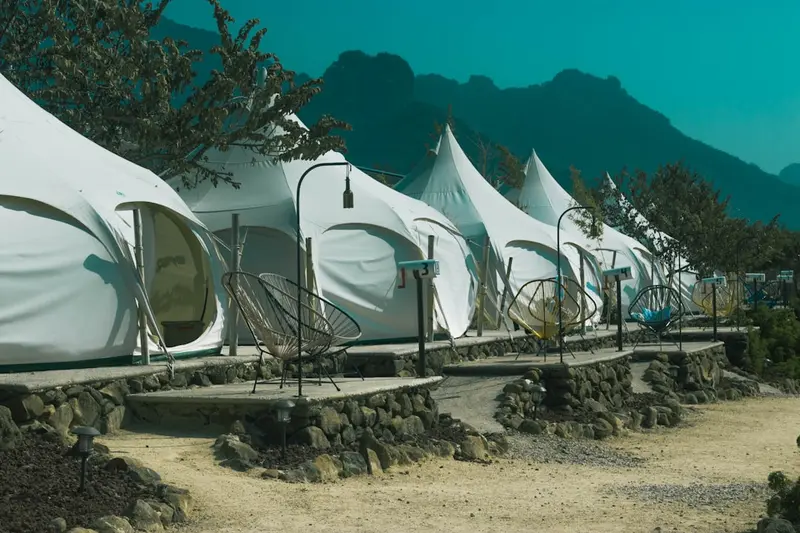
    The Twee Rivieren Rest Camp serves as the southern main gate and administrative hub of the Kgalagadi Transfrontier Park in South Africa. As the primary entry point from the South African side, it's often your first point of contact with this unique desert conservation area. Here, you'll find not only the park administration and a fuel station but also a well-stocked shop offering basic supplies and souvenirs. The camp offers various accommodation options, from campsites to comfortable chalets, all providing a convenient base for your explorations into the park.Its strategic location on the border between South Africa and Botswana makes it a crucial hub for travellers wishing to traverse the entire park. A practical tip: Plan your arrival to allow ample time for registration and completing necessary formalities, especially if you intend to cross the border into Botswana. The illuminated waterhole directly at the camp often attracts nocturnal animals, offering an excellent opportunity to observe wildlife comfortably from the camp surroundings. For the best wildlife viewing, utilise the early morning or late afternoon hours for game drives into the surrounding dry riverbeds, where predators like lions and cheetahs are frequently spotted.
    Open in Google Maps

    Nossob Rest Camp

    Nossob Rest Camp in the Kgalagadi Transfrontier Park is a central hub for travelers looking to explore the unique desert landscape and its wildlife. Strategically situated along the dry Nossob riverbed, once a crucial migration route for wildlife, the camp serves as an indispensable base for self-drive safaris. Here you'll find a range of accommodations, from campsites to comfortable chalets, along with essential facilities like a shop and a fuel station. The camp's highlight is the floodlit waterhole, which holds a fascinating allure for wildlife, especially after sunset. Here, with a bit of luck, you can observe nocturnal predators such as leopards or hyenas coming to drink. The desert's silence, broken only by the sounds of nature, makes this an unforgettable experience. Practical Tip: Spend at least one evening at the waterhole; the chances of rare sightings here are high. For the best wildlife viewing in the camp's broader vicinity, it's advisable to utilize the early morning or late afternoon, when animals are most active. Book your accommodation well in advance, especially during peak season, as capacities are limited.
    Open in Google Maps

    Mata-Mata Rest Camp

    The Mata-Mata Rest Camp is picturesquely situated on the banks of the normally dry Auob Riverbed in the Kgalagadi Transfrontier Park, serving as an important base for exploring this unique desert landscape. As one of the three main camps in the South African section of the park, it offers essential infrastructure amidst the wilderness. Historically, its location on the border with Namibia is significant, as the Kgalagadi Park is a transfrontier conservation area. Here, you'll find comfortable self-catering chalets, a small shop for essentials, and a refreshing swimming pool. However, the main draw is the floodlit waterhole directly at the camp, offering excellent opportunities for wildlife viewing. Here, springboks, wildebeest, and with a bit of luck, predators like lions or leopards often gather. Our tip: Spend the early mornings or late afternoons at the waterhole to see the most active animals. For undisturbed photos, the camp's elevated viewing platform is recommended.
    Open in Google Maps

    Auob und Nossob Flussbetten

    Die trockenen Flussbetten des Auob und Nossob sind die Lebensadern des Parks und die Hauptrouten für Wildbeobachtungen. Entlang dieser Wege konzentrieren sich die Wasserlöcher, die unzählige Tiere anziehen – von den großen Herden der Oryx und Springböcke bis hin zu den gefährlichen Raubtieren, die hier auf ihre Beute lauern. Eine Fahrt entlang dieser Pfade ist ein Muss, um die volle Pracht des Kgalagadi zu erleben.
    Open in Google Maps

    Rooiputs Campsite 4

    Rooiputs Campsite 4 offers an unparalleled wilderness experience in the Kgalagadi Transfrontier Park. This park is a pioneer in transboundary conservation efforts between South Africa and Botswana, established in 2000 to preserve this unique ecosystem. Here, amidst the red dunes of the Kalahari, you'll find an unfenced environment that allows direct encounters with wildlife. Expect basic facilities such as a dry toilet and a shower bracket; you must bring your own water and firewood. Especially in the early morning and late afternoon, you'll have excellent chances to observe predators like lions or leopards directly from your campsite. Its remoteness also guarantees a breathtaking night sky. Our tip: Book well in advance, as places are highly sought after. Always be aware of your surroundings and maintain a safe distance from wildlife.
    Open in Google Maps

    Restaurants & Cafes

    Historic Heritage and Kgalagadi Cultures

    While the Kgalagadi Transfrontier Park is primarily known for its pristine wilderness and unique wildlife, it also holds a **deep human heritage** stretching back millennia. The history of this arid land is inextricably linked to the indigenous peoples who once inhabited it, and whose traces are still visible today. Cultural expressions and historical contexts shape the understanding of this unique region.The history of the Kalahari region is closely intertwined with the **San people** (Bushmen), who lived here as hunter-gatherers for tens of thousands of years. Their traditional way of life, their comprehensive knowledge of the desert's flora and fauna, as well as their orally transmitted stories and spiritual practices, form the cultural foundation of this area. Although no prominent archaeological sites or rock paintings are directly accessible within the park, artifacts and the continuous presence of their descendants bear witness to this deep connection to the landscape.The park's establishment in 1999, through the merging of the Kalahari Gemsbok National Park in South Africa and the Gemsbok National Park in Botswana, is a more recent historical event reflecting efforts towards transboundary conservation. Adjacent to the South African park area lives the **Mier community**, which includes descendants of the San. This community plays a vital role in preserving its cultural heritage and is actively involved in conservation and tourism initiatives, allowing the ancient culture to live on in a modern context.

    Exploring Locally

    The Kgalagadi Transfrontier Park is a vast wilderness area where getting around differs fundamentally from urban regions. A 4x4 vehicle is absolutely essential for self-drivers to navigate the sandy tracks and explore all park areas. Public transport like metro, bus, or tram is not available here; nor are taxis or urban-style ride-sharing services. Transfers usually need to be privately arranged in advance. Walking is strictly prohibited outside fenced camps due to wildlife, and bicycles or e-scooters are also not permitted in the park. For travelers without their own 4x4 vehicle, guided game drives are the best option to experience the wildlife safely and expertly. Plan sufficient fuel and supplies, and always observe the park rules and speed limits for a safe safari.

    Accommodations in Kgalagadi Transfrontier Park

    Accommodations in Kgalagadi Transfrontier Park

    Find perfect stay in Kgalagadi Transfrontier Park

    Booking.com
    Search Hotels
    Agoda
    Search Hotels
    Airbnb
    Vacation Rentals
    Hotels.com
    Hotels Worldwide
    Hostelworld
    Hostels

    Plan your trip to Kgalagadi Transfrontier Park

    Save places, build a route and plan your city trip — all in one place.

    Save places

    Bookmark sights, restaurants and neighborhoods you're interested in.

    Build your route

    Turn your bookmarks into a route — define order, days and budget.

    Refine with AI

    Let Mein Fernweh suggest experiences and put together a tailored daily plan.

    Start trip planningOpen bookmarks

    Locations nearby

    These places are nearby — perfect for additional days or a day trip.

    Upington

    Upington

    Welcome to Upington, the vibrant heart of South Africa's Northern Cape Province and the gateway to the captivating "Green Kalahari"! Nestled directly on the majestic Orange River, this city is a true oasis which, with its fertile surroundings and vast, dry landscapes, creates a unique backdrop.Here you can experience the rich history of the region, feel the life-giving power of the river firsthand, and let yourself be enchanted by the warm hospitality of the people, while discovering the agricultural wonders such as the famous wine and raisin growing areas.
    Augrabies Falls

    Augrabies Falls

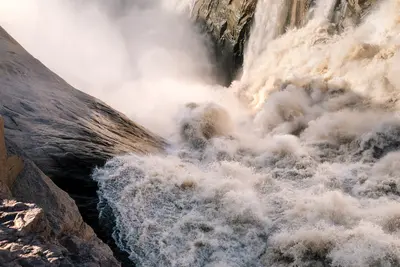
    Prepare yourself for an unforgettable natural spectacle: The Augrabies Falls in South Africa are a majestic wonder, where the mighty Orange River tumbles thunderously into a 56-meter-deep granite gorge. Surrounded by a rugged, primeval landscape of granite formations and aloe forests, you'll discover here not only the untamed power of the water, but also a unique flora and fauna that makes this place a true highlight of your journey through the Northern Cape Province.
    Namaqualand

    Namaqualand

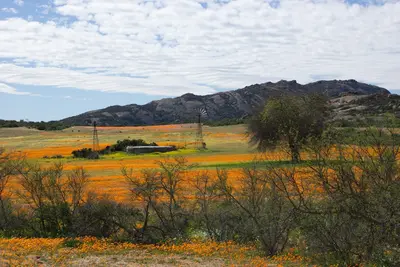
    The Namaqualand is a unique semi-desert region in South Africa, which once a year transforms into a breathtaking sea of flowers.Famous for its spectacular wildflower display in spring, it offers an unparalleled nature experience and insights into a rugged, yet beautiful landscape.
    Springbok

    Springbok

    As the regional hub of Namaqualand, Springbok serves as an important junction on the N7 in South Africa. The town is particularly known for its spectacular spring wildflower bloom, which transforms the otherwise barren landscape into a sea of colours. In the Goegap Nature Reserve, east of the town, you can experience this natural splendour and the unique flora of the Succulent Karoo. Springbok's history, closely linked to copper mining, becomes tangible in the Namaqualand Museum and through old mine workings. The strategically important Koppie, a hill in the town centre, bears witness to its role in the Anglo-Boer War. The best time to visit for the bloom is between August and September; outside this period, Springbok serves as a practical stopover en route to Namibia.
    Northern Cape

    Northern Cape

    Discover the Northern Cape, South Africa's largest and most sparsely populated province, a region of breathtaking vastness and untamed beauty that will captivate you with its quiet majesty and unparalleled natural phenomena. Here you can expect endless, star-studded nights, the spectacular floral display of Namaqualand, and the thundering waters of Augrabies Falls. Let yourself be enchanted by the rugged elegance of the Karoo and the Kalahari, where the history of the diamond rush meets a rich San culture.