Fernweh
    ExploreTravel GuidesMy Trips
    de|en
    About FernwehImprintFAQPrivacy Policy
    ExploreTravel GuidesMy Trips
    Augrabies Falls

    Augrabies Falls

    City
    1. Home
    2. Destinations
    3. South Africa
    4. Northern Cape
    5. Augrabies Falls
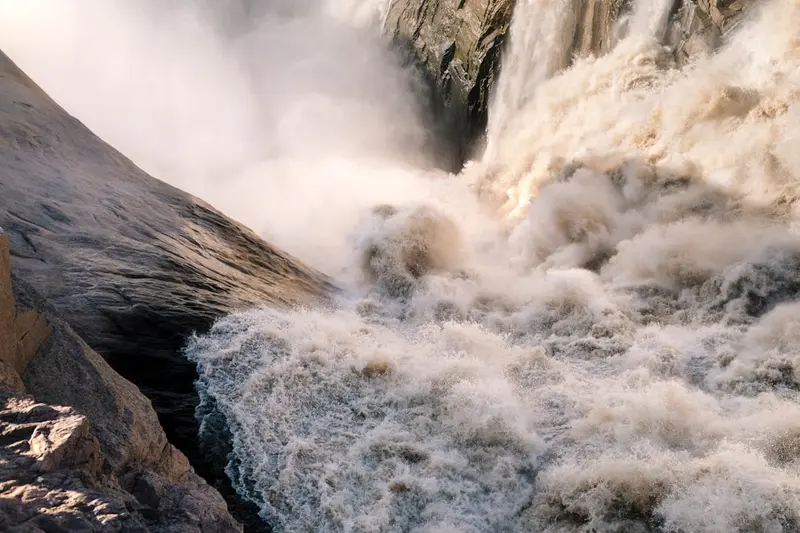
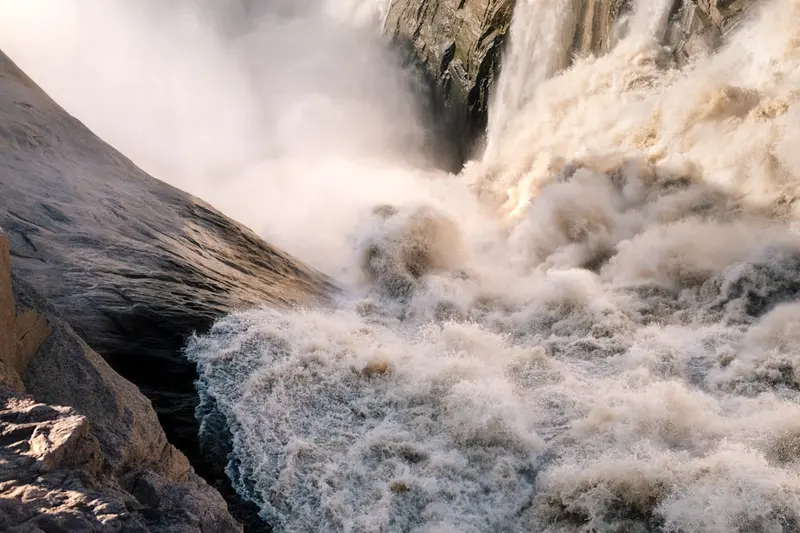
    Prepare yourself for an unforgettable natural spectacle: The Augrabies Falls in South Africa are a majestic wonder, where the mighty Orange River tumbles thunderously into a 56-meter-deep granite gorge. Surrounded by a rugged, primeval landscape of granite formations and aloe forests, you'll discover here not only the untamed power of the water, but also a unique flora and fauna that makes this place a true highlight of your journey through the Northern Cape Province.
    • Neighborhoods & highlights
    • Eat & drink
    • Culture
    • Getting around
    • Accommodation
    • Plan trip
    • Nearby
    • Neighborhoods & highlights
    • Eat & drink
    • Culture
    • Getting around
    • Accommodation
    • Plan trip
    • Nearby

    Overview

    The Augrabies Falls in South Africa are an impressive natural spectacle, where the Orange River plunges 56 meters deep into a granite gorge. The Khoikhoi name 'Aukoerebis', 'Place of Great Noise', aptly describes the roaring water. The national park offers bizarre granite formations, quiver trees, and unique desert vegetation. From viewpoints like the Main Waterfall Viewpoint and Moon Rock, you'll enjoy diverse perspectives. The best time to visit is from March to May after the rainy season; also plan for hikes.

    Places in Augrabies Falls

    Discover the most important sights and attractions

    Sights in Augrabies Falls

    Augrabies Falls (Hauptkatarakt)

    The Augrabies Falls, whose name originates from the Khoikhoi word "Aukoerebis", signifying "place of great noise", represent an impressive natural phenomenon situated on the Orange River in South Africa. This name accurately describes the immense roar generated by the main cataract as the water violently plunges into the deep gorge. Here, you will witness the Orange River dramatically plummeting over a 56-meter high edge into an 18-kilometer long gorge. Especially impressive is the main cataract, where the vast masses of water force their way through a narrow rock crevice and surge into the depths with enormous power. The surrounding landscape is characterized by stark beauty, granite rocks, and the unique flora of the semi-desert. Over millions of years, the sheer force of the water has carved out a spectacular geological formation, which you can observe from various strategically placed viewpoints. Our Tip: For the absolute best view of the main cataract and to effectively avoid the largest crowds, a visit early in the morning or late in the afternoon is highly recommended. The well-placed viewing platforms offer secure locations for taking memorable photos. Be sure to pay close attention to the distinct dry and rainy seasons; during the rainy season (typically November to April), the river carries a significantly greater volume of water, which makes the entire spectacle even more intensely powerful.
    Open in Google Maps

    Moon Rock

    The Moon Rock is an impressive, smooth granite dome within Augrabies Falls National Park, showcasing a unique geological formation. This massive rock formation owes its name to its resemblance to a lunar landscape, shaped by millions of years of erosion and tectonic activity. From the summit of Moon Rock, you can enjoy a wide panoramic view over the arid landscape, the course of the Orange River, and the deep gorge. Its surface has been smoothed by wind and water, lending it a distinctive appearance and impressively highlighting the raw beauty of the South African semi-desert. Our Tip: For the best light conditions and to avoid the intense midday heat, we recommend visiting in the early morning or late afternoon. This is also the ideal time for impressive photos. Ensure sturdy footwear, as the ascent onto the smooth surface can be slippery in some places.
    Open in Google Maps

    Oranjekom Viewpoint

    The Oranjekom Viewpoint offers you one of the most spectacular views of the Augrabies Falls, where the Orange River plunges into a deep gorge. This viewpoint is named after the river, whose name 'Orange' refers to the often sediment-rich colour of its water. From here, you experience the raw power of the water as it pours over the granite rocks, creating an impressive spray cloud. The geological formation of the gorge is the result of millions of years of erosion by the river, which carves its way through the hard rock. You look directly into the 'Gat', the main fall, and can observe the immense masses of water rushing into the depths. Our tip: Visit the Oranjekom Viewpoint in the early morning to capture the best light for photos and avoid the largest crowds. Pay attention to the signage and stay on the marked paths, as the rocks can be slippery. The view is particularly impressive after heavy rainfall in the Orange River's catchment area, when the water masses reach their peak.
    Open in Google Maps

    Dassie Nature Trail

    The Dassie Nature Trail at Augrabies Falls offers you an excellent opportunity to experience the unique landscape of the National Park up close. This relatively short but informative circular trail is named after the ubiquitous rock hyraxes, also known as dassies, which you might spot on the rocks with a bit of luck. The path leads you along the impressive gorge and opens up spectacular views of the waterfalls and the surrounding, sparse desert vegetation. You'll pass various viewpoints, offering new perspectives on the mighty waters of the Orange River. A practical tip: Start your hike early in the morning or late in the afternoon to avoid the intense midday heat and make the most of the best lighting for photos. Look out for the special flora, such as the quiver trees, which have adapted to the dry climate. Don't forget to bring enough water and wear sturdy footwear, as the terrain can be uneven.
    Open in Google Maps

    The Rock 4x4 campsite

    The Rock 4x4 campsite offers you a unique wilderness experience in Augrabies Falls National Park. This secluded pitch is specifically designed for off-road vehicles, allowing you to delve deeper into the rugged landscape of the Northern Cape. You'll find yourself amidst dramatic granite formations, characteristic of the region around the Orange River. The site itself is kept minimalist, fostering an authentic nature experience, far from the park's more frequented areas. Expect basic facilities and an unparalleled tranquility under the vast starry sky. The geological nature of the surroundings, shaped by millions of years of erosion, is particularly palpable here. Our tip: Plan your visit during the cooler months from May to September to avoid the extreme summer temperatures. Ensure you bring sufficient water, fuel, and all necessary supplies for a self-sufficient overnight stay, as there are no provisions on site. For impressive landscape photographs, the early morning or late afternoon hours are ideal, when the light optimally showcases the rock formations.
    Open in Google Maps

    Restaurants & Cafés

    Culture, Art & History of the Augrabies Falls

    The Augrabies Falls are not only a natural wonder but also deeply rooted in the history and culture of South Africa. Their original name, Aukoerebis, comes from the indigenous Khoikhoi people and means "Place of Great Noise." This name testifies to the indigenous population's deep connection with this majestic landscape.The region around the falls has been inhabited by the Khoisan peoples for millennia. Their oral traditions and traditional practices are closely linked to the Orange River and its dramatic waterfalls. The spirituality of the Khoisan communities often views such natural phenomena as sacred places where spirits reside or important rituals took place. Although there are no architectural structures of ancient civilizations at the falls, the cultural presence is palpable through the naming and oral history. The arrival of European settlers in the 18th century led to the corruption of the name to "Augrabies," yet its original meaning remains a cornerstone of the region's cultural heritage. Today, the Augrabies Falls National Park is a testament to this rich history, preserving both the natural beauty and the cultural significance of the place.

    Exploring Locally

    Getting around to and within Augrabies Falls, an impressive national park in South Africa's Northern Cape, differs fundamentally from urban destinations. A municipal metro, bus, or tram network does not exist here. Arrival at the park typically involves a private rental car from nearby cities like Upington, or as part of an organized safari or transfer tour. This is the most flexible method for exploring the region.Within the national park, the main attractions are accessible via well-maintained roads. However, for short distances and exploring the viewpoints around the waterfalls, the park is designed to be extremely pedestrian-friendly, with numerous well-marked paths and elevated boardwalks. Hikes require sturdy footwear and sufficient water, especially during the hot months. Bicycles or e-scooters are impractical for the vastness of the park and are not common modes of transport.Given the remote nature of the area, conventional taxi or ride-sharing services are rarely available or extremely expensive. It is advisable to organize all transportation in advance. Visitors should note that with an entrance ticket, they can drive their private vehicle into the park and use the internal roads to reach the various viewpoints and picnic areas.

    Accommodations in Augrabies Falls

    Accommodations in Augrabies Falls

    Find perfect stay in Augrabies Falls

    Booking.com
    Search Hotels
    Agoda
    Search Hotels
    Airbnb
    Vacation Rentals
    Hotels.com
    Hotels Worldwide
    Hostelworld
    Hostels

    Plan your trip to Augrabies Falls

    Save places, build a route and plan your city trip — all in one place.

    Save places

    Bookmark sights, restaurants and neighborhoods you're interested in.

    Build your route

    Turn your bookmarks into a route — define order, days and budget.

    Refine with AI

    Let Mein Fernweh suggest experiences and put together a tailored daily plan.

    Start trip planningOpen bookmarks

    Locations nearby

    These places are nearby — perfect for additional days or a day trip.

    Upington

    Upington

    Welcome to Upington, the vibrant heart of South Africa's Northern Cape Province and the gateway to the captivating "Green Kalahari"! Nestled directly on the majestic Orange River, this city is a true oasis which, with its fertile surroundings and vast, dry landscapes, creates a unique backdrop.Here you can experience the rich history of the region, feel the life-giving power of the river firsthand, and let yourself be enchanted by the warm hospitality of the people, while discovering the agricultural wonders such as the famous wine and raisin growing areas.
    Kgalagadi Transfrontier Park

    Kgalagadi Transfrontier Park

    Immerse yourself in the untouched wilderness of the Kgalagadi Transfrontier Park, where the vibrant red dunes of the Kalahari meet vast savannas, creating a breathtaking backdrop for an unparalleled safari experience. This cross-border park, a unification of South Africa's Kalahari Gemsbok National Park and Botswana's Gemsbok National Park, is a paradise for big cats and desert animals, promising you unforgettable encounters with nature in its purest form.
    Namaqualand

    Namaqualand

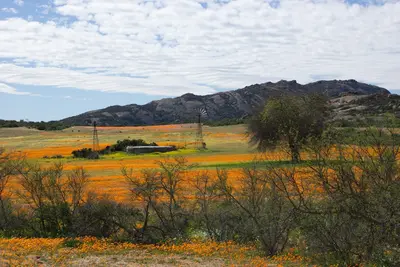
    The Namaqualand is a unique semi-desert region in South Africa, which once a year transforms into a breathtaking sea of flowers.Famous for its spectacular wildflower display in spring, it offers an unparalleled nature experience and insights into a rugged, yet beautiful landscape.
    Springbok

    Springbok

    As the regional hub of Namaqualand, Springbok serves as an important junction on the N7 in South Africa. The town is particularly known for its spectacular spring wildflower bloom, which transforms the otherwise barren landscape into a sea of colours. In the Goegap Nature Reserve, east of the town, you can experience this natural splendour and the unique flora of the Succulent Karoo. Springbok's history, closely linked to copper mining, becomes tangible in the Namaqualand Museum and through old mine workings. The strategically important Koppie, a hill in the town centre, bears witness to its role in the Anglo-Boer War. The best time to visit for the bloom is between August and September; outside this period, Springbok serves as a practical stopover en route to Namibia.
    Port Nolloth

    Port Nolloth

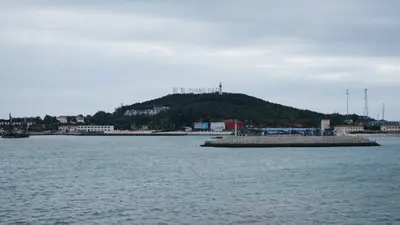
    Port Nolloth, a remote coastal town in South Africa, is deeply connected to the history of diamond mining and fishing. Here you'll find a unique atmosphere, shaped by the rugged beauty of the Namaqualand Desert and the Atlantic Ocean. The Port Nolloth Museum offers detailed insights into the region's former diamond industry and maritime heritage. A stroll along the harbour allows you to observe local fishermen at work and purchase fresh fish directly from the boat. The surrounding coastal landscape invites you to explore untouched beaches, where you can discover the unique flora of Namaqualand. Ideally, plan your visit during the South African spring (August to October) to experience the spectacular wildflower bloom that transforms the desert into a sea of colours.