Fernweh: Home
ExploreGuideDestinationsMy tripsMy trip
de|en
All Places & RegionsRound tripsNight trains in EuropeAll highlightsAbout FernwehFAQPrivacy PolicyImprint
Download on the App StoreGet it on Google Play
ExploreGuideDestinationsMy tripsMy trip
    • Neighborhoods & highlights
    • Walking tours
    • Tours
    • Eat & drink
    • Culture
    • Getting around
    • Accommodation
    • Plan trip
    • Round trips
    • Nearby
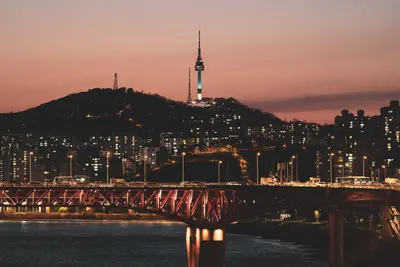
    Seoul

    Photo by Hyeok Jang on Pexels

    South Korea

    Seoul

    City

    Seoul ist das politische, wirtschaftliche und kulturelle Zentrum Südkoreas: rund 9,3 Millionen Menschen leben in der Stadt am Han-Fluss, im Großraum sind es rund 26 Millionen.

    by Felix Gillen

    1. Home
    2. Destinations
    3. South Korea
    4. Seoul
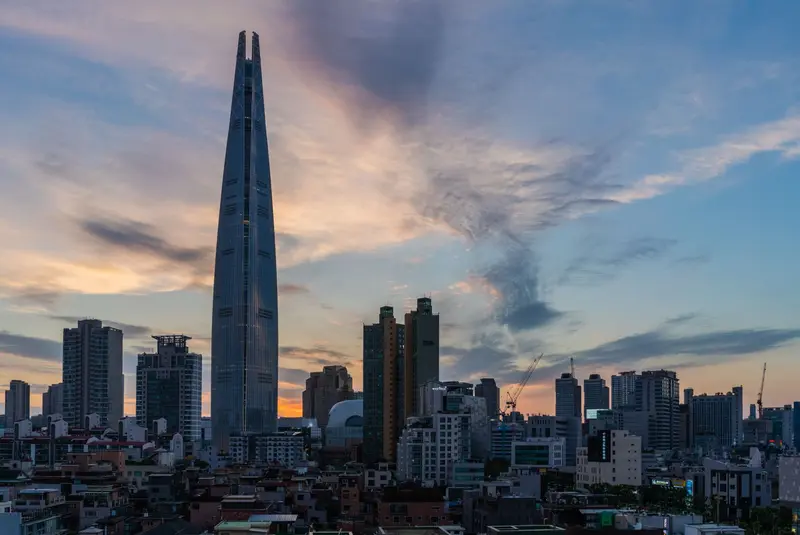
    Seoul ist das politische, wirtschaftliche und kulturelle Zentrum Südkoreas: rund 9,3 Millionen Menschen leben in der Stadt am Han-Fluss, im Großraum sind es rund 26 Millionen. Fünf Königspaläste und der Ahnenschrein Jongmyo erinnern an die über 500 Jahre, in denen Seoul Hauptstadt der Joseon-Dynastie war. Daneben findest du Hanok-Gassen in Bukchon und Ikseon-dong, quirlige Märkte wie Gwangjang, das Designzentrum DDP von Zaha Hadid und den 555 Meter hohen Lotte World Tower. Abends locken die Studenten- und Musikszene in Hongdae, das internationale Itaewon und das schicke Gangnam südlich des Flusses.
    South Korea travel guideSee the round tripPlan a trip with Seoul

    Contents

    • Neighborhoods & highlights
    • Walking tours
    • Tours
    • Eat & drink
    • Culture
    • Getting around
    • Accommodation
    • Round trips
    • Nearby
    Gangnam and Jamsil

    Photo by Ethan Brooke on Pexels

    District 1 of 4

    Gangnam and Jamsil

    South of the Han River lie Seoul's affluent business and shopping districts.

    Discover
    Insadong and Ikseon-dong

    S h y numis / Wikimedia Commons / CC BY-SA 4.0, mod.

    District 2 of 4

    Insadong and Ikseon-dong

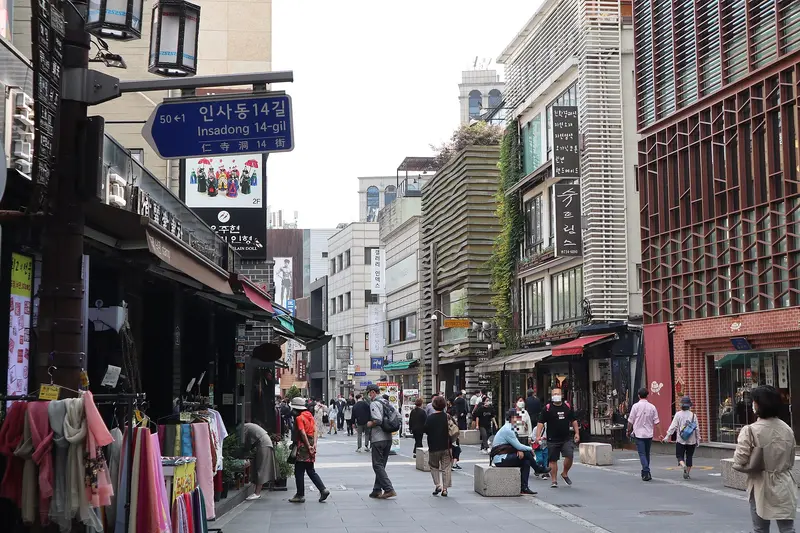
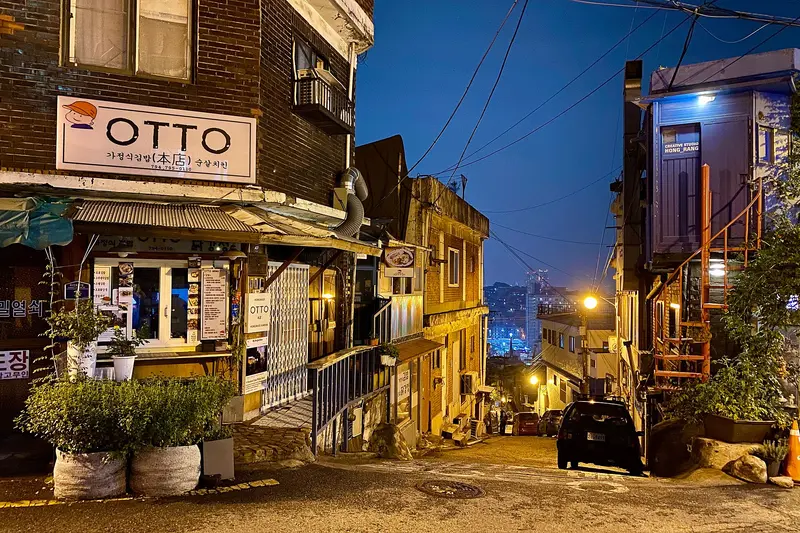
    The approximately 700-meter-long Insadong-gil is Seoul's street for handicrafts, antiques, galleries, and teahouses; on weekends, it belongs to pedestrians and street musicians.

    Discover
    Itaewon and Yongsan

    Aatu Dorochenko / Wikimedia Commons / CC BY-SA 4.0, mod.

    District 3 of 4

    Itaewon and Yongsan

    Itaewon, on Namsan's southern slope, is Seoul's most international district, renowned for global restaurants and vibrant nightlife.

    Discover
    Jongno and Palace Quarter

    Photo by Daniel Bernard on Unsplash

    District 4 of 4

    Jongno and Palace Quarter

    Seoul's historic heart stretches from Gwanghwamun Square, featuring statues of King Sejong and Admiral Yi Sun-sin, to the Joseon Dynasty palaces.

    Discover

    More districts in Seoul

    Myeongdong and Namsan

    Nathan Park·Unsplash

    Myeongdong and Namsan

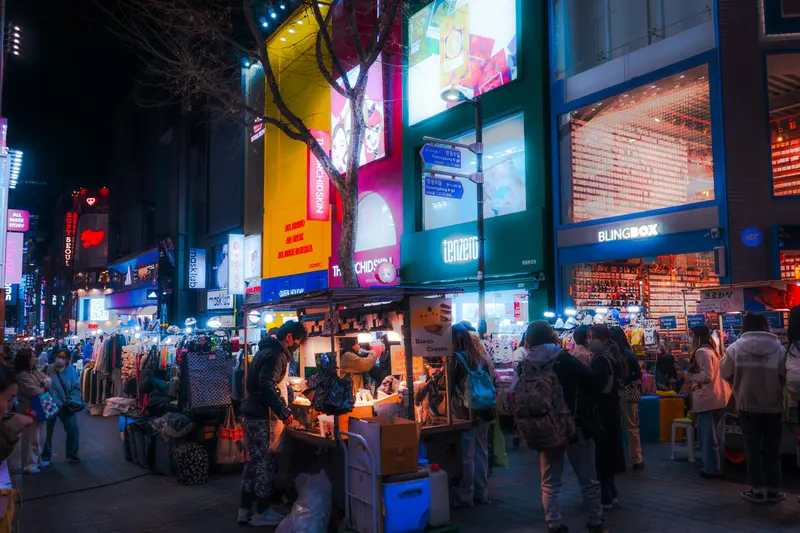
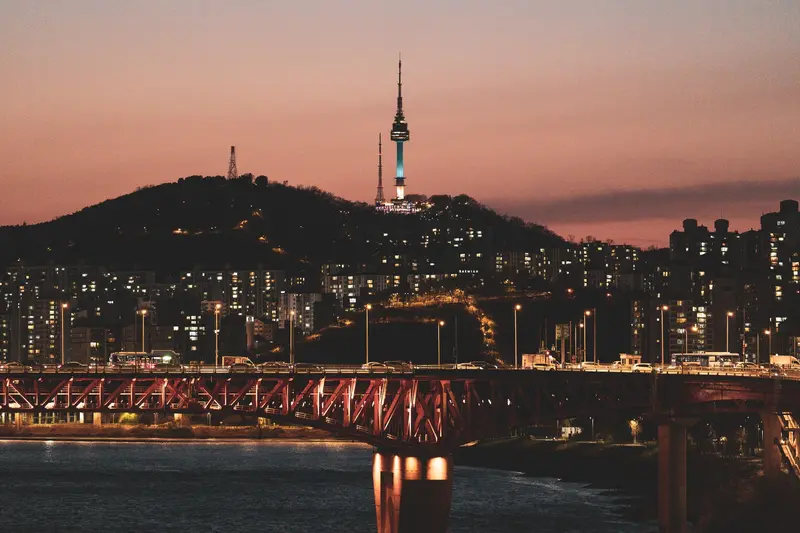
    Myeongdong is Seoul's shopping district for fashion and cosmetics; in the evenings, street food stalls line the alleys. The neo-Gothic Myeongdong Cathedral towers above the district, and behind it, Namsan Mountain, home to the N Seoul Tower, ascends. The district also encompasses Sungnyemun Gate, the large Namdaemun Market, and the elevated park Seoullo 7017 at Seoul Station.
    Hongdae and Mapo

    Patrick·Unsplash

    Hongdae and Mapo

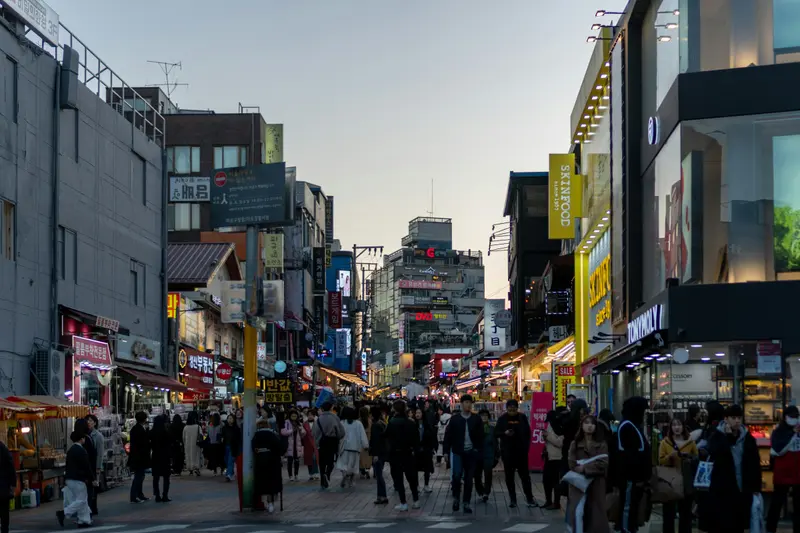
    Around Hongik University in Mapo District, a young neighborhood with art, indie bands, and live clubs has emerged, known simply as Hongdae. Along a former railway line, the Gyeongui Line Forest Park stretches, a green strip lined with cafes on both sides. In neighboring Mangwon, the market blends traditional stalls with new cafes and dessert shops.
    Dongdaemun

    TealAlligator·CC BY-SA 4.0

    Dongdaemun

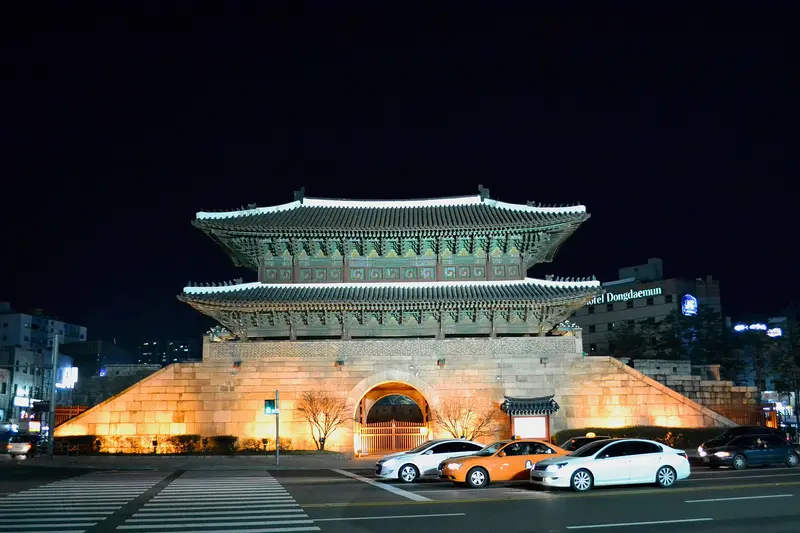
    Dongdaemun is named after Heunginjimun, the Great East Gate of the old city wall, its current structure dating to 1869. Around the gate, history and fashion converge: Zaha Hadid's Dongdaemun Design Plaza opened in 2014, and next door, the Dongdaemun History & Culture Park reveals excavated city wall remains. From the gate, a section of the city wall leads to Naksan, and in market alleys, restaurants have for decades cooked Dakhanmari, a whole chicken in a pot.

    Sights in Seoul

    Discover the most important sights and attractions

    Attraction

    1Gyeongbokgung

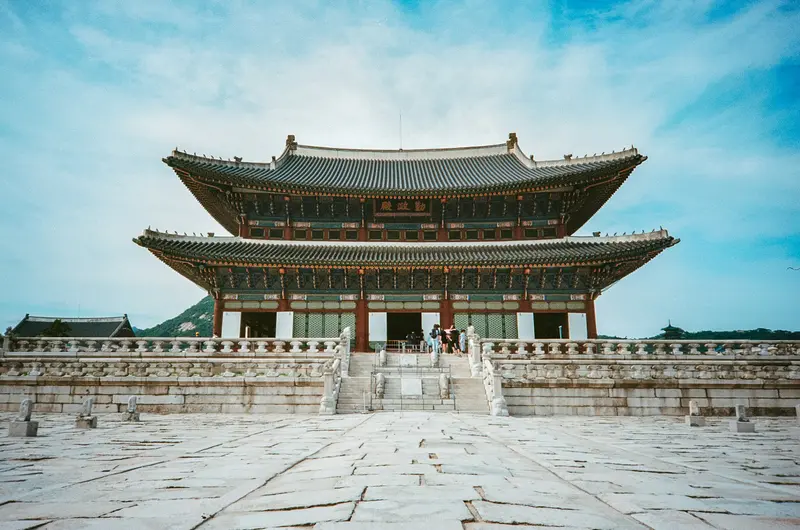
    The first palace of the Joseon Dynasty was built in 1395, destroyed in the Imjin War in 1592, and rebuilt in 1867. Behind the main gate Gwanghwamun, the Throne Hall, Banquet Pavilion, and gardens extend against the backdrop of Bugaksan. Practical: closed Tuesdays, admission 3,000 Won, free in Hanbok, under 19 and over 65; guard changing ceremony at the gate at 10 AM and 2 PM. Plan at least two hours; the National Folk Museum is located on the grounds.
    Open in Google Maps
    Attraction

    2Changdeokgung and Huwon Palace Garden

    Founded in 1405, the palace blends harmoniously into the hilly landscape and has been on the UNESCO World Heritage List since 1997. A highlight is the Huwon Secret Garden, with its ponds and pavilions, which you can only see on a guided tour (5,000 Won in addition to the palace ticket, reserve online). Practical tip: closed Mondays; English garden tours several times daily.
    Open in Google Maps
    Jongmyo

    “Jongmyo-Jeongjeon” by João Trindade / Wikimedia Commons / CC BY 2.0, mod.

    Place of Worship

    3Jongmyo

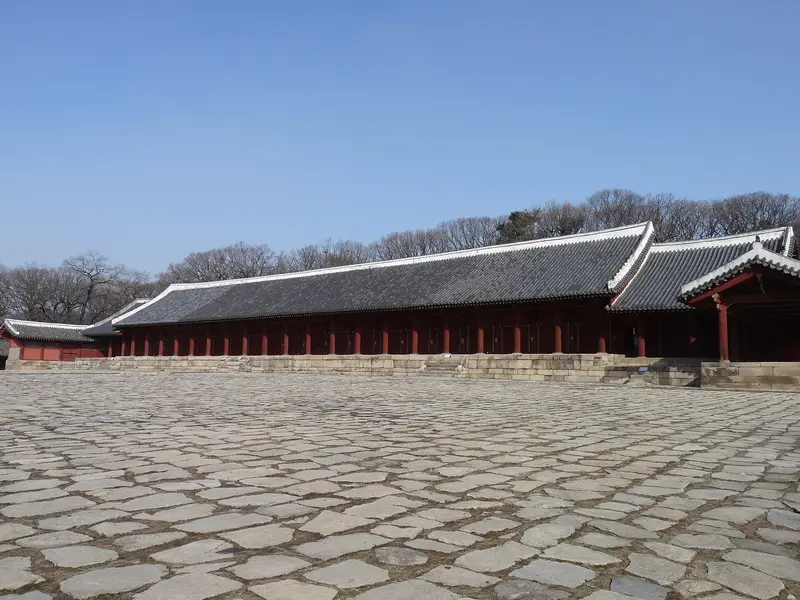
    The Royal Ancestral Shrine, home to memorial tablets of Joseon kings and queens, became a UNESCO World Heritage site in 1995. The long, austere main hall Jeongjeon will reopen in April 2025 after years of restoration. The Jongmyo Jerye ancestral ritual with court music is held here on the first Sunday in May. Practical: closed Tuesdays, 1,000 Won entry. Guided tours only Mon, Wed, Thu, Fri. Free visit Sat, Sun, public holidays, and last Wed of month.
    Open in Google Maps
    Bukchon Hanok Village

    kallerna / Wikimedia Commons / CC BY-SA 4.0, mod.

    Attraction

    4Bukchon Hanok Village

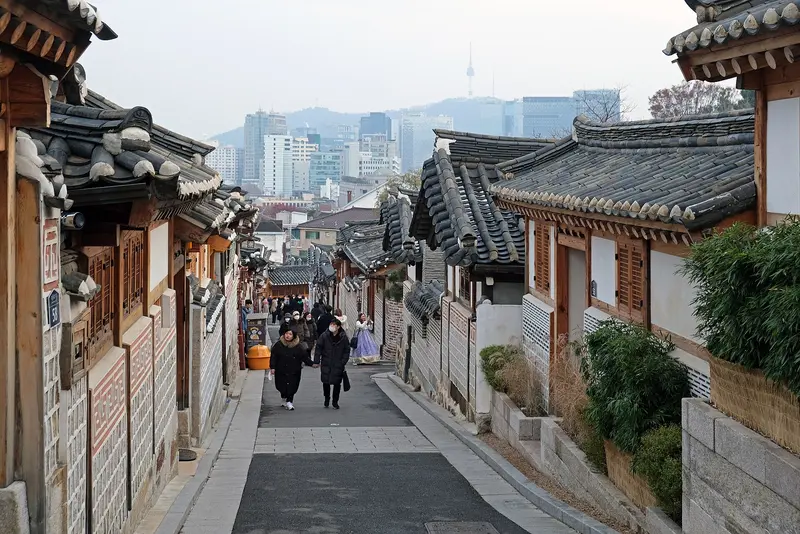
    This hilly residential neighborhood between Gyeongbokgung and Changdeokgung comprises traditional Hanok houses with curved tiled roofs, where people still live today. Due to visitor numbers, tourists may only enter the so-called red zone from 10 AM to 5 PM since 2025; violations can be fined 100,000 Won. Be quiet and respect private entrances.
    Open in Google Maps
    Attraction

    5N Seoul Tower and Namsan

    The 236-meter-high TV Tower stands on Namsan Mountain and has been open to visitors since 1980. From the observation deck, you look out over the entire city to the surrounding mountains. Reach it on foot via forest paths or by the Namsan Cable Car. Admission: Adults 29,000 Won for platform. Open daily from 10 AM until late evening.
    Open in Google Maps
    Park

    6Cheonggyecheon

    The renaturalized city stream was uncovered in 2005 and flows for nearly 11 kilometers through the city center. A sunken riverside path with stepping stones and bridges invites for a walk away from traffic. Around the turn of the year, the Seoul Lantern Festival takes place here.
    Open in Google Maps

    City walks in Seoul

    Curated walking tours through the city's highlights, handpicked by experienced travel journalists.

    Palaces, Hanok and Markets: A Walking Tour of Old Seoul
    This walking tour takes you from Gwanghwamun Square through the Joseon Dynasty palaces and the Bukchon Hanok Village to the food alleys of Gwangjang Market. Plan a full day and start between Wednesday and Sunday: Gyeongbokgung and Jongmyo are closed on Tuesdays, Changdeokgung on Mondays. The distances between the stops are a few hundred meters to just under a kilometer as the crow flies.
    Open in Google Maps
    Stops (8)

    Tours & experiences in Seoul

    Search tours for Seoul on GetYourGuide* (Affiliate link)On GetYourGuide, with reviews from other travellers

    * Affiliate link: if you book through it, we earn a small commission. The price stays the same for you.

    Restaurants in Seoul

    1

    La Yeon

    Contemporary Korean cuisine on the 23rd floor of The Shilla hotel, two-starred in the Michelin Guide Seoul and Busan 2026. Upscale pricing, reservation recommended.
    Show on Google Maps
    2

    Woo Lae Oak

    Traditional restaurant for Pyeongyang Naengmyeon, cold buckwheat noodles in clear broth, and Bulgogi, recommended as a Bib Gourmand in the Michelin Guide 2026. Located between Euljiro and Gwangjang Market, mid-range price.
    Show on Google Maps
    3

    Geumdwaeji Sikdang

    Korean Barbecue in Sindang, a Bib Gourmand in the Michelin Guide Seoul and Busan 2026, offering good value for money.
    Show on Google Maps

    Culture & Practice

    Clever Palace VisitsGyeongbokgung and Jongmyo are closed on Tuesdays, Changdeokgung and Deoksugung on Mondays. Therefore, it's best to plan your palace tour from Wednesday to Sunday.Wearing a Hanbok grants free entry to all five palaces. Visitors under 19 and over 65 also enter Gyeongbokgung for free.The changing of the guard at Gwanghwamun Main Gate happens at 10 AM and 2 PM, except Tuesdays and in heavy rain.You can only visit Changdeokgung's Huwon Secret Garden on a guided tour, booked online in advance. English tours run several times daily.Markets and FoodGwangjang Market is one of the city's most traditional markets. In its food alleys, you'll find Bindaetteok (mung bean pancakes), Mayak-Gimbap, and Yukhoe. Seoul's restaurant scene spans from noodle classics to Mingles, the only three-Michelin-star restaurant in the Michelin Guide Seoul and Busan 2026.FestivalsYeondeunghoe: Before Buddha's Birthday in May, a lantern parade proceeds from Dongdaemun via Jongno Street to Jogyesa Temple. The festival has been a UNESCO Intangible Cultural Heritage since 2020.Seoul Lantern Festival: Around the New Year, light installations illuminate along the Cheonggyecheon Stream.

    Getting There & Around

    From the Airport to the CityFrom Incheon Airport (Terminal 1), the AREX Express train goes non-stop to Seoul Station in 43 minutes; from Terminal 2, it takes around 51 minutes (Adults 13,000 Won, as of November 2026). The AREX Commuter train is cheaper but slower, stopping at Gimpo Airport en route.Gimpo primarily serves domestic flights, e.g., to Jeju.Subway, Bus, and TaxiThe subway, with a T-money card, costs 1,550 Won for the first 10 km as of June 2025; city buses cost 1,500 Won. Card transfers within 30 minutes (60 at night) are discounted.The Climate Card for tourists comes in 1, 2, 3, 5, or 7-day options (1 day 5,000 Won, 7 days 20,000 Won, plus 3,000 Won for the card). Since March 2026, it can also be bought with foreign credit cards at many Lines 1-8 subway machines. It's valid on the subway and most city buses, but not airport buses or the Shinbundang Line.Taxis cost 4,800 Won for the first 1.6 km during the day; higher basic fares apply at night.Long-Distance TravelKTX trains to Busan, Gyeongju, and Jeonju depart from Seoul Station and Yongsan; SRT trains from Suseo Station in Gangnam. Trains for Gangneung and Andong, among others, leave Cheongnyangni.
    Accommodations in Seoul

    Find perfect stay in Seoul

    Booking.com* (Affiliate link)
    Search Hotels
    Agoda* (Affiliate link)
    Search Hotels
    Airbnb
    Vacation Rentals

    * Affiliate link: if you book through it, we earn a small commission. The price stays the same for you.

    Plan your trip to Seoul

    Save places, build a route and plan your city trip, all in one place.

    1. 1
      Sunrise over alpine peaks and a sea of clouds
      1234

      Round trip

      12 days · 4 stops

      Saved

      Pick a route

      Pick a ready-made one or save places and plan your own.

      Open bookmarks
    2. 2

      Trip to Seoul

      Live
      • 1Gyeongbokgung3 days
      • 2Changdeokgung and Huwon Palace Garden4 days
      • 3Jongmyo5 days
      Budget

      Plan your trip

      The planner sorts stops, days and budget. Plan together in real time.

      Start trip planning
    3. 3
      9:41 No signal
      Seoul
      Available offline

      Photo by Hyeok Jang on Pexels

      Use it on the road

      Download the guide to your phone and use it on site, even offline.

    Round trips with Seoul

    Classic: Seoul, Gyeongju, Busan and Jeju

    Classic: Seoul, Gyeongju, Busan and Jeju

    The round trip links the capital with ancient Silla capital Gyeongju, port metropolis Busan, and volcanic island Jeju. Between Seoul, Gyeongju, and Busan, you travel comfortably by high-speed train KTX; to Jeju and back by short domestic flights.

    12 Days
    5 stops

    Hyeok Jang·Pexels

    Nearby

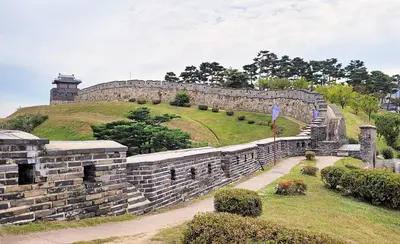
    Suwon

    Suwon

    Suwon, the capital of Gyeonggi Province, lies approximately 30 km south of Seoul. Its main attraction is Hwaseong Fortress, built by King Jeongjo in the late 18th century, a UNESCO World Heritage site since 1997. Its 5.74 km wall encloses the old town and Hwaseong Haenggung, a temporary palace. Suwon is known for its Galbi, marinated beef ribs grilled over charcoal.

    Bernard Gagnon·CC0

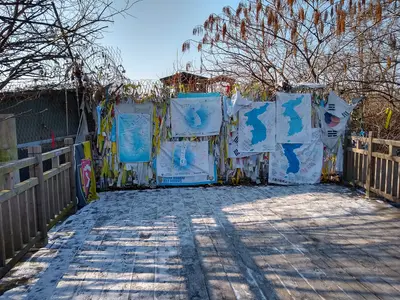
    DMZ and Paju

    DMZ and Paju

    Before any visit to the border region, check the current UK FCDO travel advice for South Korea (gov.uk/foreign-travel-advice).Individual visits to the Demilitarized Zone are restricted. You visit it on the Paju DMZ Peace Tour from Imjingak or on an organised tour from Seoul. Course A runs from Imjingak to the Third Tunnel, the Dora Observatory and back via Tongil-chon, takes about 3 hours and costs 12,200 KRW including the monorail in the tunnel. Tickets are sold on site from 9 am to 2:30 pm, bookings via dmz.paju.go.kr.Since 24 April 2026, the DMZ Peace Link Train has also run on the 2nd and 4th Friday of each month from Seoul Station via Unjeong and Imjingang to Dorasan. Reservations are made through KORAIL's tourism website.You must carry your original passport; copies or phone photos are not accepted. The area is closed on Mondays and public holidays, and tours can be cancelled without notice because of the security situation or the weather. The JSA at Panmunjom has been closed to regular tourists since 18 July 2023; since May 2025 only special visits for selected groups take place there, and a visit is still not possible for ordinary travellers (as of November 2026).

    Lance Vanlewen·CC BY-SA 4.0

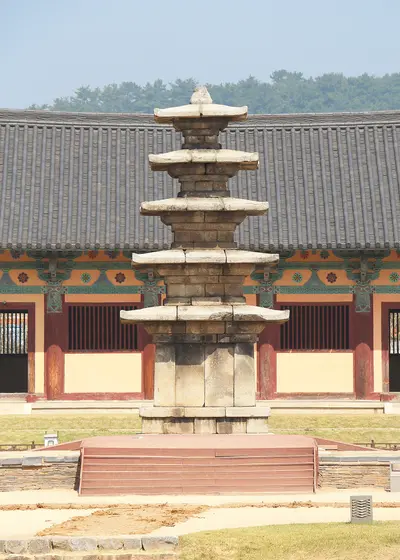
    Gongju and Buyeo

    Gongju and Buyeo

    Gongju, damals Ungjin, war von 475 bis 538 Hauptstadt des Königreichs Baekje. Danach regierten die Könige bis zum Untergang des Reiches 660 von Buyeo aus, das damals Sabi hieß.Festungen, Königsgräber und Tempelstätten beider Orte gehören zusammen mit Stätten in Iksan zum UNESCO-Welterbe „Baekje Historic Areas“, eingeschrieben 2015. Sie zeigen den Austausch von Technik, Buddhismus und Kunst zwischen Korea, China und Japan.Gongju liegt am Fluss Geumgang. Im Stadtgebiet von Gongju, am Fuß des Taehwasan, steht der Tempel Magoksa, der zum Welterbe der koreanischen Bergklöster gehört.

    Bernard Gagnon·CC0

    Seoraksan National Park and Sokcho

    Seoraksan National Park and Sokcho

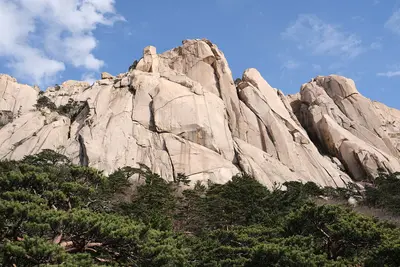
    Seoraksan on the east coast has been a National Park since 1970 and a UNESCO Biosphere Reserve since 1982. Its highest peak, Daecheongbong, is 1,708 m. Park sights: Ulsanbawi Rock, Biseondae Rock Platform, Sinheungsa Temple. A cable car ascends to Gwongeumseong. The port city Sokcho is the starting point, its Abai Village home to North Korean war refugees (1950-53) and descendants.

    kallerna·CC BY-SA 4.0

    Gangneung

    Gangneung

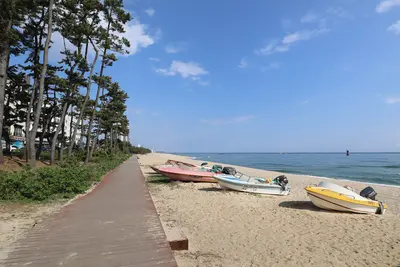
    Gangneung, located on Gangwon Province's coast, is just two hours from Seoul by KTX-Eum. Its historical estates include Ojukheon, scholar Yulgok's birthplace, and Seongyojang, the residence of Lee Nae-beon's family. Coastal attractions include Gyeongpo Beach with Gyeongpoho Lagoon and the Anmok Beach cafe street. Gangneung is renowned for Chodang-Sundubu, a soft tofu curdled with seawater, and for the UNESCO-listed Danoje Festival.

    Mobius6·CC BY-SA 4.0

    Your next steps

    Seoul is in South Korea. Ways to carry on from here.

    • More in South Korea

      Highlights, areas, routes and the best time to travel for all of South Korea.

      South Korea travel guide
    • Round trips with Seoul

      One route passes through Seoul, with stops, nights and a map.

      See the round trip

    Sources & method

    • Photos: Wikimedia Commons, Unsplash, Pexels. Each photo carries its credit.
    • Place data such as addresses and ratings comes from Google Maps.
    • The content is based on web research from public, traceable sources. How the content is made · The role of AI