ExploreTravel GuidesPlan a trip
    de|en
    All Places & RegionsAbout FernwehFAQPrivacy PolicyImprint
    ExploreTravel GuidesPlan a trip
    • Neighborhoods & highlights
    • Eat & drink
    • Food culture
    • Culture
    • Nightlife
    • Getting around
    • Accommodation
    • Plan trip
    • Nearby
    Zermatt

    Switzerland

    Zermatt

    City

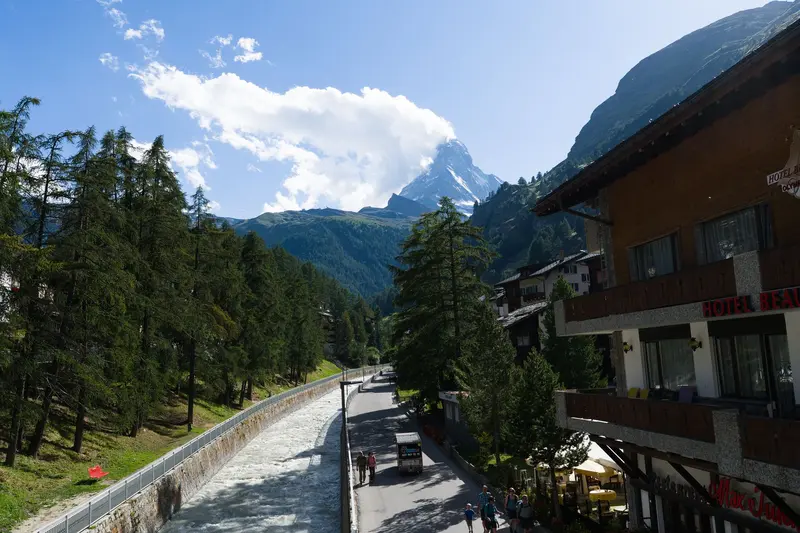
    Zermatt is located in Valais at the end of the Matter Valley, directly beneath the 4478-meter-high Matterhorn.

    1. Home
    2. Destinations
    3. Switzerland
    4. Valais
    5. Zermatt
    Zermatt is located in Valais at the end of the Matter Valley, directly beneath the 4478-meter-high Matterhorn. This car-free mountain resort is the starting point for scenic railways, hikes, and high-alpine tours around the four-thousander peaks on the Italian border.By car, you can only get as far as Täsch; from there, a train shuttles to Zermatt. Within the village, electric buses and taxis operate. The Gornergrat Bahn, a cogwheel railway, has been operating since 1898, taking 33 minutes from the village to the 3089-meter-high Gornergrat, offering views of the Matterhorn and the Monte Rosa massif. Even higher, you can ascend to the Matterhorn Glacier Paradise at 3883 meters. For both railways, the Swiss Travel Pass only offers a discount. Zermatt is also the terminus of the Glacier Express to St. Moritz.
    Zermatt ist ein autofreies Bergdorf am Ende des Mattertals im Wallis. Autos parkst du im Terminal in Täsch, von dort fährt ein Pendelzug ins Dorf, im Ort selbst sind Elektrobusse, Elektrotaxis und Pferdekutschen unterwegs. Alles Wichtige liegt entlang der Bahnhofstrasse zwischen Bahnhof und Kirchplatz, wo auch das Matterhorn Museum steht. Gegenüber dem Bahnhof fährt die Gornergrat Bahn ab, am südlichen Dorfende beginnen die Bahnen zum Matterhorn Glacier Paradise. Zermatt ist außerdem Start- und Endpunkt des Glacier Express nach St. Moritz.

    Sights in Zermatt

    Discover the most important sights and attractions

    Matterhorn Glacier Paradise
    Attraction

    1Matterhorn Glacier Paradise

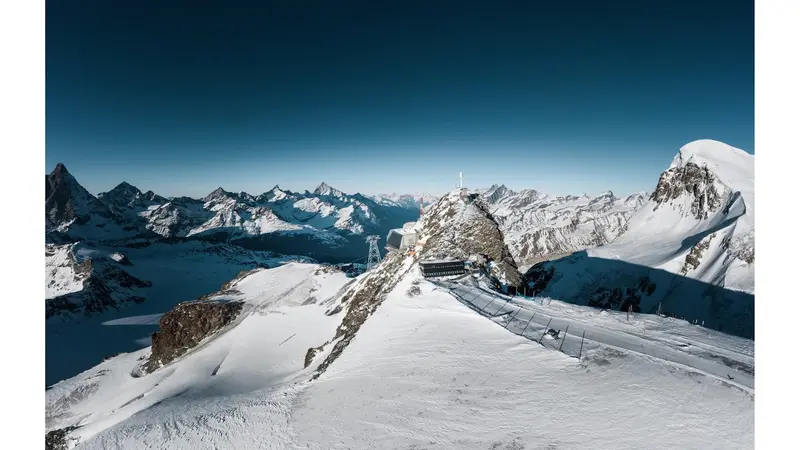
    At 3883 metres, the Klein Matterhorn mountain station is the highest cable car station in the Alps. From Zermatt, you travel up in about 40 minutes; at the top, there is a viewing platform and a glacier palace.
    Open in Google Maps
    Matterhorn Museum – Zermatlantis
    Museum

    2Matterhorn Museum – Zermatlantis

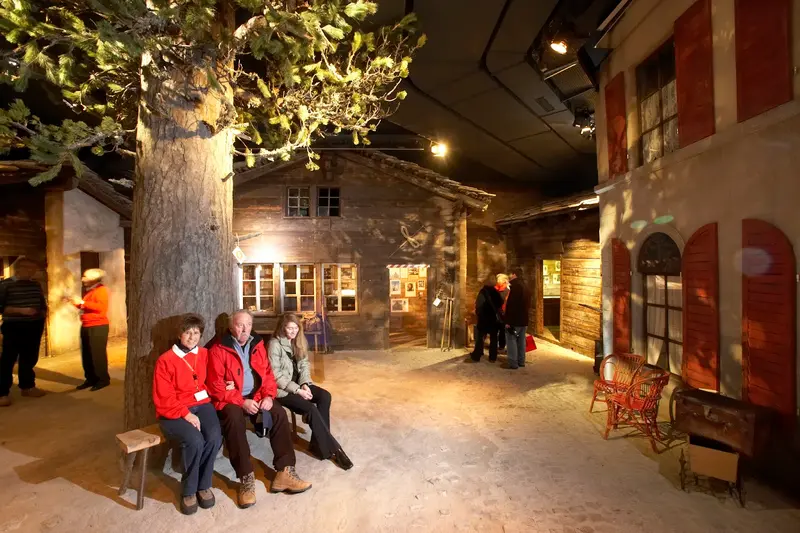
    Under a glass roof next to the village church, the museum, with original houses, shows how Zermatt developed from a mountain farming village into a holiday resort. Also on display is the snapped rope from the first ascent of the Matterhorn on July 14, 1865, in which four of seven climbers died.
    Open in Google Maps
    Gornergrat Bahn
    Attraction

    3Gornergrat Bahn

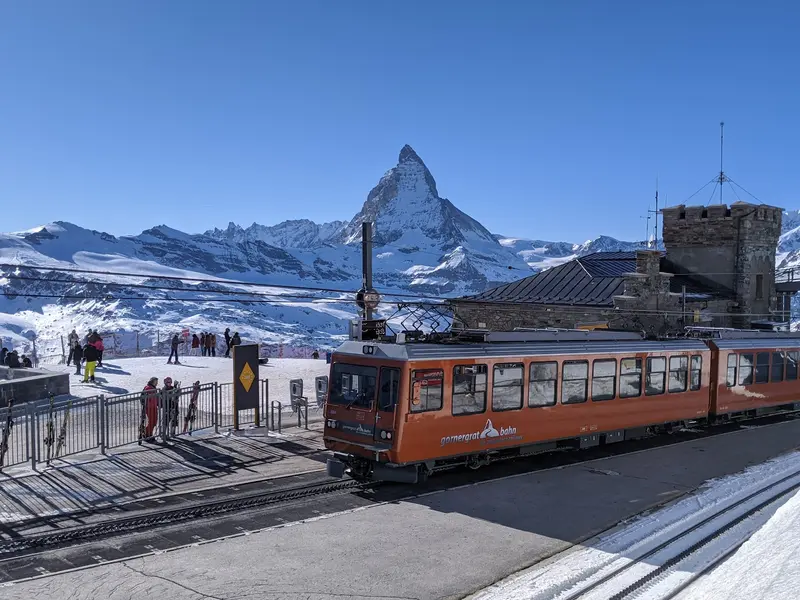
    The cogwheel train departs opposite Zermatt station, climbing to Gornergrat (3089m) in 33 minutes, a route operated since 1898. En route and at the summit, you'll see the Matterhorn and Monte Rosa massif. The Swiss Travel Pass offers a discount.
    Open in Google Maps
    Gornerschlucht
    Park

    4Gornerschlucht

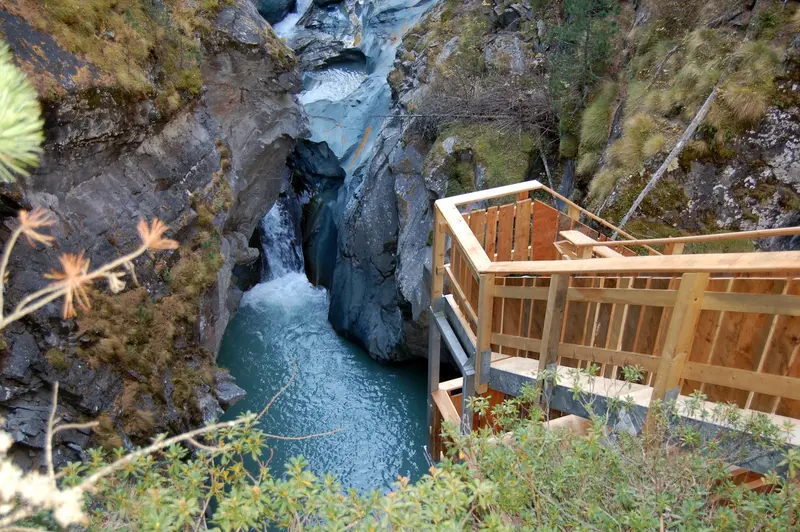
    Around a 15-minute walk from the village, the Gornervispa has carved deep into the rock. Since 1886/87, wooden walkways lead through the gorge with its waterfalls and rock formations.
    Open in Google Maps

    Restaurants in Zermatt

    1

    Restaurant Spycher

    Swiss cuisine and grilled dishes in the village on Steinmattweg, near Kirchplatz.
    Show on Google Maps
    2

    Chez Vrony

    Mountain restaurant with Swiss cuisine in the hamlet of Findeln above Zermatt, a popular destination for hikes and in the ski area around Sunnegga.
    Show on Google Maps
    3

    Petit Royal

    Café and bistro on Bahnhofstrasse with coffee, desserts & chocolate, ideal for a break between station and village center.
    Show on Google Maps

    Food & Drink in Zermatt

    Raclette

    Raclette

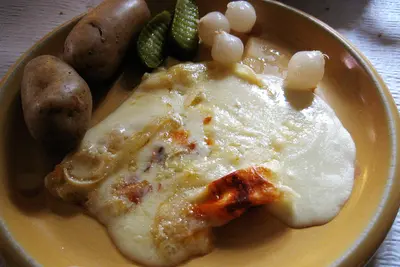
    The melted Valais cheese is scraped directly from the wheel onto the plate and eaten with potatoes, gherkins, and pickled onions.

    Valaisan Rye Bread

    The dark, compact rye bread is a Valais specialty with Protected Designation of Origin (AOP).
    Cholera

    Cholera

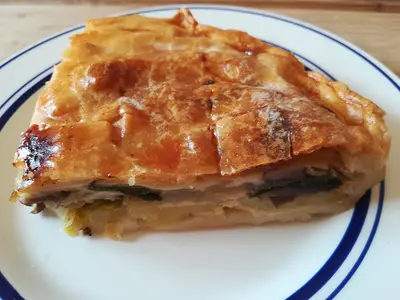
    A covered Valais pie with potatoes, leeks, apples and cheese, the region's traditional leftover dish.

    Culture in Zermatt

    Behind the hotels and shops of Bahnhofstrasse, Zermatt is still an old Valais mountain village.Hinterdorf and StadelIn Hinterdorf, the historic village core, dark wooden houses and Stadel line the narrow alleys. The Stadel served as granaries and stand on stilts with large round stone slabs, which kept mice away and kept the grain dry. Many date from the 16th century; some, according to tree-ring dating, even from the 14th century.The First AscentThe history of the village is closely linked to the Matterhorn. On July 14, 1865, Edward Whymper and his rope team achieved the first ascent, but during the descent, four of the seven mountaineers fell to their deaths. The snapped rope is exhibited in the Matterhorn Museum.

    Nightlife

    1

    Bar 55

    Lounge bar on Schluhmattstrasse in the village's south, a Zermatt evening hotspot. Especially lively until late during winter.
    Show on Google Maps
    2

    Grizzly's Bar & Bistro

    Pub with bistro cuisine directly at the station square, convenient for a beer after arrival or after a ski day. Simple dishes are served, the atmosphere is casual.
    Show on Google Maps

    Traveling in Zermatt

    Zermatt is car-free. If you arrive by car, park at the Matterhorn Terminal in Täsch and take the shuttle train to the village; alternatively, you can reach Zermatt with the Matterhorn Gotthard Bahn from Visp.Electric buses and taxis operate in the village, but you'll cover most distances on foot. The Gornergrat Bahn starts opposite the station; the Gornerschlucht is a fifteen-minute walk.

    Accommodations in Zermatt

    Find perfect stay in Zermatt

    Booking.com* (Affiliate link)
    Search Hotels
    Agoda* (Affiliate link)
    Search Hotels
    Airbnb
    Vacation Rentals

    * Affiliate link: if you book through it, we earn a small commission. The price stays the same for you.

    Campgrounds in Zermatt

    Find perfect campground in Zermatt

    Search via Google Maps
    Campgrounds nearby (15km)
    Camping.info
    Find Campgrounds
    Park4Night
    RV Parks & Camping

    Plan your trip to Zermatt

    Save places, build a route and plan your city trip, all in one place.

    1. 1
      1234

      Round trip

      12 days · 4 stops

      Saved

      Pick a route

      Pick a ready-made one or save places and plan your own.

      Open bookmarks
    2. 2

      Trip to Zermatt

      Live
      • 1Matterhorn Glacier Paradise3 days
      • 2Matterhorn Museum – Zermatlantis4 days
      • 3Gornergrat Bahn5 days
      Budget

      Plan your trip

      The planner sorts stops, days and budget. Plan together in real time.

      Start trip planning
    3. 3
      9:41 No signal
      Available offline

      Use it on the road

      Download the guide to your phone and use it on site, even offline.

    Nearby

    Valais

    Valais

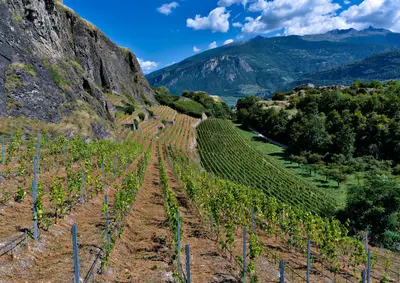
    Valais in southwestern Switzerland follows the Rhone Valley and is home to most of the country's four-thousand-meter peaks, including the Matterhorn and Dufourspitze, Switzerland's highest peak. The canton is bilingual: German is spoken in Upper Valais, French in Lower Valais.Valais is also Switzerland's largest wine-growing canton and home to Raclette. Its most famous place is car-free Zermatt.
    Aletsch Glacier

    Aletsch Glacier

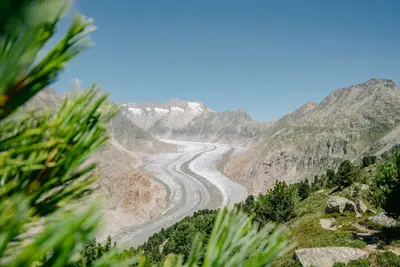
    At 23 kilometres, the Great Aletsch Glacier in Oberwallis is the longest glacier in the Alps and has been part of the UNESCO World Heritage Swiss Alps Jungfrau-Aletsch since 2001. From the panoramic peaks above the car-free villages of the Aletsch Arena, you can look down on the mighty ice stream, which sweeps in a wide arc from the Jungfrau region into the valley.The three most important viewpoints are the Eggishorn at 2869 metres, accessible by cable cars from Fiesch via Fiescheralp, the Bettmerhorn at 2872 metres above Bettmeralp, and the Moosfluh at 2333 metres above Riederalp. To reach Bettmeralp and Riederalp, you travel by train to Betten or Mörel and from there ascend by cable car. At Konkordiaplatz, where several ice streams converge, the ice is up to 900 metres thick.
    Stresa

    Stresa

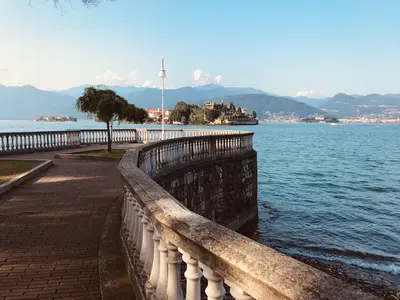
    Stresa is located on the western shore of Lake Maggiore, on the Borromean Gulf opposite the Borromean Islands. The town has just under 4700 inhabitants, and three of the islands (Isola Bella, Isola Madre, and Isola dei Pescatori) belong to the municipality. Stresa is the main starting point for boat trips to the islands.
    Jungfrau Region

    Jungfrau Region

    The Jungfrau Region in the Bernese Oberland lies at the foot of Eiger, Mönch, and Jungfrau, south of Interlaken. Here, the Jungfraubahn has been traveling since 1912 through Eiger and Mönch to the Jungfraujoch, which, at 3,454 meters, is Europe's highest-altitude railway station.From Grindelwald Terminal, the Eiger Express takes you to Eigergletscher station in 15 minutes, from there you continue by cogwheel train; from Interlaken Ost, the journey takes about an hour and a half. At the top, you look out onto the Aletsch Glacier, at 23 kilometers the longest glacier in the Alps and part of the UNESCO World Heritage Site Swiss Alps Jungfrau-Aletsch. In the Lauterbrunnen Valley, also known as the Valley of 72 Waterfalls, and in Grindelwald and Wengen, many hiking trails begin. The Swiss Travel Pass only grants a discount on the journey to the Jungfraujoch.
    Chamonix-Mont-Blanc

    Chamonix-Mont-Blanc

    Chamonix-Mont-Blanc liegt am Fuß des Mont Blanc in Hochsavoyen und gilt als Wiege des Alpinismus. Der Ort ist ein internationales Zentrum für Bergsteiger, Wanderer und Wintersportler. Die Seilbahn auf die Aiguille du Midi (3842 Meter) bringt dich mitten ins Mont-Blanc-Massiv, die Zahnradbahn zum Montenvers zur Mer de Glace, dem größten Gletscher Frankreichs, mit ihrer jährlich neu gehauenen Eisgrotte. Im Ortszentrum mischen sich savoyische Architektur, Belle-Époque-Hotels, Ausrüstungsläden und Restaurants. Die Geschichte der Alpenerschließung zeigt das Musée Alpin. Am vollsten ist es im Juli und August sowie in den Winterferien im Februar; ruhiger sind Juni, September und der Frühwinter. Tickets für die Aiguille du Midi buchst du am besten frühzeitig online, idealerweise für eine der ersten Fahrten am Morgen.