Indonesia
West Sumatra
Region
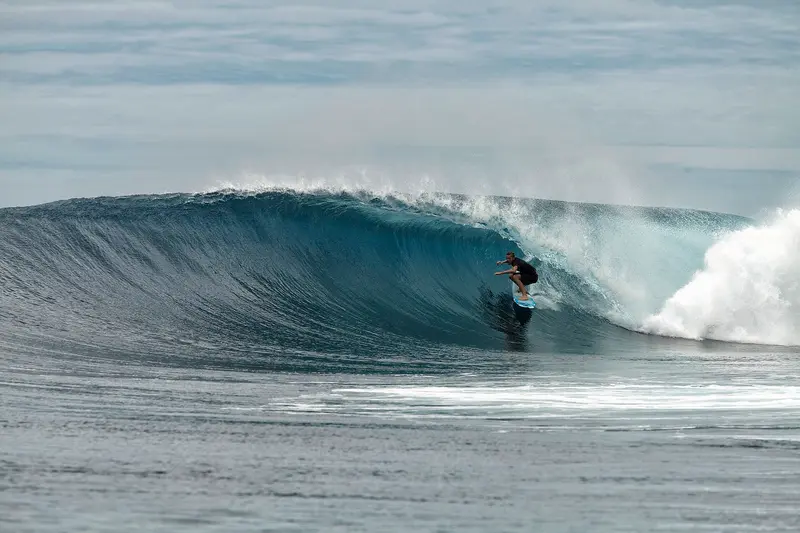
West Sumatra is home to the Minangkabau. Volcanoes, crater lakes, and deep gorges define the Bukittinggi highlands, off its coast are the Mentawai Islands, with surf spots and a unique culture.
by Felix Gillen
West Sumatra is home to the Minangkabau. Volcanoes, crater lakes, and deep gorges define the Bukittinggi highlands, off its coast are the Mentawai Islands, with surf spots and a unique culture. Padang cuisine originates here, found throughout Indonesia.
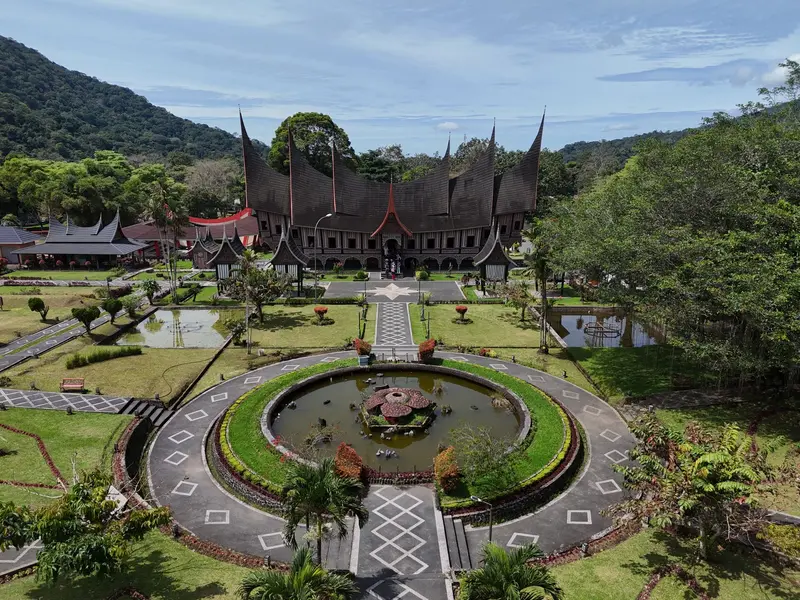
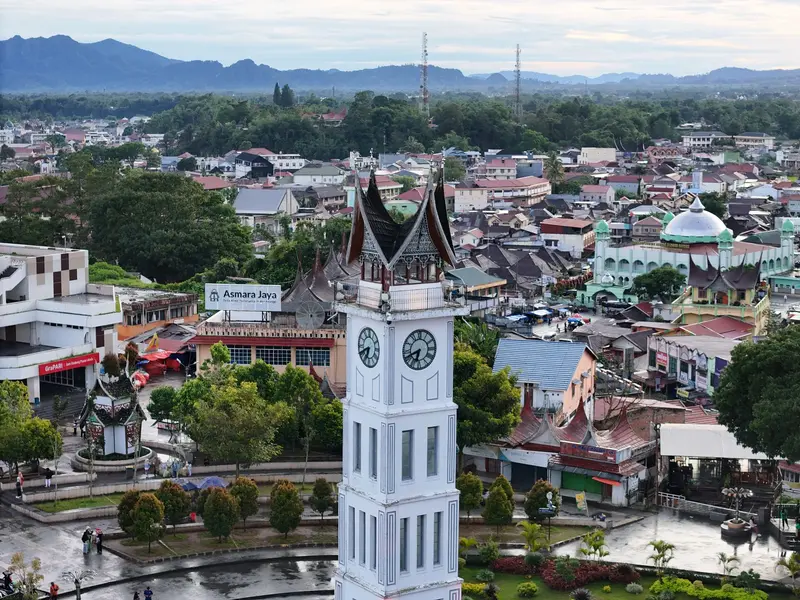
The provincial capital is the coastal city of Padang, with Minangkabau International Airport. Most travellers head directly to the highlands to **Bukittinggi**, from where you can reach Ngarai Sianok Canyon, the crater lake Maninjau, the Harau Valley, and Pagaruyung Royal Palace. Surfers and those interested in culture take a speedboat from Padang to the **Mentawai Islands**. West Sumatra is one of Indonesia's rainiest regions, with showers occurring year-round.
Pathofkarma / Wikimedia Commons / CC BY-SA 4.0, mod.
Food and Beverages
Nasi Padang
Rice with a selection of pre-cooked dishes, served on many small plates. You only pay for what you eat.
Rendang
Beef braised for hours in coconut milk and spices, the most famous dish of the Minangkabau.
Sate Padang
Beef skewers with a thick, yellow, spicy sauce made from rice flour and spices.
Best Time to Visit
When is the best time for your trip?
26–27°C·258–310 mm(heavy rain)
From May to August, West Sumatra experiences slightly less rain, but even then, Padang still averages 258 to 310 mm per month. From October to December, it is the wettest, and mountain roads can be closed due to floods and landslides.
The monthly values are for Padang on the coast (climate normals 1991 to 2020, published by the Japanese Meteorological Agency JMA). Most rain falls there in November with 510 mm. In Bukittinggi at around 900 m, it is cooler.
Seasons
Jan
Feb
Mar
Apr
May
Jun
Jul
Aug
Sep
Oct
Nov
Dec
Slightly less rain
The Rainiest Months
Much rain
Best Time to Visit
▶Show detailed monthly data
| Month | Temp (°C) | Rain (mm) |
|---|---|---|
| January | 26.6 | 328 |
| February | 26.7 | 270 |
| March | 26.9 | 364 |
| April | 27.1 | 339 |
| May | 27.2 | 278 |
| June | 26.8 | 310 |
| July | 26.3 | 274 |
| August | 26.2 | 258 |
| September | 26.2 | 336 |
| October | 26.3 | 404 |
| November | 26.3 | 510 |
| December | 26.4 | 397 |
Culture and History
HistoryIn the 14th century, Adityawarman, a nobleman with ties to the Javanese empires of Singhasari and Majapahit, established a kingdom based in Pagaruyung and ruled from 1347 to 1375. From 1803 to 1837, the Padri War shook the highlands: Islamic reformers fought against the traditional nobility, who called on the Dutch for help in 1821. In 1837, the fortress of Bonjol, held by Padri leader Tuanku Imam Bonjol, fell, after which the Dutch consolidated their rule. Bukittinggi was then known as Fort de Kock, named after their stronghold.Religion and BeliefsThe Minangkabau are devout Muslims. After the Padri War, the principle of “Adat basandi syarak, syarak basandi Kitabullah” became established: Custom is based on Islamic law, and law is based on the Quran. In Pariaman on the coast, the mourning festival of Tabuik is celebrated during the month of Muharram. On the Mentawai Islands, the animistic religion Arat Sabulungan was widespread, believing that everything has a soul and shamans (sikerei) perform healing. Today, most Mentawai are Christians or Muslims, with only a few actively preserving the old customs.Society and CustomsThe Minangkabau are one of the largest matrilineal societies in the world: land, house, and family name pass from mother to daughter, while self-acquired wealth is inherited according to Islamic law. Clans (suku) are usually led by a Penghulu, and maternal uncles (mamak) hold significant influence in families and villages. The Rumah Gadang, with roofs shaped like buffalo horns, are typical. Many Minang leave their homeland to seek their fortune elsewhere (merantau), which is why Padang restaurants can be found throughout the country. On Mentawai, several families of a paternal lineage live together in a longhouse (uma).Visitor ConductDress modestly with covered shoulders and knees, especially in mosques. During Ramadan, avoid demonstratively eating or drinking in public during the day. On Mentawai, visit villages and Uma only with a local guide and ask for permission before taking photographs.
Arrival and On the Go
Minangkabau Airport, Padang, flies to Jakarta, Medan, Kuala Lumpur. Bukittinggi is ~3 hours by shared taxi, bus, or car. Speedboats link Padang to Siberut and Sipora (Mentawai Islands). Trans-Sumatra Highway buses go north to Lake Toba; a very long journey.
Nearby
Your next steps
West Sumatra is in Indonesia. Ways to carry on from here.
More in Indonesia
Highlights, areas, routes and the best time to travel for all of Indonesia.
Indonesia travel guideRound trips in Indonesia
Ready-made routes through Indonesia, with stops, nights and a map.
See the routesPlan a trip with West Sumatra
The Guide asks about season, length and who is coming, and suggests a trip with West Sumatra.
Plan the trip