Fernweh: Home
    ExploreTravel GuidesPlan a tripMy tripLast visited
    de|en
    All Places & RegionsAll highlightsAbout FernwehFAQPrivacy PolicyImprint
    ExploreTravel GuidesPlan a tripMy tripLast visited
    • Overview
    • Places in the region
    • Food culture
    • Culture
    • Getting around
    • Round trips
    • Nearby
    Sardinia

    Italy

    Sardinia

    RegionBeachNatureCultureMountainsCulinary

    Sardinia is, after Sicily, the second-largest island in the Mediterranean Sea and lies west of the Italian mainland.

    by Felix Gillen

    1. Home
    2. Destinations
    3. Italy
    4. Sardinia
    Sardinia is, after Sicily, the second-largest island in the Mediterranean Sea and lies west of the Italian mainland. It is known for its coast with sandy beaches and clear waters, from the Costa Smeralda in the northeast to the bays of the Golfo di Orosei in the east. The island's interior is mountainous and sparsely populated; here stand many Nuraghe, stone tower-structures from the Bronze Age, among which the Su Nuraxi complex near Barumini is a UNESCO World Heritage site. Sardinia has its own language, Sardinian, and in Alghero, an old form of Catalan is still spoken today. Ferries connect the island to Genoa, Livorno, and Civitavecchia, among other places, and airports are located in Cagliari, Olbia, and Alghero.
    Sardinia has around 1.6 million inhabitants; its capital is Cagliari in the south. The island is vast: The SS131 motorway alone, from Cagliari to Porto Torres, is about 230 kilometres long. The rail network is sparse, buses operate between cities; a rental car is practical for coastal and inland areas. The swimming season lasts from June to September; in August, beaches and ferries are very busy. Spring and autumn are ideal for hiking and cultural tours.
    Oristano

    Place 1 of 4

    Oristano

    Oristano, provincial capital in western Sardinia, was in the Middle Ages capital of the Judicate of Arborea. The old town, with Piazza Eleonora, the cathedral, and the Tower of Mariano II, is small.

    Discover
    Bosa

    Place 2 of 4

    Bosa

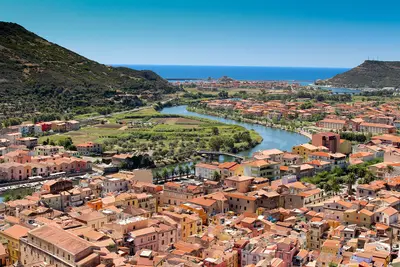
    Bosa is located on Sardinia's west coast in the Temo Valley. The colorfully painted houses of the Sa Costa district stretch up the Serravalle hill to the Malaspina Castle.

    Discover
    Alghero

    Place 3 of 4

    Alghero

    Alghero is located on Sardinia's northwest coast and features a walled old town by the sea. Since the Catalans occupied the city in 1354, it has been influenced by Catalan culture; Algherese, a Catalan variety, is recognized as a minority language.

    Discover
    Olbia

    Place 4 of 4

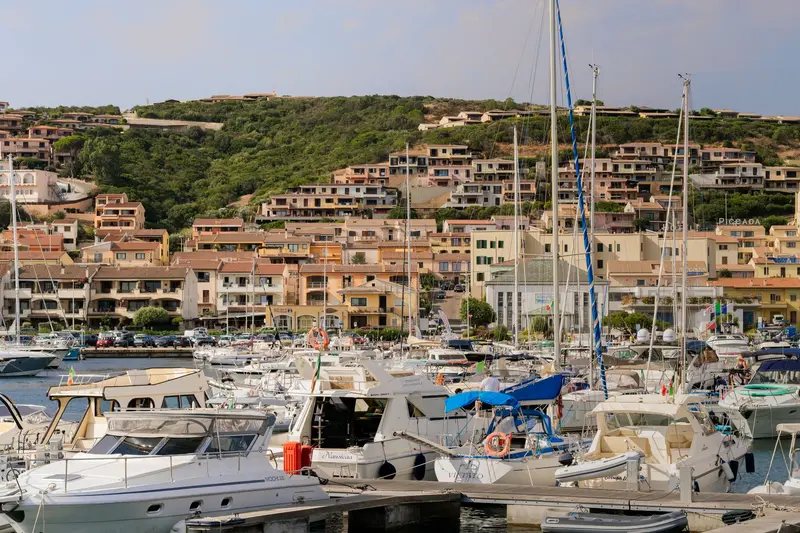
    Olbia

    Olbia is located on a bay in northeastern Sardinia. The port is the island's most important passenger harbor, and Olbia Costa Smeralda Airport lies south of the city.

    Discover

    More places in Sardinia

    Cagliari

    Cagliari

    Cagliari is located on the gulf on the south coast of Sardinia and is the island's capital. On the city's outskirts are lagoons and salt pans, and flamingos have been nesting in Molentargius since 1993.Historic QuartersThe old town consists of four quarters: the fortified Castello on the hill, as well as Marina, Stampace, and Villanova. The Bastione di Saint Remy connects Castello with Villanova and Marina.Antiquity and MuseumsPhoenicians settled here early on, and the Romans left behind an amphitheater half-carved into the rock. The National Archaeological Museum displays bronze figures from the Nuragic culture and statues from Mont'e Prama.SeaPoetto is the city beach, approximately eight kilometers long, and at its western end lies the Sella del Diavolo.
    La Maddalena

    La Maddalena

    La Maddalena is the main town of the archipelago of the same name off Sardinia's northeast coast. From Palau, you can reach the port by ferry in 15 to 20 minutes. The town is a starting point for boat tours through the National Park and for excursions to Caprera with Garibaldi's house.

    Sights in Sardinia

    Discover the most important sights and attractions

    Su Nuraxi di Barumini
    Museum

    Su Nuraxi di Barumini

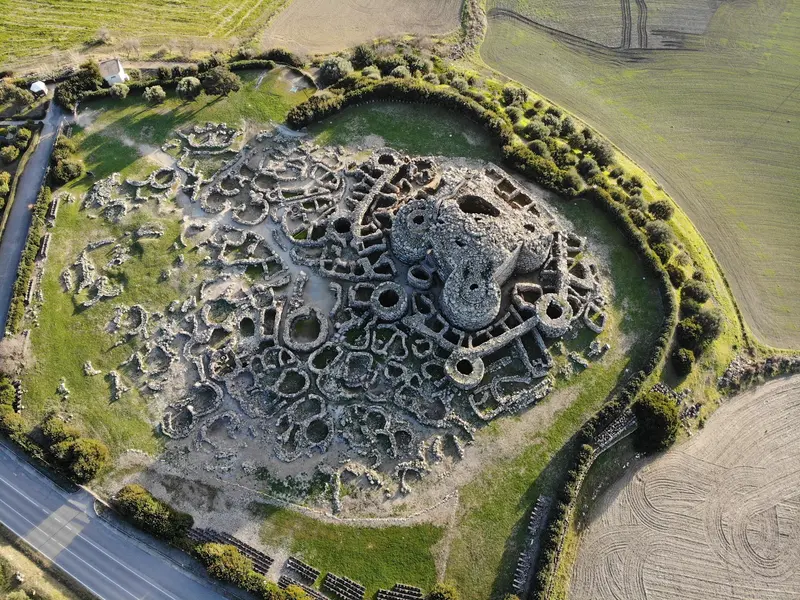
    Bronze Age Nuragic complex near Barumini in the island's interior north of Cagliari, a UNESCO World Heritage site since 1997. A bastion with four corner towers and the remains of a village with over 200 huts cluster around a central tower. Access is by guided tour only.
    Open in Google Maps
    Spiaggia La Pelosa (Stintino)
    Beach

    Spiaggia La Pelosa (Stintino)

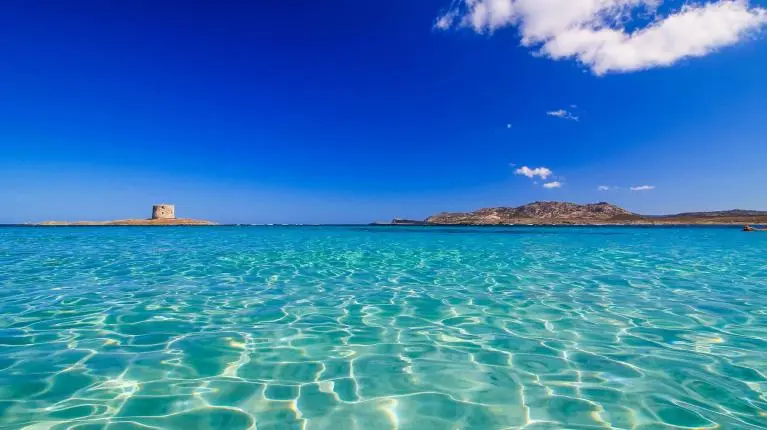
    Beach with light sand and shallow, clear water on Sardinia's northwest tip, in front of a Genoese watchtower on a small island. To protect the beach, visitor numbers are limited in summer; access only with a pre-booked ticket, and a beach mat under your towel is mandatory.
    Open in Google Maps
    Costa Smeralda
    Attraction

    Costa Smeralda

    Coastal stretch north of Olbia, developed from 1962 under Karim Aga Khan as a holiday resort. Its centre is Porto Cervo with a yacht harbour; in between are bays like Capriccioli, Cala di Volpe, Grande Pevero and the Spiagge del Principe. Very crowded and expensive in August.
    Open in Google Maps
    Golfo di Orosei und Cala Gonone
    Attraction

    Golfo di Orosei und Cala Gonone

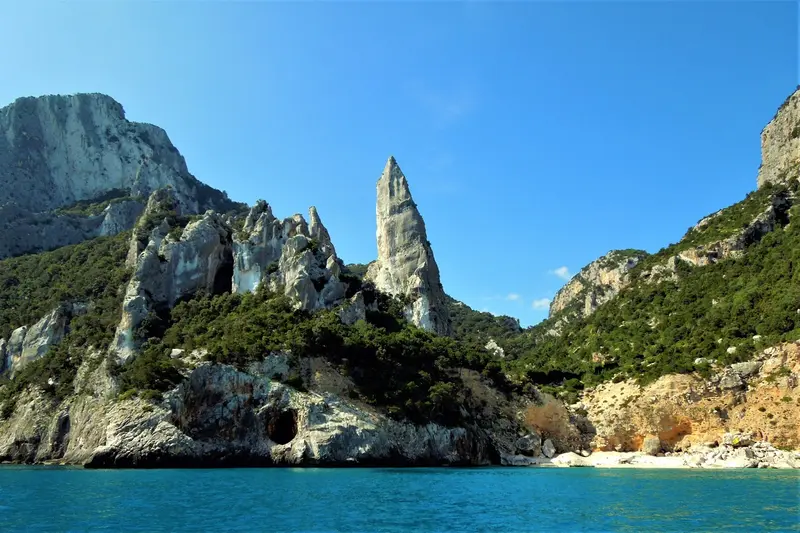
    The island's east side boasts steep cliffs and coves like Cala Luna, Cala Mariolu, and Cala Goloritzé. Most are only accessible by boat from Cala Gonone, Santa Maria Navarrese, or Arbatax, or via demanding hikes. For Cala Goloritzé and Cala Mariolu, summer visitor numbers are limited, and access requires a ticket or reservation. Inland, in the Supramonte, lies the Gola di Gorropu gorge.
    Open in Google Maps

    Food & Beverages

    Inland, Sardinian cuisine is a pastoral one with meat and cheese, while along the coast, fish and seafood take center stage.

    Porceddu

    Suckling pig, slowly spit-roasted and often flavored with myrtle or rosemary.

    Culurgiones

    Pasta parcels with potato-Pecorino-mint filling, closed like a wheat ear, primarily from Ogliastra.

    Pane carasau

    Wafer-thin, crispy shepherd's flatbread; soaked in broth and layered with tomato sauce, poached egg, and Pecorino, it becomes Pane frattau.

    Malloreddus

    Small ridged semolina pasta, often with sausage-tomato sauce with saffron (alla campidanese).

    Bottarga

    Salted, dried roe of the grey mullet, grated over pasta, a specialty from Cabras.

    Cannonau and Vermentino

    The island's main grape varieties: Cannonau produces robust red wines, Vermentino fresh white wines, especially from the north.

    Culture and History

    Sardinia's island location gave rise to a unique development, shaped by prehistoric cultures and external rulers.NuraghesThe Nuragic culture, which began around 1700 BC in the Middle Bronze Age and lasted into the Iron Age, is a defining feature. Thousands of its stone tower structures, the Nuraghes, survive on the island. The Su Nuraxi site near Barumini has been a UNESCO World Heritage site since 1997.Foreign RulersPhoenicians, Punics, Romans, and Byzantines followed; in the Middle Ages, indigenous Judicates ruled; Pisa and Genoa then gained influence, later Aragon and Spain. From these epochs stem Roman theatres and amphitheatres, Romanesque churches in Pisan style, and Spanish Baroque buildings.TraditionsThe polyphonic pastoral singing Canto a tenore is on UNESCO's Intangible Cultural Heritage list. Crafts such as weaving, ceramics, and knife-making are still cultivated today.

    On the Road

    There are airports in Cagliari, Olbia, and Alghero. Ferries connect the island with Genoa, Livorno, Piombino, Civitavecchia, and Naples, among other cities; from Santa Teresa Gallura, a ferry travels to Bonifacio on Corsica.On the island, the SS131 highway connects Cagliari with Sassari and Porto Torres; a branch leads via Nuoro to Olbia. Regional trains run between the larger cities, and buses also reach smaller towns, but rarely. Many coves can only be reached on foot or by boat.Beach RulesIt is forbidden to take sand, pebbles, and shells from the beaches; violations incur high fines, and customs also conducts checks at airports and ports. At several particularly popular beaches, such as La Pelosa, Cala Goloritzé, Cala Mariolu, or Cala Brandinchi, access is restricted in summer and only possible with a reservation or ticket. Check the rules in advance with the respective municipality.In summer, forest fires can occur; current information on safety and health can be found in the travel and security advisories of the Federal Foreign Office.

    Round trips through this region

    Sardinia North-South

    Sardinia North-South

    The tour begins in Olbia, taking a ferry from Palau to the La Maddalena Archipelago, crossing the north to Alghero, then continuing down the west coast via Bosa and Oristano to Cagliari. Without a rental car or campervan, you'll barely reach the bays. From La Maddalena to Alghero, the drive is about three hours.

    14 Days
    6 stops

    Nearby

    Oristano

    Oristano

    Oristano, provincial capital in western Sardinia, was in the Middle Ages capital of the Judicate of Arborea. The old town, with Piazza Eleonora, the cathedral, and the Tower of Mariano II, is small. In the neighboring municipality of Cabras lie the Sinis Peninsula with the excavations of Tharros and beaches like Is Arutas, Maimoni and Mari Ermi.
    Bosa

    Bosa

    Bosa is located on Sardinia's west coast in the Temo Valley. The colorfully painted houses of the Sa Costa district stretch up the Serravalle hill to the Malaspina Castle. On the left bank of the river, the former tanneries stand.
    Cagliari

    Cagliari

    Cagliari is located on the gulf on the south coast of Sardinia and is the island's capital. On the city's outskirts are lagoons and salt pans, and flamingos have been nesting in Molentargius since 1993.Historic QuartersThe old town consists of four quarters: the fortified Castello on the hill, as well as Marina, Stampace, and Villanova. The Bastione di Saint Remy connects Castello with Villanova and Marina.Antiquity and MuseumsPhoenicians settled here early on, and the Romans left behind an amphitheater half-carved into the rock. The National Archaeological Museum displays bronze figures from the Nuragic culture and statues from Mont'e Prama.SeaPoetto is the city beach, approximately eight kilometers long, and at its western end lies the Sella del Diavolo.
    Alghero

    Alghero

    Alghero is located on Sardinia's northwest coast and features a walled old town by the sea. Since the Catalans occupied the city in 1354, it has been influenced by Catalan culture; Algherese, a Catalan variety, is recognized as a minority language.Old Town and BastionsThe Old Town is home to the Cathedral and the Catalan-Gothic Church of San Francesco, while the bastions with a promenade line the seaward side.SurroundingsWest of the city lie the Bay of Porto Conte and Capo Caccia with Neptune's Grotto. Along the coast are beaches such as Le Bombarde and Lazzaretto.
    Olbia

    Olbia

    Olbia is located on a bay in northeastern Sardinia. The port is the island's most important passenger harbor, and Olbia Costa Smeralda Airport lies south of the city.CityThe most significant building is the Romanesque Basilica di San Simplicio, mostly of granite.HistoryPhoenicians and Greeks came to the coast; the Carthaginians built a fortified city, and the Romans followed later. The Archaeological Museum at the harbor displays Roman ship parts; nearby are a well sanctuary and a giant's tomb.

    Sources & method

    • Photos: Unsplash, Pexels, Google Maps. Each photo carries its credit.
    • Place data such as addresses and ratings comes from Google Maps.
    • The content is based on web research from public, traceable sources. How the content is made · The role of AI