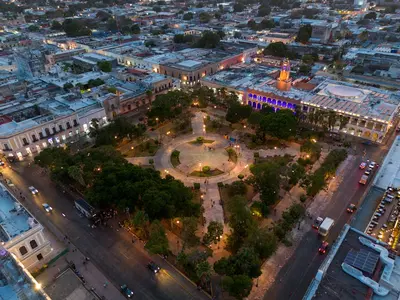
New Orleans is located in the state of Louisiana on the Mississippi River, approximately 170 kilometers upstream from the Gulf of Mexico.
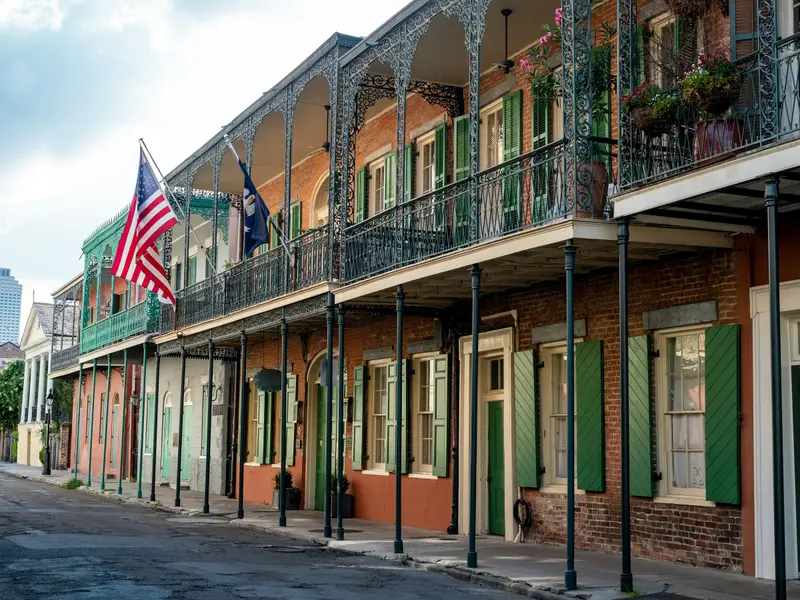
New Orleans is located in the state of Louisiana on the Mississippi River, approximately 170 kilometers upstream from the Gulf of Mexico. You go there for the live music, the Creole cuisine, and the buildings from French and Spanish colonial times.The city was founded in 1718 under Jean-Baptiste Le Moyne de Bienville. Its historic core is the French Quarter with Jackson Square. There you'll find the St. Louis Cathedral and the Cabildo, where the Louisiana Purchase was finally signed. Live music clubs are primarily found on Frenchmen Street in the neighboring Faubourg Marigny. The St. Charles Streetcar has been running since 1835 and is considered the world's oldest continuously operating streetcar line. It connects Canal Street via the Garden District to Carrollton.You land at Louis Armstrong New Orleans International Airport. Summers are hot, humid, and rainy; the driest month is October.
New Orleans had just under 384,000 residents in the 2020 census, while the metropolitan area counted over one million. Over half of the city's approximately 906 square kilometers is water; its historic core along the Mississippi is compact. Explore the French Quarter, Faubourg Marigny, and Tremé on foot. Reach the Garden District and Uptown via the St. Charles streetcar, and City Park using the Canal line. The city thrives on its French-Creole heritage, live music, and unique cuisine. Beyond the French Quarter, Marigny and Bywater, Tremé, the Garden District, and the Warehouse District with its museums are particularly rewarding.
Sights in New Orleans
Discover the most important sights and attractions
Historic Landmark
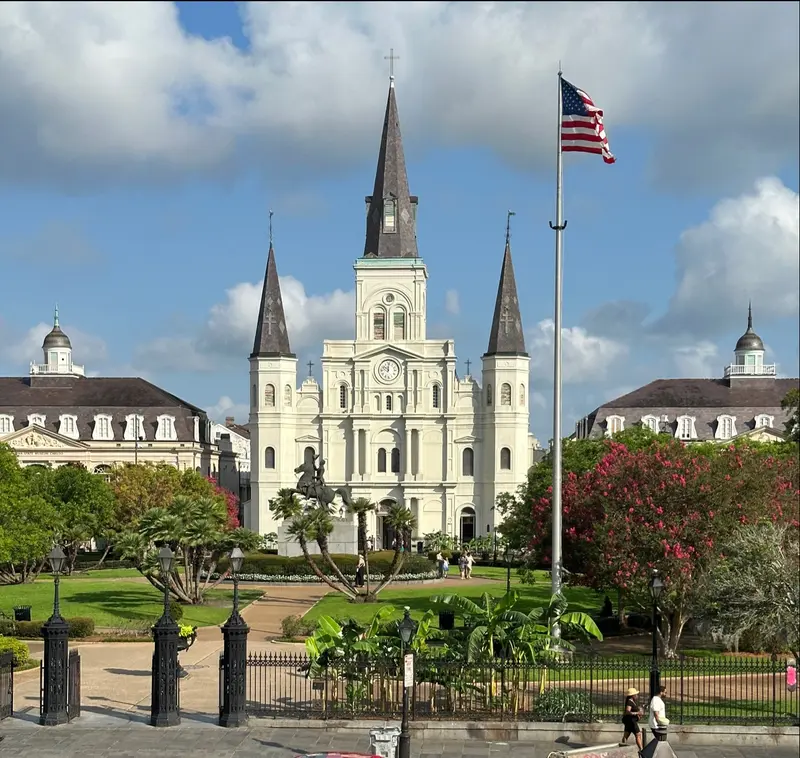
1Jackson Square and St. Louis Cathedral
The former Place d'Armes in the French Quarter bears Andrew Jackson's name since 1851; his equestrian statue has stood there since 1856. The Cathedral is flanked by the Cabildo and the Presbytère, both now museums, while the 1840s Pontalba Buildings line the square.
The museum in the Warehouse District, founded by Stephen Ambrose, is open daily from 9 AM to 5 PM, with adult admission at $37. The 4D film 'Beyond All Boundaries' costs an extra $9, and it's best to purchase tickets in advance.
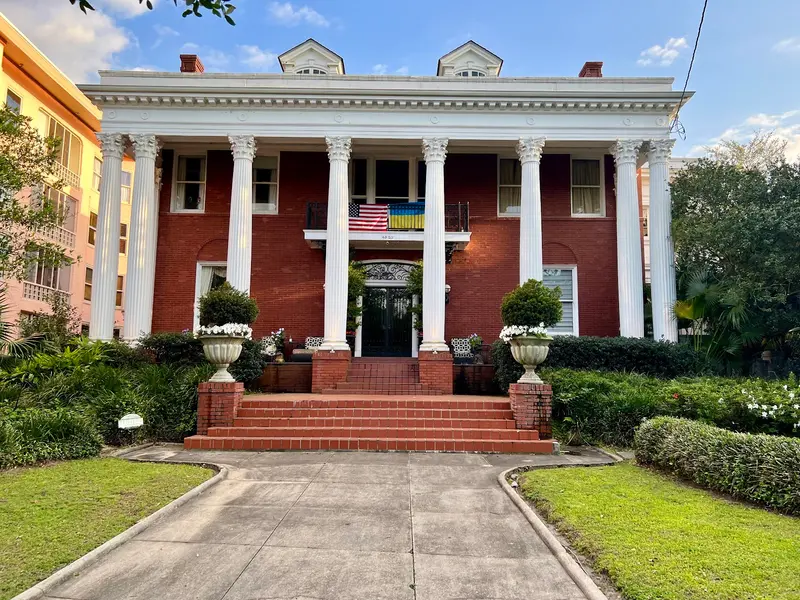
Built between 1832 and 1900, the district between St. Charles Avenue and Magazine Street blends antebellum villas with Victorian houses, and has been a National Historic Landmark since 1974. On Washington Avenue are Lafayette Cemetery No. 1 (dating from 1833) and Commander's Palace restaurant (from 1880).
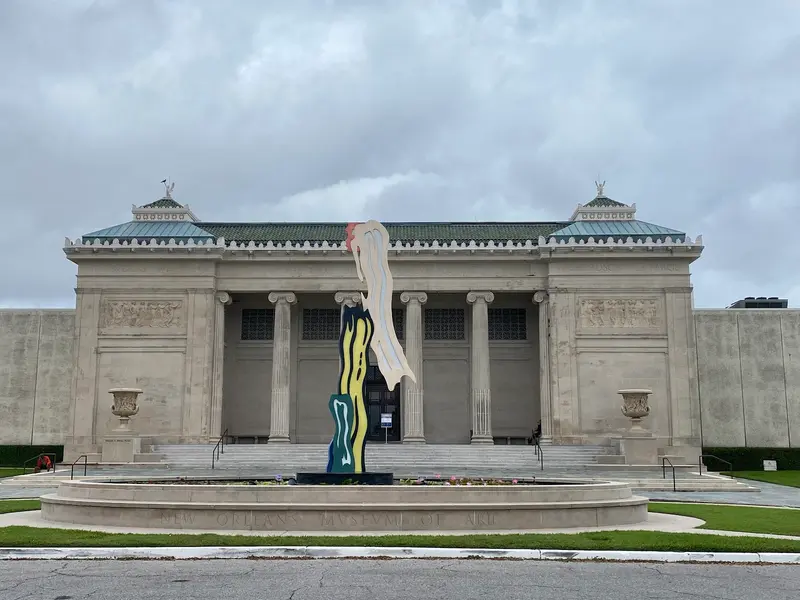
The approximately 530-hectare City Park has the world's largest collection of ancient Virginia Oaks. NOMA is open Tuesday through Sunday; visitors from outside Louisiana pay 23 US dollars, and the Besthoff Sculpture Garden is accessible daily for free.
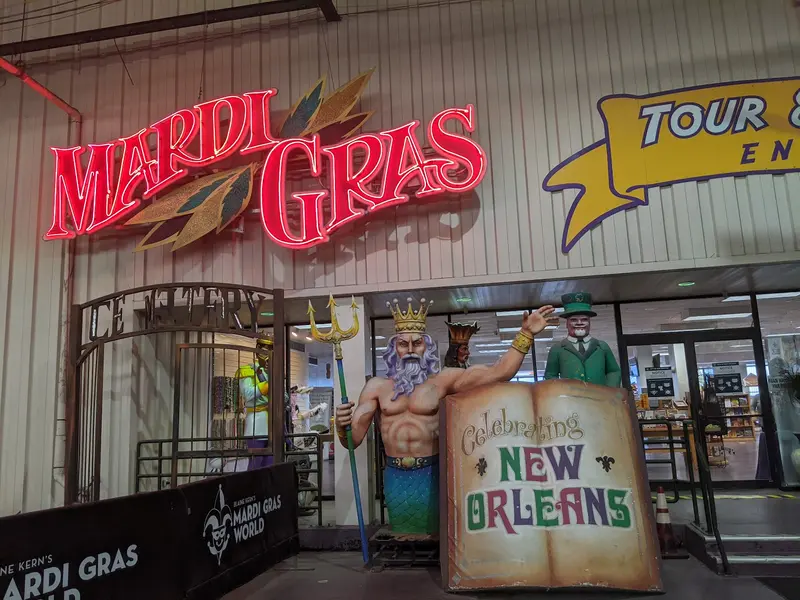
Inside the Kern Studios' hall, you'll see how sculptors and painters build the parade floats for the carnival. Open daily from 9 AM to 5:30 PM, closed on Christmas, Thanksgiving, Easter, and Mardi Gras.
New Orleans' specialties range from the coffee stand at the French Market to the sandwich of Sicilian tradition.
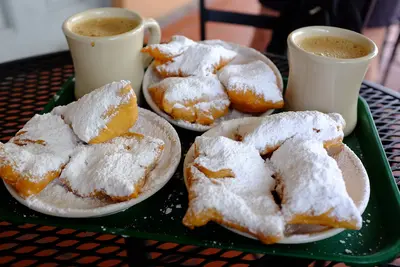
Beignets and Café au Lait at Café du Monde
The coffee stand at the French Market dates back to 1862. Square beignets with powdered sugar are served, always three per portion, along with dark-roasted chicory coffee.
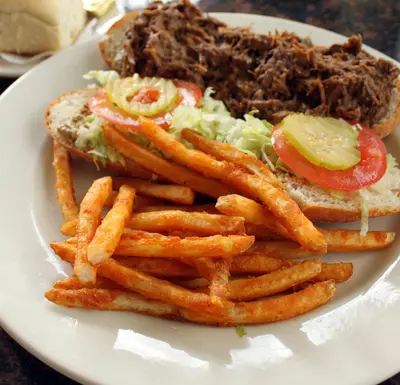
Po' boy
Sandwich on a fluffy New Orleans baguette, filled with roast beef and its gravy or fried shrimp, oysters, or fish. “Dressed” means with lettuce, tomato, pickles, and mayonnaise.
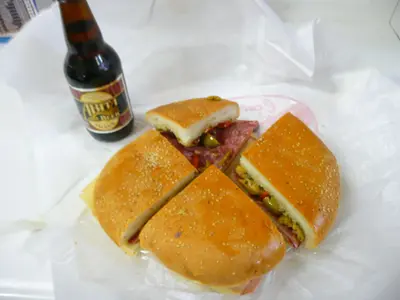
Muffuletta
Round sesame bread with olive salad, salami, ham, mortadella, provolone, and Swiss cheese. It is said to have been invented by Sicilian immigrant Salvatore Lupo in 1906 at Central Grocery on Decatur Street.
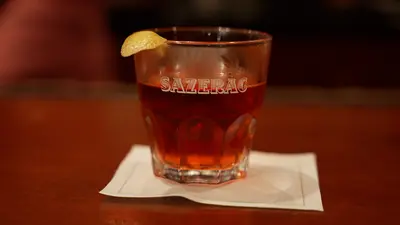
Sazerac
Rye Whiskey or Cognac with Peychaud's Bitters and sugar, served without ice in a glass rinsed with Absinthe. Since 2008, it has been the city's official cocktail.
Creole Heritage, Jazz and Carnival
The French Mississippi Company founded New Orleans in 1718 under Jean-Baptiste Le Moyne de Bienville. In 1803, the city became part of the USA with the Louisiana Purchase. The final version of the treaty was signed in the Cabildo on Jackson Square. In August 2005, Hurricane Katrina flooded more than 80 percent of the city, over 1,300 people died, and the population temporarily halved.Mardi Gras: the city's most famous festival. In 2027, Fat Tuesday falls on February 9th.Music: Preservation Hall has preserved traditional jazz since 1961, and on Frenchmen Street, bands have been playing in clubs that primarily attract locals since the 1980s.New Orleans Jazz & Heritage Festival: one of the city's major annual festivals.Museums: The National WWII Museum, New Orleans Museum of Art in City Park, the Cabildo, and the Presbytère on Jackson Square.
The hall on St. Peter Street has been open since 1961 and features traditional New Orleans jazz every evening, with one ticket valid for a 45-minute set. Tickets are available online only in advance, and admission is for all ages.
From Louis Armstrong New Orleans International Airport, the RTA Airport Express (Line 202) runs to Downtown for $1.25, stopping at Elk Place or the Union Passenger Terminal. Taxis charge a flat rate of $36 to the Central Business District or French Quarter for up to two people; for three or more people, it's $15 per person.RTA Fare: $1.25, including transfers within two hours. Pay with exact cash, tokens, or via the Le Pass App; drivers do not carry change.Jazzy Pass: 1-Day $3, 3-Day $8, 7-Day $15, 31-Day $45.Streetcars: St. Charles (Canal Street to Carrollton), Canal (with Cemeteries and City Park branches), Riverfront (along the Mississippi), and Rampart-Loyola (via St. Claude Avenue).