Fernweh: Home
    ExploreTravel GuidesPlan a tripMy tripLast visited
    de|en
    All Places & RegionsAll highlightsAbout FernwehFAQPrivacy PolicyImprint
    ExploreTravel GuidesPlan a tripMy tripLast visited
    Chambord

    France

    Chambord

    Point of InterestCultureNatureFor Families

    Chambord is the largest castle in the Loire Valley and a masterpiece of the French Renaissance. Francis I had it built as a hunting lodge from 1519.

    by Felix Gillen

    1. Home
    2. Destinations
    3. France
    4. Centre-Val de Loire
    5. Chambord
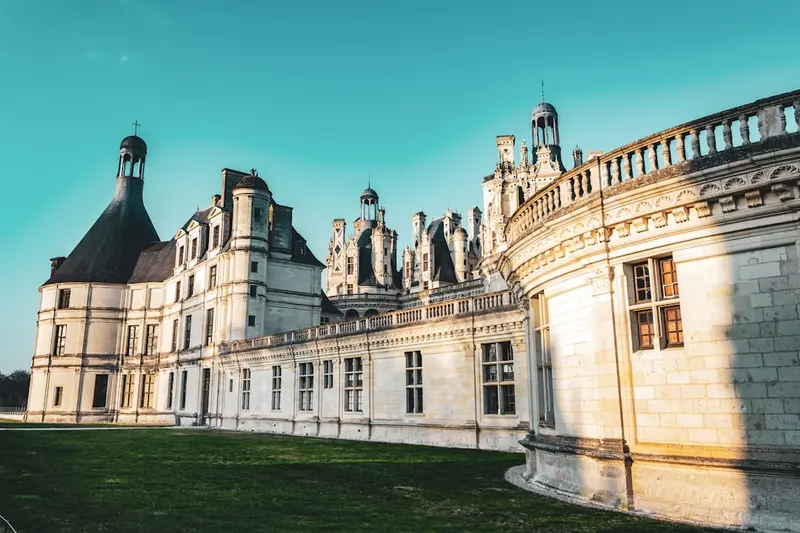
    Chambord is the largest castle in the Loire Valley and a masterpiece of the French Renaissance. Francis I had it built as a hunting lodge from 1519. See the double-helix staircase, the rooftop landscape with its towers, and a walled forest park. The castle and estate are UNESCO World Heritage.

    Sights

    Discover the most important sights and attractions

    1Die doppelläufige Wendeltreppe

    Sie ist das unbestreitbare Herzstück des Schlosses: die legendäre doppelläufige Wendeltreppe. Angeblich von Leonardo da Vinci entworfen, ermöglicht sie zwei Personen, gleichzeitig auf- und abzusteigen, ohne sich zu begegnen. Du wirst von ihrer genialen Konstruktion und ästhetischen Eleganz fasziniert sein, die bis heute Rätsel aufgibt.
    Open in Google Maps

    2Die Dachterrassen und Türme

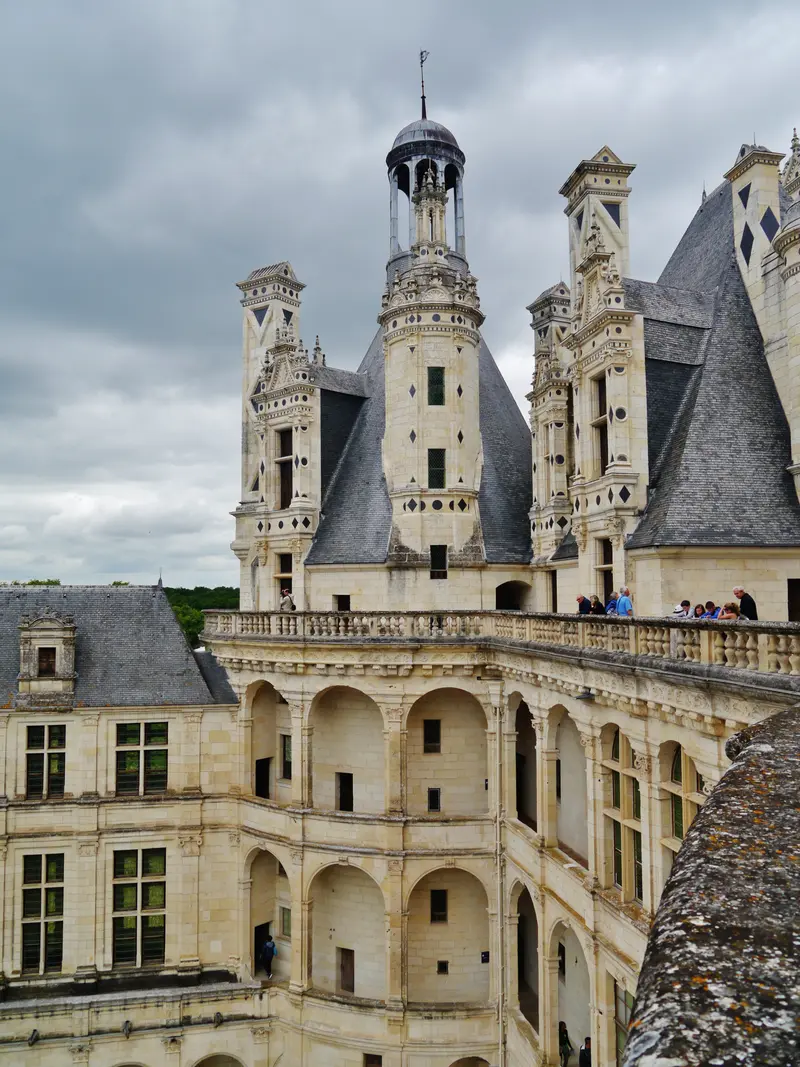
    Erklimme die Treppen bis auf die Dachterrassen und lass dich von der atemberaubenden Aussicht über den Park und die einzigartige Dachlandschaft verzaubern. Hier oben, inmitten der filigranen Türmchen, Schornsteine und Laternen, fühlst du dich wie auf einem königlichen Kreuzfahrtschiff – eine Architektur, die ihresgleichen sucht und unvergessliche Fotomotive bietet.
    Open in Google Maps

    3Die königlichen Gemächer und das Schlossinnere

    Im Inneren des Schlosses entdeckst du die prächtig ausgestatteten königlichen Appartements, darunter die Gemächer von Franz I. und Ludwig XIV. Wandle durch die riesigen Säle und Ausstellungsräume, die dir die reiche Geschichte und das Leben am Hofe näherbringen. Tauche ein in das opulente Ambiente vergangener Jahrhunderte und bewundere die historischen Möbel und Kunstwerke.
    Open in Google Maps

    4Die Domaine National de Chambord

    Das Schloss ist eingebettet in einen der größten umzäunten Waldparks Europas, der zum UNESCO-Weltkulturerbe gehört. Miete ein Fahrrad, spaziere entlang der Pfade oder unternimm eine Kutschfahrt, um die beeindruckende Flora und Fauna – inklusive Hirsche und Wildschweine – dieses außergewöhnlichen Naturreservats zu erleben. Ein Paradies für Naturliebhaber und Ruhesuchende.
    Open in Google Maps
    Chambord Forest • Bracieux Gate

    5Chambord Forest • Bracieux Gate

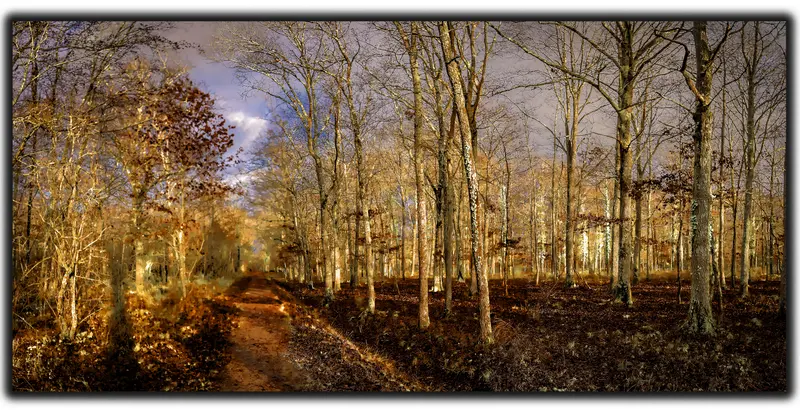
    The Chambord Forest constitutes the largest part of the Domaine nationale de Chambord. Covering approximately 5,400 hectares within a roughly 32-kilometer-long wall, it is considered Europe's largest enclosed forest park and is part of the Loire Valley UNESCO World Heritage site. It was established as the royal hunting ground of Francis I; today, red deer and wild boar, among other animals, inhabit it. The Porte de Bracieux is one of the gates in the wall. Only a portion of the forest is accessible to visitors; the rest remains closed as a wildlife sanctuary. You can hike or cycle on the open paths. Our Tip: Early morning and late afternoon offer the best chances for wildlife sightings, and in September and October, you can hear the red deer rut.
    Open in Google Maps

    6

    The rooftop terraces of Château de Chambord lead directly into the roofscape of turrets, chimneys, dormers, and lanterns, often compared to the silhouette of a small town. It was a central element of Francis I.'s building program; whether Leonardo da Vinci influenced the planning is not proven. From the terraces, you look out over the castle grounds and the Chambord forest, and see the stonework of the chimneys up close. The ascent is via the double-helix staircase, which ends in the central lantern. Our Tip: Come in the early morning or late afternoon, when the light is softer and fewer visitors are up there.
    Open in Google Maps

    Restaurants & Cafes

    Le Grand Saint-Michel (im Relais de Chambord)

    Direkt gegenüber dem Schloss findest du das elegante Restaurant "Le Grand Saint-Michel" im Hotel Relais de Chambord. Hier genießt du gehobene französische Küche mit regionalen Produkten und einer atemberaubenden Aussicht auf das Château – perfekt für ein unvergessliches kulinarisches Erlebnis in stilvollem Ambiente.
    Show on Google Maps

    L'Orangerie du Château

    Im Herzen des Schlossgeländes gelegen, bietet dir L'Orangerie du Château eine entspannte Atmosphäre für eine Mittagspause oder einen Kaffee. Hier bekommst du frische Salate, Sandwiches und leichte französische Gerichte – ideal, um dich zwischen den Erkundungen zu stärken, ohne das Gelände verlassen zu müssen.
    Show on Google Maps

    Le Saint-Michel (Café Restaurant)

    Nur wenige Schritte vom Eingang des Schlosses entfernt, lädt das Café Restaurant Le Saint-Michel zu einer gemütlichen Pause ein. Freue dich auf traditionelle französische Küche in bodenständiger Atmosphäre, von regionalen Spezialitäten bis hin zu herzhaften Tagesgerichten. Eine gute Option für ein authentisches, unkompliziertes Mahl.
    Show on Google Maps

    Relais de Chambord

    Dezent-elegante Zimmer und Suiten in einem noblen Hotel mit gehobenem Restaurant, Bar und Schlossblick.
    Show on Google Maps

    La Rôtisserie du Château

    Restaurant in 5 Place Saint-Louis.
    Show on Google Maps

    Dining & Drinks

    The castle offers a few eateries for day visitors. The local cuisine is influenced by the Sologne: game, mushrooms, and freshwater fish.

    Game from the Sologne

    The Park of Chambord remains a game reserve to this day. In the area's restaurants, venison and wild boar feature on menus in autumn.

    Wines from Cheverny

    The wine-growing region lies about 15 kilometers southwest and yields fresh Sauvignon white wines as well as light red wines.

    Tarte Tatin

    The upside-down apple cake from Lamotte-Beuvron in Sologne is a standard dessert across the whole region.

    Picnic in a Park

    The publicly accessible part of the park has meadows and paths for a picnic. For food, stock up beforehand in Blois.

    Chambord: A Monument of the Renaissance

    Chambord Castle, begun in 1519 under King Francis I, is a masterpiece of French Renaissance architecture and an expression of royal power. Originally conceived as a hunting lodge, it blends the form of a medieval castle with Italian Renaissance design principles.At the center of the Donjon stands the double-helix staircase, whose design is often attributed to Leonardo da Vinci. Two people can ascend and descend it simultaneously without crossing paths. The roofscape, with its turrets, chimneys, and lanterns, resembles the silhouette of a small town.Chambord was only intermittently inhabited, but served as a setting for hunts, festivals, and receptions, especially under Louis XIV, for whom Molière premiered “Le Bourgeois gentilhomme” here in 1670. The castle showcases the transition from the Middle Ages to the modern era in French architecture.

    On the go locally

    Chambord does not have a train station. From spring to autumn, a regional shuttle bus runs from Blois train station to the château; outside this season, you'll need a car, taxi, or bicycle. Check the timetables in advance.To explore the estate, you can rent bicycles at the château, and in summer, boats on the Cosson. The immediate surroundings of the château and the small village of Chambord are easy to explore on foot. You can reach Chambord from Blois by bike via the signposted Châteaux à Vélo cycle routes.

    Accommodations in Chambord

    Find perfect stay in Chambord

    Booking.com* (Affiliate link)
    Search Hotels
    Agoda* (Affiliate link)
    Search Hotels
    Airbnb
    Vacation Rentals

    * Affiliate link: if you book through it, we earn a small commission. The price stays the same for you.

    Campgrounds in Chambord

    Find perfect campground in Chambord

    Search via Google Maps
    Campgrounds nearby (15km)
    Camping.info
    Find Campgrounds
    Park4Night
    RV Parks & Camping

    Nearby

    Blois

    Blois

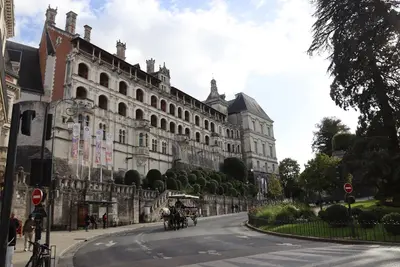
    Blois is located on the north bank of the Loire and was one of the most important residences of the French kings in the 15th and 16th centuries.The central Château Royal de Blois combines Gothic, Renaissance, and Classicism around one courtyard.The winding old town features half-timbered houses and the Cathédrale Saint-Louis, which was largely rebuilt after a storm at the end of the 17th century.Opposite the castle, the Maison de la Magie Robert-Houdin is dedicated to the history of magic.April, May, or September are ideal for the old town, when fewer visitors are around.
    Centre-Val de Loire

    Centre-Val de Loire

    The Centre-Val de Loire region stretches from Chartres in the north to Berry in the south. Its heart is the Loire Valley with its châteaux and gardens, the section of which between Sully-sur-Loire and Chalonnes is a UNESCO World Heritage site. It also features forests like the Sologne, wine regions from Sancerre to Vouvray, and a cuisine with goat cheese, game, and river fish.
    Orléans

    Orléans

    Orléans is located at the northernmost point of the Loire bend and is closely associated with Jeanne d'Arc, who ended the city's siege in 1429. The old town features restored half-timbered houses, a Gothic cathedral, and quays along the Loire. The city makes an ideal base for the eastern part of the Loire Valley, which is a UNESCO World Heritage site here.
    Amboise

    Amboise

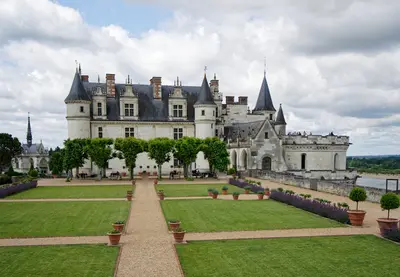
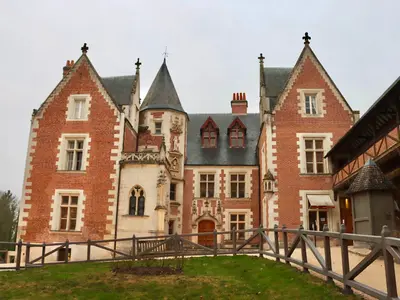
    The old royal town of Amboise is situated on the south bank of the Loire, below the Château d'Amboise. It is known as the burial place of Leonardo da Vinci, who spent his final years in the nearby Clos Lucé.
    Loire Valley (Vallée de la Loire)

    Loire Valley (Vallée de la Loire)

    The Loire Valley, between Sully-sur-Loire and Chalonnes-sur-Loire, has been on the UNESCO World Heritage List since 2000. The region is known for its châteaux (often numbering over 300), its gardens, and its wide river landscapes.Its moniker, the "Garden of France," points to its fruit and vegetable cultivation, along with wine regions from Sancerre to Muscadet, and a cuisine heavily reliant on regional products.

    Sources & method

    • Photos: Wikimedia Commons, Unsplash. Each photo carries its credit.
    • The content is based on web research from public, traceable sources. How the content is made · The role of AI