Fernweh: Home
    ExploreTravel GuidesPlan a tripMy tripLast visited
    de|en
    All Places & RegionsAll highlightsAbout FernwehFAQPrivacy PolicyImprint
    ExploreTravel GuidesPlan a tripMy tripLast visited
    National Park Vicente Pérez Rosales

    Chile

    National Park Vicente Pérez Rosales

    National Park

    Vicente Pérez Rosales National Park is Chile's oldest, stretching from Osorno Volcano to the Argentine border.

    by Felix Gillen

    1. Home
    2. Destinations
    3. Chile
    4. Lake Region
    5. National Park Vicente Pérez Rosales
    Vicente Pérez Rosales National Park is Chile's oldest, stretching from Osorno Volcano to the Argentine border. Most visitors come for the Saltos del Petrohué and the turquoise-green Lago Todos los Santos, plus hiking trails through rainforest and lava fields.

    Sehenswürdigkeiten

    Discover the most important sights and attractions

    Mirador La Picada

    1Mirador La Picada

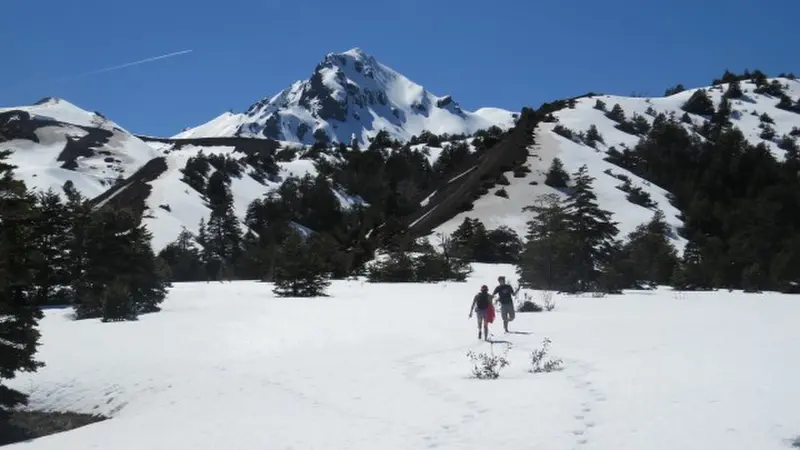
    The viewpoint is located on the path to Paso Desolación on the northern flank of Osorno volcano; the starting point is La Picada sector. In clear weather, you have views of Osorno and the surrounding mountains and volcanoes. The path there requires fitness.
    Open in Google Maps

    2Museo Pioneros

    The small museum in Petrohué commemorates researchers and pioneers connected with the region, including Vicente Pérez Rosales and the naturalist Santiago Roth. One exhibit is the reconstruction of an Andean cable car from around 1900. A brief visit that combines well with the boat trip from the pier.
    Open in Google Maps
    The Petrohué Falls
    Natural Feature

    3The Petrohué Falls

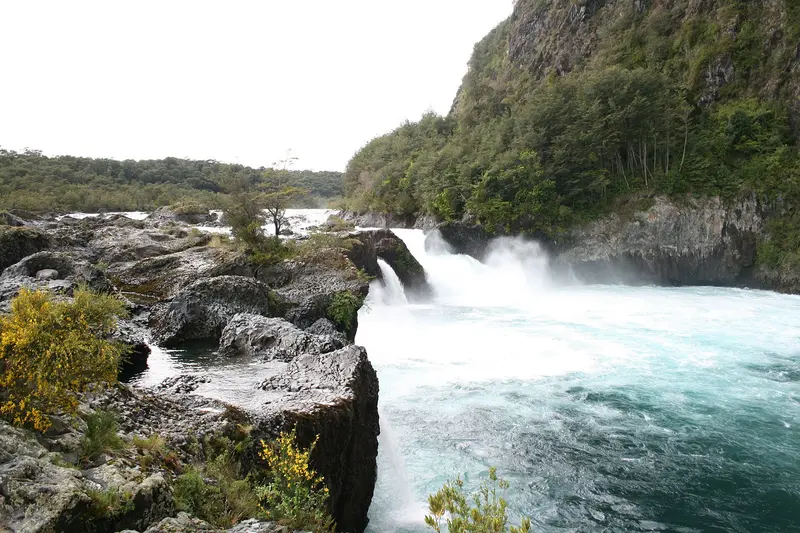
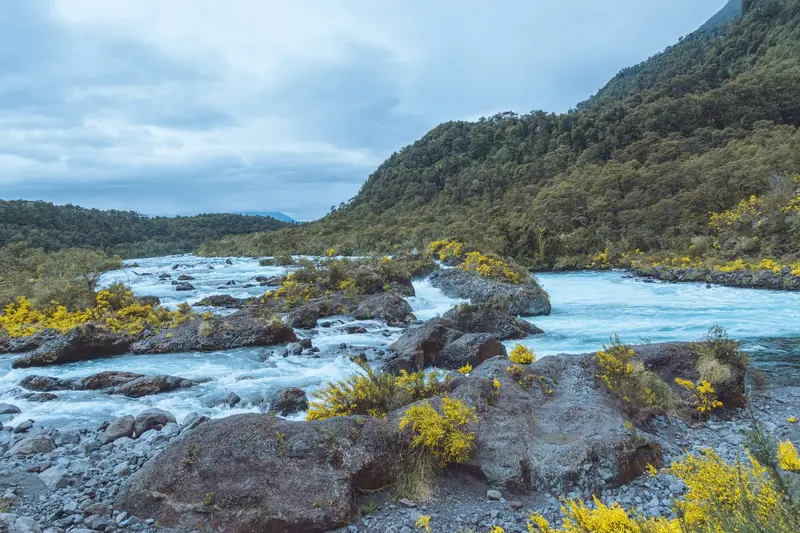
    The Río Petrohué here forces its way over solidified lava into narrow channels and cascades, with the Osorno Volcano behind it. Short wooden boardwalks lead from the roadside parking lot to several viewpoints. Tickets can be bought in advance online via pasesparques.cl; for foreign adults, the entrance fee in 2026 was 8,200 Pesos.
    Open in Google Maps
    Lake Todos los Santos
    Natural Feature

    4Lake Todos los Santos

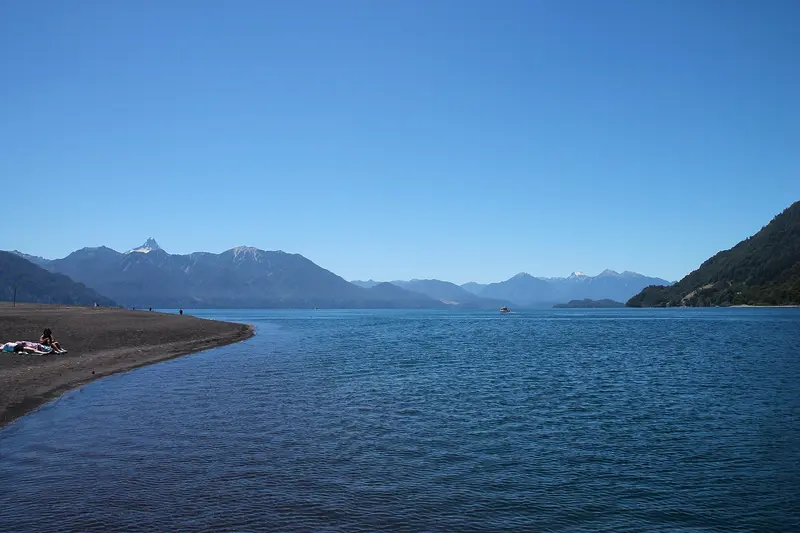
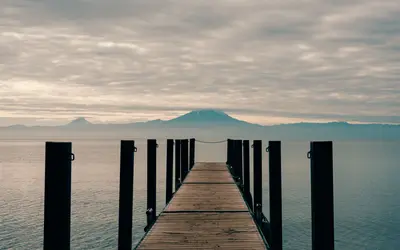
    The lake in the center of the park shimmers turquoise-green due to mineral suspended particles and is surrounded by the volcanoes Osorno, Puntiagudo, and Tronador. From the Petrohué pier, excursion boats and the ships of the Andean Crossing depart for Peulla.
    Open in Google Maps
    Osorno Volcano
    Natural Feature

    5Osorno Volcano

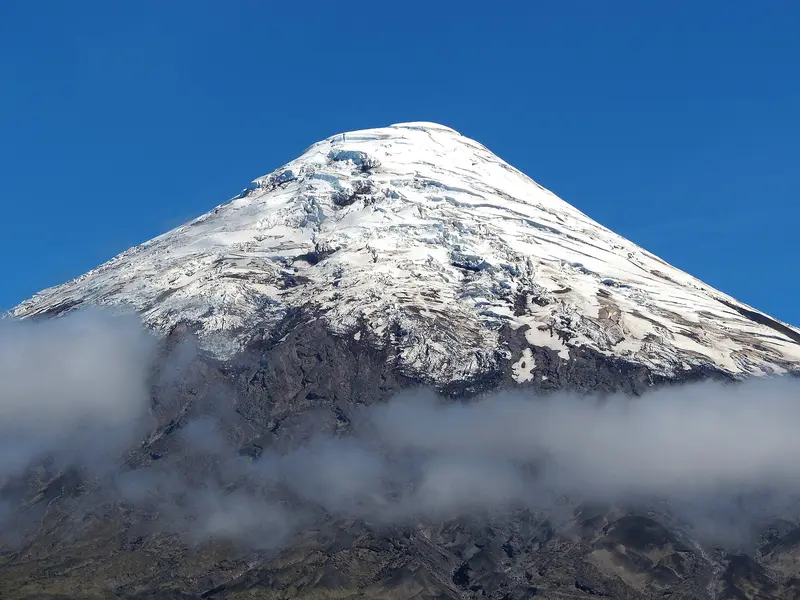
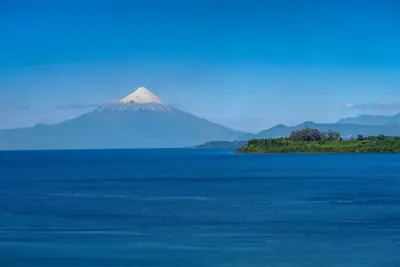
    The almost symmetrical, glaciated cone, at 2,652 meters, is the landmark of the Lake Region. A branch road from Ensenada leads up to around 1,200 meters to the ski center; from there, chairlifts take you higher up.
    Open in Google Maps

    Essen & Trinken

    1

    Restaurante Donde Nana

    Small restaurant in Petrohué on Lago Todos los Santos, a few minutes' walk from the boat dock. Off-season, check beforehand if it's open.
    Show on Google Maps
    2

    Restaurante Esmeralda

    Restaurant in Petrohué near the boat dock on Lago Todos los Santos, convenient before or after your boat trip. Off-season, please check if it's open.
    Show on Google Maps

    Sazón de Laura

    Casual restaurant in Petrohué on Lago Todos los Santos, convenient for lunch before or after your boat trip. Off-season, check beforehand if open.
    Show on Google Maps
    3

    Fogón de Puschel

    Restaurant in Petrohué on the Río Petrohué, near the boat dock. The name refers to the Fogón, the open fireplace of Southern Chilean cuisine. Outside of season, check beforehand if open.
    Show on Google Maps

    Food & Drinks in the Park

    Within the park, options are limited. If you're after more than a snack, eat in Ensenada or bring something from Puerto Varas.

    Venues in Petrohué

    On the lakeshore in Petrohué, near the boat dock, are several simple restaurants. Practical for lunch before or after the boat trip. Off-season, check beforehand if they are open.

    Restaurants in Ensenada

    In the town on the east shore of Lago Llanquihue, at the access to the park, you'll find more restaurants. Out of season, not all are open.

    Self-catering

    There are no supermarkets in the park, so it's better to shop in Puerto Varas. For longer hikes, you'll need your own supplies and water.

    History of the Park

    Chile's First National ParkThe park was established by decree on August 17, 1926, as Chile's first national park, and was the second in South America after Argentina's Nahuel Huapi. It covers approximately 253,780 hectares and bears the name of Chilean politician Vicente Pérez Rosales. It is managed by CONAF.An Ancient Route Across the AndesThe route via Lago Todos los Santos was used as a crossing over the Andes long before the park was founded. In 1670, the Jesuit Nicolás Mascardi traveled across the Reloncaví Fjord and Lago Todos los Santos to Lago Nahuel Huapi, where he founded a mission. By the end of the 19th century, cargo and passenger traffic began from Puerto Montt, which is the origin of today's boat connection from Petrohué via Peulla towards Bariloche.Pioneers by the LakeThe small Museo Pioneros in Petrohué commemorates the area's explorers and pioneers, including a reconstruction of an Andean cable car from around 1900. Peulla, on the lake's eastern shore, remains accessible only by boat from the Chilean side.

    On-site Adventures

    DirectionsThe access road leads from Puerto Varas via Ensenada to the Saltos del Petrohué, approximately 55 kilometers on paved road, and continues to the pier in Petrohué. You can buy tickets for the Saltos online in advance via pasesparques.cl. Parking is available at the waterfalls and at the boat pier.Without a car, buses run several times daily from Puerto Varas in summer, much less frequently outside the season. Many agencies offer half-day tours, often combined with Osorno Volcano.The ParkWithin the park, you get around on foot or by boat. The paths at the waterfalls are short; longer routes, such as the path to Paso Desolación, require fitness and sturdy footwear. Excursion boats and the ships of the Andean Crossing to Bariloche operate on Lago Todos los Santos.

    Accommodations in National Park Vicente Pérez Rosales

    Find perfect stay in National Park Vicente Pérez Rosales
    Booking.com* (Affiliate link)
    Search Hotels
    Agoda* (Affiliate link)
    Search Hotels
    Airbnb
    Vacation Rentals

    * Affiliate link: if you book through it, we earn a small commission. The price stays the same for you.

    Nearby

    Frutillar

    Frutillar

    Frutillar is located on the west shore of Lago Llanquihue and is known for the wooden houses of the German settlers in Frutillar Bajo and the Teatro del Lago directly on the water. On a clear day, Osorno Volcano stands directly opposite on the other side of the lake.
    Puerto Varas

    Puerto Varas

    Puerto Varas is a small town on Lago Llanquihue in the south of the Chilean Lake District, characterized by wooden houses from the period of German immigration. On clear days, the Osorno and Calbuco volcanoes rise above the lake, and most of the region's attractions can be reached from here as a day trip.
    Lake Region

    Lake Region

    The Chilean Lake District stretches from Lago Villarrica in La Araucanía through Los Ríos to Lago Llanquihue, Chiloé Island, and the start of the Carretera Austral in Los Lagos. Volcanoes like Villarrica and Osorno, temperate rainforest, wooden houses from the German immigration era, and the wooden churches of Chiloé define the region.
    Lake District and Bariloche

    Lake District and Bariloche

    In northern Patagonia, glacial lakes, forests, and snow-capped peaks line up at the foot of the Andes. The heart of the region is Parque Nacional Nahuel Huapi, Argentina's oldest national park, with the city of San Carlos de Bariloche on its namesake lake. In summer, hiking trails, boat trips, and scenic routes like the Ruta de los Siete Lagos beckon; in winter, the ski resorts.
    San Carlos de Bariloche

    San Carlos de Bariloche

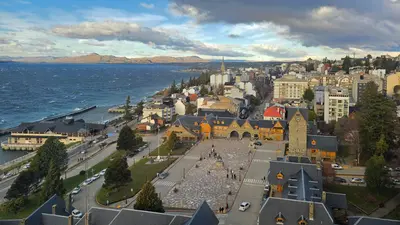
    Bariloche is located on the southern shore of Lago Nahuel Huapi, a glacial lake at approximately 700 meters above sea level, and is completely surrounded by Parque Nacional Nahuel Huapi. The park, founded in 1922 and re-established in 1934, is Argentina's oldest. With its alpine-style timber and stone buildings, chocolate shops, and surrounding mountains, the city is considered the gateway to Patagonia and the country's chocolate capital.Its focal point is the Centro Cívico, built of stone and wood and inaugurated in 1940, offering views of the lake. The classic excursion is the Circuito Chico, a roughly 60-kilometer scenic drive around the Llao Llao peninsula, featuring viewpoints over the lakes. Along the way, a chairlift ascends Cerro Campanario, whose panorama is considered one of the most beautiful in the region. In winter, Cerro Catedral is one of South America's largest ski resorts; to the north, the Ruta de los Siete Lagos covers approximately 120 kilometers from Villa La Angostura to San Martín de los Andes.

    Sources & method

    • Photos: Wikimedia Commons, Pexels, Google Maps. Each photo carries its credit.
    • Place data such as addresses and ratings comes from Google Maps.
    • The content is based on web research from public, traceable sources. How the content is made · The role of AI