Chiloé is the large green island in the Pacific at the southern end of the Chilean Lake District, with its own architecture, cuisine, and mythology. You come for the wooden churches, 16 of which are UNESCO World Heritage Sites, the palafitos of Castro, and the penguin colony near Puñihuil.
Sehenswürdigkeiten
Discover the most important sights and attractions
1Mirador Veliche
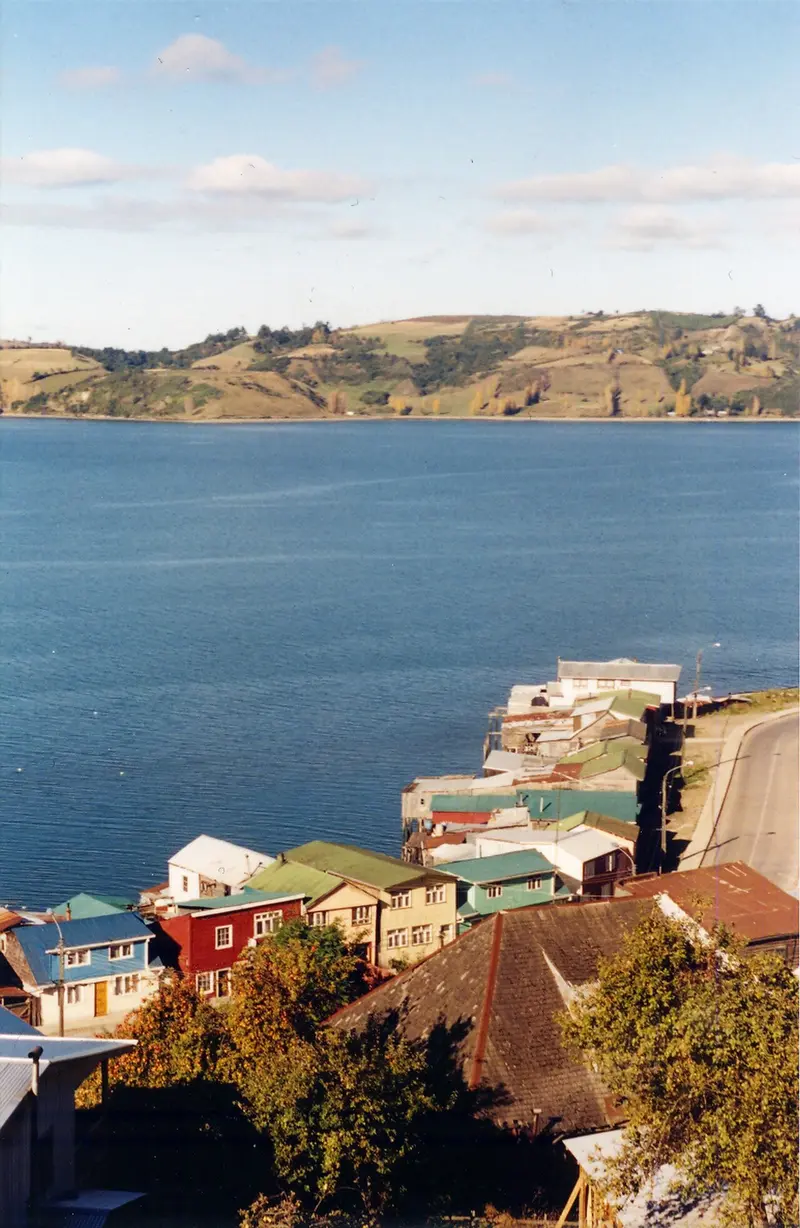
Viewpoint on the southwestern edge of Castro with views over the fjord and the city.
Secluded beach on the open Pacific in the northern part of Chiloé National Park, significantly north of Cucao. You can only reach it on foot via the coastal path from Cucao, which leads past Playa Cole Cole to Río Anay. Plan the hike as a multi-day tour with tent and provisions and inquire in advance with CONAF about the trail conditions.
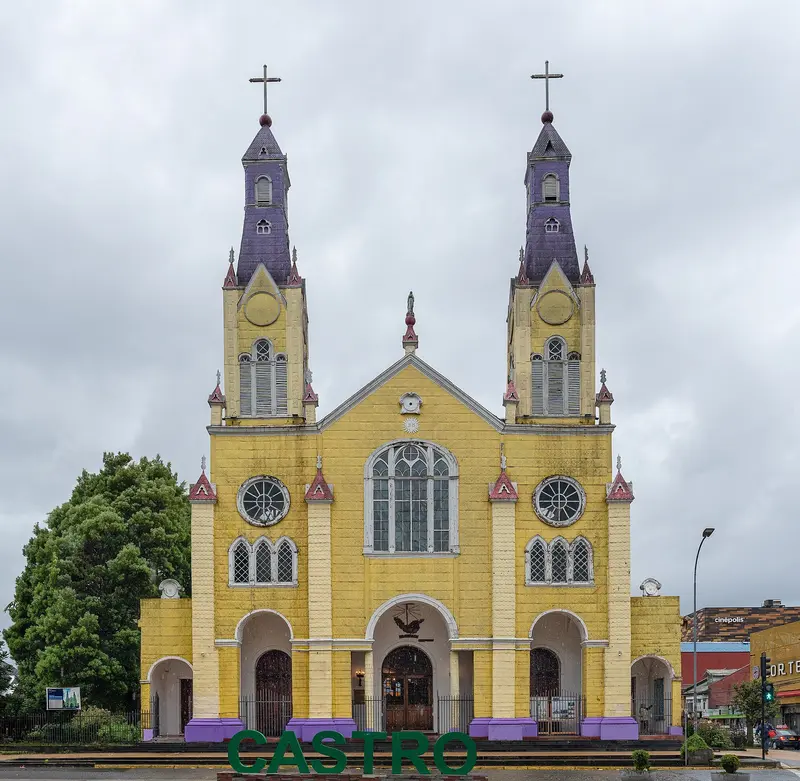
Castro's Plaza de Armas church was rebuilt after its 1902 predecessor burned, based on plans by Italian architect Eduardo Provasoli, and completed in 1912. Externally clad in coloured corrugated iron, internally with local timbers, it became a UNESCO World Heritage site in 2000.
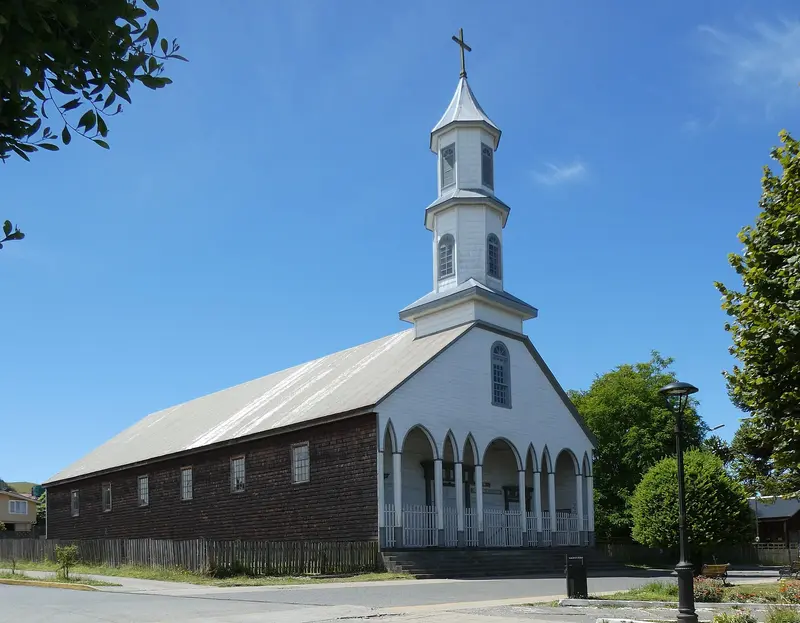
The wooden church with its columned portico stands on Dalcahue's shore, right next to the market, and is one of the archipelago's 16 World Heritage churches. Saturdays are ideal to combine a visit with the market.
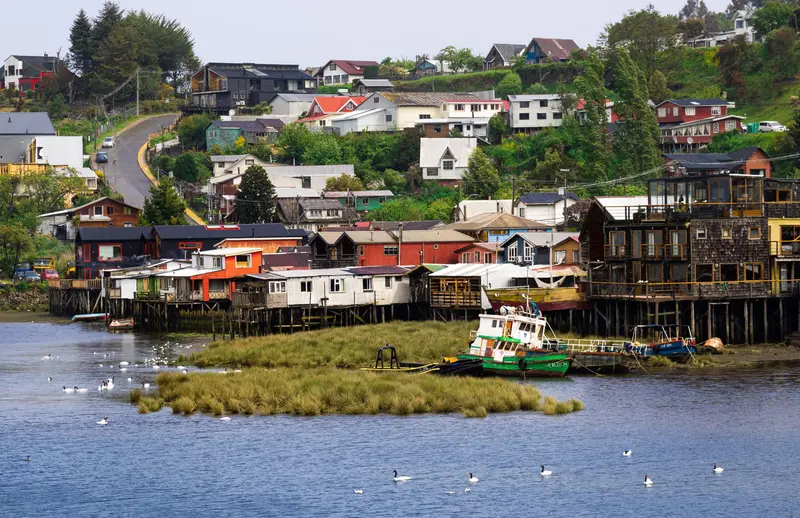
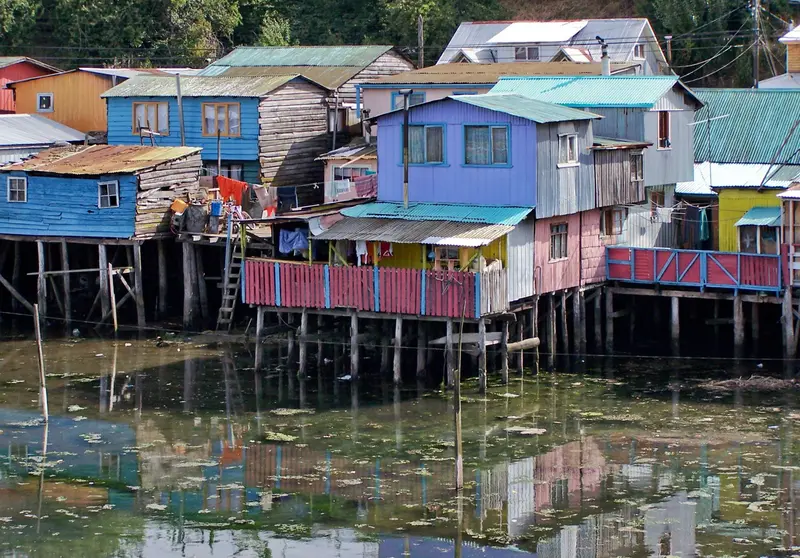
The colorful wooden stilt houses in Gamboa are Castro's most iconic image. Best seen at high tide from the Mirador on Ruta 5, some Palafitos are now accommodations or cafés.
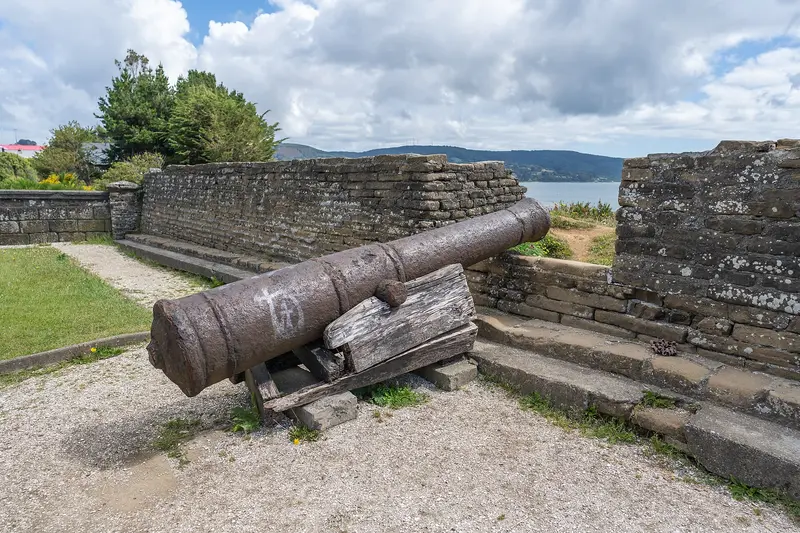
The Spanish fortress, built in 1770 above the port of Ancud, was Spain's last bastion on Chilean soil: On January 19, 1826, the Spanish flag was lowered here. From the cannon emplacements, you have a wide view over the bay; admission is free.
Restaurant at Calle Pedro Montt 210 in the center of Castro, near the waterfront. The cuisine offers a modern interpretation of Chilotan traditions, with a focus on fish and seafood and ingredients from the island's markets.
Bakery and patisserie at Calle Chacabuco 355 in the center of Castro, with cakes and savory items, as the name suggests. Good for a break with cake or a small snack.
Chiloé's cooking differs from the rest of Chile: lots of potatoes, mussels, and smoked foods. The best places are the market halls in Dalcahue, Castro, and Ancud.
Curanto
The island dish: Mussels, meat, sausages, and potato flatbreads cook in an earth pit over hot stones, under Nalca leaves. This takes hours and is a social event. In restaurants, you usually get the pot version, Pulmay.
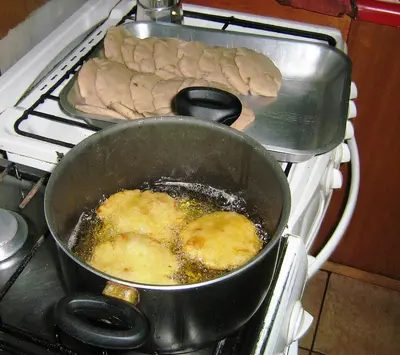
Milcao and Chapalele
Milcao is a potato-dough flatbread, Chapalele a potato-and-flour bread, cooked in water or Curanto steam. Both are part of the Curanto but are also eaten alone. Chiloé is considered an origin region of the potato; hundreds of old varieties are still grown on the archipelago today.
Seafood from the Market
In the market halls, such as in Dalcahue and Castro, you'll find mussels, Machas, and dried shell strings, plus Congrio and salmon. Much is prepared on-site.
Chicha de Apple
Apples are the archipelago's most common fruit, from which Chicha is made – a fermented apple cider. It pairs with Licor de Oro, a sweet liqueur of whey, schnapps, saffron, and lemon peel. Both are available bottled at markets.
Culture on Chiloé
Wooden ChurchesThe wooden churches are the island's unique cultural feature. Jesuits introduced the architectural style from the 17th century, which local boat builders then implemented using shipbuilding techniques and entirely native wood. Since 2000, 16 of these churches have been on the UNESCO World Heritage List, including Santa María de Loreto in Achao and the colourful Church of San Francisco in Castro.Myths and CraftsIts oral tradition is equally defining: Chiloé has its own world of myths featuring the ghost ship Caleuche, the mermaid Pincoya, and the forest creature Trauco. These figures can be found in museums, markets, and place names, and many older islanders still recount them with gravitas.Crafts also endure: Wool is spun, dyed, and knitted, especially at the markets in Dalcahue and Castro. During a Minga, a communal work effort, entire houses were formerly relocated. Today, it is more a symbol than an everyday practice.
Exploring locally
Getting There by FerryThe journey uses the car ferry from Pargua to Chacao across the Canal de Chacao. The crossing takes about 30 to 40 minutes. Ferry operators Cruz del Sur and Transmarchilay shuttle continuously without a fixed timetable. No advance booking is needed, but waits can occur during peak season. Long-distance buses from Puerto Montt and Santiago take the ferry, with the crossing included in the ticket. A bridge over the canal is under construction, with completion announced for 2028.On the IslandOn the island, Ruta 5 links Ancud, Castro, and Quellón, with regular buses connecting these towns. Dalcahue, Cucao, and smaller coastal villages are served by micros, which run irregularly and rarely on Sundays.For visiting the churches and the west, a rental car is highly recommended. Many secondary roads are gravel, turning muddy after rain. A short ferry departs from Dalcahue to Quinchao.
Accommodations in Chiloé Island (Isla Grande de Chiloé)
Find perfect stay in Chiloé Island (Isla Grande de Chiloé)