The Chilean Lake District stretches from Lago Villarrica in La Araucanía through Los Ríos to Lago Llanquihue, Chiloé Island, and the start of the Carretera Austral in Los Lagos.
The Chilean Lake District stretches from Lago Villarrica in La Araucanía through Los Ríos to Lago Llanquihue, Chiloé Island, and the start of the Carretera Austral in Los Lagos. Volcanoes like Villarrica and Osorno, temperate rainforest, wooden houses from the German immigration era, and the wooden churches of Chiloé define the region.
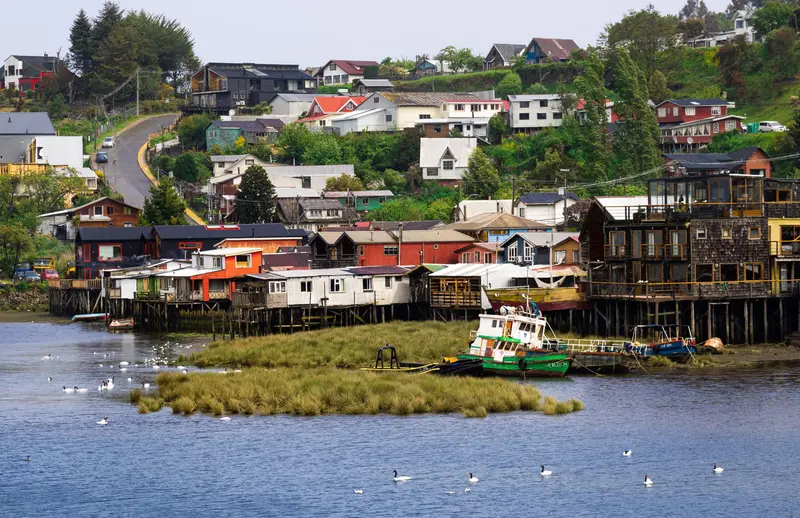
The Lake Region, for tourism purposes, encompasses the three regions of La Araucanía, Los Ríos, and Los Lagos. To the north lies Pucón on Lago Villarrica, a starting point for tours to Villarrica Volcano and the surrounding thermal springs. To the south, Lago Llanquihue forms the center, on whose shores stand Puerto Varas and Frutillar with their shingled houses from the settler era. To the east, Vicente Pérez Rosales National Park adjoins, featuring the 2,652-meter-high Osorno Volcano, the Saltos del Petrohué, and Lago Todos los Santos. From Pargua, southwest of Puerto Montt, the ferry crosses to Chiloé, where Palafitos and the UNESCO World Heritage wooden churches showcase a distinctive island culture. From December to March it is mildest, but you should expect rain throughout the year.
Place 1 of 4
Pucón
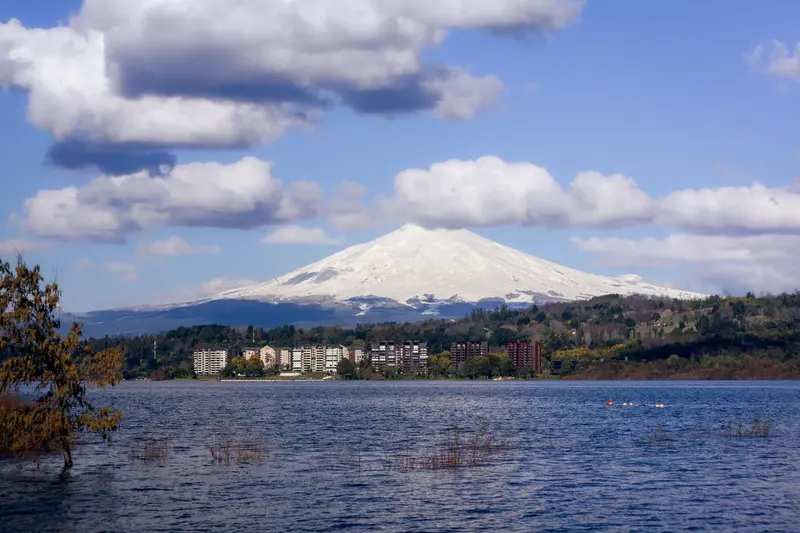
Pucón, a resort town on Lake Villarrica in northern Chile's Lake District, is overlooked by the cone of Villarrica volcano. From here, explore forest hot springs, the Araucaria forests of Huerquehue National Park, and the whitewater of the Río Trancura.
Frutillar is located on the west shore of Lago Llanquihue and is known for the wooden houses of the German settlers in Frutillar Bajo and the Teatro del Lago directly on the water.
Vicente Pérez Rosales National Park is Chile's oldest, stretching from Osorno Volcano to the Argentine border. Most visitors come for the Saltos del Petrohué and the turquoise-green Lago Todos los Santos, plus hiking trails through rainforest and lava fields.
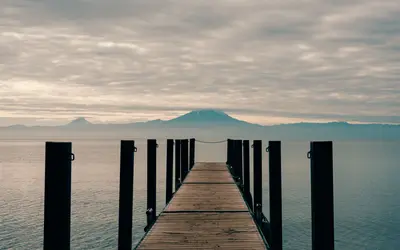
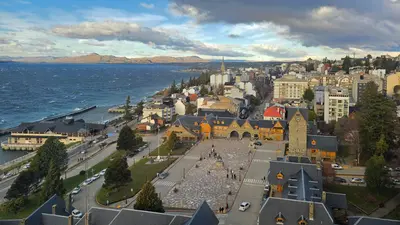
Puerto Varas is a small town on Lago Llanquihue in the south of the Chilean Lake District, characterized by wooden houses from the period of German immigration. On clear days, the Osorno and Calbuco volcanoes rise above the lake, and most of the region's attractions can be reached from here as a day trip.
Sights in Lake Region
Discover the most important sights and attractions
Natural Feature
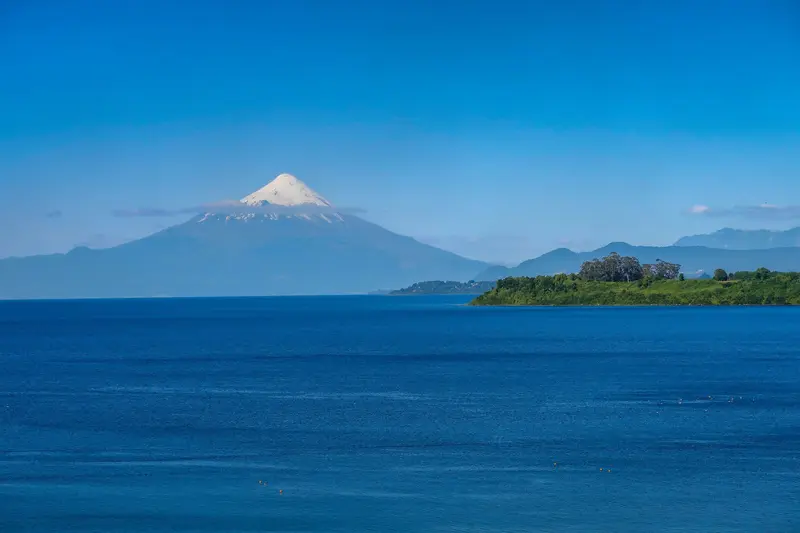
Volcán Osorno
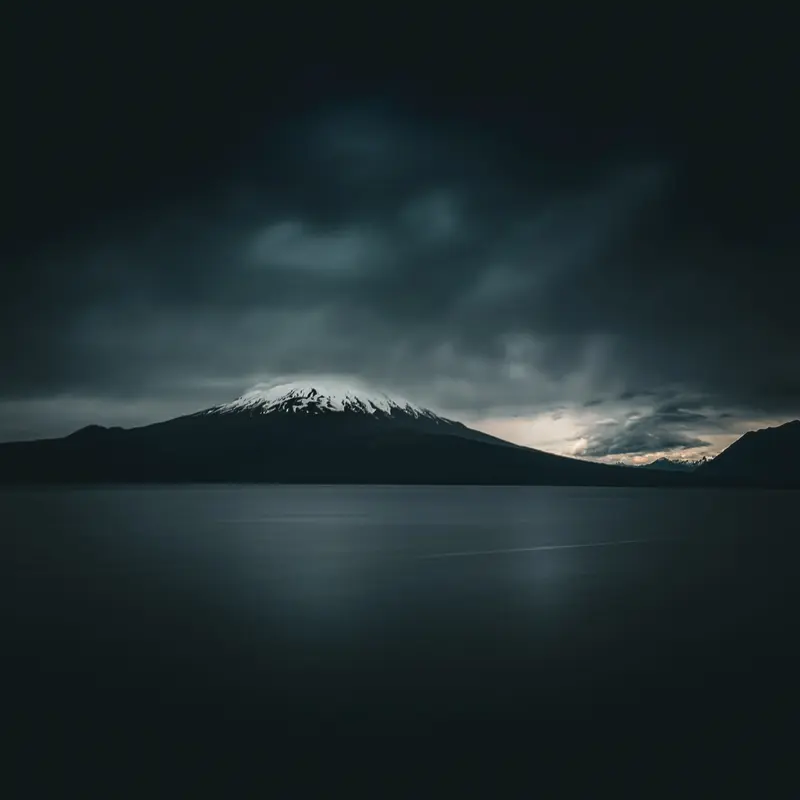
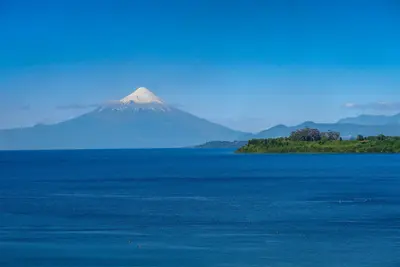
The almost symmetrical, glaciated cone is 2,652 meters high, stands between Lago Llanquihue and Lago Todos los Santos, and is visible from Puerto Varas and Frutillar. A side road from Ensenada takes you to the ski center at around 1,200 meters.
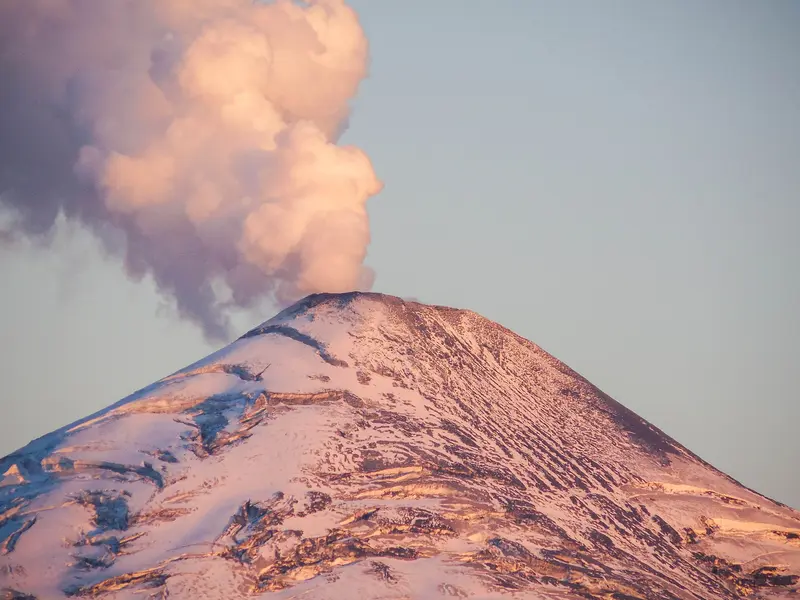
At roughly 2,850 meters, the volcano above Pucón is one of Chile's most active, featuring a lava lake in its crater. Agencies in Pucón offer guided ascents, if authorities permit the climb; its northern flank hosts a ski resort in winter. Since September 2026, an elevated alert level has been in effect: check current status with SENAPRED and in the Foreign Office's travel and security advisories.
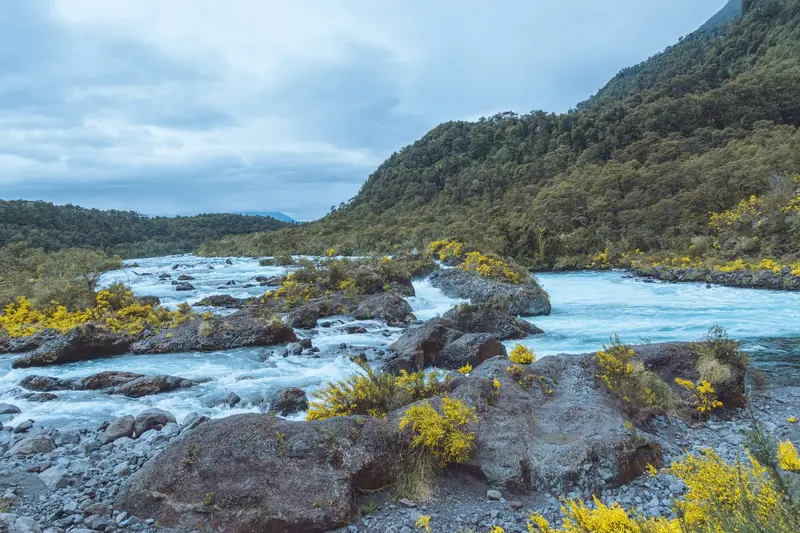
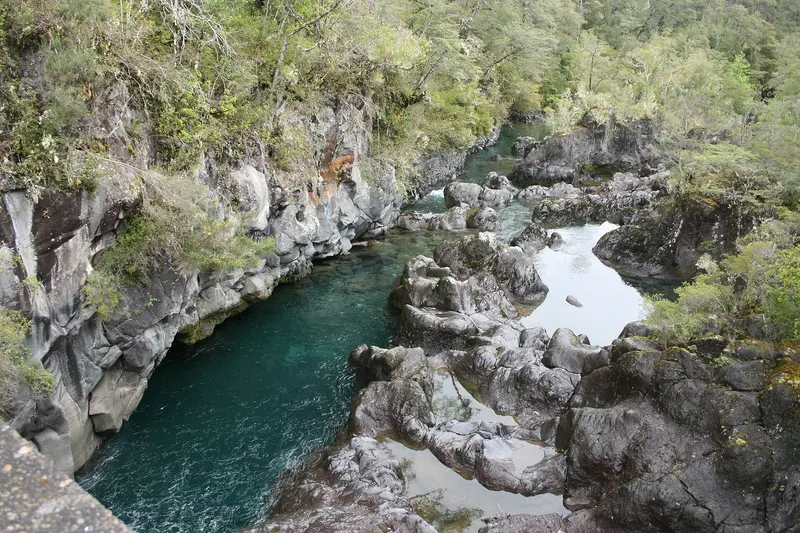
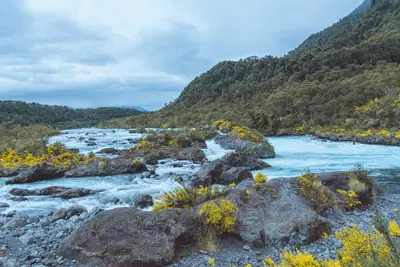
Here, the Río Petrohué flows over solidified lava in channels and cascades, backed by Volcano Osorno. Short paths lead from the parking lot on Ruta 225 to several viewpoints. You can buy tickets online in advance via pasesparques.cl; the 2026 entry for foreign adults was 8,200 Pesos.
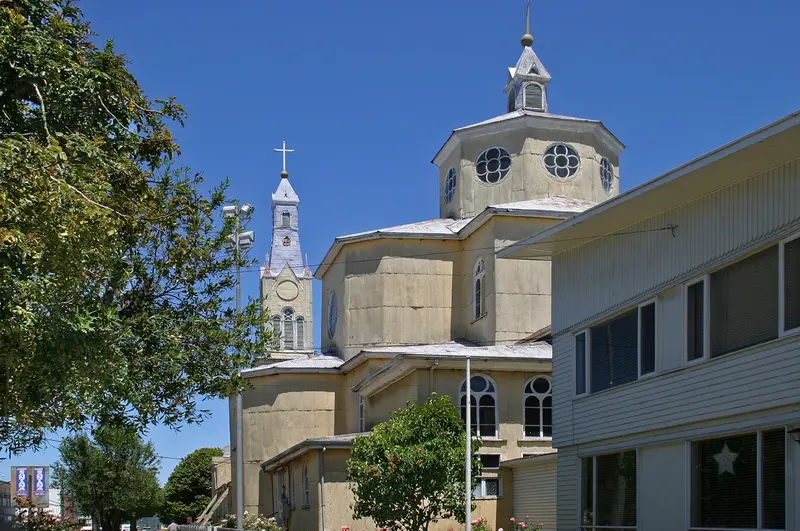
The wooden church on the Plaza de Armas in Castro was built from 1910 to 1912, designed by Eduardo Provasoli, and is clad in colorfully painted sheet metal. Inside, you'll find works made from local woods, and since 2000, it has been part of the Chiloé Churches World Heritage Site.
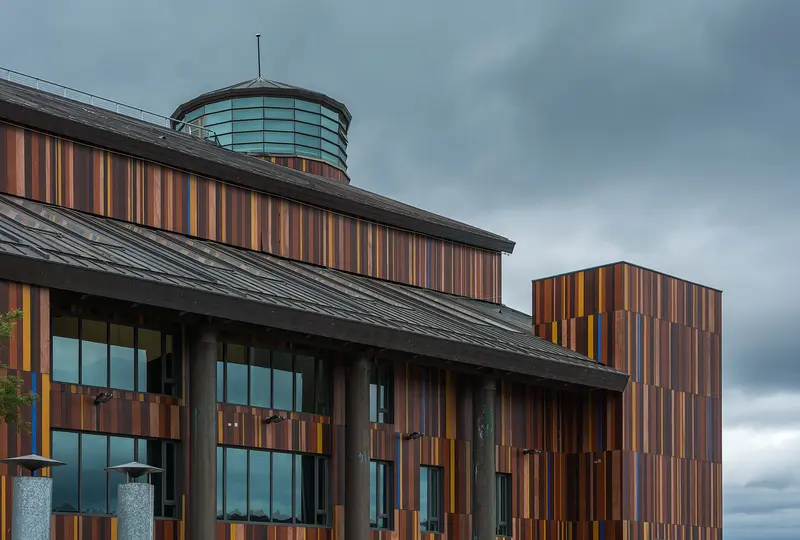
Opened in November 2010, the concert and theater house is located in Frutillar directly on the shore of Lago Llanquihue, its main hall seats 1,178. Besides the program of classical music, opera, and dance, you can also explore the building on guided tours.
The Lake Region's cuisine blends Chilean traditions with the heritage of German immigrants and Chiloé's island cuisine. Lots of salmon, potato, and cake.
Curanto
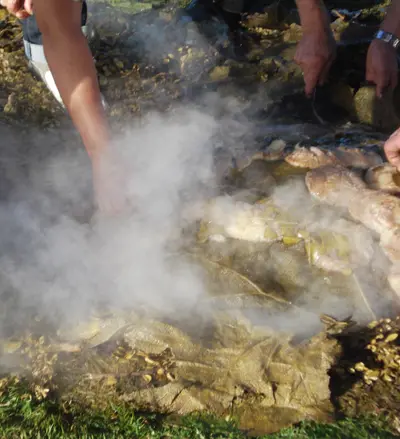
Shellfish, meat, sausages, and potatoes cook in an earth pit over hot stones under Nalca leaves. On Chiloé, this is a communal event that lasts several hours. In restaurants, you usually get the pot version, Pulmay.
Cakes and Onces
In the cafés of Puerto Varas and Frutillar, display cases hold cakes; the word 'Kuchen' has made it unchanged into Chilean Spanish. Typical toppings are seasonal fruits like Murta, raspberries, strawberries, or blueberries. These are enjoyed with Onces, the Chilean afternoon snack.
Salmon and various Seafood
Salmon, mussels, and other fish are on the menu throughout the region. Angelmó Market in Puerto Montt is known for its seafood, and its simple eateries serve fish and mussels for lunch.
Potatoes from Chiloé
Chiloé is considered a region of origin for the potato, and hundreds of old varieties are still cultivated on the archipelago today. Milcao is a flatbread made from potato dough, Chapalele a bread made from potato and flour; both are part of Curanto.
Beer with German roots
German immigrants brought beer brewing to southern Chile from 1850. In Valdivia, Carl Anwandter founded a brewery in 1851; today, it is home to the Kunstmann Brewery, which began as a small operation in 1991.
Best Time to Visit
When is the best time for your trip?
December
January
February
March
13–15°C·70–110 mm(moderate rain)
The southern summer between December and March is the most reliable time: long days, mild temperatures and the highest chance of clear views of the Osorno and Calbuco volcanoes. January and February are also the Chilean holiday season, so Puerto Varas and Frutillar are crowded and prices are higher. Those seeking tranquility should travel in November or late March, accepting more rainy days.
The lake region has a temperate rainy climate: cool summers, mild winters, and precipitation every month. Puerto Montt receives around 1,800 millimeters annually, significantly more than Central Europe, with a peak between May and August.The weather changes quickly and locally — a rainy morning can turn into a clear afternoon with volcano views. A rain jacket and layers belong in your luggage even in midsummer, as windy lakeshores feel cooler than the thermometer shows.
Seasons
Jan
Feb
Mar
Apr
May
Jun
Jul
Aug
Sep
Oct
Nov
Dec
Summer, top travel season
Transitional, changeable
Winter, wet and cool
Best Time to Visit
▶Show detailed monthly data
Month
Temp (°C)
Rain (mm)
Sun (h)
January
15.0
70
8.0
February
14.5
75
7.0
March
13.0
110
6.0
April
11.0
160
4.0
May
9.0
230
3.0
June
7.5
250
2.5
July
7.0
230
2.5
August
7.5
190
3.0
September
9.0
140
4.0
October
11.0
110
5.5
November
12.5
95
7.0
December
14.0
85
8.0
Culture in the Lake Region
German Heritage at LlanquihueFrom 1852, German emigrants settled around Lago Llanquihue, and this visibly shapes the region to this day: shingle houses in Puerto Varas and Frutillar, cakes in the cafés, German family names on shop signs. The Museo Colonial Alemán in Frutillar illustrates with a mill, forge, and farmhouse how the first decades looked.Chiloé and MusicThe culture on Chiloé is older and more distinct. The archipelago's wooden churches, built by Jesuits and local boatbuilders, have been a UNESCO World Heritage site since 2000. Additionally, there is its own mythology with figures like the Trauco and the ghost ship Caleuche.Musically, Frutillar is the place to be: The Semanas Musicales in January and February fill the Teatro del Lago on the lakeshore, a concert hall of international caliber in a small town.
On-site adventures
By Bus and CarThe Panamericana, here Ruta 5, crosses the region from north to south. Puerto Montt is the transport hub with El Tepual Airport and the bus terminal. Between Puerto Montt, Puerto Varas, Frutillar and Osorno, buses run frequently during the day, and the routes are short.For everything off the main axis, a rental car is the most convenient solution, for example for circling Lago Llanquihue or accessing Vicente Pérez Rosales National Park. Many secondary roads are gravel and often softened in the winter months.Ferries to Chiloé and the SouthTo Chiloé, the car ferry crosses the Canal de Chacao from Pargua to Chacao, operating regularly during the day. A bridge over the canal is under construction, with completion announced for 2028. Further south, the Carretera Austral begins in Puerto Montt, its first sections only passable by ferry connections. These ferries should be booked in advance during high season.