Fernweh: Home
    ExploreTravel GuidesPlan a tripMy tripLast visited
    de|en
    All Places & RegionsAll highlightsAbout FernwehFAQPrivacy PolicyImprint
    ExploreTravel GuidesPlan a tripMy tripLast visited
    San Pedro de Atacama Village

    Chile

    San Pedro de Atacama Village

    VillageCulture

    San Pedro de Atacama is an adobe oasis village at approx. 2,450 meters in the Atacama Desert, northern Chile.

    by Felix Gillen

    1. Home
    2. Destinations
    3. Chile
    4. Atacama Desert
    5. San Pedro de Atacama Village
    San Pedro de Atacama is an adobe oasis village at approx. 2,450 meters in the Atacama Desert, northern Chile. Stay here to experience geysers, salt flats, highland lagoons, and the desert's starry sky: Most regional excursions depart from the Plaza and Calle Caracoles.

    Sehenswürdigkeiten

    Discover the most important sights and attractions

    Plaza de San Pedro de Atacama

    1Plaza de San Pedro de Atacama

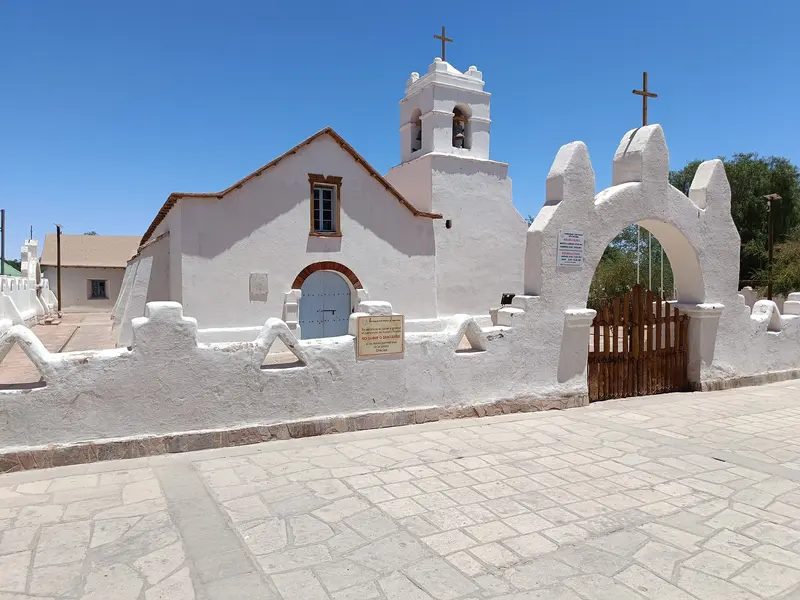
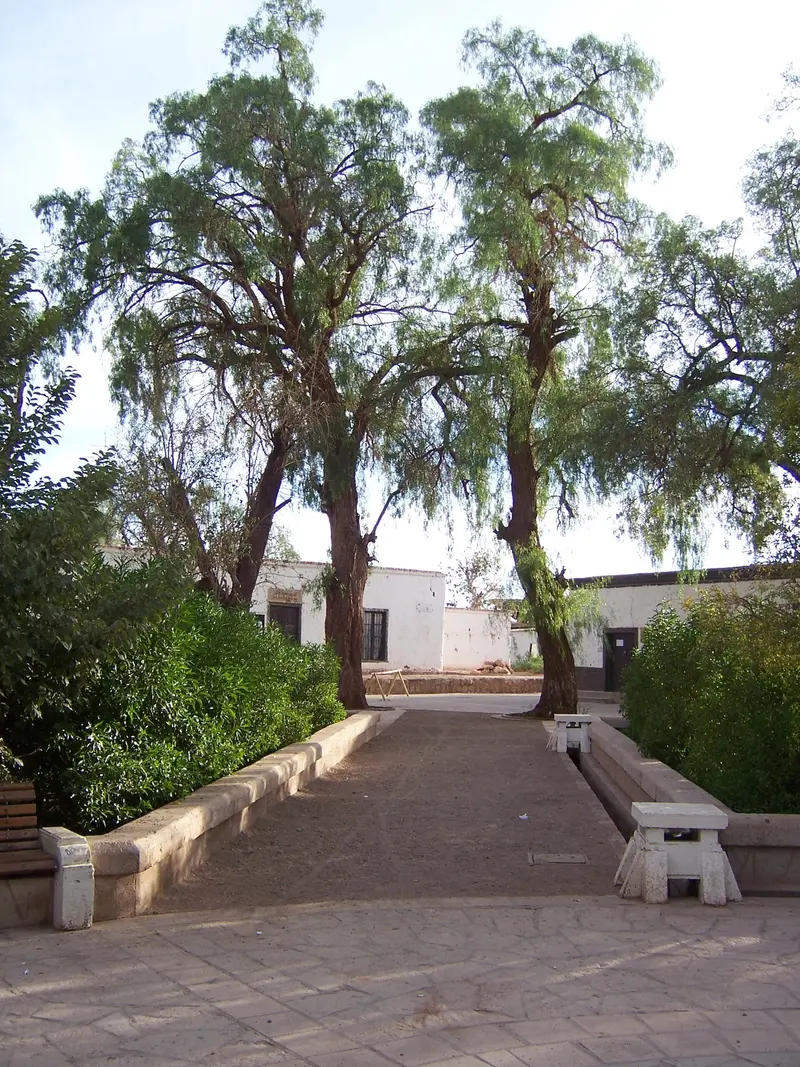
    The shady village square with pepper trees is the center of San Pedro. The Adobe church stands on its west side; around it are craft stalls, cafes, and tour operators. Early in the morning, it's still quiet here.
    Open in Google Maps
    Iglesia San Pedro

    2Iglesia San Pedro

    The white-washed adobe church on the plaza has walls from 1744 and a roof structure of carob wood beams and cactus wood, held together with llama leather straps. It has been a historical monument since 1951 and is used as a community church.
    Open in Google Maps
    Calle Caracoles

    3Calle Caracoles

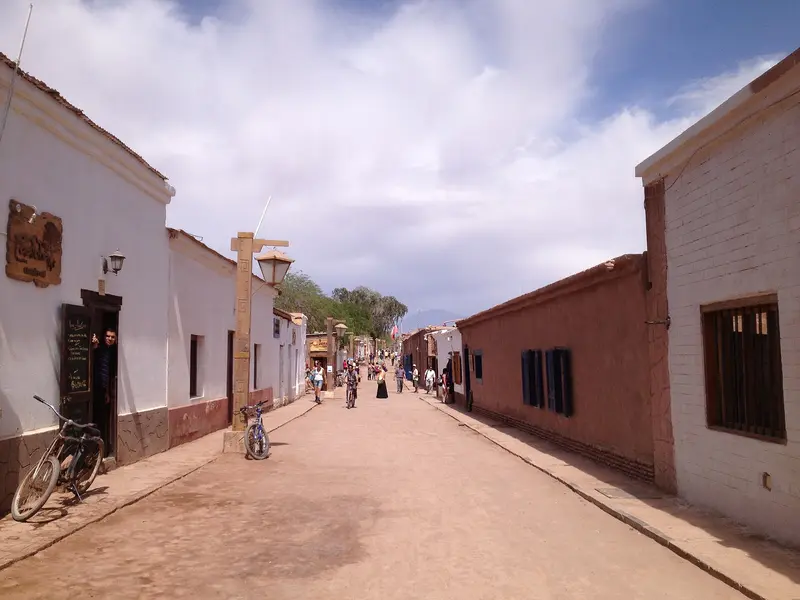
    The village's unpaved main street is lined with low adobe houses. It features restaurants, tour operators, exchange offices, and shops, becoming the evening hub.
    Open in Google Maps
    Pukará de Quitor

    4Pukará de Quitor

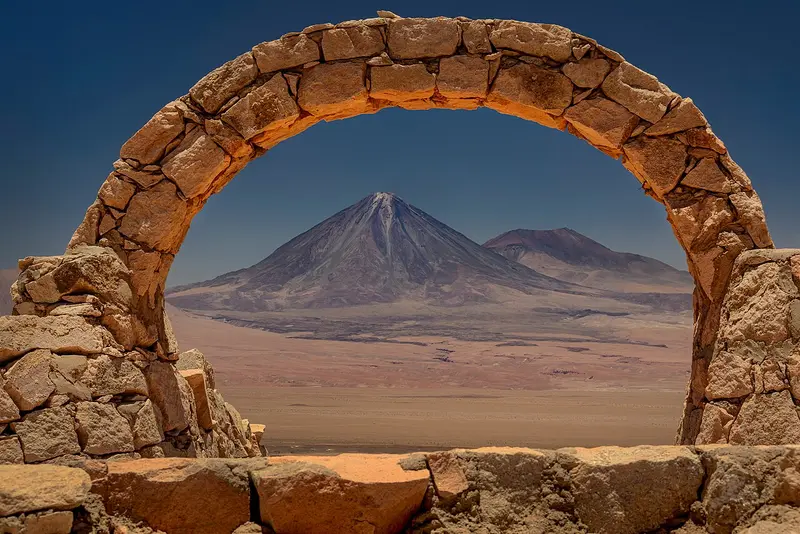
    The ruins of the 12th-century Atacameño fortress stretch about three kilometers northwest of the village, up a slope above the Río San Pedro. From the upper viewpoint, you overlook the oasis and the Valle de la Muerte. Easily accessible on foot or by bike.
    Open in Google Maps

    Essen & Trinken

    1

    Dulce Amanecer

    Small restaurant with Peruvian cuisine on Calle Licancabur, one block north of San Pedro's Plaza.
    Show on Google Maps
    2

    Kusa

    Restaurant with Chilean cuisine on Calle Caracoles, San Pedro's main street in the town center, just west of the Plaza.
    Show on Google Maps
    3

    Los Guasos

    Restaurant with Chilean cuisine on Calle Licancabur, one block north of the Plaza of San Pedro.
    Show on Google Maps
    4

    Ckunna

    Restaurant in a restored building, a former school, at the western end of Caracoles. The cuisine combines ingredients and recipes from the Altiplano with Mediterranean influences, known for its homemade pasta.
    Show on Google Maps
    5

    La Casona

    Restaurant on Caracoles with a high dining room, dark wood paneling, and a central Adobe fireplace. The menu focuses on Chilean cuisine, and the place is especially known for grilled platters and fish in sharing portions.
    Show on Google Maps
    6

    Adobe

    Restaurant on Caracoles, in town since 1997, with rustic decor, rock art motifs as decoration, and a large fire in the open dining area. The menu features Chilean meat dishes, fish, pasta, salads, and pizza.
    Show on Google Maps
    7

    Jardín Meraki

    Restaurant at Calle Calama 419, a side street north of Caracoles in the town center of San Pedro.
    Show on Google Maps
    8

    Antai Restaurant

    Restaurant on Calle Domingo Atienza in the town center, a little off the Caracoles. The cuisine combines modern techniques with regional ingredients such as quinoa, desert herbs, guanaco meat, and fish; the setting is rather formal.
    Show on Google Maps
    9

    Restaurant Paacha

    Restaurant on Calle Domingo Atienza, a few minutes' walk southwest of the Plaza.
    Show on Google Maps

    Food & Drink in San Pedro

    For a desert village, the selection is surprisingly large, because practically every visitor eats here. For this, you pay significantly more than elsewhere in Chile.

    Spicy Rabbit Stew

    Rabbit from the surrounding valleys is slow-braised until the meat falls off the bone, and served in a thick, spicy chili sauce. It is served with rice or potatoes.

    Quinoa from the Highlands

    The large-grained quinoa from the highlands features on many menus as soup, risotto-style Quinoto, or a dessert. Accompanied by local corn, pumpkin, and potatoes.

    Llama meat

    The lean, mild-tasting meat is available as Carpaccio, grilled fillet or as Anticuchos, small skewers.

    Rica-Rica and Airampo

    The wild herb Rica-Rica smells of mint, rosemary, and citrus and flavors the Rica-Rica Sour, a local variant of the Pisco Sour. The seeds of the Airampo cactus color drinks, liqueurs, and sauces violet and taste slightly tart.

    Drinking at altitude

    The dry air and altitude dehydrate you more than you realize. Drink water regularly; alcohol affects you more strongly at altitude than usual.

    Culture in San Pedro

    Church and Adobe ArchitectureThe San Pedro Church on the Plaza is the town's most famous building: whitewashed adobe walls, a roof structure of algarrobo beams and cactus wood planks, held together with llama leather straps. Its current walls date back to 1744, and since 1951 it has been protected as a historical monument, still serving as a parish church today.Traces of the Atacameño CultureThe archaeological museum, based on the collection of the Belgian Jesuit Gustavo Le Paige, has been closed for about ten years. A new building has been planned for a long time, but it is delayed, and an opening date has not been set.In the surroundings are two more testaments to this culture: the 12th-century fortress Pukará de Quitor on a slope above the Río San Pedro valley, and the adobe settlement Aldea de Tulor, whose round houses were inhabited from around 400 BC. Tulor is managed by the local Atacameño community, and the entrance fee directly benefits them.

    Exploring locally

    Within the village itself, you'll get around on foot. The alleys are unpaved and dusty, sometimes unlit in the evenings, so a flashlight is handy.For the surrounding area, you have three options: tours from agencies on Caracoles with pick-up at your accommodation, a rental car from Calama, or a rented bicycle for nearby destinations like Valle de la Luna, Pukará de Quitor, and Aldea de Tulor. For many destinations, tickets are now purchased online in advance, which applies to places such as Valle de la Luna, the Miscanti and Miñiques Lagoons, and Laguna Chaxa.Arrival is almost always via El Loa Airport in Calama, about 100 kilometers and an hour and a half away, by transfer, bus, or rental car. Bring enough cash in Pesos, as smaller entrance fees, such as in Tulor, are collected in cash.The Ministry of Foreign Affairs points out pickpocketing and robberies in Calama and San Pedro de Atacama in its travel and safety advisories; read them before your trip. Due to the altitude, consult a doctor in advance.

    Accommodations in San Pedro de Atacama Village

    Find perfect stay in San Pedro de Atacama Village

    Booking.com* (Affiliate link)
    Search Hotels
    Agoda* (Affiliate link)
    Search Hotels
    Airbnb
    Vacation Rentals

    * Affiliate link: if you book through it, we earn a small commission. The price stays the same for you.
    Nearby

    Atacama Desert

    Atacama Desert

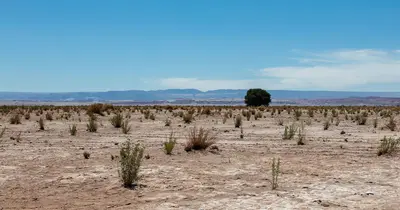
    The Atacama in northern Chile is one of the driest deserts on Earth: salt flats, volcanoes, high-altitude lakes, and geyser fields at over 4,000 meters. Almost all visitors stay in the oasis San Pedro de Atacama and explore the region from there on day trips.
    Valle de la Luna

    Valle de la Luna

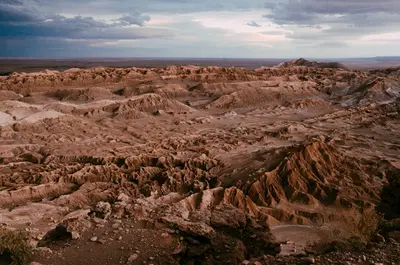
    The Valle de la Luna, some 13 kilometers west of San Pedro de Atacama, is a valley of salt, gypsum, and clay formations with sand dunes in the Cordillera de la Sal. Late afternoon sun tinges ridges and rock faces reddish.
    Salar de Atacama

    Salar de Atacama

    The Salar de Atacama, south of San Pedro, is Chile's largest salt flat, a rough, white-grey crust before Andean volcanoes. Three flamingo species live in the shallow lagoons at its edge, especially Laguna Chaxa.
    Geysers del Tatio Area

    Geysers del Tatio Area

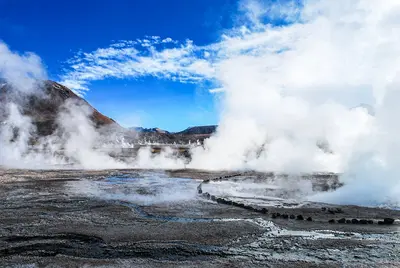
    The El Tatio geyser field lies at about 4,320 meters in the Andes, about 80 to 90 kilometers north of San Pedro de Atacama. Shortly after sunrise, steam columns rise from dozens of vents into the icy cold air, so tours begin in the middle of the night.
    Lagunas Altiplánicas

    Lagunas Altiplánicas

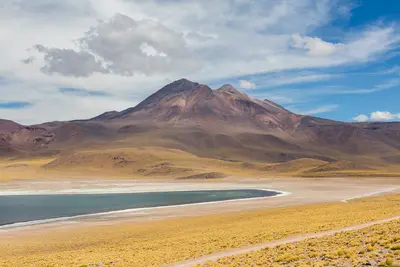
    The Lagunas Miscanti and Miñiques are two deep blue highland lakes at over 4,100 meters in the Altiplano of the Atacama Desert, in northern Chile. Against the backdrop of their namesake volcanoes, you'll see flamingos, taguas, and vicuñas here, and on the way there, the drive passes the Salar de Atacama and the red rocks of Piedras Rojas.

    Sources & method

    • Photos: Wikimedia Commons, Pexels, Google Maps. Each photo carries its credit.
    • Place data such as addresses and ratings comes from Google Maps.
    • The content is based on web research from public, traceable sources. How the content is made · The role of AI