Fernweh: Home
    ExploreTravel GuidesPlan a tripMy tripLast visited
    de|en
    All Places & RegionsAll highlightsAbout FernwehFAQPrivacy PolicyImprint
    ExploreTravel GuidesPlan a tripMy tripLast visited
    • Overview
    • Places in the region
    • Eat & drink
    • Food culture
    • Culture
    • Getting around
    • Nearby
    Champagne

    France

    Champagne

    Region

    Champagne, in northeastern France, is home to the sparkling wine of the same name. Gentle vineyards, historic cities like Reims and Troyes, and miles of chalk cellars characterize the region.

    by Felix Gillen

    1. Home
    2. Destinations
    3. France
    4. Champagne
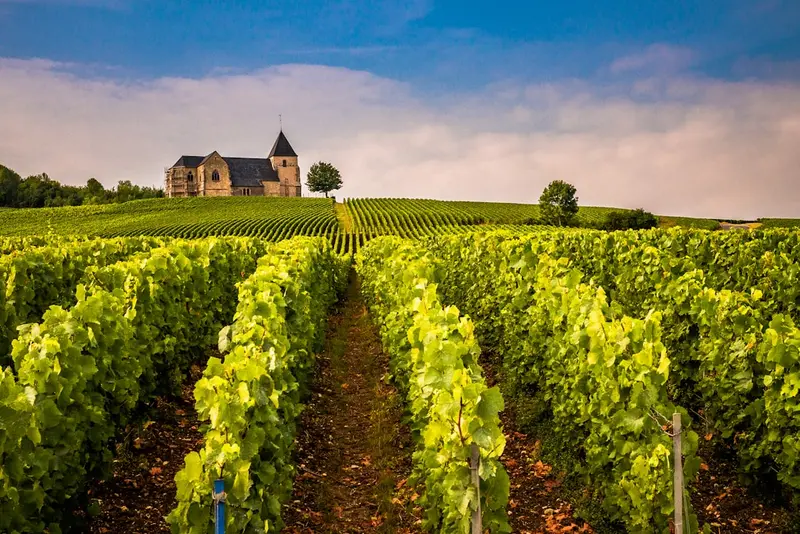
    Champagne, in northeastern France, is home to the sparkling wine of the same name. Gentle vineyards, historic cities like Reims and Troyes, and miles of chalk cellars characterize the region. The "Hillsides, Houses and Cellars of Champagne" have been a UNESCO World Heritage site since 2015.
    The Champagne region in northeast France is inextricably linked with the sparkling wine that takes its name from here. You'll discover hilly landscapes full of vines, whose historic hillsides, Champagne Houses, and cellars have been UNESCO World Heritage sites since 2015. In Reims stands Notre-Dame Cathedral, the coronation site of French kings, while in Épernay, the Avenue de Champagne is lined with the headquarters of renowned Houses. Visit large Champagne Houses or smaller winemakers to discover the diversity. Troyes entices with an old town full of half-timbered houses. During the harvest, usually in September, many winemakers have little time for visitors; spring and early summer are more relaxed times to visit. Book cellar tours in advance.
    Châlons-en-Champagne

    Place 1 of 4

    Châlons-en-Champagne

    Châlons-en-Champagne, prefecture of the Marne department, blends historical heritage with waterways.

    Discover
    Hautvillers

    Place 2 of 4

    Hautvillers

    Hautvillers lies in the vineyards north of Épernay and is considered the cradle of Champagne.

    Discover
    Montagne de Reims

    Place 3 of 4

    Montagne de Reims

    The Montagne de Reims Regional Natural Park is a forested plateau, known for its Grand Cru vineyards, charming wine villages, and scenic beauty.

    Discover
    Reims

    Place 4 of 4

    Reims

    As the former coronation city of French kings and home to the majestic Notre-Dame Cathedral, Reims is the historical and spiritual heart of Champagne.

    Discover

    More places in Champagne

    Troyes

    Troyes

    The historic capital of the County of Champagne delights with a charming old town characterized by half-timbered houses, narrow streets, and magnificent churches.

    Sights in Champagne

    Discover the most important sights and attractions

    Loge de vigne "Volupte"

    The Loge de vigne „Volupté“ is located in the vineyards between Chouilly and Cramant, southeast of Épernay. Loges de vigne are small vineyard huts made of stone, wood, or brick, where winemakers used to store tools and find shelter from rain and heat. Many fell into disrepair with mechanization; some were restored or reinterpreted by architects. From here, you can gaze over the vine-covered slopes of the Côte des Blancs. Our Tip: In the late afternoon, the light over the vines is particularly beautiful. Stay on the paths and do not enter any vine rows.
    Open in Google Maps

    Clos Saint Hilaire Champagne Billecart Salmon

    The Clos Saint-Hilaire is a walled vineyard of about one hectare in Mareuil-sur-Aÿ and belongs to the Champagne house Billecart-Salmon, founded in 1818. It is planted exclusively with Pinot Noir; its grapes produce a Blanc de Noirs, which is among the house's most expensive Champagnes. Clos sites like this are rare in Champagne. Billecart-Salmon offers tours and tastings by appointment; the Clos itself is not always accessible. Our tip: Book a tour and tasting well in advance.
    Open in Google Maps
    Avenue de Champagne, Epernay

    Avenue de Champagne, Epernay

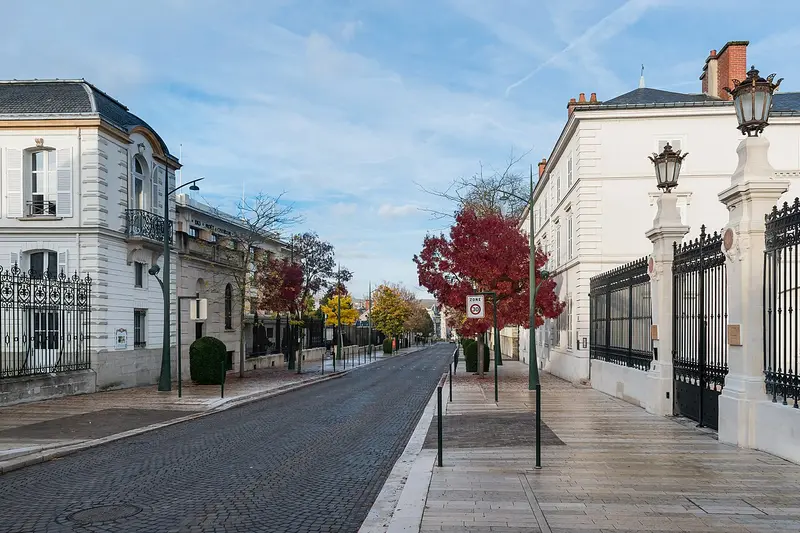
    The Avenue de Champagne in Épernay has been a UNESCO World Heritage site since 2015, as part of the "Hillsides, Houses and Cellars of Champagne". Along the street stand the grand headquarters of renowned Champagne houses like Moët & Chandon, Perrier-Jouët, and Pol Roger, many being splendid 19th-century mansions. Beneath Épernay, 110 kilometres of chalk cellars stretch, where millions of bottles mature. Guided tours teach you about Champagne production and storage, often with a subsequent tasting. Our Tip: Book cellar tours in advance, especially during peak season. On weekday mornings, the Avenue is quieter.
    Open in Google Maps

    Vignoble Jean PERNET

    The Vignoble Jean PERNET is a historic Champagne house in Le Mesnil-sur-Oger, one of the most renowned Grand Cru villages of the Côte des Blancs. Here, the Pernet family has for generations dedicated itself to crafting outstanding Blanc de Blancs Champagnes, exclusively from Chardonnay grapes. A visit offers insights into the meticulous craftsmanship and the unique characteristics of the terroir that shapes this distinctive character. Expect a guided tour through the historic cellars, where bottles mature under optimal conditions and the méthode champenoise is vividly explained. Afterwards, you'll have the opportunity to taste various Cuvées and discover the subtle nuances that define the house. Our Tip: Be sure to book your tour and tasting in advance, especially during high season, to avoid waiting times. Look out for the vintage Champagnes, which often offer exceptional depth and complexity.
    Open in Google Maps

    Food & Drinks

    La Grillade Gourmande

    Restaurant in 16 Rue de Reims.
    Show on Google Maps

    Le Recommandé

    Bar in 13 Rue Sainte-Dorothée.
    Show on Google Maps

    La Cave à Champagne

    Restaurant in 16 Rue Gambetta.
    Show on Google Maps

    Le Bistrot

    Restaurant in 31 Rue Carnot.
    Show on Google Maps

    Food & Drinks

    In Champagne, everything revolves around its sparkling wine. Beyond that, the region boasts its own cheeses, charcuterie, and pastries that rarely venture beyond its borders.

    Champagne

    The sparkling wine, made from Chardonnay, Pinot Noir, and Meunier, ages for at least 15 months on its lees. Grower champagnes are often more affordable and distinctive than major brands.

    Chaource and Langres

    Two regional cheeses with Protected Designation of Origin. Langres has a dip on its top, traditionally filled with Marc.

    Jambon de Reims and Andouillette de Troyes

    A ham terrine with parsley and an offal sausage, grilled and served with mustard sauce.

    Biscuit rose de Reims

    The pink, very dry biscuit is dipped in champagne without crumbling. Baked in Reims since the 17th century.

    Ratafia de Champagne

    Aperitif of grape must and brandy, sweet and robust, enjoyed chilled before meals.

    Culture, Art & History of Champagne

    Champagne boasts a rich and complex history, deeply intertwined with the identity of France. Even the Romans left their mark in cities like Reims, once known as Durocortorum. For centuries, the region was the site of royal coronations, with the Cathedral of Notre-Dame de Reims playing a central role as the crowning place of French monarchs, and also being a masterpiece of Gothic architecture.Champagne's architecture is defined by grand religious buildings, including the cathedrals of Reims, Châlons-en-Champagne, and Troyes. Troyes also impresses with its historic centre of half-timbered houses. After the devastation of the First World War, which hit the region hard, Reims was largely rebuilt in the Art Deco style, giving the city a distinct architectural heritage.Culturally, Champagne is inextricably linked with the production of its wine. The traditions of Champagne production, from cultivation to bottle aging in the kilometre-long chalk cellars, are a deeply rooted cultural asset. The hillsides, houses, and cellars of Champagne have been a UNESCO World Heritage site since 2015, shaping the social and economic life of many communities.

    Exploring on site

    By TrainYou can reach Reims from Paris by TGV in 45 minutes, and Châlons-en-Champagne and Épernay by regional train in just over an hour. Trains between Reims and Épernay run frequently; the journey takes about half an hour.To the WineriesThe Champagne houses in Reims and Épernay are within walking distance in the cities. However, the wineries in the villages of the Montagne de Reims and Marne Valley require a car, a bike, or a booked tour. Keep in mind the legal blood alcohol limit, which is 0.5 in France.By BikeMarked routes wind through the vineyards, some featuring noticeable climbs on the slopes of the Montagne de Reims. A flat towpath runs along the Marne Canal, which is ideal for longer stages.

    Nearby

    Hautvillers

    Hautvillers

    Hautvillers lies in the vineyards north of Épernay and is considered the cradle of Champagne. In the Abbey of Saint-Pierre d'Hautvillers, the Benedictine monk Dom Pérignon was cellar master from 1668; he significantly improved cultivation, blending and cellar techniques, even though he did not invent sparkling wine. His tombstone lies in the abbey church. The village, with its narrow lanes, winegrowers' houses and wrought-iron shop signs, invites a stroll. From the slopes you look out over the Marne valley and the vineyards, which are part of the UNESCO World Heritage. Numerous winemakers offer tastings. During the harvest in September the village is busy; spring and early summer are quieter.
    Montagne de Reims

    Montagne de Reims

    The Montagne de Reims Regional Natural Park is a forested plateau, known for its Grand Cru vineyards, charming wine villages, and scenic beauty.
    Reims

    Reims

    As the former coronation city of French kings and home to the majestic Notre-Dame Cathedral, Reims is the historical and spiritual heart of Champagne.
    Châlons-en-Champagne

    Châlons-en-Champagne

    Châlons-en-Champagne, prefecture of the Marne department, blends historical heritage with waterways. You'll discover the Cathédrale Saint-Étienne and the collegiate church Notre-Dame-en-Vaux, which is a UNESCO World Heritage site as a stop on the Way of St. James. The city is traversed by the Marne and the smaller rivers and canals Mau and Nau; on a boat trip, you'll see half-timbered houses and old bridges from the water. In summer, the light and sound show “Métamorph'eau'ses” runs evenings on the canals. Explore the old town, visit a champagne cellar, and relax in Grand Jard Park. Spring and autumn are quiet travel times.
    Provins

    Provins

    An exceptional medieval fortress town and UNESCO World Heritage site, which transports visitors back in time with its well-preserved fortifications and historical spectacles.

    Sources & method

    • Photos: Wikimedia Commons, Unsplash. Each photo carries its credit.
    • The content is based on web research from public, traceable sources. How the content is made · The role of AI