France
Château du Haut-Kœnigsbourg
Point of InterestCulture
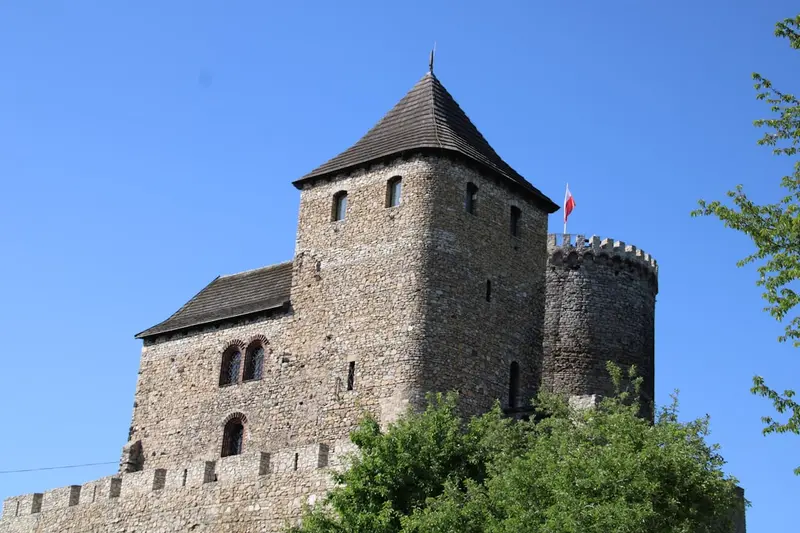
The Château du Haut-Kœnigsbourg, the High Königsburg, stands at about 750 meters on a mountain spur of the Vosges overlooking the Rhine plain.
by Felix Gillen
The Château du Haut-Kœnigsbourg, the High Königsburg, stands at about 750 meters on a mountain spur of the Vosges overlooking the Rhine plain. The castle was first mentioned in 1147, rebuilt in the 15th century, and destroyed in 1633 during the Thirty Years' War. Between 1900 and 1908, Kaiser Wilhelm II had it rebuilt by architect Bodo Ebhardt. You can visit furnished rooms such as the Emperor's Hall, the Armory, and the living quarters, plus the keep, courtyards, and battlements with views over the plain to the Black Forest. It is quieter in the morning or late afternoon.
Places of Interest
Discover the most important sights and attractions
Hohkönigsburg
Restaurierte Burg aus dem 12. Jahrhundert mit Artillerieplattform, mittelalterlichem Garten & Königsräumen.
Sylvie Fahrer & Son
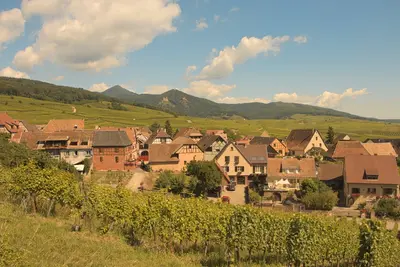
The Domaine Sylvie Fahrer et Fils is a family winery in Saint-Hippolyte, the wine village at the foot of the Hochkönigsburg. Here you can taste Alsatian wines directly from the producer, including Riesling, Pinot Gris, and Gewürztraminer, also from surrounding vineyards. Saint-Hippolyte is also one of the few places in Alsace with noteworthy Pinot Noir red wine.Our tip: Arrange an appointment for the tasting beforehand; weekdays mornings are the quietest.
Cave Jean Geiler - Orschwiller (anc. Cave Les Faîtières)
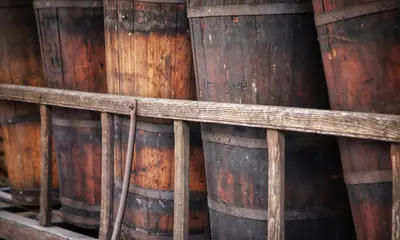
The former Cave Les Faîtières in Orschwiller, at the foot of the Hochkönigsburg, is now a sales and tasting cellar of the Jean Geiler wine cooperative, founded in 1926 in Ingersheim as Cave Vinicole. Here you can taste and buy Alsatian wines like Riesling, Gewürztraminer, Pinot Gris, and Crémant.Our tip: The cellar combines well with a visit to the Hochkönigsburg. Outside of peak travel season, it is quieter.
Food and Drink
Restaurant in Château du Haut Koenigbourg.
Food & Drink
The castle has an eatery that's very busy in summer. The wine villages at the foot of the mountain offer considerably more options.
Winstub Valley Kitchen
In Kintzheim, Saint-Hippolyte and Orschwiller, Choucroute, Baeckeoffe, and Flammkuchen are on the menus, at prices below castle level.
Wines from Saint-Hippolyte
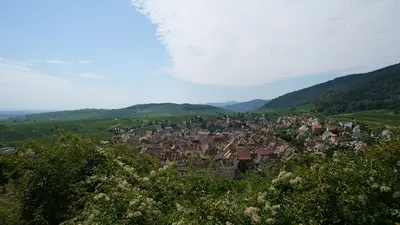
The village below the castle is one of the few in Alsace with significant Pinot Noir red wine. Several estates offer tastings.
A Picnic with a View
There are rest stops around the car park and along the hiking trails. For food, head down to the valley.
Vosges Game Dishes
During autumn and winter, venison and wild boar from the surrounding forests feature on guesthouse menus.
History and Heritage of the Château du Haut-Kœnigsbourg
The castle was first mentioned in 1147, then in the Staufer orbit. Strategically located above the Rhine plain, it controlled important trade routes.After sieges and changes of ownership, the Counts of Thierstein had it rebuilt from 1479 and adapted for artillery. In 1633, Swedish troops conquered the castle after a 52-day siege during the Thirty Years' War; shortly thereafter it burned down and remained a ruin for over 250 years. In 1899, the city of Sélestat gifted the ruin to Emperor Wilhelm II., who had it rebuilt by Bodo Ebhardt until 1908.The reconstruction was based on the castle's condition around 1500 and is a major work of Historicism and monument preservation around 1900. Visitors can see the keep, the zwinger, residential buildings, and furnished interiors with wall paintings and furniture. From 1919 to 2007, the castle belonged to the French state; since then to Alsatian territorial authorities, today the Collectivité européenne d'Alsace.
Local Explorations
The castle is reached by car via a winding mountain road. Parking is available at the access below the castle.Without a car, bus line 500, the Navette Haut-Koenigsbourg, operates from Sélestat train station to the castle and other regional attractions; timetables and operating hours are available from the regional network Fluo Grand Est.The ascent by bike is long and steep. On the castle grounds, you move on foot along paths and up many stairs.
Accommodations in Château du Haut-Kœnigsbourg
Find perfect stay in Château du Haut-Kœnigsbourg
Booking.com* (Affiliate link)
Search Hotels
Agoda* (Affiliate link)
Search Hotels
Airbnb
Vacation Rentals
* Affiliate link: if you book through it, we earn a small commission. The price stays the same for you.
Campgrounds in Château du Haut-Kœnigsbourg
Find perfect campground in Château du Haut-Kœnigsbourg