Fernweh: Home
    ExploreTravel GuidesPlan a tripMy tripLast visited
    de|en
    All Places & RegionsAll highlightsAbout FernwehFAQPrivacy PolicyImprint
    ExploreTravel GuidesPlan a tripMy tripLast visited
    • Overview
    • Places in the region
    • Eat & drink
    • Food culture
    • Culture
    • Getting around
    • Round trips
    • Nearby
    Alsace

    France

    Alsace

    RegionCultureCulinaryNatureMountains

    The Alsace region in eastern France, nestled between the Vosges Mountains and the Rhine, borders Germany.

    by Felix Gillen

    1. Home
    2. Destinations
    3. France
    4. Alsace
    The Alsace region in eastern France, nestled between the Vosges Mountains and the Rhine, borders Germany. It blends French and German influences and is famed for its vineyards, half-timbered wine villages, cities like Strasbourg and Colmar, and a rich, eventful history.Also noteworthy are its hearty regional cuisine, white wines like Riesling and Gewürztraminer, and castles bordering the Vosges.
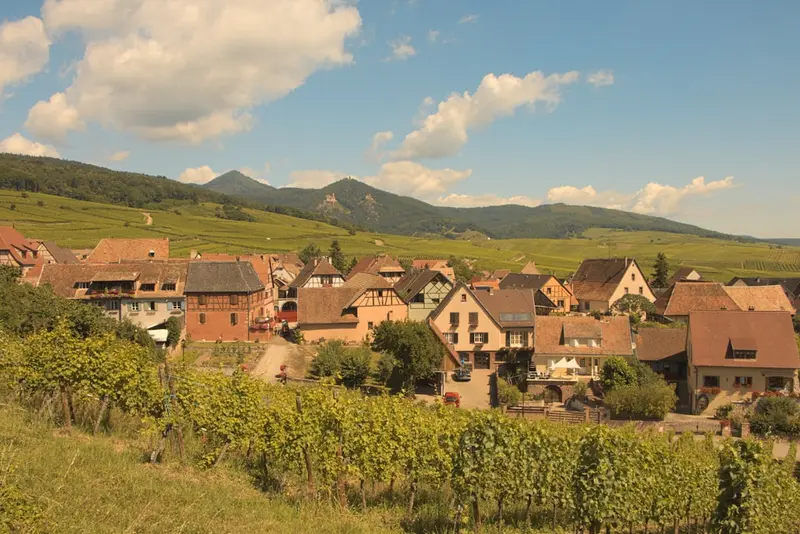
    Alsace, located on the border with Germany, is a region with a distinct bicultural identity, shaped by French and German influences.Here you'll find the picturesque Route des Vins d'Alsace, winding through gentle hills and renowned vineyards, past charming villages like Riquewihr and Eguisheim with their characteristic half-timbered houses.The capital, Strasbourg, impresses with its Gothic Notre-Dame Cathedral and the historic district of Petite France, while Colmar is known for its 'Little Venice' and the Unterlinden Museum.Alsatian cuisine reflects this cultural blend, with specialties like Tarte Flambée and Choucroute garnie, accompanied by regional white wines such as Riesling.Historically significant is Haut-Kœnigsbourg Castle (Château du Haut-Kœnigsbourg), an imposing hilltop castle with expansive views over the Rhine plain.For a relaxed exploration of the wine villages, spring or autumn is recommended, when the vineyards are in full splendor or the grape harvest begins.
    Ribeauvillé

    Place 1 of 4

    Ribeauvillé

    Ribeauvillé is a small town on the Alsace Wine Route, about 15 kilometers north of Colmar.

    Discover
    Obernai

    Place 2 of 4

    Obernai

    Obernai, at the foot of the Vosges, lies about 30 km southwest of Strasbourg. It was an Imperial City and member of the Decapole.

    Discover
    Eguisheim

    Place 3 of 4

    Eguisheim

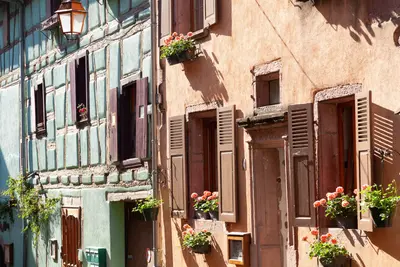
    Eguisheim, on the Alsace Wine Route just southwest of Colmar, is one of the "Plus Beaux Villages de France". Its cobbled streets spiral around the central castle, lined with colorful, flower-adorned half-timbered houses.

    Discover
    Château du Haut-Kœnigsbourg

    Place 4 of 4

    Château du Haut-Kœnigsbourg

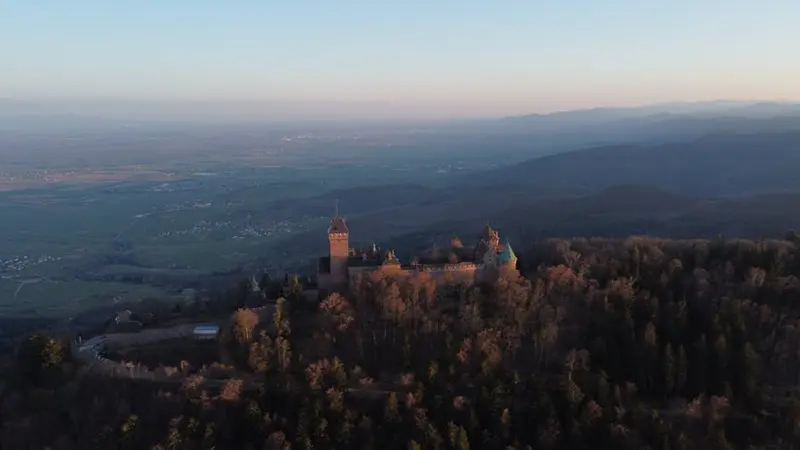
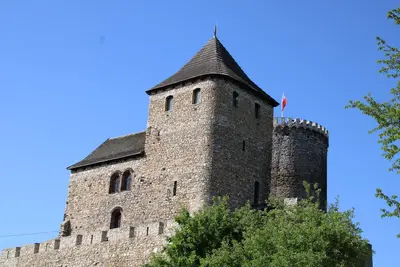
    The Château du Haut-Kœnigsbourg, the High Königsburg, stands at about 750 meters on a mountain spur of the Vosges overlooking the Rhine plain.

    Discover

    More places in Alsace

    Colmar

    Colmar

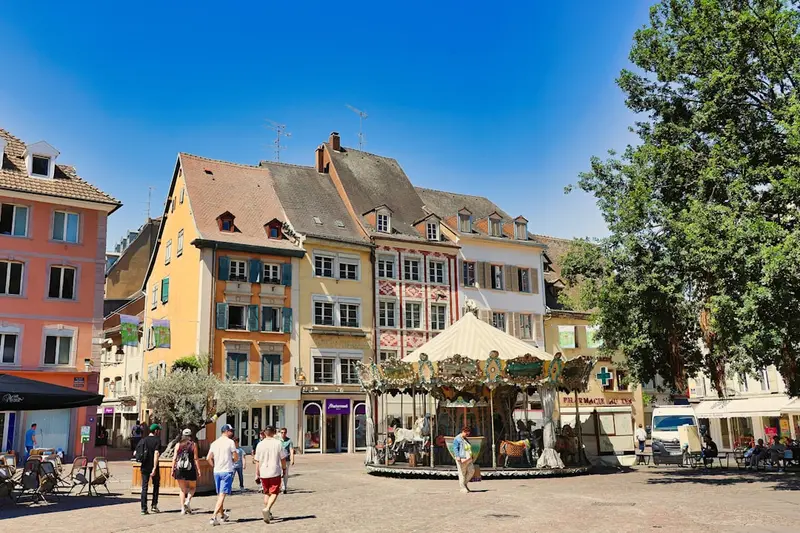
    Colmar, located in Alsace, captivates with its picturesque old town and the unique blend of French and German culture. Here you'll find well-preserved half-timbered houses, winding alleys and canals, which have earned Colmar the nickname "Little Venice" (La Petite Venise). A central highlight is the Musée Unterlinden, home to the famous Isenheim Altarpiece and making art history accessible. Stroll through the Fischermarkt quarter and along the Lauch River to experience the idyllic scenery, or visit the historic Koïfhus. The city is also an excellent starting point for the Alsatian Wine Route. You can best explore Colmar on foot or by boat; the spring and autumn months are ideal for a visit to avoid crowds.
    Mulhouse

    Mulhouse

    Mulhouse is the largest city in the south of Alsace, near the border with Switzerland and Germany. It is known for its industrial history and its museums, especially the Automobile Museum Cité de l'Automobile and the Railway Museum Cité du Train.
    Riquewihr

    Riquewihr

    Riquewihr, a picturesque village on the Alsatian Wine Route, captivates with its exceptionally well-preserved medieval architecture. The main street, Rue du Général de Gaulle, leads you past colorful half-timbered houses and historic buildings that reflect the rich heritage of the place. Particularly striking is the Dolder Tower, a former 13th-century defensive gate that now houses a museum and offers insights into the local history. Here you will find numerous wine taverns and shops offering local products and the famous Alsatian wine. To experience the authentic atmosphere away from the main thoroughfare, we recommend exploring the smaller alleys and courtyards. A visit in spring or autumn, outside the high season, allows for a calmer experience of the historic setting and wine tastings.
    The Alsace Wine Route

    The Alsace Wine Route

    France’s oldest wine route winds through picturesque villages, past endless vineyards, and offers tastings of famous Alsatian wines.
    Strasbourg

    Strasbourg

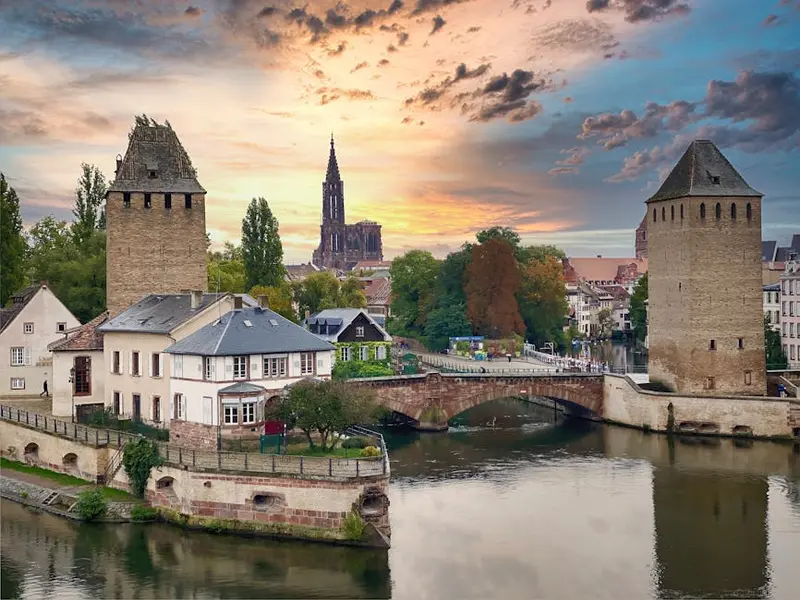
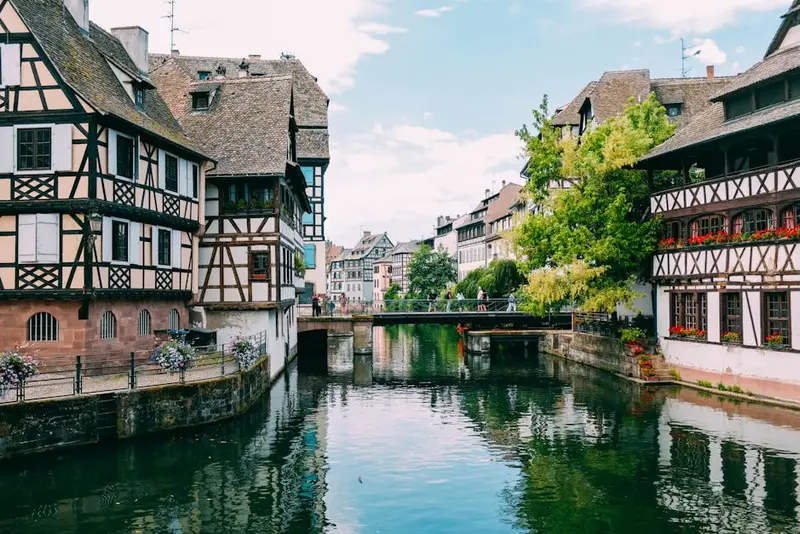
    Strasbourg is the largest city in Alsace and home to European institutions. Its landmark is the Gothic Cathédrale Notre-Dame with its astronomical clock. The La Petite France district, with its half-timbered houses, alleys, and canals of the Ill, is part of the Grande Île, a UNESCO World Heritage site since 1988. From the Ponts Couverts and the rooftop terrace of the Barrage Vauban, you look out over the city and the Ill. The European Parliament and the Council of Europe are located in the European Quarter. It's less crowded in spring and autumn. You can enjoy Alsatian cuisine in traditional Winstubs.

    Sights in Alsace

    Discover the most important sights and attractions

    Zentralmoschee Strasbourg

    Zentralmoschee Strasbourg

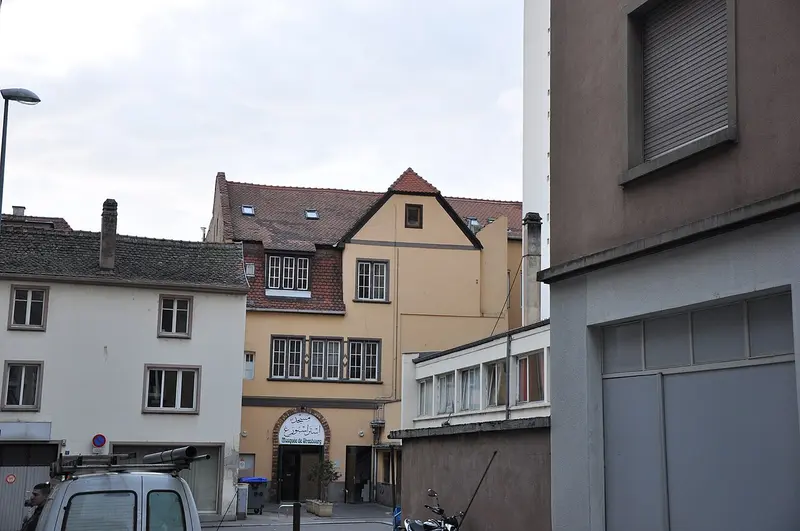
    The Grande Mosquée de Strasbourg was inaugurated in September 2012 and is one of France's largest mosques. Designed by Italian architect Paolo Portoghesi, its striking feature is the large dome; there is no minaret. The prayer hall accommodates around 1200 worshippers. Located on the banks of the Ill, the mosque is also a place for encounter and education.Practical tip: Visit the mosque outside of prayer times and wear clothing that covers shoulders and knees; women should bring a headscarf. Weekday mornings are the quietest.
    Open in Google Maps

    Jung-Sankt-Peter protestantisch

    The Protestant Church of Saint-Pierre-le-Jeune in Strasbourg unites architectural elements from many centuries. Below it lies a small crypt, the remnant of a 7th-century church. Three wings of the cloister date from the 11th century, the fourth from the 14th. The Gothic nave from the 14th century is adorned with numerous murals from that period and a rood screen, which is considered unique in Alsace. The church has been Protestant since 1524. The organ by Jean André Silbermann dates from 1780.Our Tip: It's quiet here in the early morning or late afternoon; take your time for the cloister.
    Open in Google Maps
    Museum Œuvre Notre-Dame

    Museum Œuvre Notre-Dame

    The Museum Œuvre Notre-Dame in Strasbourg is inextricably linked to the history and construction of Strasbourg Cathedral. It preserves original artworks that once adorned the Cathedral and document the development of Gothic art in Alsace. Here you'll find an impressive collection of sculptures, stained-glass windows, building plans, and architectural fragments, spanning from the Middle Ages to the Renaissance. Particularly noteworthy are original statues such as the famous figures of „Ecclesia“ and „Synagoga“, which were removed from the Cathedral for protection against weathering and are exhibited here. The museum offers a deep insight into medieval architecture, the working methods of the 'Bauhütte' (cathedral workshop), and the continuous maintenance of the Cathedral over centuries. Our Tip: Ideally, visit the museum directly after the Cathedral to better understand the exhibits in the context of their original placement. For a peaceful experience and the opportunity to thoroughly examine the artworks' details, a morning visit is recommended.
    Open in Google Maps
    Cathédrale Notre-Dame de Strasbourg

    Cathédrale Notre-Dame de Strasbourg

    The Cathédrale Notre-Dame de Strasbourg is a masterpiece of Gothic architecture and has shaped the city's skyline for centuries. Its construction began in 1176 and was only completed in 1439, combining elements of Romanesque and Gothic styles. From 1647 to 1874, it was the tallest building in the world. You will be captivated by its intricate facade with countless sculptures and the impressive rose window. Inside, magnificent stained-glass windows from the 12th to 14th centuries await you, along with the famous astronomical clock, whose figures come to life daily at 12:30 PM. A climb up 332 steps to the viewing platform offers an unparalleled panoramic view of Strasbourg and the Rhine Plain. Our Tip: It's best to visit the cathedral early in the morning to enjoy the tranquility and special light, and to avoid the crowds. Allow ample time for the astronomical clock and be there by 12:00 PM at the latest to secure a good spot.
    Open in Google Maps
    Elsässische Weinstraße (Route des Vins d'Alsace)

    Elsässische Weinstraße (Route des Vins d'Alsace)

    The Alsace Wine Route, one of France's oldest and most famous wine routes, stretches over 170 kilometres from Marlenheim in the north to Thann in the south. You'll traverse a picturesque landscape of gentle, vine-covered hills and discover over a hundred charming wine villages. These villages, often with medieval centres and colourful half-timbered houses, such as Riquewihr, Eguisheim, or Kaysersberg, invite you to linger.The region has been shaped by viticulture for centuries, reflected in its architecture and local traditions. Its unique geographical location between the Vosges Mountains and the Rhine creates a special microclimate that favours the cultivation of grape varieties like Riesling, Gewürztraminer, and Pinot Gris. Plan several days for a comprehensive exploration to enjoy the diversity of its wineries and local gastronomy. Our tip: Visit the Wine Route in spring, when the vines bud, or in autumn for the grape harvest, to experience the lively atmosphere and colourful landscape. To avoid the largest tourist crowds, focus on the smaller, lesser-known villages off the main routes or start your visits early in the morning.
    Open in Google Maps
    Château du Haut-Kœnigsbourg

    Château du Haut-Kœnigsbourg

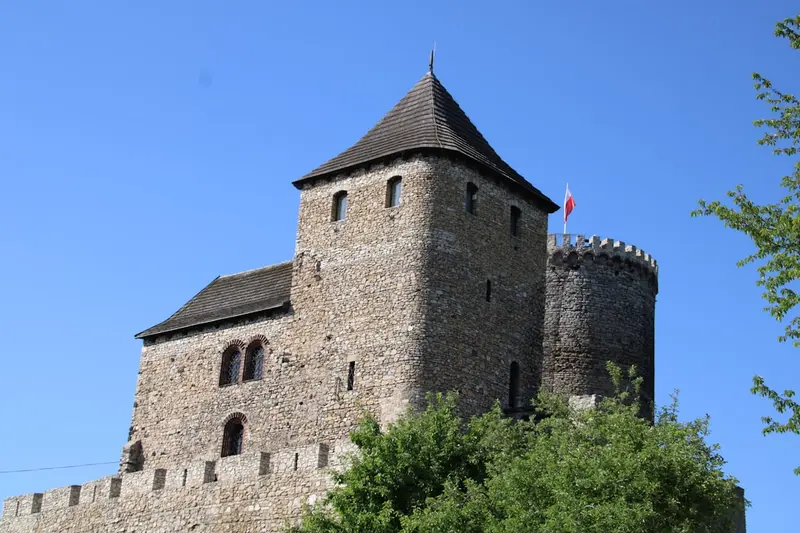
    The Château du Haut-Kœnigsbourg stands majestically on a rocky spur in the Vosges Mountains, offering an impressive insight into the medieval fortress architecture of Alsace. Its history dates back to the 12th century, but it owes its current appearance to an extensive restoration under Emperor Wilhelm II at the beginning of the 20th century. This reconstruction, led by Bodo Ebhardt, aimed to create an idealized image of a medieval castle, making the Château a unique testament to imperial historical interpretation.During your visit, you'll explore well-preserved courtyards, living quarters, the keep, and the imposing defensive walls. From the upper platforms, you'll enjoy a sweeping panoramic view over the Rhine Plain, the Vosges Mountains, and on a clear day, even as far as the Black Forest. The blend of Romanesque and Gothic elements, as well as the detailed furnishings, convey a vivid picture of life in a medieval castle. Our Tip: To avoid peak crowds and enjoy the tranquility of the site, it's best to visit the Château early in the morning right after opening or in the late afternoon. For the best photos of the castle in its full splendor, a vantage point from the access road is recommended.
    Open in Google Maps

    Food & Drink

    Au Crocodile

    Innovative Gourmetküche in einem eleganten Restaurant aus dem 19. Jahrhundert mit einem riesigen Gemälde von Adolphe Grison.
    Show on Google Maps

    Restaurant Les Sales Gosses à Strasbourg

    Kreative, regional inspirierte Menüs und erlesene Weine in einem modernen Restaurant mit Pop-Art-Akzenten.
    Show on Google Maps

    La Fabrique à Miam

    Restaurant in 10 Rue Gloxin.
    Show on Google Maps

    Restaurant Gurtlerhoft

    Gerichte aus dem Elsass mit Schweinefleisch und deutschen Einflüssen in einem Restaurant mit Gewölbedecke.
    Show on Google Maps

    L'ARTICHAUT

    Bar im eleganten Industriestil mit bekannten regionalen und internationalen Gerichten, Fassbier und regelmäßiger Livemusik.
    Show on Google Maps

    Winstub S'kaechele (Strasbourg)

    For an authentic Alsatian experience, be sure to visit Winstub S'kaechele in Strasbourg. Here, you'll savor traditional dishes like Choucroute garnie or Baeckeoffe in a cozy, rustic atmosphere that invites you to linger.
    Show on Google Maps

    Au Vieux Pêcheur (Colmar)

    Located right on Colmar's canals, 'Au Vieux Pêcheur' offers a superb selection of fresh fish and regional specialties. Dine here in a charming setting overlooking the 'Petite Venise' – perfect for a romantic dinner.
    Show on Google Maps

    Maison Kammerzell (Strasbourg)

    Experience history and indulgence at Maison Kammerzell, one of Strasbourg's most beautiful, oldest half-timbered houses. Here, enjoy sophisticated Alsatian cuisine in a historic ambiance and let the opulent decor and Cathedral views impress you.
    Show on Google Maps

    Restaurant Le Flamme & Co (Colmar)

    If you're in the mood for a modern take on the Alsatian classic Flammkuchen, Le Flamme & Co in Colmar is just the place. Here, you'll find innovative creations with fresh, seasonal ingredients in a stylish and contemporary setting.
    Show on Google Maps

    Pâtisserie Kubler (Strasbourg)

    Treat yourself to a sweet break at Pâtisserie Kubler in Strasbourg, a traditional patisserie known for its exquisite cakes, tarts, and chocolates. Taste the quality craftsmanship and watch the vibrant city life from here with a coffee.
    Show on Google Maps

    Food & Drink

    Alsatian cuisine is hearty and clearly influenced by its German neighbors: pork, cabbage, noodles, and cake, accompanied by dry white wines and beer.

    Choucroute garnie

    Sauerkraut with potatoes, bacon and various sausages, braised in Riesling. One portion is enough in most Winstubs for two people.

    Flammkuchen and Baeckeoffe

    The thin flatbread with Crème fraîche and bacon and the three-meat stew are the region's two most famous dishes.

    Alsatian Wines

    Riesling, Gewürztraminer, Pinot Gris, Pinot Blanc, Sylvaner, Muscat, and Pinot Noir are almost always single-varietal. 51 vineyards hold Grand Cru status.

    Crémant d'Alsace

    Traditional method sparkling wine makes up roughly a quarter of Alsatian production.

    Kougelhopf and Bredele

    The yeast cake from the fluted tin is a Sunday staple, just as small Christmas cookies appear in every bakery from November.

    The Cultural Heritage of Alsace

    Alsace's identity is shaped by its eventful history between France and Germany. After Roman times, the region long belonged to the Holy Roman Empire, largely passed to France in the 17th century, to the German Empire in 1871, back to France in 1918, and was de facto annexed by Germany during World War II. Conflicts and cultural exchange have shaped the region equally.Architecturally, Alsace is known for its well-preserved half-timbered houses, for instance in Strasbourg's "Petite France" or in Colmar. The Strasbourg Liebfrauenmünster is a masterpiece of Gothic architecture. Numerous castles on the edge of the Vosges, such as the Haut-Kœnigsbourg Castle, attest to the region's strategic importance.Culturally, Alsace maintains a blend of French and German traditions. Alsatian, an Alemannic or Franconian dialect of German, is still primarily spoken by older generations. Local festivals, Christmas markets, and the cuisine, which combines hearty German influences with French finesse, reflect this blend.

    Exploring locally

    By TrainFrequent regional trains run between Strasbourg, Sélestat, Colmar, and Mulhouse. From Germany, travel via Kehl and Offenburg to Strasbourg; from Switzerland, via Basel to Mulhouse. The TGV from Paris takes just under two hours.The Wine RouteMost wine villages lie off the rail line, at the foot of the Vosges. Buses run from Colmar and Sélestat, with extra excursion lines in summer, but service remains patchy. By car, villages are quickly connected; however, parking in Riquewihr, Eguisheim, and Kaysersberg fills early during peak season and Christmas market weekends.By BikeAlsace has a dense cycling network of several thousand kilometers. The route along the Rhine-Rhône Canal and the cycle path along the Wine Route are mostly flat; only side trips into the Vosges get steep.

    Round trips through this region

    Alsatian Wine Route

    Alsatian Wine Route

    From Strasbourg, south along the Alsace Wine Route via Obernai, Ribeauvillé, and Riquewihr to Colmar. Then Eguisheim, the wine village, and finally Mulhouse; most legs are under half an hour.

    11 Days
    7 stops

    Nearby

    Strasbourg

    Strasbourg

    Strasbourg is the largest city in Alsace and home to European institutions. Its landmark is the Gothic Cathédrale Notre-Dame with its astronomical clock. The La Petite France district, with its half-timbered houses, alleys, and canals of the Ill, is part of the Grande Île, a UNESCO World Heritage site since 1988. From the Ponts Couverts and the rooftop terrace of the Barrage Vauban, you look out over the city and the Ill. The European Parliament and the Council of Europe are located in the European Quarter. It's less crowded in spring and autumn. You can enjoy Alsatian cuisine in traditional Winstubs.
    Obernai

    Obernai

    Obernai, at the foot of the Vosges, lies about 30 km southwest of Strasbourg. It was an Imperial City and member of the Decapole. Its old town boasts half-timbered houses, the 1523 Town Hall, Chapel Tower, Six-Bucket Fountain, and preserved city walls. Enjoy Alsatian cuisine in Winstubs; vineyards are just steps away.
    Baden-Baden

    Baden-Baden

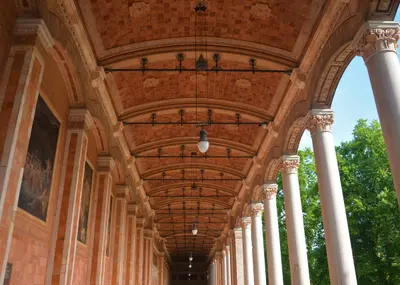
    Baden-Baden lies on the western edge of the Northern Black Forest in the Oos valley and, since July 2021, has been part of the UNESCO World Heritage Site as one of the eleven "Great Spa Towns of Europe". The Romans already bathed on the Florentinerberg, where the Friedrichsbad stands today, and in the 19th century the town became one of the best-known spa resorts in Europe.The heart of the town is the neoclassical Kurhaus by Friedrich Weinbrenner with its casino, behind which the Lichtentaler Allee begins along the Oos. For a view from above, the Merkur funicular has been running up the 669-metre Merkur since 1913.
    Black Forest

    Black Forest

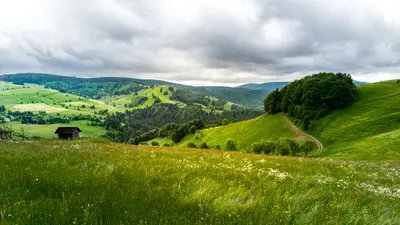
    The Black Forest in the southwest of Baden-Württemberg is the highest and largest continuous low mountain range in Germany: it covers more than 6,000 square kilometres and stretches roughly 150 kilometres from north to south, bounded by the Upper Rhine Plain to the west and the High Rhine to the south. The highest peak is the Feldberg at 1,493 metres. Since 2014, the Black Forest National Park between Baiersbronn and Baden-Baden has protected a good 10,000 hectares on the main ridge of the Northern Black Forest.No other German low mountain range attracts as many holidaymakers. Here you can combine lively cities such as Freiburg and the spa town of Baden-Baden with waterfalls, lakes such as the Titisee and a long tradition of clockmaking, which began between Triberg and Titisee-Neustadt.
    Château du Haut-Kœnigsbourg

    Château du Haut-Kœnigsbourg

    The Château du Haut-Kœnigsbourg, the High Königsburg, stands at about 750 meters on a mountain spur of the Vosges overlooking the Rhine plain. The castle was first mentioned in 1147, rebuilt in the 15th century, and destroyed in 1633 during the Thirty Years' War. Between 1900 and 1908, Kaiser Wilhelm II had it rebuilt by architect Bodo Ebhardt. You can visit furnished rooms such as the Emperor's Hall, the Armory, and the living quarters, plus the keep, courtyards, and battlements with views over the plain to the Black Forest. It is quieter in the morning or late afternoon.

    Sources & method

    • Photos: Wikimedia Commons, Unsplash. Each photo carries its credit.
    • The content is based on web research from public, traceable sources. How the content is made · The role of AI