Fernweh: Home
    ExploreTravel GuidesPlan a tripMy tripLast visited
    de|en
    All Places & RegionsAll highlightsAbout FernwehFAQPrivacy PolicyImprint
    ExploreTravel GuidesPlan a tripMy tripLast visited
    Gorges de l'Ardèche

    France

    Gorges de l'Ardèche

    Point of Interest

    The Gorges de l'Ardèche stretch for approximately 30 kilometers between Vallon-Pont-d'Arc and Saint-Martin-d'Ardèche, cutting through a limestone plateau in the south of the Ardèche.

    by Felix Gillen

    1. Home
    2. Destinations
    3. France
    4. Auvergne-Rhône-Alpes
    5. Gorges de l'Ardèche
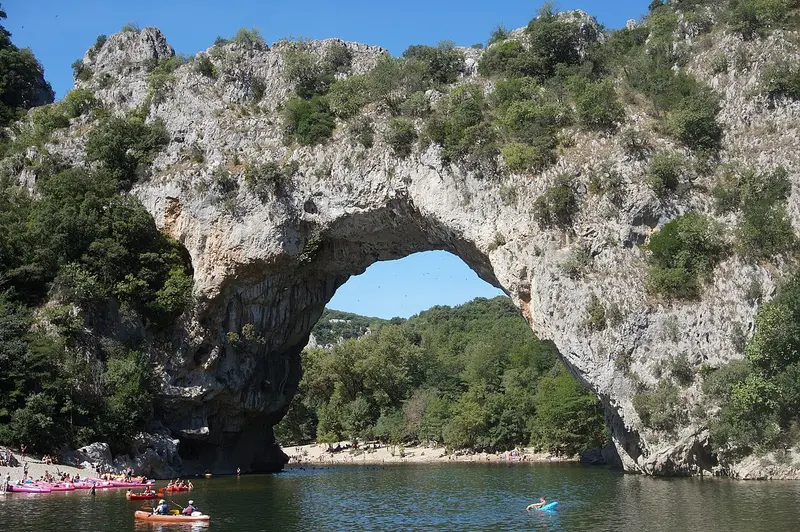
    The Gorges de l'Ardèche stretch for approximately 30 kilometers between Vallon-Pont-d'Arc and Saint-Martin-d'Ardèche, cutting through a limestone plateau in the south of the Ardèche. At the entrance stands the Pont d'Arc, a natural rock arch over the river. By canoe, you see the steep limestone cliffs up close; from the panoramic road D290, you look down into the gorge from above. Nearby lies the Grotte Chauvet 2 Ardèche, a replica of the Chauvet Cave with its Ice Age paintings. In spring and autumn, it's significantly less busy than in summer.

    Points of Interest

    Discover the most important sights and attractions

    1Plage du rapide des trois eaux

    The Plage du rapide des trois eaux is a pebble beach on the Ardèche below the Pont d'Arc, at a small rapid. Here you can swim and watch the canoes as they pass through the rapid. The area is surrounded by limestone cliffs and Mediterranean vegetation.Practical tip: It's quieter early in the morning or late in the afternoon. When swimming, you should avoid the current near the rapid and heed on-site instructions.
    Open in Google Maps

    2La Font d'Augier

    La Font d'Augier is a spring source near Vallon-Pont-d'Arc, where water emerges from the karst of the limestone plateau. The cool water and green vegetation create a contrast to the dry limestone rocks of the surroundings.Our Tip: Outside peak season, it is quiet here.
    Open in Google Maps

    3Rapide du Coste

    The Rapide du Coste is one of the most distinctive and challenging rapids in the Gorges de l'Ardèche, an impressive natural area in France. This passage, shaped by the river's erosive power over millennia, presents a significant obstacle for canoeists and kayakers, while also being a fascinating natural spectacle. Here, you experience the Ardèche's raw power as it winds through the limestone and creates a dynamic waterscape. Historically, such rapids were important landmarks for river navigation, attesting to the region's unspoiled nature. Our Tip: If you are navigating the Gorges by canoe, approach the Rapide du Coste with caution and heed the markings. For safe viewing and impressive photos, a viewpoint along the panoramic road D290 is recommended, allowing you to oversee the rapids from a safe distance, particularly at medium water levels in spring or autumn.
    Open in Google Maps

    4Canoës du Pont d'arc

    The Pont d'Arc is an impressive natural wonder and the iconic gateway to the Gorges de l'Ardèche. This majestic natural rock arch, carved by the Ardèche River, is approximately 54 meters high and spans 60 meters across the river. It marks the start of one of France's most beautiful canoeing routes. If you rent a canoe here, an unforgettable journey awaits you through a spectacular limestone gorge, past steep cliffs and clear waters. You'll paddle directly under the Pont d'Arc, which offers a unique experience and fantastic photo opportunities. Our tip: To avoid the crowds and fully enjoy nature's tranquility, it's best to start your canoe tour early in the morning. The off-season in spring or autumn also offers milder temperatures and fewer visitors. Plan enough time to fully soak in the landscape.
    Open in Google Maps

    5Rapide du Coste

    The Rapide du Coste is one of the rapids in the Gorges de l'Ardèche, on the section between the Pont d'Arc and the Cirque de la Madeleine. Steep limestone cliffs and dense vegetation line the river. Without a boat, you can get an impression of the gorge from the viewpoints along the D290.Our Tip: If you're paddling yourself, follow the advice of canoe rental companies and the nature reserve administration. In June and September, the river is less crowded than in July and August.
    Open in Google Maps
    Pont d'Arc

    6Pont d'Arc

    The natural rock arch over the Ardèche is the gorge's landmark and the starting point for many canoe tours. The panoramic road D290 begins just beyond it.
    Open in Google Maps

    Food and Drink

    Camping Le Clapas

    Bar in 280 Chemin de la Vernède Vallon Pont d'Arc.
    Show on Google Maps

    Restaurant Le Clos des Bruyères

    Restaurant in 347 Rte des Gorges.
    Show on Google Maps

    Restaurant La Grotte Des Tunnels

    Bar in Quartier Arduc.
    Show on Google Maps

    Restaurant l'Embarcadère des Gorges

    Bar in Camping des Tunnels.
    Show on Google Maps

    Le Bistrot Ardéchois

    Bar in 5490 Rte des Gorges.
    Show on Google Maps

    Food & Drink

    There are no provisions in the gorge itself. You eat in Vallon-Pont-d'Arc, Saint-Martin and the villages on the plateau.

    Chestnut products

    Cream, flour, and candied chestnuts from Ardèche bear a Protected Designation of Origin and are found in every farm shop.

    Picodon

    The region's small goat cheese is mild when young, sharp when aged. Ideal for a picnic.

    Wines of the Ardèche and the Southern Rhône

    In the nearby Rhône Valley lie the growing regions of the southern Côtes du Rhône with Grenache and Syrah. In Ardèche itself, primarily country wines (IGP Ardèche) are produced.

    Provisions for the Canoe Trip

    The route has only two bivouac sites with basic provisions. A full day's water belongs in watertight drums.

    Historical Heritage of the Gorges de l'Ardèche

    The area around the Gorges de l'Ardèche has been inhabited since the Paleolithic Age. World-renowned is the Grotte Chauvet near Vallon-Pont-d'Arc: Its approximately 36,000-year-old paintings are among the oldest known cave art, and since 2014, the cave has been a UNESCO World Heritage site. Additionally, the limestone cliffs contain numerous other caves and traces of early settlement.Upstream from the gorge are stone villages like Balazuc or Labeaume, which are designated as 'Villages de caractère'. With their narrow alleys, Romanesque churches, and houses built into the rock, they bear witness to a long history of settlement.The regional cuisine is characterized by chestnuts, goat cheese like Picodon, and truffles. The gorge itself has been protected as a nature reserve since 1980.

    Local adventures

    The gorge is a natural area without continuous public transport. During peak season, regional buses connect some towns like Vallon-Pont-d'Arc, but your own vehicle is most practical for viewpoints and hiking trails. The panoramic road D290 runs along the edge of the plateau.Bicycles and e-bikes can be rented in Vallon-Pont-d'Arc. Taxis are available in larger towns, but a reservation is advisable.Canoe rental companies offer shuttles that bring you back to the starting point after your river trip. For the two-day trip through the entire gorge, overnight stays are only permitted at the two bivouac sites Gaud and Gournier, which must be reserved in advance.

    Accommodations in Gorges de l'Ardèche

    Find perfect stay in Gorges de l'Ardèche

    Booking.com* (Affiliate link)
    Search Hotels
    Agoda* (Affiliate link)
    Search Hotels
    Airbnb
    Vacation Rentals

    * Affiliate link: if you book through it, we earn a small commission. The price stays the same for you.

    Campgrounds in Gorges de l'Ardèche

    Find perfect campground in Gorges de l'Ardèche

    Search via Google Maps
    Campgrounds nearby (15km)
    Camping.info
    Find Campgrounds
    Park4Night
    RV Parks & Camping

    Nearby

    Vallon-Pont-d’Arc

    Vallon-Pont-d’Arc

    Vallon-Pont-d’Arc is a village in the southern Ardèche and the main starting point for the Ardèche Gorges. From here, you can reach the natural rock arch Pont d’Arc, canoe trips through the gorge, and Grotte Chauvet 2, the replica of the Chauvet Cave with its approximately 36,000-year-old paintings.
    Pont du Gard

    Pont du Gard

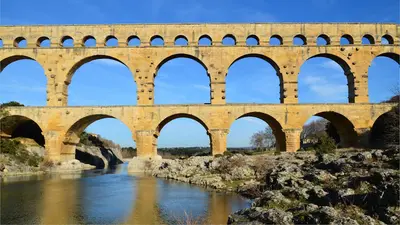
    The Pont du Gard is one of the best-preserved Roman aqueducts and has been a UNESCO World Heritage site since 1985. The approximately 49-meter-high bridge spans the Gardon and was part of a roughly 50-kilometer-long aqueduct system that brought spring water from Uzès to Nîmes in the 1st century AD. You can admire the three superimposed rows of arches up close and cross the river via the lower level. A museum and visitor center explain its construction and history. In the late afternoon, the light is warm and the crowds are smaller. In summer, you can swim in the Gardon below the bridge; a walk along the banks offers additional perspectives.
    Avignon

    Avignon

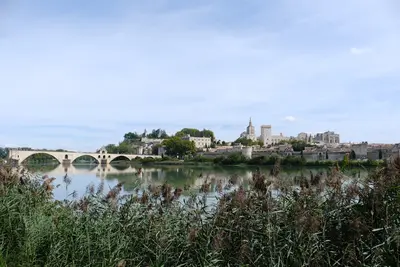
    Historical Avignon in Provence is inextricably linked to its time as a papal seat in the 14th century. Its imposing city walls enclose an Old Town that is a UNESCO World Heritage site. You will be particularly impressed by the Palais des Papes, Europe's largest Gothic palace, and the famous Pont Saint-Bénézet bridge, known as the Pont d'Avignon. Stroll through the narrow streets and bustling squares to experience the city's authentic flair. From the Rocher des Doms rock, you can also enjoy a wide view over the city and the Rhône. For a more relaxed experience, a visit in spring or autumn is recommended to avoid the summer heat and peak tourist crowds.
    Provence

    Provence

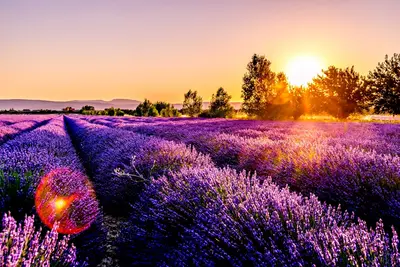
    The Provence in southeastern France stretches from the Rhône Valley into the Pre-Alps and to the coast near Marseille. Here you'll find Roman structures, medieval hilltop villages, lavender fields on the plateaus, the Verdon Gorges, and lively cities like Marseille, Avignon, and Aix-en-Provence. Additionally, there are markets, wine, and a cuisine rich in vegetables, olive oil, and herbs.
    Saint-Gilles

    Saint-Gilles

    Saint-Gilles is a small town on the edge of the Petite Camargue in the Gard département, about 20 kilometres south of Nîmes. It is known for its abbey church, whose Romanesque west facade from the 12th century counts among the most important sculptural works of Romanesque art in France and is a UNESCO World Heritage Site as part of the Routes of Santiago de Compostela. There are also a small old town, a harbour on the Canal du Rhône à Sète and the bull and rice culture of the Camargue.

    Sources & method

    • Photos: Wikimedia Commons, Unsplash. Each photo carries its credit.
    • The content is based on web research from public, traceable sources. How the content is made · The role of AI