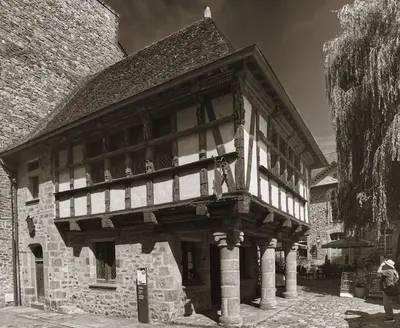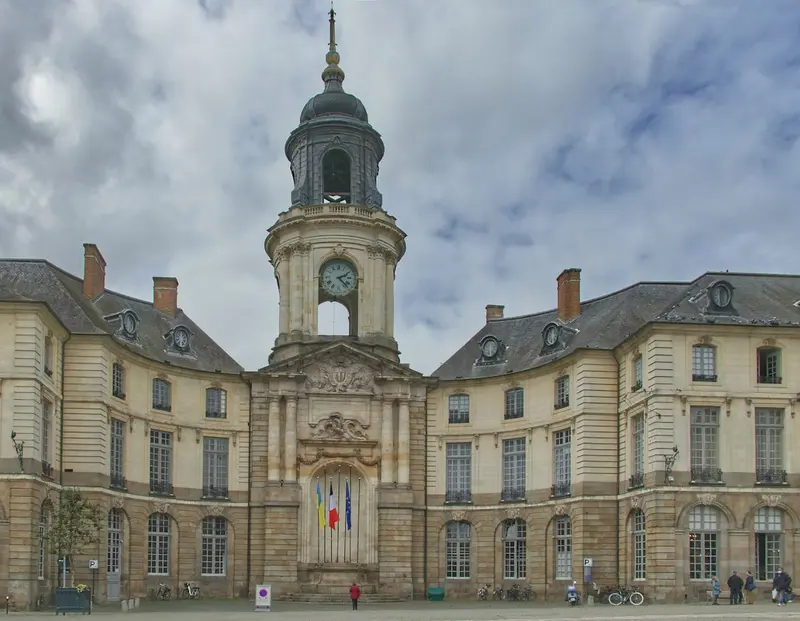
Rennes, the dynamic capital of Brittany, combines rich history with vibrant city life. You'll discover an impressive density of well-preserved half-timbered houses, particularly charming in the lanes around Place Sainte-Anne and Rue du Champ-Jacquet. The majestic Parlement de Bretagne, a 17th-century architectural masterpiece, testifies to the region's historical significance. On Saturday mornings, the Marché des Lices, one of France's largest markets, entices with regional products and Breton specialties. The expansive Parc du Thabor offers a green oasis of tranquility with its French gardens and rose garden. The Rue de la Soif invites visitors to traditional crêperies and authentic nightlife. For a relaxed visit, spring or autumn are recommended to experience the city without the largest tourist crowds.
Places in Rennes
Discover the most important sights and attractions
Sights in Rennes
Passe-Muraille
The Passe-Muraille in Rennes is a fascinating sculpture that seems to have sprung directly from French literature. You'll find it near the Place des Lices, where it often prompts passers-by to pause. The bronze statue, created by Jean-Louis Bertin, depicts the protagonist from Marcel Aymé's short story of the same name: a man with the ability to walk through walls. This literary figure, Dutilleul, used his gift to commit minor crimes and eventually got stuck in a wall. The sculpture perfectly captures this moment of transition and invites reflection on freedom and boundaries. Our Tip: It's best to visit the statue early in the morning to admire it in peace and take an undisturbed photo. It's a popular photo opportunity and a charming detail in Rennes' urban landscape.
Invader 1 in Rennes is a characteristic work by the internationally renowned French street artist Invader. Since the late 1990s, he has placed mosaics worldwide reminiscent of the pixel graphics from the classic video game "Space Invaders". These artworks are a subtle "invasion" of urban space and a tribute to the digital culture shaping our world. Each mosaic is numbered and part of a larger, global project that sends art lovers and explorers on an urban treasure hunt. In Rennes, you'll find Invader 1, often in an unexpected spot on a building facade, which requires an attentive look upwards. Its deliberate placement encourages interaction with the surroundings and blurs the lines between art and everyday life. Our Tip: Take your time to carefully observe the surroundings, as the artworks are often discreetly integrated. For the best photo without distracting shadows, a visit during daylight is ideal.
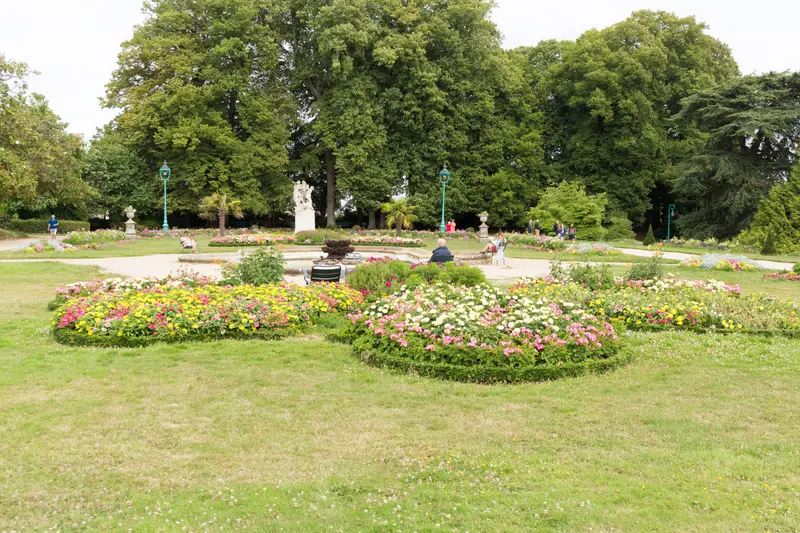
The Parc du Thabor in Rennes is one of France's most remarkable green spaces, offering a unique combination of different garden styles. Originally an orchard of Saint-Melaine Abbey, the grounds were transformed into their current form in the 19th century under the direction of landscape architect Denis Bühler. Here you'll find a magnificent French Formal Garden with precisely trimmed hedges and symmetrical flowerbeds, exuding classic elegance. Adjacent, a sprawling English Landscape Garden stretches out, inviting visitors to stroll along its winding paths, ancient trees, and past a waterfall. Particularly worth seeing is the Roseraie with over 2,000 rose bushes, as well as the Orangerie, housing a variety of exotic plants. Our Tip: Visit the park preferably in the early morning to enjoy the tranquility and experience the gardens in their best light before the crowds grow. For impressive photos of French garden art, position yourself best at the upper end of the Formal Garden with a view of the symmetrical layouts.
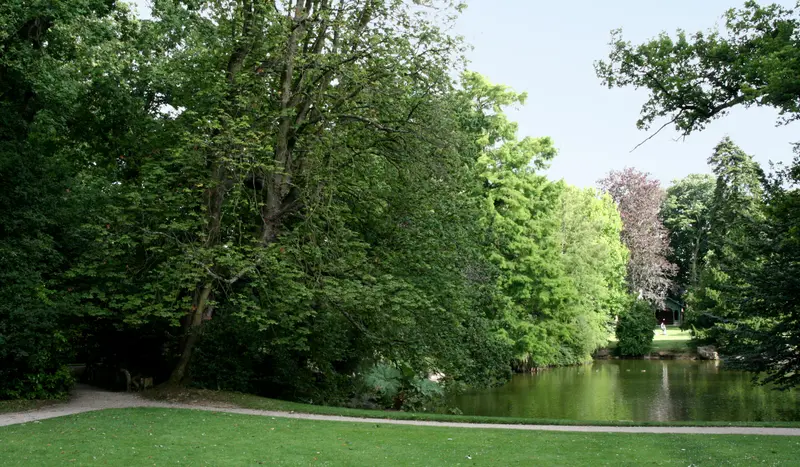
The Park Hamelin Oberthür in Rennes was originally the private garden of the Oberthür family, a prominent printing and natural history family of the 19th century. Notably, Charles Oberthür, a renowned entomologist, significantly influenced the design of this estate. Today, this green oasis serves as a public park and offers you a welcome haven of peace in the heart of the city.Upon entering, you'll find a harmonious blend of formal elements and a natural English landscape garden. Here, you'll discover an impressive variety of old trees, meticulously arranged flowerbeds, and a large pond inhabited by ducks. A small waterfall contributes to the idyllic atmosphere. The park is a popular meeting point for locals seeking relaxation, reading a book, or simply enjoying a stroll.Our Tip: To best experience the special tranquility and soft light, visit the park early in the morning or late in the afternoon. This is also the ideal time for atmospheric photos, especially by the pond. Pay attention to the magnificent, old trees, which provide pleasant shade in summer and stand as witnesses to the park's long history.
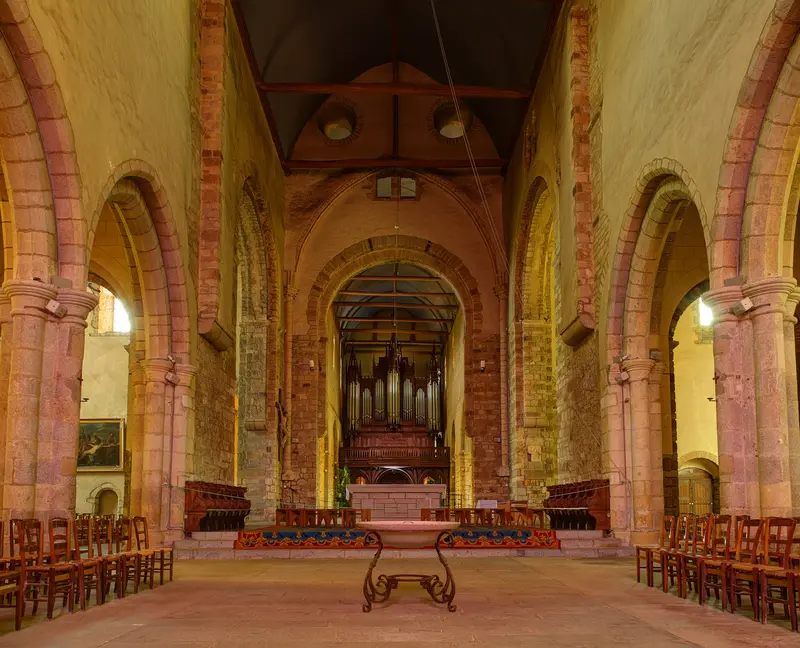
Notre-Dame-en-Saint-Melaine in Rennes is a historically significant church, with origins dating back to the 6th century when Saint Melaine founded an abbey here. You'll discover a fascinating mix of architectural styles, reflecting the site's long history. The Romanesque bell tower from the 11th century is a striking feature, testifying to its early construction phases. Over the centuries, the church was repeatedly rebuilt and expanded, with the classical west facade, which you see today, notably added in the 17th century.Upon entering the church, you'll discover Gothic elements within, harmoniously blending with later additions. Look out for the impressive stained-glass windows, filtering the light, and the tranquil atmosphere, inviting you to linger. The choir and various chapels house interesting artworks and tombs, offering insights into the region's religious and artistic development.Our tip: Visit the church in the morning to quietly admire the architectural details and capture the best light for photos. For a beautiful exterior view and a perspective that truly appreciates the entire edifice, the nearby Jardin Saint-Melaine is ideal. Note that access to the church is restricted during services.
Curated walking tours through the city's highlights — handpicked by experienced travel journalists.
Das Historische Herz von Rennes: Ein Spaziergang durch die Jahrhunderte
Tauchen Sie ein in die reiche Geschichte und das lebendige Flair von Rennes auf diesem zweistündigen Stadtrundgang. Von prächtigen Barockgebäuden bis zu charmanten Fachwerkhäusern und einer grünen Oase – erleben Sie die schönsten Seiten der bretonischen Hauptstadt. Ein idealer Mix aus Kultur, Geschichte und Entspannung.
Rennes: A City Bursting with History and Breton Culture
Rennes, the historic capital of Brittany, is a living testament to a rich past, reflected in its architecture and culture. Originally known as the Gallo-Roman Condate, the city evolved into the powerful center of the Duchy of Brittany during the Middle Ages.A defining event was the devastating fire of 1720, which destroyed large parts of the medieval city and necessitated extensive reconstruction in the Neoclassical style based on plans by Jacques Gabriel. Today, both the preserved picturesque half-timbered houses, for example in the Rue du Chapitre, and the imposing 18th-century stone buildings shape the cityscape. An outstanding example is the Parlement de Bretagne, an architectural jewel that once housed the Supreme Court and remains a symbol of Breton history today.Rennes' cultural identity is closely linked to Breton tradition, even though the city exudes a modern and cosmopolitan atmosphere. This connection is evident in local festivals, the Breton language, and, of course, the gastronomy, where Galettes and Crêpes with local cider play a central role. The city is also a significant center for contemporary art and music, with numerous galleries and internationally renowned festivals.
Nightlife
Rennes awakens after sunset with a **vibrant and diverse nightlife scene** that caters to every taste. From traditional pubs to trendy cocktail bars in the heart of the city and charming riverside guinguettes – visitors will find a wide range of entertainment here. Especially in the district around Rue Saint-Michel, known as the "Rue de la Soif", life pulses with numerous bars and clubs.
Getting Around Here
Rennes is a compact city, wonderfully explorable on foot, especially its charming historic center. Moreover, Rennes features a highly efficient public transport network, including a modern, driverless Metro and a comprehensive bus network. What's more, Rennes actively promotes cycling, making travel both eco-friendly and enjoyable.
These places are nearby — perfect for additional days or a day trip.
Dinan
Dinan, a picturesque town in Brittany, captivates with its medieval character and well-preserved half-timbered houses. You can climb the impressive town walls and visit the Clock Tower (Tour de l'Horloge), which are testaments to Dinan's rich history. Stroll down the historic Rue du Jerzual, a cobblestone street that leads you directly to the charming river port on the Rance. At the port, once a vital trading hub, you can admire the historic buildings and enjoy the relaxed atmosphere. The Château de Dinan as well as the Basilica Saint-Sauveur are among the city's other architectural highlights. For a relaxed exploration of the narrow streets and fully walkable ramparts, a visit outside the peak tourist season is recommended.
Mont Saint-Michel
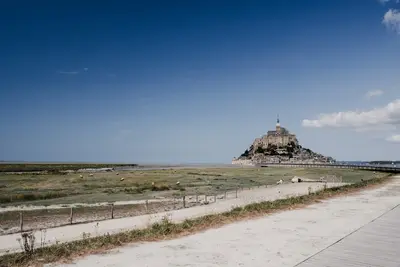
Mont Saint-Michel rises majestically as an imposing rocky island from the tidal flats of Normandy, creating an unforgettable panorama. This UNESCO World Heritage site is primarily known for its medieval abbey, which developed over centuries into a significant pilgrimage destination. The Benedictine Abbey, a masterpiece of Gothic architecture, crowns the summit and offers you a deep insight into religious architecture and history. You can explore the narrow, cobblestone streets of the village, which spiral around the rock and lead to the abbey. Be mindful of the tides, as they can affect access to the island and represent a unique natural phenomenon. For a more relaxed experience and to avoid larger crowds, a visit in the early morning or late afternoon outside of peak season is recommended.
Saint-Malo
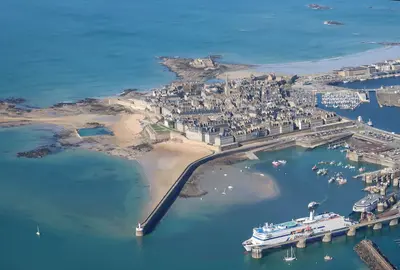
Saint-Malo presents itself as an imposing fortified city on the Breton coast, its granite walls encompassing the historic Intra-Muros.The city is inseparably linked to its history as home port of the corsairs who sailed from here in the 17th and 18th centuries.A walk on the perfectly preserved Remparts offers you impressive views of the bay and the offshore tidal islands, such as Grand Bé with Chateaubriand's tomb.The city's interior, rebuilt after its destruction in the Second World War, is home to charming alleyways, boutiques, and traditional restaurants.For a deeper insight into the maritime past, we recommend the Château de Saint-Malo, which today houses the city museum.Outside the walls, the Plage du Sillon invites you for long beach walks, with spring or autumn being the most relaxed visiting times.
Brittany
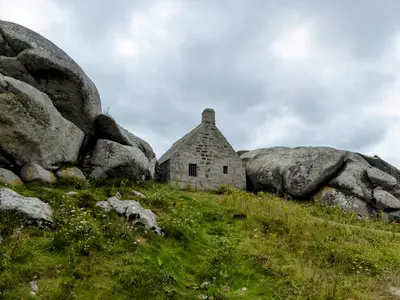
The **Brittany**, a northwestern region of France, charms with its ruggedly romantic coastline, deeply rooted Celtic culture, and a distinctive Breton identity. From mystical megaliths to charming fishing villages and bustling port cities, it offers a unique blend of rugged nature, rich history, and culinary delights that captivates every visitor.
Vannes
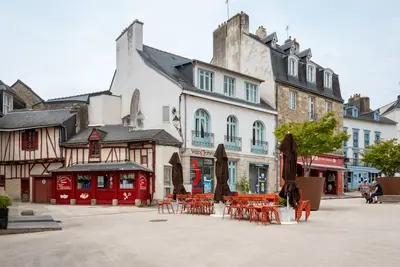
Vannes, a historic city in Brittany, impresses with its well-preserved medieval Old Town. Here you'll discover half-timbered houses, narrow streets, and the imposing city walls that encircle the centre. Vannes harbour is a lively meeting point and starting place for boat trips in the Gulf of Morbihan. The Saint-Pierre Cathedral and the Saint-Patern quarter bear witness to the city's rich history as a Breton ducal city. A stroll along the city walls offers you excellent views over Vannes' gardens and rooftops. Visit the weekly market at Place des Lices to sample regional specialities. The summer months are lively, but a visit in spring or autumn allows for a quieter exploration of the streets.