Fernweh: Home
    ExploreTravel GuidesPlan a tripMy tripLast visited
    de|en
    All Places & RegionsAll highlightsAbout FernwehFAQPrivacy PolicyImprint
    ExploreTravel GuidesPlan a tripMy tripLast visited
    • Neighborhoods & highlights
    • Walking tours
    • Eat & drink
    • Food culture
    • Culture
    • Getting around
    • Accommodation
    • Plan trip
    • Nearby
    Vannes

    France

    Vannes

    CityCulture

    Vannes, a historic city in Brittany, impresses with its well-preserved medieval Old Town. Here you'll discover half-timbered houses, narrow streets, and the imposing city walls that encircle the centre.

    by Felix Gillen

    1. Home
    2. Destinations
    3. France
    4. Brittany
    5. Vannes
    Vannes, a historic city in Brittany, impresses with its well-preserved medieval Old Town. Here you'll discover half-timbered houses, narrow streets, and the imposing city walls that encircle the centre. Vannes harbour is a lively meeting point and starting place for boat trips in the Gulf of Morbihan. The Saint-Pierre Cathedral and the Saint-Patern quarter bear witness to the city's rich history as a Breton ducal city. A stroll along the city walls offers you excellent views over Vannes' gardens and rooftops. Visit the weekly market at Place des Lices to sample regional specialities. The summer months are lively, but a visit in spring or autumn allows for a quieter exploration of the streets.

    Sights in Vannes

    Discover the most important sights and attractions

    Statue de saint Émilion

    1Statue de saint Émilion

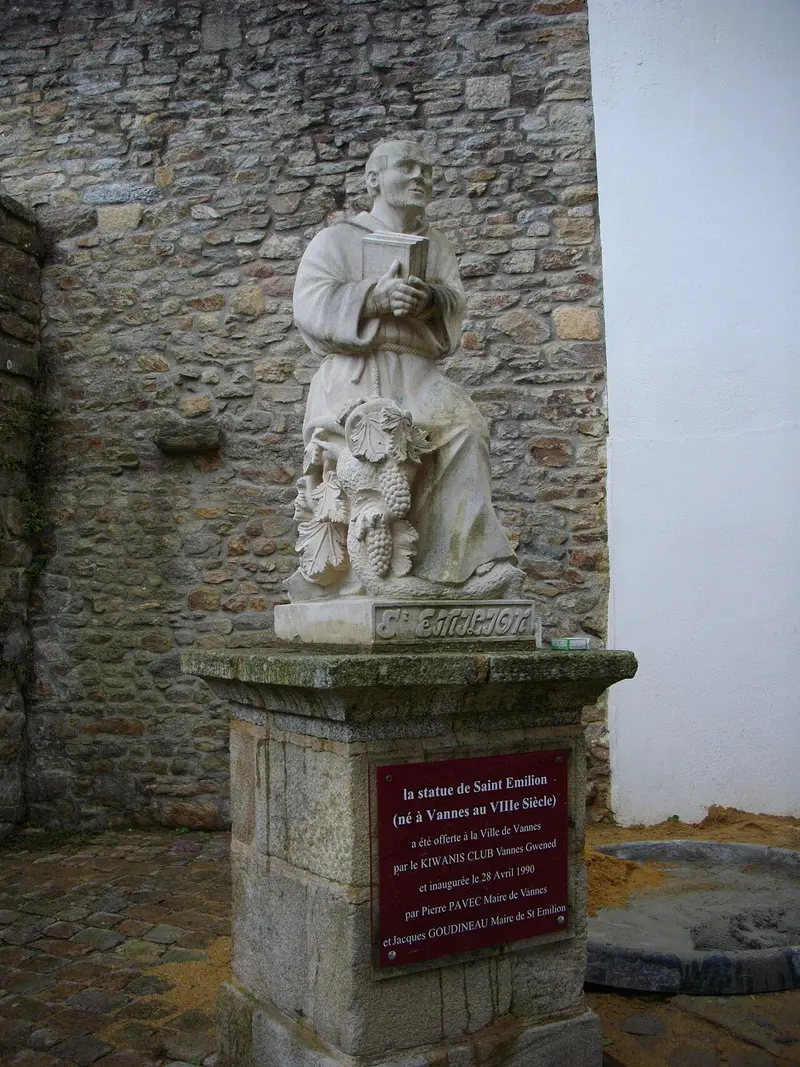
    The Statue of Saint Émilion commemorates the monk Émilion, who was born in Vannes in the 8th century and later lived as a hermit in the Gironde. Around his hermitage, the town of Saint-Émilion emerged, now primarily known for its wine. The statue can be easily combined with a stroll through the old town and to the harbour.
    Open in Google Maps

    2Street Art

    In Vannes, a city known for its well-preserved medieval architecture, you'll also find a surprisingly vibrant and diverse street art scene. These modern artworks create a fascinating contrast to the historic walls and reflect the city's dynamic cultural development. You can expect a wide range of artistic expressions, from large-format murals covering entire facades to detailed stencils and intelligently placed installations. Many of these works address local themes, tell stories from Breton culture, or offer subtle social commentaries. The city serves as an open canvas for artists, making their visions accessible to a wide audience.Our Tip: To discover the best works, you should explore the alleys off the main tourist paths. Walks are particularly worthwhile in the districts around the harbor and in the areas outside the historic city walls, where larger and more impressive murals are often found. Take your time to observe the details and decipher the messages behind the images. A morning visit not only offers optimal light for photos but also fewer passersby, allowing for an undisturbed art experience.
    Open in Google Maps
    Place des lices

    3Place des lices

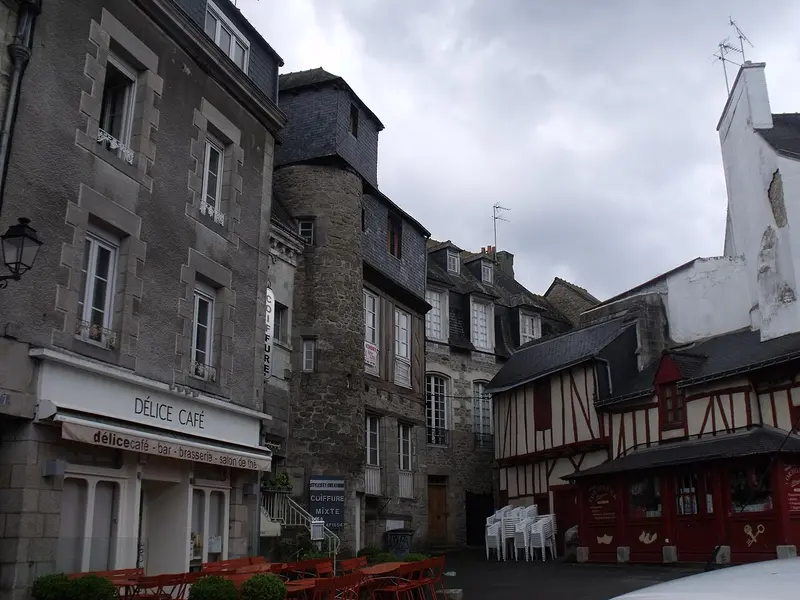
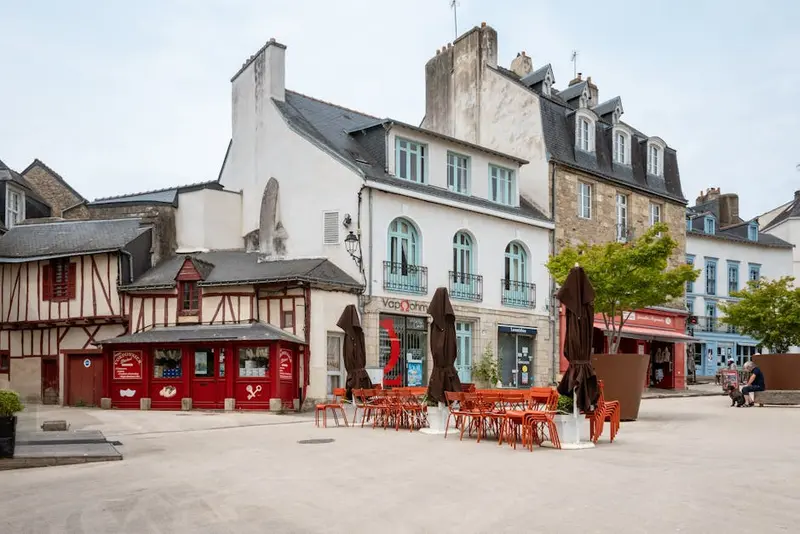
    The Place des Lices in Vannes is a historically significant location, whose name harks back to its original function as a jousting arena for knightly tournaments in the Middle Ages. Today, it forms the vibrant heart of the city and is particularly known for its lively weekly market. Here you'll find an impressive collection of well-preserved half-timbered houses from the 15th and 16th centuries, which lend the square a unique, picturesque ambiance. These buildings bear witness to Vannes' rich history and prosperity in past centuries.Every Saturday morning, the square transforms into a colourful marketplace, where vendors offer regional products, fresh food, flowers, and handicrafts. It's the ideal spot to soak up the local atmosphere and discover Breton specialties. Even outside market hours, the square, with its surrounding cafés and restaurants, invites you to linger. Here you can often observe locals playing Boule, which lends the place an authentic, relaxed atmosphere.Our Tip: Visit the market on Saturday morning to experience the full spectacle. To avoid the largest crowds, it's advisable to arrive early in the morning. For an atmospheric photo of the half-timbered houses, the view from Rue du Mené is ideal, especially when the sun is low.
    Open in Google Maps
    Place Lucien Laroche

    4Place Lucien Laroche

    The Place Lucien Laroche is located in the historic center of Vannes, just a few steps from Place des Lices. Surrounded by half-timbered houses, from here you can easily reach Saint-Pierre Cathedral and the gardens along the city walls. Our tip: In the early morning, it's quiet here, and the light beautifully illuminates the facades.
    Open in Google Maps

    5Remparts de Vannes

    The Remparts de Vannes, Vannes' well-preserved city walls, are an outstanding example of medieval military architecture in Brittany. Their origins date back to the 3rd century, but they largely took their current form between the 13th and 17th centuries, particularly under the Dukes of Brittany. You can walk along much of these historic fortifications, gaining a unique insight into the defensive strategies of past eras.The walls encompass the picturesque old town and offer charming views from various sections of Vannes' rooftops, Saint-Pierre Cathedral, and the adjacent gardens, often referred to as the 'Jardins des Remparts'. Particularly impressive is the section near the Porte Saint-Vincent and the Tour du Connétable. Here, you can see the massive construction and the strategic placement of the towers. The complex served not only for protection but also as a status symbol for the Dukes.Our Tip: Visit the Remparts early in the morning or late afternoon to get the best light for photos and avoid the largest crowds. A stroll through the adjacent gardens below the walls offers a different perspective and is ideal for grasping the fortification's dimensions. Look out for the various architectural styles that reflect the walls' long history.
    Open in Google Maps

    City walks in Vannes

    Curated walking tours through the city's highlights, handpicked by experienced travel journalists.

    Vannes: A Journey Through Breton History and Picturesque Lanes

    Discover Vannes, the historic capital of the Morbihan, on a two-hour walk. Admire the imposing town walls and the charming half-timbered houses and immerse yourself in the medieval flair of this lively town. A walk that combines history and Breton charm.

    Open in Google Maps
    Stops (7)

    Food & Drink

    Afghan Café

    Restaurant in 23 Rue de la Fontaine.
    Show on Google Maps

    BiBoViNo - Restaurant/Cave à vins

    Bar in 18 Rue Emile Burgault.
    Show on Google Maps

    Crêperie Dan Ewen - Crêpes et Galettes Bretonnes

    Restaurant in 3 Pl. du Général de Gaulle.
    Show on Google Maps

    Sushi pearl

    Bar in 7 Rue Alain le Grand.
    Show on Google Maps

    Le Coq à l'âne

    Bar in 17 Pl. du Général de Gaulle.
    Show on Google Maps

    Food & Drink

    Vannes is on the Gulf, shaping the cuisine: oysters, mussels, and fish. Then come Breton classics of buckwheat and butter.

    Oysters from the Gulf of Morbihan

    In the shallow bays, oysters are cultivated, tasting milder due to the brackish water than those from the open coast.

    Galettes and Crêpes

    The crêperies in the old town's alleys are a standard fixture. Buckwheat is increasingly grown locally again.

    Kouign-amann and Far breton

    Butter cake and plum cake are available in every bakery. Both are filling and keep well for on the go.

    Market on Wednesday and Saturday

    Around Lices Hall, local producers offer vegetables, oysters, and sausages. The Saturday market is the larger.

    Culture and History in Vannes

    Vannes, the Roman Darioritum, boasts a long history. In the Middle Ages, the city was an important fortress, a trading hub, and at times the residence of the Dukes of Brittany, who lived here in the Château de l'Hermine. In 1532, the Estates of Brittany decided in Vannes on the union of the duchy with France. The well-preserved city walls, whose origins date back to late antiquity and which were largely built between the 13th and 17th centuries, bear witness to this era with gates like the Porte Saint-Vincent. Within the walls, half-timbered houses and narrow alleys characterize the cityscape.The Saint-Pierre Cathedral combines Romanesque, Gothic, and Renaissance elements and reflects various construction phases. Culturally, Vannes is closely linked to Breton identity, which is evident in festivals, the Breton language, and maritime traditions. Museums and events keep this connection alive.

    Local explorations

    From Paris Montparnasse, Vannes is a two-and-a-half-hour TGV journey; from Rennes, just over an hour by regional train. The old town and harbour are best explored on foot. A municipal bus network serves longer distances. Seasonal excursion boats depart from the harbour for the Gulf of Morbihan and its islands. To explore the coast flexibly, opt for a bicycle or rental car.

    Accommodations in Vannes

    Find perfect stay in Vannes

    Booking.com* (Affiliate link)
    Search Hotels
    Agoda* (Affiliate link)
    Search Hotels
    Airbnb
    Vacation Rentals

    * Affiliate link: if you book through it, we earn a small commission. The price stays the same for you.

    Campgrounds in Vannes

    Find perfect campground in Vannes

    Search via Google Maps
    Campgrounds nearby (15km)
    Camping.info
    Find Campgrounds
    Park4Night
    RV Parks & Camping

    Plan your trip to Vannes

    Save places, build a route and plan your city trip, all in one place.

    1. 1
      Sunrise over alpine peaks and a sea of clouds
      1234

      Round trip

      12 days · 4 stops

      Saved

      Pick a route

      Pick a ready-made one or save places and plan your own.

      Open bookmarks
    2. 2

      Trip to Vannes

      Live
      • 1Statue de saint Émilion3 days
      • 2Street Art4 days
      • 3Place des lices5 days
      Budget

      Plan your trip

      The planner sorts stops, days and budget. Plan together in real time.

      Start trip planning
    3. 3
      9:41 No signal
      Vannes
      Available offline

      Use it on the road

      Download the guide to your phone and use it on site, even offline.

    Nearby

    Carnac

    Carnac

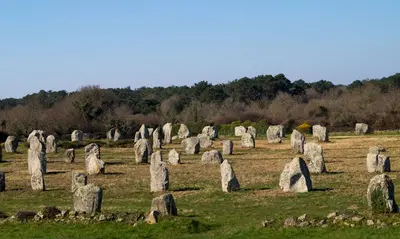
    Carnac is renowned for its prehistoric stone alignments, the world's largest collection of menhirs. Approximately 3,000 stones stretch for several kilometers and are a testament to the Neolithic period. Since 2025, the Megaliths of Carnac and the Morbihan Coast have been part of the UNESCO World Heritage. The most famous are the Alignments of Le Ménec, Kermario, and Kerlescan. Their exact purpose is unknown; archaeologists suggest religious, astronomical, or social functions. The Musée de Préhistoire de Carnac offers deeper insight into the visit. To protect the stones, parts of the sites are only accessible with a guided tour in summer, while access is usually free during the winter half-year. Early mornings and late afternoons are the calmest, and the area is best explored on foot or by bike.
    Guérande

    Guérande

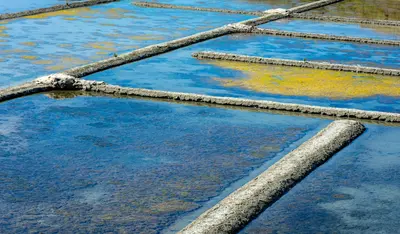
    Guérande is a medieval town whose almost completely preserved town walls define its character. You can walk around the roughly 1.4-kilometer-long fortifications and their four gates on the outer boulevard; a section of the wall walk is accessible via the museum. In the old town, you'll find the Porte Saint-Michel with the town museum and the Collegiate Church of Saint-Aubin. The area is known for the Marais salants, Guérande's salt marshes, where salt and Fleur de Sel have been harvested for centuries. A guided tour through the salt pans reveals the work of the Paludiers. Spring and autumn are ideal for a peaceful visit.
    La Baule-Escoublac

    La Baule-Escoublac

    La Baule-Escoublac is a renowned seaside resort on the Atlantic coast of Loire-Atlantique, boasting a nine-kilometer long sandy beach that stretches in a bay from Pornichet to Le Pouliguen. The town developed into a popular seaside destination in the late 19th and early 20th centuries, as evidenced by its numerous villas. Along the promenade, you'll find boutiques, restaurants, and the Casino Barrière. Away from the beach, the Parc des Dryades invites you for strolls, while in the La Baule-les-Pins district, many interwar villas are nestled among pine trees. It's quieter in spring or autumn. At La Baule's market, you can discover regional products, including salt from nearby Guérande.
    Brittany

    Brittany

    Brittany, in northwest France, is shaped by a rugged coastline, a distinctive culture with Celtic roots, and a vibrant Breton identity. Neolithic megaliths, fishing villages, walled port cities, and a unique cuisine featuring Galettes, seafood, and Cidre define the region.
    Pornic

    Pornic

    Pornic is a coastal town on the Côte de Jade in the Loire-Atlantique department. The town features a historic port below a medieval castle, small sandy coves, and a coastal path. Historically, Pornic belonged to the Duchy of Brittany, a legacy still evident today in its cuisine and townscape.

    Sources & method

    • Photos: Wikimedia Commons, Pexels. Each photo carries its credit.
    • The content is based on web research from public, traceable sources. How the content is made · The role of AI