France
Carnac
VillageCulture
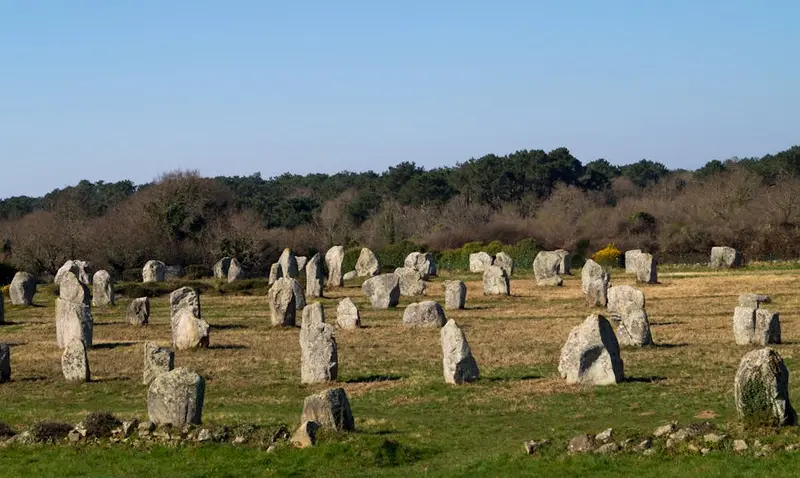
Carnac is renowned for its prehistoric stone alignments, the world's largest collection of menhirs. Approximately 3,000 stones stretch for several kilometers and are a testament to the Neolithic period.
by Felix Gillen
Carnac is renowned for its prehistoric stone alignments, the world's largest collection of menhirs. Approximately 3,000 stones stretch for several kilometers and are a testament to the Neolithic period. Since 2025, the Megaliths of Carnac and the Morbihan Coast have been part of the UNESCO World Heritage. The most famous are the Alignments of Le Ménec, Kermario, and Kerlescan. Their exact purpose is unknown; archaeologists suggest religious, astronomical, or social functions. The Musée de Préhistoire de Carnac offers deeper insight into the visit. To protect the stones, parts of the sites are only accessible with a guided tour in summer, while access is usually free during the winter half-year. Early mornings and late afternoons are the calmest, and the area is best explored on foot or by bike.
Points of Interest
Discover the most important sights and attractions
La grande baie
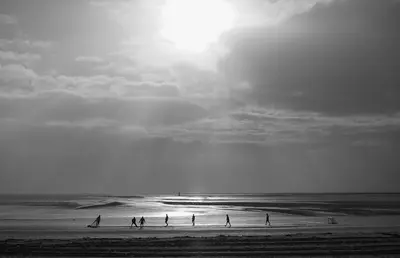
The Grande Baie, east of Carnac-Plage, is a coastal stretch featuring sandy beaches, rocky outcrops, and adjoining wetlands where waterfowl can be observed. At low tide, vast sandy expanses become exposed, perfect for long walks. Our tip: The light is most beautiful in the early morning and late afternoon; check the tides beforehand.
Food and Drink
Dining & Drinks
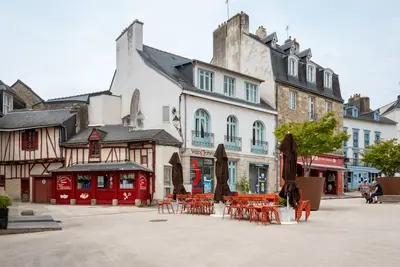
Carnac is a beach resort and archaeological site. Brasseries by the beach, crêperies and fish restaurants in the old town.
Oysters and Mussels
Quiberon Bay and the Gulf of Morbihan yield oysters and mussels. These are served raw or steamed in white wine.
Galettes and Cider
Buckwheat galettes with egg and bacon, plus cider in a bowl, are the region's simplest and most reliable meal.
Sardines from Quiberon
On the peninsula, several canneries operate, which still hand-pack sardines today. The cans bear vintage labels.
Brittany-Sourced Salt
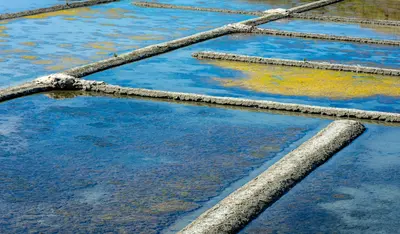
In the salt pans of Carnac and further southeast near Guérande, sea salt is hand-harvested. Fleur de Sel is a typical souvenir.
Culture and History: Carnac's Megalithic Heritage
Carnac's cultural and historical identity is inextricably linked to its prehistoric roots. The region is globally renowned for its impressive megalithic structures, primarily dating from the Neolithic period and erected between 4500 and 2000 BC.These colossal stones, including menhirs and dolmens, are arranged in complex alignments and patterns, forming the largest concentration of their kind worldwide. Their exact function remains a subject of scientific research to this day, but is commonly interpreted as ritualistic or astronomical.Over the millennia, Roman settlement and medieval life also shaped the area, with traces visible in individual archaeological finds. Nevertheless, the mystical stone alignments dominate Carnac's cultural memory and local tradition, which is deeply rooted in the appreciation and preservation of this unique heritage.
Exploring locally
Carnac is small but still offers several practical ways to get around. There's no metro or tram network; the local bus service, which connects the districts and beaches during the season, is the main public option. Tickets are bought directly from the driver; multi-trip tickets are often cheaper for longer stays.The region is excellent for exploring by bike: Numerous rental stations offer bikes and e-bikes, ideal for enjoying the megalithic alignments and coastal landscape car-free. E-scooters are less common, but the flat terrain makes cycling a pleasure anyway. For spontaneous trips or transfers, taxis are available; ride-hailing services are rarer in this more rural area.Carnac is also very pedestrian-friendly: Most destinations in the center and along the coast are easily reached on foot, especially the Megalithic Fields. It's best to plan your routes in advance.
Accommodations in Carnac
Find perfect stay in Carnac
Booking.com* (Affiliate link)
Search Hotels
Agoda* (Affiliate link)
Search Hotels
Airbnb
Vacation Rentals
* Affiliate link: if you book through it, we earn a small commission. The price stays the same for you.
Campgrounds in Carnac
Find perfect campground in Carnac