Fernweh: Home
    ExploreTravel GuidesPlan a tripMy tripLast visited
    de|en
    All Places & RegionsAll highlightsAbout FernwehFAQPrivacy PolicyImprint
    ExploreTravel GuidesPlan a tripMy tripLast visited
    • Neighborhoods & highlights
    • Walking tours
    • Eat & drink
    • Food culture
    • Culture
    • Getting around
    • Accommodation
    • Plan trip
    • Nearby
    Quimper

    France

    Quimper

    CityCulture

    Quimper, the historic capital of Cornouaille, captivates with its medieval charm and distinct Breton culture. You'll stroll through winding lanes, lined with picturesque half-timbered houses, stretching along the Odet River.

    by Felix Gillen

    1. Home
    2. Destinations
    3. France
    4. Brittany
    5. Quimper
    Quimper, the historic capital of Cornouaille, captivates with its medieval charm and distinct Breton culture. You'll stroll through winding lanes, lined with picturesque half-timbered houses, stretching along the Odet River. The majestic Saint-Corentin Cathedral, a masterpiece of Gothic architecture, defines the cityscape. In the Locmaria district, you'll discover the traditional Faience Manufactory Henriot-Quimper, renowned for its hand-painted ceramics. The Musée des Beaux-Arts houses a remarkable collection of Breton and European art. For an authentic experience, visit the weekly market to taste local products and specialties. May and June are ideal months for a visit to enjoy the mild climate and blossoming gardens.

    Sights in Quimper

    Discover the most important sights and attractions

    1Place Maubert

    The Place Maubert is a small square in the old town of Quimper, just a few steps from Saint-Corentin Cathedral. All around stand half-timbered and granite houses, home to shops and cafés. The square is a good starting point for a stroll through the alleys of the old town. Our Tip: In the early morning it's quiet here and the light on the facades is beautiful.
    Open in Google Maps

    2Breton Door

    The Breton Door in Quimper is not a single monument, but a representative example of the rich craftsmanship and architecture you'll find throughout the historic old town. These doors, often crafted from robust wood and adorned with intricate carvings or wrought-iron fittings, tell stories of centuries past. They are an integral part of the picturesque half-timbered houses and granite buildings that define the cityscape and underscore Quimper's medieval atmosphere. Pay close attention to the details: coats of arms, dates, or religious symbols are not uncommon, offering insights into the history of the inhabitants. For the best photos of these architectural gems, a stroll through Rue Kéréon or the alleys around Saint-Corentin Cathedral in the early morning is recommended. The streets are still quiet then, and the soft light perfectly highlights the doors' textures and colours. Avoid midday, when the alleys are busier and the light is often too harsh for detailed shots. These doors are silent witnesses to Breton building culture and invite a closer look.
    Open in Google Maps

    City walks in Quimper

    Curated walking tours through the city's highlights, handpicked by experienced travel journalists.

    Quimper: In the Footsteps of Faïence – A Craft and Artists' Walk

    Immerse yourself in Quimper's world-famous faïence pottery heritage. This themed walk leads you off the beaten path to the historic production sites, the fascinating faïence museum and through the quarter shaped by this unique craft. Experience the history, the art and the people behind the colorful creations.

    ~1 Std. 45 Min.
    Open in Google Maps
    Stops (6)

    Food and Drink

    Côté Bistrot

    Bar in 3 Rue Sainte-Thérèse.
    Show on Google Maps

    Le Carnaval de Venise

    Bar in 2bis Rue de Locronan.
    Show on Google Maps

    Le Riad Couscous Quimper

    Restaurant in 18 Rue Sainte-Catherine.
    Show on Google Maps

    Resto la plaidoirie

    Restaurant in 44 Quai de l'Odet.
    Show on Google Maps

    Le Troquet

    Bar in 26 Rue du Frout.
    Show on Google Maps

    Food & Drinks

    Quimper is known as one of the crêpe capitals. Most crêperies in the old town use regional buckwheat.

    Galettes and Crêpes

    The city has one of the highest crêperie densities in Brittany. You order savory buckwheat, then sweet wheat, with cider.

    Kouign-amann

    The butter cake comes from nearby Douarnenez. Fresh from the oven, the caramel crust is still soft.

    Seafood from the Cornouaille

    From the ports of Concarneau and Le Guilvinec come spiny lobsters, sardines, and hake. Le Guilvinec is one of France's largest fishing ports.

    Cidre from Cornouaille

    The region's cider holds a Protected Designation of Origin. It is drier and tarter than many other French ciders.

    Chouchen

    The Breton honey wine is drunk chilled as an aperitif or digestif and is a staple at festivals.

    The Culture, Art & History of Quimper

    Quimper, the historic capital of Cornouaille, boasts a history dating back to Gallo-Roman times. Its location at the confluence of the Odet and Steïr rivers shaped the city's development, making it an important centre of Breton culture; the Breton name Kemper means 'confluence'.In the Middle Ages, Quimper became the religious and political centre of Cornouaille, a fact reflected in its architecture. The Saint-Corentin Cathedral, a masterpiece of Breton Gothic art, dominates the cityscape. A distinctive feature is the bend between the nave and the choir: the choir's axis deviates significantly from that of the nave, presumably due to challenging ground conditions. The two spires were only added in the 19th century.The winding streets of the old town are lined with half-timbered houses from the 15th to 17th centuries. Culturally, Quimper is closely linked to its Breton identity; Breton language, music, and dances are actively cultivated, for example, at the Festival de Cornouaille in July.The city is known for its faience, painted ceramics, the production of which has been documented in the Locmaria district since the late 17th century and continues today in manufactories like Henriot-Quimper.

    Getting Around Quimper: Your Transport Options

    Quimper, with its picturesque old town, can be **excellently explored on foot**, with most attractions easily accessible. For longer distances or excursions into the surrounding area, the efficient public bus network offers a practical alternative. Taxi services and the option to use rental cars complete the offerings for maximum flexibility.

    Accommodations in Quimper

    Find perfect stay in Quimper

    Booking.com* (Affiliate link)
    Search Hotels
    Agoda* (Affiliate link)
    Search Hotels
    Airbnb
    Vacation Rentals

    * Affiliate link: if you book through it, we earn a small commission. The price stays the same for you.

    Campgrounds in Quimper

    Find perfect campground in Quimper

    Search via Google Maps
    Campgrounds nearby (15km)
    Camping.info
    Find Campgrounds
    Park4Night
    RV Parks & Camping

    Plan your trip to Quimper

    Save places, build a route and plan your city trip, all in one place.

    1. 1
      Sunrise over alpine peaks and a sea of clouds
      1234

      Round trip

      12 days · 4 stops

      Saved

      Pick a route

      Pick a ready-made one or save places and plan your own.

      Open bookmarks
    2. 2

      Trip to Quimper

      Live
      • 1Place Maubert3 days
      • 2Breton Door4 days
      Budget

      Plan your trip

      The planner sorts stops, days and budget. Plan together in real time.

      Start trip planning
    3. 3
      9:41 No signal
      Quimper
      Available offline

      Use it on the road

      Download the guide to your phone and use it on site, even offline.

    Nearby

    Carnac

    Carnac

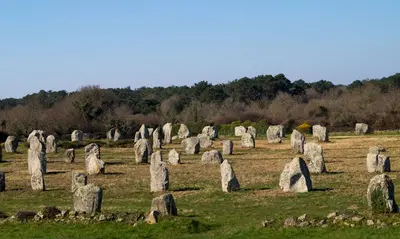
    Carnac is renowned for its prehistoric stone alignments, the world's largest collection of menhirs. Approximately 3,000 stones stretch for several kilometers and are a testament to the Neolithic period. Since 2025, the Megaliths of Carnac and the Morbihan Coast have been part of the UNESCO World Heritage. The most famous are the Alignments of Le Ménec, Kermario, and Kerlescan. Their exact purpose is unknown; archaeologists suggest religious, astronomical, or social functions. The Musée de Préhistoire de Carnac offers deeper insight into the visit. To protect the stones, parts of the sites are only accessible with a guided tour in summer, while access is usually free during the winter half-year. Early mornings and late afternoons are the calmest, and the area is best explored on foot or by bike.
    Brittany

    Brittany

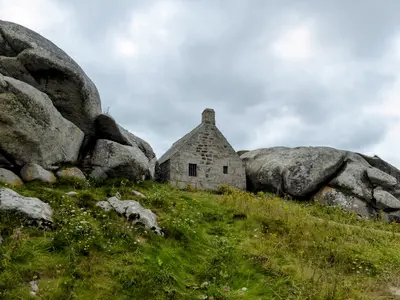
    Brittany, in northwest France, is shaped by a rugged coastline, a distinctive culture with Celtic roots, and a vibrant Breton identity. Neolithic megaliths, fishing villages, walled port cities, and a unique cuisine featuring Galettes, seafood, and Cidre define the region.
    Côte de Granit Rose

    Côte de Granit Rose

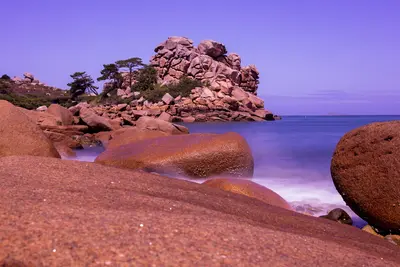
    The Côte de Granit Rose in northern Brittany is known for its pink granite rocks, which wind and sea have sculpted into unusual shapes. The most famous section is the Sentier des Douaniers, the customs officers' path between Trestraou beach in Perros-Guirec and Ploumanac'h; the rocky coast continues past Trégastel to Trébeurden. In Ploumanac'h stands the Phare de Mean Ruz, a pink granite lighthouse with views over the sea and coast. Spring and autumn are quieter than the summer months. Pay attention to the tides; at low tide, some rocks and coves are more accessible.
    Vannes

    Vannes

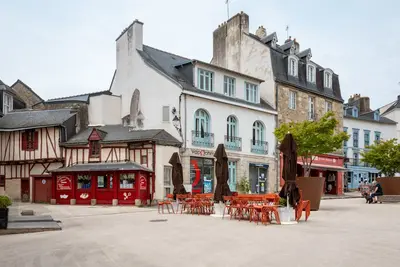
    Vannes, a historic city in Brittany, impresses with its well-preserved medieval Old Town. Here you'll discover half-timbered houses, narrow streets, and the imposing city walls that encircle the centre. Vannes harbour is a lively meeting point and starting place for boat trips in the Gulf of Morbihan. The Saint-Pierre Cathedral and the Saint-Patern quarter bear witness to the city's rich history as a Breton ducal city. A stroll along the city walls offers you excellent views over Vannes' gardens and rooftops. Visit the weekly market at Place des Lices to sample regional specialities. The summer months are lively, but a visit in spring or autumn allows for a quieter exploration of the streets.
    Guérande

    Guérande

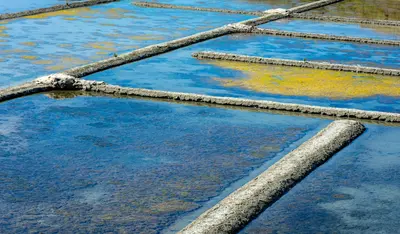
    Guérande is a medieval town whose almost completely preserved town walls define its character. You can walk around the roughly 1.4-kilometer-long fortifications and their four gates on the outer boulevard; a section of the wall walk is accessible via the museum. In the old town, you'll find the Porte Saint-Michel with the town museum and the Collegiate Church of Saint-Aubin. The area is known for the Marais salants, Guérande's salt marshes, where salt and Fleur de Sel have been harvested for centuries. A guided tour through the salt pans reveals the work of the Paludiers. Spring and autumn are ideal for a peaceful visit.

    Sources & method

    • Photos: Unsplash. Each photo carries its credit.
    • The content is based on web research from public, traceable sources. How the content is made · The role of AI