Fernweh: Home
    ExploreTravel GuidesPlan a tripMy tripLast visited
    de|en
    All Places & RegionsAll highlightsAbout FernwehFAQPrivacy PolicyImprint
    ExploreTravel GuidesPlan a tripMy tripLast visited
    Côte de Granit Rose

    France

    Côte de Granit Rose

    Point of InterestCulture

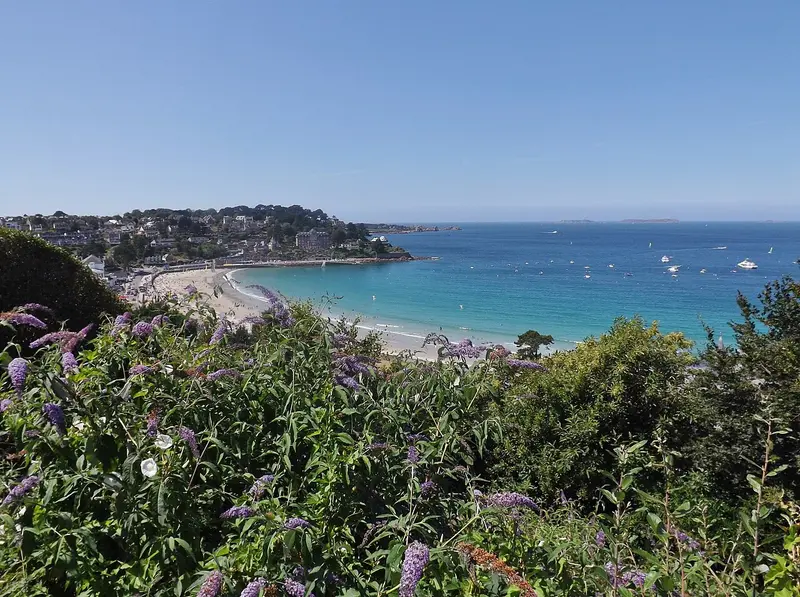
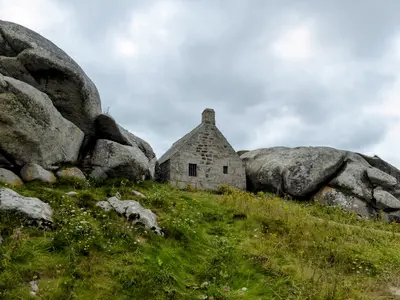
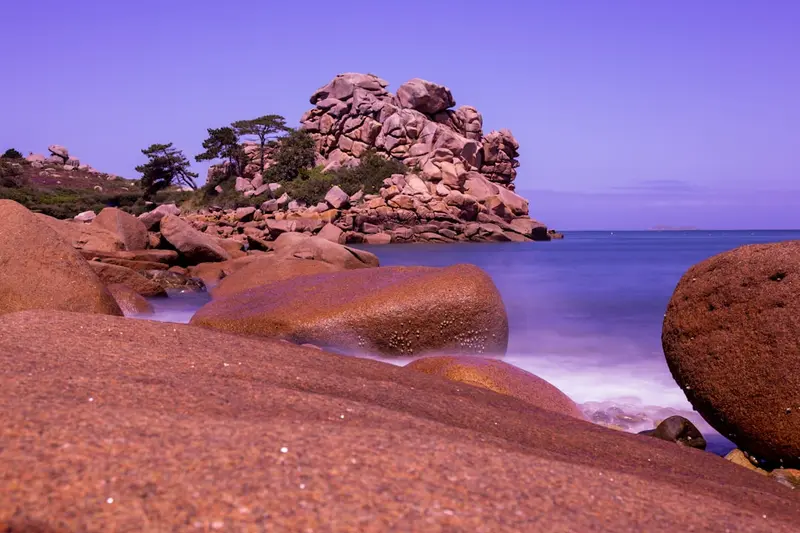
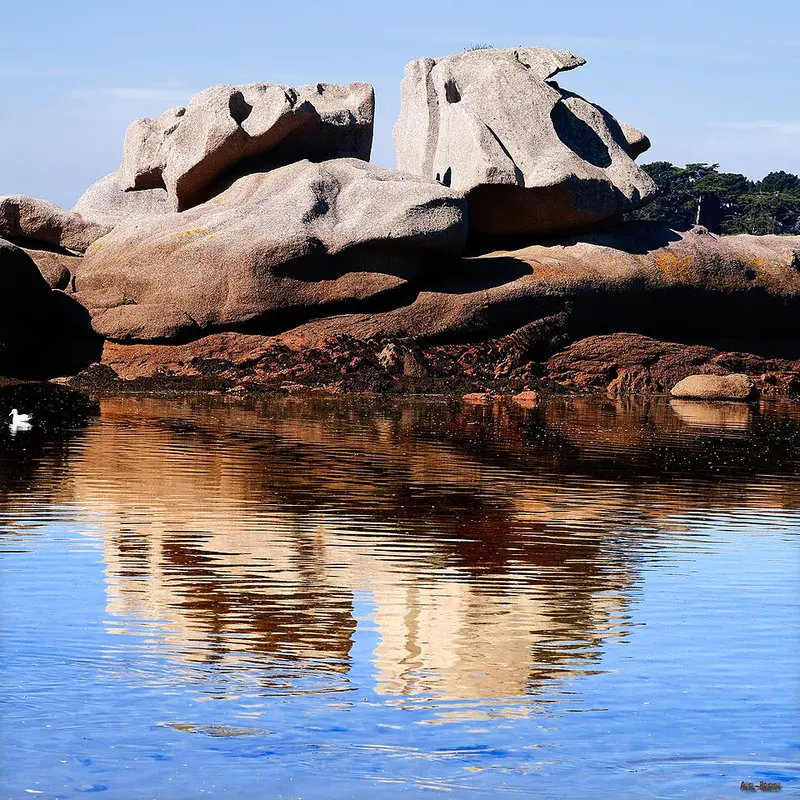
    The Côte de Granit Rose in northern Brittany is known for its pink granite rocks, which wind and sea have sculpted into unusual shapes.

    by Felix Gillen

    1. Home
    2. Destinations
    3. France
    4. Brittany
    5. Côte de Granit Rose
    The Côte de Granit Rose in northern Brittany is known for its pink granite rocks, which wind and sea have sculpted into unusual shapes. The most famous section is the Sentier des Douaniers, the customs officers' path between Trestraou beach in Perros-Guirec and Ploumanac'h; the rocky coast continues past Trégastel to Trébeurden. In Ploumanac'h stands the Phare de Mean Ruz, a pink granite lighthouse with views over the sea and coast. Spring and autumn are quieter than the summer months. Pay attention to the tides; at low tide, some rocks and coves are more accessible.

    Places of Interest

    Discover the most important sights and attractions

    1L'arbre enlacé

    L'arbre enlacé, "the embraced tree", is a tree near Ploumanac'h whose roots clasp a granite block as if embracing it. This unusual interplay of tree and rock is a popular photo opportunity and combines well with a stroll through the surroundings of Ploumanac'h. Our Tip: In the late afternoon, the light is soft and there are fewer people around.
    Open in Google Maps

    2Panorama Saint Anne

    The **Panorama Sainte-Anne** viewpoint is located in Trégastel above the coast. From here, you overlook the pink granite rocks, the bays, and the offshore islands. The granite's color changes with the light, from delicate pink to vibrant orange-red. Our Tip: The rocks glow most intensely in the early morning and late afternoon.
    Open in Google Maps

    3Village de Gîtes "Stereden"

    Park in Chemin des Antennes.
    Open in Google Maps
    Plage de Tourony

    4Plage de Tourony

    Attraction in Rue de Tourony.
    Open in Google Maps
    Strand Von Trestraou

    5Strand Von Trestraou

    Attraction in Bd Joseph le Bihan.
    Open in Google Maps

    City walks in Côte de Granit Rose

    Curated walking tours through the city's highlights, handpicked by experienced travel journalists.

    Lannion: A Journey Through Time in the Half-Timbered Town on the Léguer

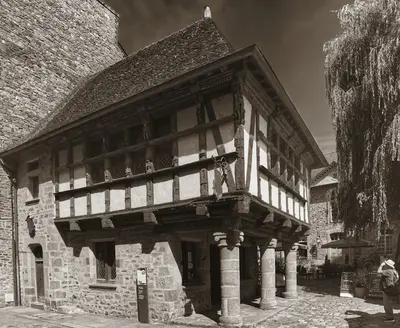
    Discover the historic heart of Lannion, a charming town away from the direct coast of the Côte de Granit Rose. This walk leads you through winding lanes with magnificent half-timbered houses, to venerable churches and along the river Léguer, which gives the town its special appeal. Experience another side of Brittany, rich in history and architecture.

    ~2 Std.
    Open in Google Maps
    Stops (8)

    Dining & Drinks

    Crêpes et galettes bretonnes à emporter Roulez Galettes !

    Restaurant in 7855 Rte du Dolmen.
    Show on Google Maps

    O'ty marché

    Restaurant in 13 Place Ste Anne.
    Show on Google Maps

    Brasserie des 7 îles

    Bar in ZA du Dolmen.
    Show on Google Maps

    NOMAD

    Restaurant in 1 Rue Abbé Bouget.
    Show on Google Maps

    Restaurant L'atelier Perros-guirec

    Restaurant in 81 Bd des Traouiero.
    Show on Google Maps

    Food and Drink

    The coast is sparsely populated, with restaurants concentrated in Perros-Guirec, Trégastel and Ploumanac'h. Fish and seafood dominate.

    Seafood from the English Channel

    Lobster, brown crabs, and scallops come from the waters off the coast. The scallop season runs from October to May.

    Produce from Trégor and Léon

    Northern Brittany is one of France's most important vegetable-growing regions. Artichokes and cauliflower are also grown in Trégor, while the pink onions come from Roscoff, located further west.

    Galettes and Cider

    Buckwheat galettes remain the most reliable meal here. They are accompanied by regional cider.

    Algae products

    On this coast, edible seaweed is harvested and processed. They appear in butter, bread, and terrines.

    Cultural Landscape of the Côte de Granit Rose

    The Côte de Granit Rose is not only stunningly beautiful, but also deeply rooted in Breton culture and history. The unique pink granite formations, which define the coastal landscape, emerged millions of years ago and have significantly influenced local architecture and way of life, especially since the settlement by Celtic tribes.Architecturally, buildings crafted from the local granite prevail, ranging from traditional fishermen's houses and stately Belle Époque villas to lighthouses like the renowned Phare de Ploumanac'h. Numerous chapels and churches, often with maritime connections, bear witness to a deeply ingrained Christian tradition dating back to the Middle Ages.The cultural heritage is profoundly influenced by its Celtic past. The Breton language, music, and traditional festivals such as the „Pardons“ (religious processions) are preserved to this day and form an integral part of the annual calendar. Since the 19th century, the region has served as a wellspring of inspiration for many artists who captured the unique light and abstract forms of the rocks in their works, thereby contributing to the coast's cultural identity.

    Getting Around Here

    Exploring the Côte de Granit Rose is most flexible with a rental car, as public transport is limited. There's neither a metro nor a tram; regional bus lines connect larger towns, but their frequencies and schedules should be checked in advance, ideally via local apps for multi-journey tickets.For active travelers, bicycles and e-bikes are ideal for exploring the coast on the Sentier des Douaniers or the Vélomaritime; rental stations can be found in tourist centers. The region is also very pedestrian-friendly, perfect for walks along the rock formations.Taxis are available in larger towns, but ride-sharing is hardly widespread. A rental car is therefore essential to fully discover and optimally experience the secluded coves and hidden gems of the Pink Granite Coast.

    Accommodations in Côte de Granit Rose

    Find perfect stay in Côte de Granit Rose

    Booking.com* (Affiliate link)
    Search Hotels
    Agoda* (Affiliate link)
    Search Hotels
    Airbnb
    Vacation Rentals

    * Affiliate link: if you book through it, we earn a small commission. The price stays the same for you.

    Campgrounds in Côte de Granit Rose

    Find perfect campground in Côte de Granit Rose

    Search via Google Maps
    Campgrounds nearby (15km)
    Camping.info
    Find Campgrounds
    Park4Night
    RV Parks & Camping

    Nearby

    Brittany

    Brittany

    Brittany, in northwest France, is shaped by a rugged coastline, a distinctive culture with Celtic roots, and a vibrant Breton identity. Neolithic megaliths, fishing villages, walled port cities, and a unique cuisine featuring Galettes, seafood, and Cidre define the region.
    Quimper

    Quimper

    Quimper, the historic capital of Cornouaille, captivates with its medieval charm and distinct Breton culture. You'll stroll through winding lanes, lined with picturesque half-timbered houses, stretching along the Odet River. The majestic Saint-Corentin Cathedral, a masterpiece of Gothic architecture, defines the cityscape. In the Locmaria district, you'll discover the traditional Faience Manufactory Henriot-Quimper, renowned for its hand-painted ceramics. The Musée des Beaux-Arts houses a remarkable collection of Breton and European art. For an authentic experience, visit the weekly market to taste local products and specialties. May and June are ideal months for a visit to enjoy the mild climate and blossoming gardens.
    Saint-Malo

    Saint-Malo

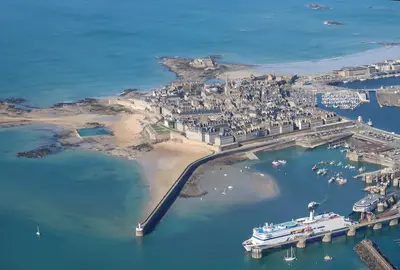
    Saint-Malo is a fortified city on Brittany's north coast, whose granite walls enclose the old town, Intra-Muros.The city is closely linked to its history as the home port of the corsairs, who set sail from here in the 17th and 18th centuries.A walk along the largely preserved Remparts offers expansive views of the bay and the offshore tidal islands like Grand Bé, where Chateaubriand is buried.After its destruction in World War II, the old town was faithfully rebuilt and is now home to narrow streets, boutiques, and traditional restaurants.The Château de Saint-Malo houses the City Museum; check in advance for opening hours.Outside the walls, the Plage du Sillon invites you for long beach walks. Spring and autumn are the most relaxed times to visit.
    Dinan

    Dinan

    Dinan in Brittany has preserved its medieval character with numerous half-timbered houses. You can walk large parts of the approximately three-kilometer-long city walls and climb the Clock Tower (Tour de l'Horloge). The steep, cobblestone Rue du Jerzual leads down to the port on the Rance, once an important trading post and today a quiet spot with waterside eateries. The Château de Dinan with Duchess Anne's keep and the Basilica Saint-Sauveur are among the architectural highlights. Outside of peak season, the lanes are noticeably quieter.
    Carnac

    Carnac

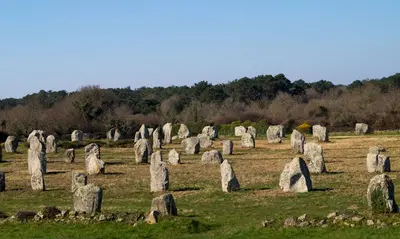
    Carnac is renowned for its prehistoric stone alignments, the world's largest collection of menhirs. Approximately 3,000 stones stretch for several kilometers and are a testament to the Neolithic period. Since 2025, the Megaliths of Carnac and the Morbihan Coast have been part of the UNESCO World Heritage. The most famous are the Alignments of Le Ménec, Kermario, and Kerlescan. Their exact purpose is unknown; archaeologists suggest religious, astronomical, or social functions. The Musée de Préhistoire de Carnac offers deeper insight into the visit. To protect the stones, parts of the sites are only accessible with a guided tour in summer, while access is usually free during the winter half-year. Early mornings and late afternoons are the calmest, and the area is best explored on foot or by bike.
    Sources & method

    • Photos: Wikimedia Commons, Unsplash. Each photo carries its credit.
    • The content is based on web research from public, traceable sources. How the content is made · The role of AI