Fernweh
    ExploreTravel GuidesMy Trips
    de|en
    About FernwehImprintFAQPrivacy Policy
    ExploreTravel GuidesMy Trips
    Saint-Malo

    Saint-Malo

    CityCulture
    1. Home
    2. Destinations
    3. France
    4. Brittany
    5. Saint-Malo
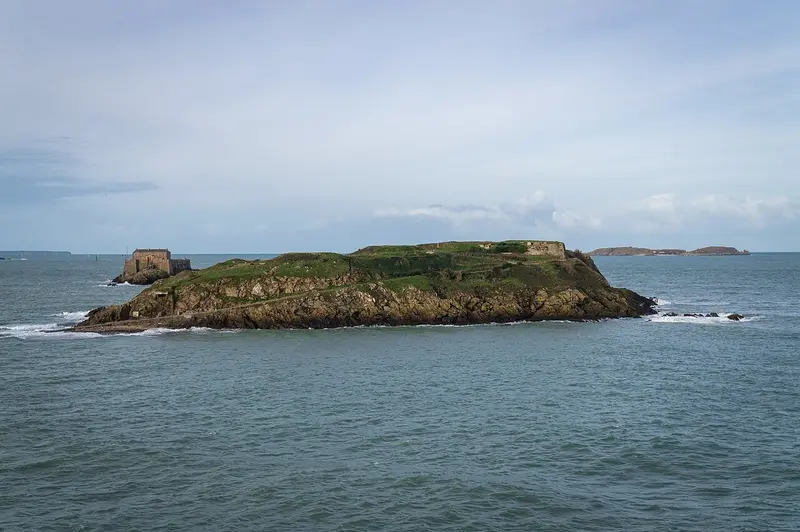
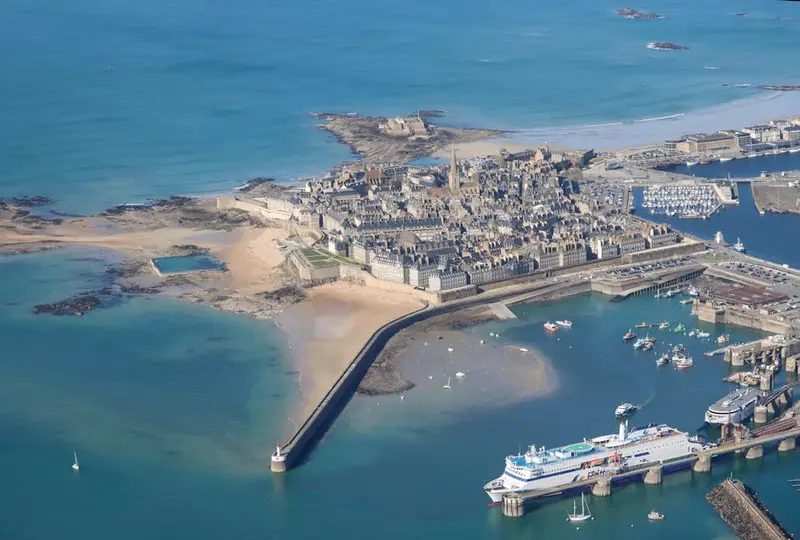
    Saint-Malo presents itself as an imposing fortified city on the Breton coast, its granite walls encompassing the historic Intra-Muros.The city is inseparably linked to its history as home port of the corsairs who sailed from here in the 17th and 18th centuries.A walk on the perfectly preserved Remparts offers you impressive views of the bay and the offshore tidal islands, such as Grand Bé with Chateaubriand's tomb.The city's interior, rebuilt after its destruction in the Second World War, is home to charming alleyways, boutiques, and traditional restaurants.For a deeper insight into the maritime past, we recommend the Château de Saint-Malo, which today houses the city museum.Outside the walls, the Plage du Sillon invites you for long beach walks, with spring or autumn being the most relaxed visiting times.
    • Neighborhoods & highlights
    • Walking tours
    • Eat & drink
    • Culture
    • Getting around
    • Accommodation
    • Plan trip
    • Nearby
    • Neighborhoods & highlights
    • Walking tours
    • Eat & drink
    • Culture
    • Getting around
    • Accommodation
    • Plan trip
    • Nearby

    Overview

    Saint-Malo is an imposing fortified city on the Breton coast, its massive granite walls encircling the historic Intra-Muros.Once homeport to the Corsairs, the city shaped 17th and 18th-century maritime history, offering extensive views of the bay and tidal islands like Grand Bé from its Remparts.The city center, faithfully rebuilt after the war, hosts charming lanes, boutiques, and traditional restaurants.The Château de Saint-Malo serves as the city museum, highlighting its rich maritime past.For relaxed beach strolls, the Plage du Sillon beckons; May to June or September are ideal for your visit.

    Places in Saint-Malo

    Discover the most important sights and attractions

    Sights in Saint-Malo

    Breizh Escape

    Breizh Escape in Saint-Malo offers you an **immersive experience** where you and your team delve into thematic puzzle worlds. Here, you'll be challenged to solve logic puzzles and find hidden clues to escape within a given time. The scenarios are often cleverly linked to the region's rich maritime history or Breton legends, giving the experience an authentic local touch. It's an excellent activity for groups seeking interactive and intellectually stimulating entertainment beyond classic sightseeing. Our tip: To avoid disappointment, you should definitely book your appointment online in advance, especially during peak travel seasons. Make sure to assemble a team of ideally 3 to 6 people to optimally utilize the dynamics and experience all facets of the game.
    Open in Google Maps

    Archaeological Regional Center Alet

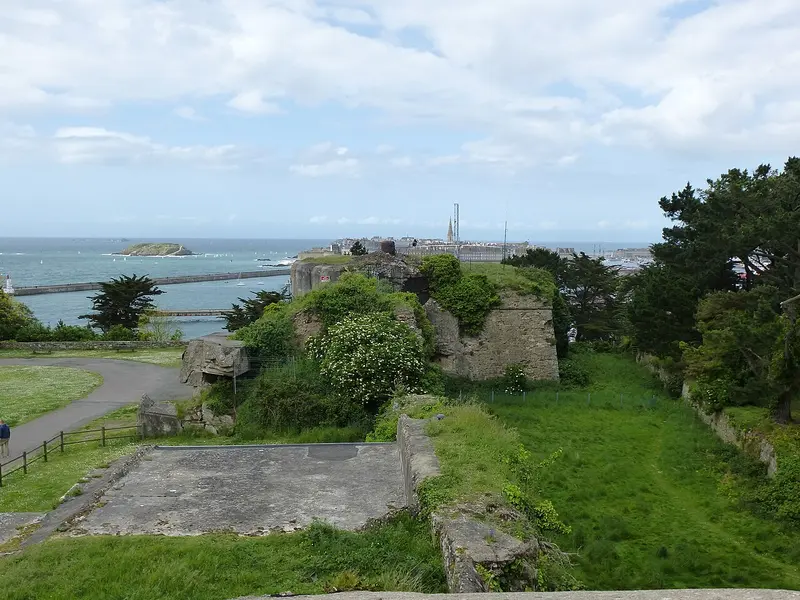
    The Regional Archaeological Centre of Alet in Saint-Malo marks the original site of the city, once known as Aletum, a significant Gallo-Roman settlement. On this strategically important promontory, you'll discover the remains of Roman fortifications, testifying to the site's long history as a defensive outpost. Later, during World War II, Alet was integrated into the Atlantic Wall, with impressive German bunker installations still bearing witness to this today. As you explore the extensive site, you'll wander through centuries of history while enjoying breathtaking panoramic views of Saint-Malo Bay and the Rance estuary. It's a place that appeals to both history enthusiasts and nature lovers. Our tip: Visit Alet preferably in the early morning or late afternoon to enjoy the tranquility of the site and make use of the soft light for photos of the coastal landscape and historical structures. This also helps avoid the largest crowds.
    Open in Google Maps

    Saint-Malo Intra-Muros

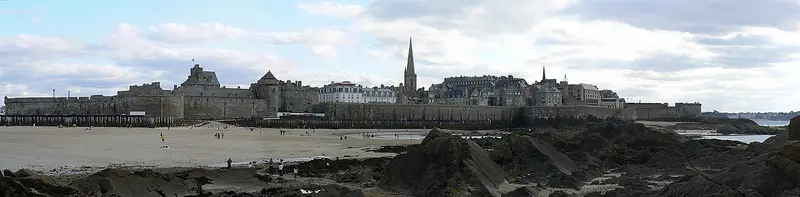
    Saint-Malo's Intra-Muros is the impressive historic old town, completely encircled by massive granite walls. These fortifications, which you can walk along today, bear witness to Saint-Malo's strategic importance as a former privateer stronghold. Although the city was heavily damaged in World War II, a meticulous reconstruction preserved its original character and maritime atmosphere in detail.As you explore the narrow cobblestone streets, you'll discover magnificent granite buildings and the imposing Saint-Vincent Cathedral. The absolute highlight, however, is a walk along the city walls. From here, you'll enjoy spectacular panoramic views over the bay, the offshore islands like Fort National and Grand Bé, as well as the fascinating spectacle of the tides.Our Tip: Plan your wall walk for the late afternoon to experience the warm light of sunset over the English Channel – an ideal photo opportunity. To avoid crowds and enjoy the tranquility of the streets, an early morning visit is recommended. Consult the tide tables, as you can walk to some of the islands at low tide.
    Open in Google Maps

    Grand Bé

    The tidal island of Grand Bé, located off Saint-Malo, is accessible via a walkable causeway at low tide. The island gains its greatest significance from the tomb of François-René de Chateaubriand, an influential French writer and diplomat of the 19th century. His simple grave, which he himself desired, looks out over the vast sea and symbolizes his deep connection to his Breton homeland.On the island, you'll find a rugged, unspoiled landscape that forms a stark contrast to Saint-Malo's bustling Old Town. From its rocky heights, you can enjoy a wide panoramic view of the historic city walls, the bay, and the coastline. It is a place of peace and reflection, offering a unique perspective on the region.Our Tip: Make sure to check the tide times beforehand. Access is only safely possible at low tide; plan enough time for the round trip to avoid being caught by the incoming tide. For the best photos of the coast and city walls, an early morning or late afternoon visit is recommended when the light is softer and there are fewer visitors.
    Open in Google Maps

    Musée des Terre-Neuvas

    The Musée des Terre-Neuvas in Saint-Malo documents the history of the Breton cod fishermen who sailed to Newfoundland for centuries. Here, you'll gain insights into their arduous lives, their ships, and the harsh working conditions at sea. The exhibition features authentic artifacts, detailed ship models, and navigation instruments. It highlights the economic and cultural significance of cod fishing, which shaped Saint-Malo's identity as an important port. Our Tip: Visit the museum in the morning for a peaceful exploration. Pay attention to the sea charts and personal stories of the fishermen, which offer a deep insight into this maritime era.
    Open in Google Maps

    City walks in Saint-Malo

    Curated walking tours through the city's highlights — handpicked by experienced travel journalists.

    Saint-Malo: Maritime Panoramen & Gezeitenabenteuer

    Entdecken Sie die beeindruckende Küstenlandschaft von Saint-Malo jenseits der Stadtmauern. Dieser Spaziergang führt Sie zu malerischen Stränden, historischen Gezeiteninseln und bietet spektakuläre Ausblicke auf die smaragdgrüne Küste, wo Sie die Kraft der Natur und die maritime Atmosphäre in vollen Zügen genießen können.

    ~2 Std. 30 Min.
    In Google Maps öffnen
    Stopps (6)

    Dining & Drinks

    Culture, Art & History of Saint-Malo

    Saint-Malo, the proud Cité corsaire, is deeply rooted in its maritime past, offering a rich narrative of history, art, and architecture. Originally founded by monks in the 6th century, the city evolved from the Middle Ages into a strategically important seaport and a center for maritime trade.Saint-Malo experienced its heyday as the home port of famous privateers and explorers such as Jacques Cartier and Robert Surcouf, whose spirit still shapes the city today. The striking architecture of its granite buildings and the imposing city walls bear witness to its resilience and wealth. Although Saint-Malo was over 80% destroyed during World War II, a meticulous reconstruction preserved its historic cityscape and unique atmosphere. The city honors its traditions, especially seafaring, and cultivates a strong cultural awareness that is reflected in the Malouiner identity.

    Exploring locally

    The picturesque old town of Saint-Malo, Intra-Muros, is wonderful to explore on foot and is largely car-free. For longer distances within the city or to the surrounding area, public bus lines and taxis are available to you. Cycling is a particularly charming way to explore the coast and surroundings, while ferries offer connections to neighboring islands and villages.

    Accommodations in Saint-Malo

    Accommodations in Saint-Malo

    Find perfect stay in Saint-Malo

    Booking.com
    Search Hotels
    Agoda
    Search Hotels
    Airbnb
    Vacation Rentals
    Hotels.com
    Hotels Worldwide
    Hostelworld
    Hostels

    Campgrounds in Saint-Malo

    Find perfect campground in Saint-Malo

    Search via Google Maps
    Campgrounds nearby (15km)
    Camping.info
    Find Campgrounds
    Park4Night
    RV Parks & Camping

    Plan your trip to Saint-Malo

    Save places, build a route and plan your city trip — all in one place.

    Save places

    Bookmark sights, restaurants and neighborhoods you're interested in.

    Build your route

    Turn your bookmarks into a route — define order, days and budget.

    Refine with AI

    Let Mein Fernweh suggest experiences and put together a tailored daily plan.

    Start trip planningOpen bookmarks

    Locations nearby

    These places are nearby — perfect for additional days or a day trip.

    Dinan

    Dinan

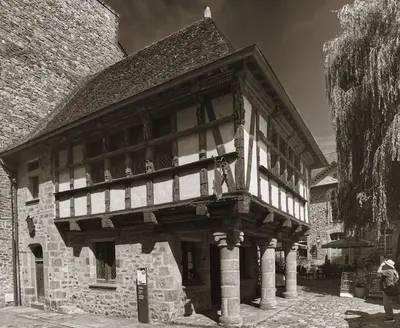
    Dinan, a picturesque town in Brittany, captivates with its medieval character and well-preserved half-timbered houses. You can climb the impressive town walls and visit the Clock Tower (Tour de l'Horloge), which are testaments to Dinan's rich history. Stroll down the historic Rue du Jerzual, a cobblestone street that leads you directly to the charming river port on the Rance. At the port, once a vital trading hub, you can admire the historic buildings and enjoy the relaxed atmosphere. The Château de Dinan as well as the Basilica Saint-Sauveur are among the city's other architectural highlights. For a relaxed exploration of the narrow streets and fully walkable ramparts, a visit outside the peak tourist season is recommended.
    Mont Saint-Michel

    Mont Saint-Michel

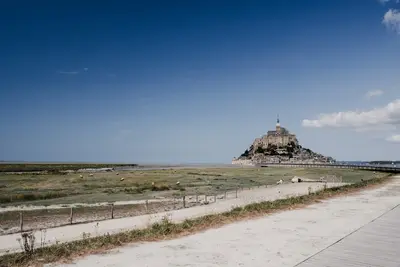
    Mont Saint-Michel rises majestically as an imposing rocky island from the tidal flats of Normandy, creating an unforgettable panorama. This UNESCO World Heritage site is primarily known for its medieval abbey, which developed over centuries into a significant pilgrimage destination. The Benedictine Abbey, a masterpiece of Gothic architecture, crowns the summit and offers you a deep insight into religious architecture and history. You can explore the narrow, cobblestone streets of the village, which spiral around the rock and lead to the abbey. Be mindful of the tides, as they can affect access to the island and represent a unique natural phenomenon. For a more relaxed experience and to avoid larger crowds, a visit in the early morning or late afternoon outside of peak season is recommended.
    Rennes

    Rennes

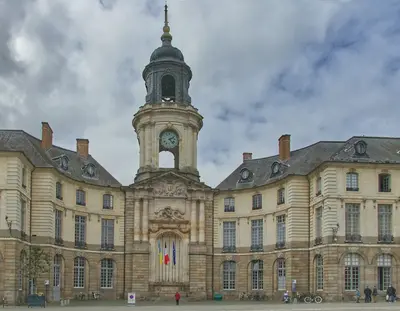
    As the vibrant capital of Brittany, Rennes combines dynamic city life with a beautiful historic center of half-timbered houses and medieval lanes.
    Brittany

    Brittany

    The **Brittany**, a northwestern region of France, charms with its ruggedly romantic coastline, deeply rooted Celtic culture, and a distinctive Breton identity. From mystical megaliths to charming fishing villages and bustling port cities, it offers a unique blend of rugged nature, rich history, and culinary delights that captivates every visitor.
    Côte de Granit Rose

    Côte de Granit Rose

    The spectacular Pink Granite Coast captivates with its unique, erosion-shaped pink rock formations and picturesque coves.