Fernweh
    ExploreTravel GuidesMy Trips
    de|en
    About FernwehImprintFAQPrivacy Policy
    ExploreTravel GuidesMy Trips
    Thermopylae

    Thermopylae

    CityCulture
    1. Home
    2. Destinations
    3. Greece
    4. Central Greece area
    5. Thermopylae
    Thermopylae is a historic site, known for the epic battle between the Spartans and the Persians, and today features a memorial commemorating the heroes.
    • Neighborhoods & highlights
    • Walking tours
    • Eat & drink
    • Culture
    • Getting around
    • Accommodation
    • Plan trip
    • Nearby
    • Neighborhoods & highlights
    • Walking tours
    • Eat & drink
    • Culture
    • Getting around
    • Accommodation
    • Plan trip
    • Nearby

    Overview

    Thermopylae is a site of immense historical significance, known for the legendary Battle of 480 BC. Here, the Spartans under King Leonidas and a small Greek alliance heroically defended themselves against an overwhelming Persian army. The Leonidas Monument, an imposing statue of the king, now marks this site of heroic resistance and serves as a central memorial. Nearby, you'll find the Thermopylae Battle Information Center, which offers detailed insights into the events and military strategy. The historical pass, once a narrow coastline, has changed due to sedimentation, yet the idea of its strategic narrowness remains present. Ideally, visit the site in the early morning or late afternoon to experience the atmosphere more undisturbed and to avoid the heat. Also note the hot sulfur springs in the vicinity, which once gave the place its name and are known for their therapeutic effects.

    Places in Thermopylae

    Discover the most important sights and attractions

    Sights in Thermopylae

    1Historical Information Center for Thermopylae

    The Historical Information Center for Thermopylae serves as an indispensable starting point for grasping the profound significance of the Battle of Thermopylae. Here you'll receive a comprehensive introduction to the events of 480 BC, when King Leonidas and his 300 Spartans heroically resisted the numerically far superior Persians. The center prepares you for visiting the actual battlefield and deepens your understanding of this turning point in ancient history.Inside the center, modern multimedia installations, informative panels, and interactive exhibits vividly portray the historical events, the cultures involved, and the military strategies. You can get a clear picture here of the pass's topography and the dramatic days of the battle. Our Tip: Plan your visit to the information center before heading to the Leonidas Monument and the actual battlefield. This way, you can explore the historical sites with the necessary background knowledge and better absorb the atmosphere. Avoid midday in high summer, as temperatures in the region can become very high.
    Open in Google Maps

    2Memorial to Leonidas and 300 Spartans

    The Monument to Leonidas and the 300 Spartans at Thermopylae commemorates one of antiquity's most pivotal battles. In 480 BC, a small Greek force under King Leonidas I of Sparta defended this strategically crucial pass against the numerically far superior Persian army of Xerxes I. Their sacrificial resistance, which encompassed the deaths of all 300 Spartans and many other Greeks, gained the other Greek city-states the vital time needed to prepare for the decisive battles of Salamis and Plataea.The central element is the imposing bronze statue of King Leonidas in full armor. At its base, a commemorative plaque bears the famous Spartan saying "Molon Labe" (Come and get them). The statue is flanked by two smaller marble figures symbolizing the Eurotas River and Mount Taygetus, both central elements of Sparta. The monument stands as a powerful symbol of courage, self-sacrifice, and the fight for freedom.It's best to visit the monument in the early morning or late afternoon to avoid the intense heat and main crowds. The surrounding landscape offers a good backdrop for photos, especially if you wish to capture the expanse of the former battlefield. Take your time to let the historical significance of this place resonate with you.
    Open in Google Maps

    3Baths of Thermopylae

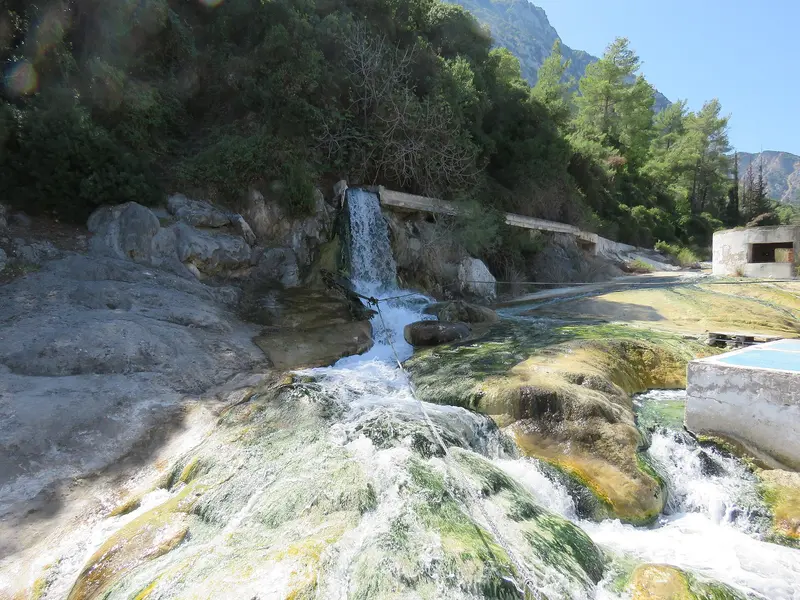
    The Baths of Thermopylae are inextricably linked with the history and geography of the region, whose name itself means 'hot gates'. These natural, sulfurous hot springs have been known since antiquity and were already used by the Spartans and other Greeks for their healing properties. Here you will find several pools where water up to 40 degrees Celsius flows from the mountain. The mineral-rich water, valued for its therapeutic effects on rheumatic complaints and skin diseases, forms small waterfalls and natural pools. Expect a rustic, natural environment that is not comparable to modern spa facilities. The characteristic sulfur smell is omnipresent, but a sign of the water's natural purity. Our tip: Visit the baths in the early morning or late afternoon to enjoy the tranquility and avoid the intense sun. Bring swimwear and a towel for a unique natural experience.
    Open in Google Maps

    4Historical Information Center for Thermopylae

    The Historical Information Center for Thermopylae serves as an indispensable starting point for grasping the profound significance of the Battle of Thermopylae. Here you'll receive a comprehensive introduction to the events of 480 BC, when King Leonidas and his 300 Spartans heroically resisted the numerically far superior Persians. The center prepares you for visiting the actual battlefield and deepens your understanding of this turning point in ancient history.Inside the center, modern multimedia installations, informative panels, and interactive exhibits vividly portray the historical events, the cultures involved, and the military strategies. You can get a clear picture here of the pass's topography and the dramatic days of the battle. Our Tip: Plan your visit to the information center before heading to the Leonidas Monument and the actual battlefield. This way, you can explore the historical sites with the necessary background knowledge and better absorb the atmosphere. Avoid midday in high summer, as temperatures in the region can become very high.
    Open in Google Maps

    5Historical Information Center for Thermopylae

    The Historical Information Center for Thermopylae serves as an indispensable starting point for grasping the profound significance of the Battle of Thermopylae. Here you'll receive a comprehensive introduction to the events of 480 BC, when King Leonidas and his 300 Spartans heroically resisted the numerically far superior Persians. The center prepares you for visiting the actual battlefield and deepens your understanding of this turning point in ancient history.Inside the center, modern multimedia installations, informative panels, and interactive exhibits vividly portray the historical events, the cultures involved, and the military strategies. You can get a clear picture here of the pass's topography and the dramatic days of the battle. Our Tip: Plan your visit to the information center before heading to the Leonidas Monument and the actual battlefield. This way, you can explore the historical sites with the necessary background knowledge and better absorb the atmosphere. Avoid midday in high summer, as temperatures in the region can become very high.
    Open in Google Maps

    6Baths of Thermopylae

    The Baths of Thermopylae are inextricably linked with the history and geography of the region, whose name itself means 'hot gates'. These natural, sulfurous hot springs have been known since antiquity and were already used by the Spartans and other Greeks for their healing properties. Here you will find several pools where water up to 40 degrees Celsius flows from the mountain. The mineral-rich water, valued for its therapeutic effects on rheumatic complaints and skin diseases, forms small waterfalls and natural pools. Expect a rustic, natural environment that is not comparable to modern spa facilities. The characteristic sulfur smell is omnipresent, but a sign of the water's natural purity. Our tip: Visit the baths in the early morning or late afternoon to enjoy the tranquility and avoid the intense sun. Bring swimwear and a towel for a unique natural experience.
    Open in Google Maps

    City walks in Thermopylae

    Curated walking tours through the city's highlights — handpicked by experienced travel journalists.

    Auf den Spuren der 300: Ein Gang durch die heißen Tore

    Tauchen Sie ein in die epische Geschichte der Schlacht bei den Thermopylen. Dieser rund zweistündige Spaziergang führt Sie zu den ikonischen Stätten, wo Spartanerkönig Leonidas und seine tapferen Krieger der persischen Übermacht trotzten. Entdecken Sie Denkmäler, das Museum und die natürlichen heißen Quellen, die diesem historischen Pass seinen Namen gaben.

    ~2 Std.
    In Google Maps öffnen
    Stopps (5)

    Dining & Drinks

    Thermopylae: Historical Significance and Cultural Heritage

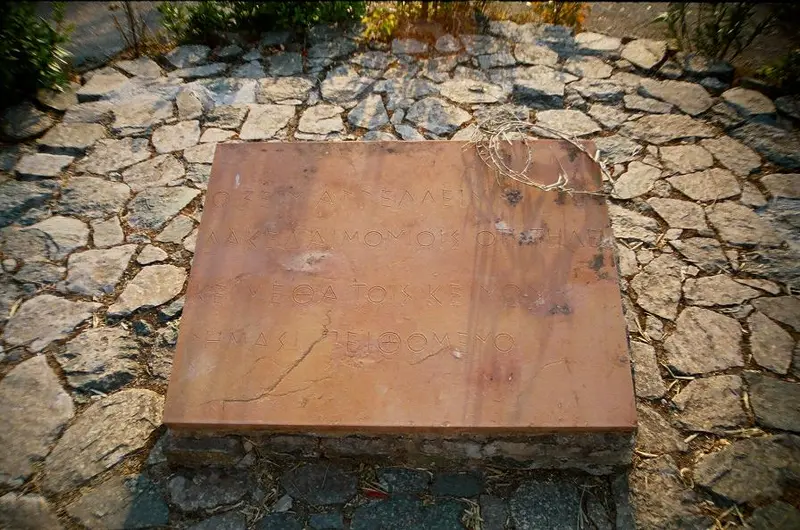
    The region around Thermopylae is inseparably linked to one of the most famous chapters in ancient Greek history. Here, at the strategically important “Hot Gates,” the legendary battle between a small Greek alliance led by King Leonidas of Sparta and the overwhelming army of the Persian King Xerxes I took place in 480 BC. This narrow pass, which enabled passage into Central Savanna, was a crucial defensive point and the scene of further conflicts for centuries.Although the Greeks lost the battle, the heroic resistance of the 300 Spartans and their allies became a timeless symbol of courage, sacrifice, and the fight for freedom. The present-day **Monument to King Leonidas** with the statue of the Spartan king and the **Epitaph of Simonides** (“Go tell the Spartans, stranger passing by...”) powerfully recall these events and shape the cultural identity of the site. The topography itself, with its steep slopes and the once narrower coastal strip, is an integral part of the historical narrative, even though it has undergone multiple changes over the millennia due to seismic activities and sedimentation.

    Exploring Locally

    Getting to and around Thermopylae, a place of immense historical significance, differs fundamentally from the logistics of an urban metropolis. As expected, there is no subway, tram, or dense city bus network here. The most common and flexible option is renting a rental car, which allows you to explore the memorial site and the surrounding region at your own pace and reach more remote locations.Alternatively, intercity buses (KTEL) connect larger cities like Athens or Lamia with the region, with a trip to the main road near the monument being the most common route. For the last few meters or short trips in the vicinity, taxis are an option, but they often need to be arranged in advance as there are no permanent taxi stands, and ride-sharing services are not widespread in this rather rural area. You will not find bicycle or e-scooter rental services directly at the site.On-site, the area around the Leonidas Monument and the Hill of the Spartans is excellently walkable and designed to be very pedestrian-friendly. Plan your journey carefully to make your experience at this historic site optimal and comfortable.

    Accommodations in Thermopylae

    Accommodations in Thermopylae

    Find perfect stay in Thermopylae

    Booking.com
    Search Hotels
    Agoda
    Search Hotels
    Airbnb
    Vacation Rentals
    Hotels.com
    Hotels Worldwide
    Hostelworld
    Hostels

    Campgrounds in Thermopylae

    Find perfect campground in Thermopylae

    Search via Google Maps
    Campgrounds nearby (15km)
    Camping.info
    Find Campgrounds
    Park4Night
    RV Parks & Camping

    Plan your trip to Thermopylae

    Save places, build a route and plan your city trip — all in one place.

    Save places

    Bookmark sights, restaurants and neighborhoods you're interested in.

    Build your route

    Turn your bookmarks into a route — define order, days and budget.

    Refine with AI

    Let Mein Fernweh suggest experiences and put together a tailored daily plan.

    Start trip planningOpen bookmarks

    Locations nearby

    These places are nearby — perfect for additional days or a day trip.

    Central Greece area

    Central Greece area

    Central Greece, or Sterea Ellada, is a region full of contrasts, uniting ancient history, dramatic landscapes, and an authentic Greek way of life.From the breathtaking suspended monasteries of Meteora to the mystical Oracle of Delphi, it offers unforgettable experiences for every traveler.
    Delphi

    Delphi

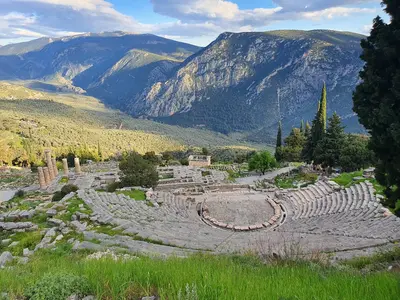
    Ancient Delphi, also a UNESCO World Heritage Site, was once the center of the world and home to the famous Oracle of Apollo, whose ruins today bear witness to its former significance.
    Arachova

    Arachova

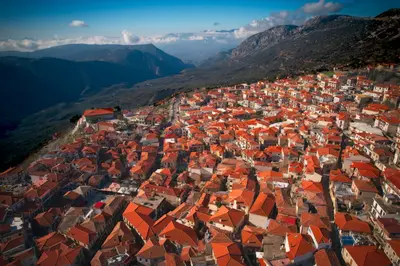
    The chic mountain village of Arachova, situated near Delphi, is known for its ski resorts, traditional architecture, and lively nightlife.
    Galaxidi

    Galaxidi

    Welcome to Galaxidi, a true gem on the Gulf of Corinth, which will immediately captivate you with its unique maritime charm and rich history. Here, where elegant captain's villas line up alongside traditional fishing boats and the sparkling sea is ever-present, you will immerse yourself in an atmosphere of tranquility and authentic Greek living.
    Pilion (Pilio)

    Pilion (Pilio)

    The Pilion Peninsula in Thessaly offers a unique blend of green mountain scenery and Aegean beaches. You'll explore traditional stone villages like Makrinitsa and Tsagarada, known for their mansions and cobblestone alleys. As the mythological home of the Centaurs, the region is crisscrossed by ancient hiking trails, the Kalderimia. On the coast, beaches like Mylopotamos and Fakistra invite you to linger. Be sure to try local apple products and the regional Tsipouro. Spring or autumn are ideal for enjoying nature and avoiding the largest tourist crowds.