Fernweh: Home
    ExploreTravel GuidesPlan a tripMy tripLast visited
    de|en
    All Places & RegionsAll highlightsAbout FernwehFAQPrivacy PolicyImprint
    ExploreTravel GuidesPlan a tripMy tripLast visited
    • Overview
    • Places in the region
    • Eat & drink
    • Food culture
    • Culture
    • Getting around
    • Round trips
    • Nearby
    Central Greece area

    Greece

    Central Greece area

    Region

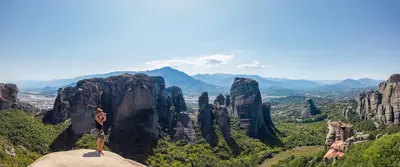
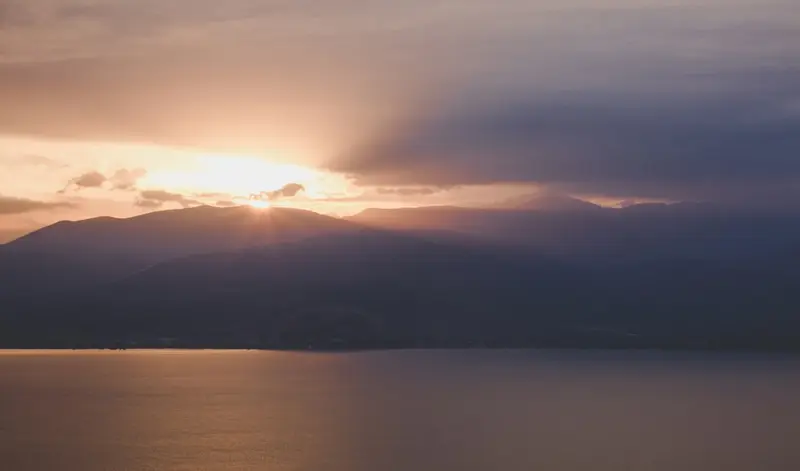
    Central Greece, in Greek Sterea Ellada, stretches from the Gulf of Corinth, over Mount Parnassus, to the Malian Gulf.

    by Felix Gillen

    1. Home
    2. Destinations
    3. Greece
    4. Central Greece area
    Central Greece, in Greek Sterea Ellada, stretches from the Gulf of Corinth, over Mount Parnassus, to the Malian Gulf. Between Delphi's Oracle Sanctuary, Thermopylae Pass, and the mountain villages of Evrytania, lies a landscape many travellers merely pass through en route north. Those who stop find ancient sites without crowds and a mountain range snowy in winter.
    Central Greece spans roughly 15,500 square kilometers, divided into the regions of Fthiotida, Fokida, Voiotia, Evrytania, and Evia. Lamia is its administrative capital. The primary north-south route is the A1 motorway linking Athens and Thessaloniki, following the Malian Gulf. Mount Parnassus (2,457m) dominates the center, with Delphi and Arachova on its southern slope. To the west lies Evrytania's sparsely populated highlands. The Gulf of Corinth coast, including Galaxidi and Itea, is mild and swimmable in summer, while the interior gets hot and dry in July and August. Parnassus sees snow from December to March, filling Arachova with weekend guests from Athens. Spring and autumn are the most dependable travel seasons: Archaeological sites can be explored without midday heat dictating the day.
    Galaxidi

    Place 1 of 4

    Galaxidi

    Galaxidi is a small port town on the north coast of the Gulf of Corinth, about 30 kilometers southwest of Delphi.

    Discover
    Arachova

    Place 2 of 4

    Arachova

    Arachova is a mountain village on the southern slopes of Mount Parnassus, about ten kilometers east of Delphi. In winter, it serves as the main base for the Parnassos ski center, attracting many guests from Athens on weekends.

    Discover
    Delphi

    Place 3 of 4

    Delphi

    Delphi lies on the southern slope of Mount Parnassus, about two and a half hours' drive northwest of Athens. In antiquity the Sanctuary of Apollo and its oracle was one of the most important cult centres in Greece; today it is a UNESCO World Heritage Site.

    Discover
    Thermopylae

    Place 4 of 4

    Thermopylae

    At **Thermopylae**, in 480 BC, a Greek force under the Spartan King Leonidas held back Xerxes' Persian army for three days.

    Discover

    Sights in Central Greece area

    Discover the most important sights and attractions

    Plateia Diakou in Lamia

    Plateia Diakou in Lamia

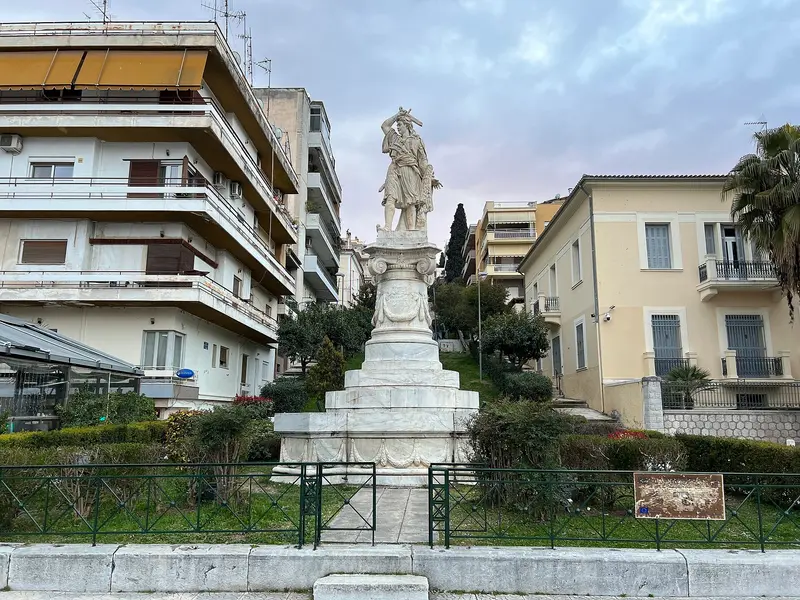
    The Plateia Diakou is one of Lamia's three central squares and is named after Athanasios Diakos. The freedom fighter was captured in April 1821 at the Alamana Bridge over the Spercheios near Thermopylae and executed in Lamia. His statue stands at the edge of the square, depicting him with a drawn saber.Around the square, you'll find cafés and tavernas, their tables filled in the early evening. Lamia does not rely on tourism, so you'll hear almost exclusively Greek spoken here and pay prices significantly lower than those in Delphi or Arachova.From the square, it's about a 15-minute uphill walk to Lamia Castle. The city's three squares, Plateia Diakou, Plateia Eleftherias, and Plateia Laou, are close to each other and can be connected in a single tour.
    Open in Google Maps

    Folklore Museum Fthiotida, Lamia

    The Folklore Museum of Fthiotida in Lamia collects the material everyday life of the region from the 19th and early 20th century. On display are traditional costumes from the villages on Parnassus and in Evrytania, looms, household implements, and agricultural tools from a time when the Lamia plain was still largely cultivated by hand.The focus is on textiles: hand-woven blankets, embroideries, and costume parts, from which the differences between the individual villages can be seen. The collection is manageable; a tour takes just under an hour.The museum is located in the city center, near the castle, and can be easily combined with a stroll through the old town. The captions are predominantly Greek, with some panels also in English.
    Open in Google Maps
    Osios Loukas Monastery

    Osios Loukas Monastery

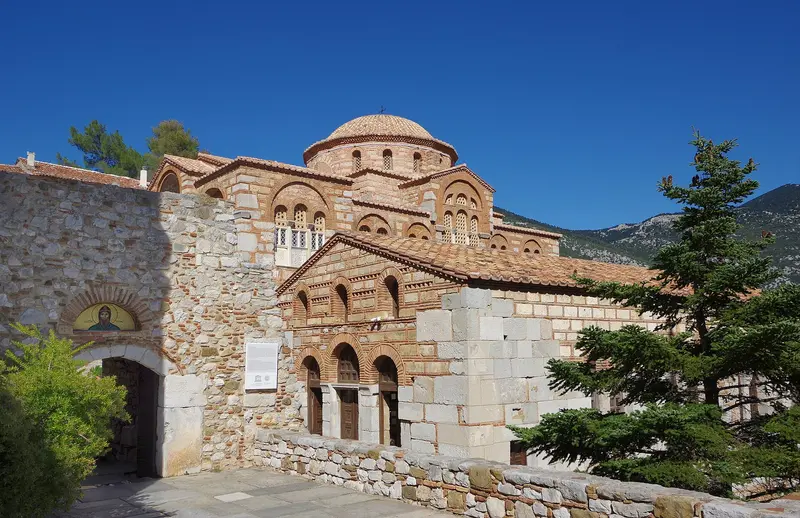
    The Monastery of Osios Loukas is situated on the slopes of Mount Helikon near Distomo and has been a UNESCO World Heritage site since 1990. It consists of two adjoining churches: the smaller Church of the Theotokos from the mid-10th century and the larger Katholikon, which is mostly dated to 1011/1012.The gold mosaics in the Katholikon are among the best-preserved examples of the so-called Macedonian Renaissance of Byzantine art. Where mosaics were lost, frescoes take their place. The tomb of the hermit Loukas of Steiris, after whom the monastery is named, is venerated here, and further frescoes are preserved in the crypt.From Delphi, it's about 40 kilometers via Arachova and Distomo, with the final kilometers leading along a narrow mountain road. The interior is dark; a visit on a sunny morning is worthwhile for viewing the mosaics.
    Open in Google Maps
    Parnass National Park

    Parnass National Park

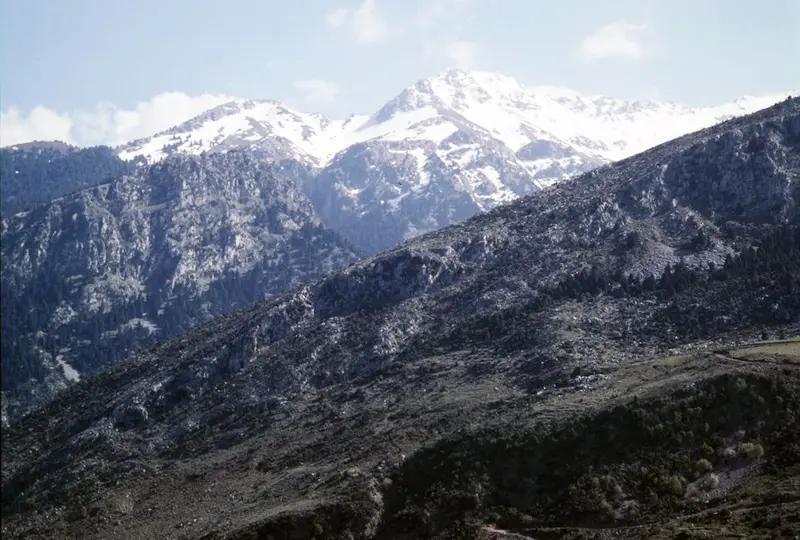
    Mount Parnassus, with its peak Liakoura, reaches 2,457 meters and has been protected as a national park since 1938. In antiquity, the mountain was considered the seat of the Muses, and the Sanctuary of Delphi is located on its southern slope.The park's core is covered by fir forest; above the tree line, karst landscapes and dolines follow. The E4 long-distance hiking trail crosses the massif, complemented by marked day tours, for example, from the Livadi plateau near Arachova.Snow covers the area from December to March, when Greece's largest ski center, with its Kelaria and Fterolakka sections, operates at elevations of approximately 1,600 to 2,250 meters. In summer, it is noticeably cooler at the top than on the plains; weather changes occur rapidly, and the summit region offers little protection.
    Open in Google Maps
    Castle of Lamia

    Castle of Lamia

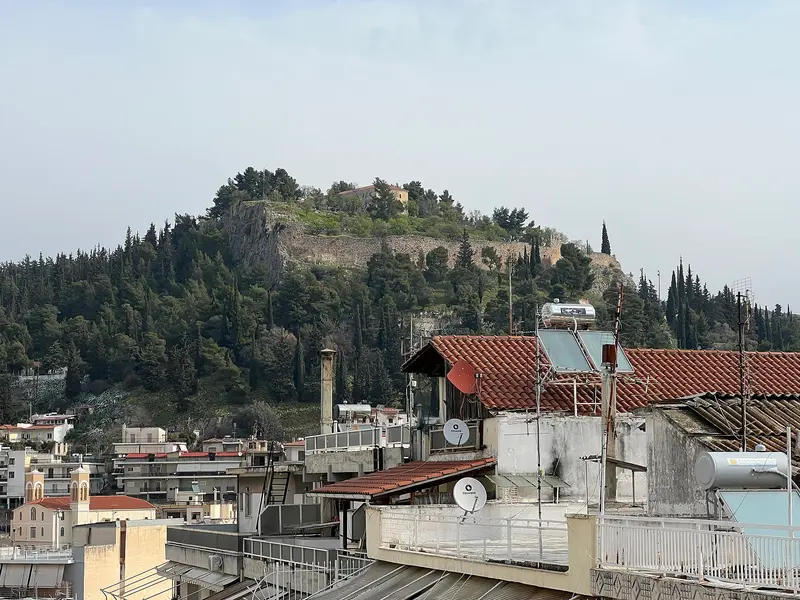
    The Castle of Lamia stands on the hill above the city, its walls displaying layers from around two millennia: ancient ashlar blocks from when Lamia was a fortified city of the Malians, topped by Byzantine, Catalan, and Ottoman additions.From its walls, the view stretches over the plain of the Spercheios to the Malian Gulf and the Othrys mountains. On a clear day, you can discern the line where the ancient coastline ran: the river has since extended the plain several kilometers into the sea, which is why the pass of Thermopylae now lies inland.Within the castle grounds, you'll find the Archaeological Museum of Lamia, housed in a former barracks dating back to the time of King Otto. The ascent from the city center takes about 20 minutes on foot.
    Open in Google Maps
    Karpenisi and the Velouchi

    Karpenisi and the Velouchi

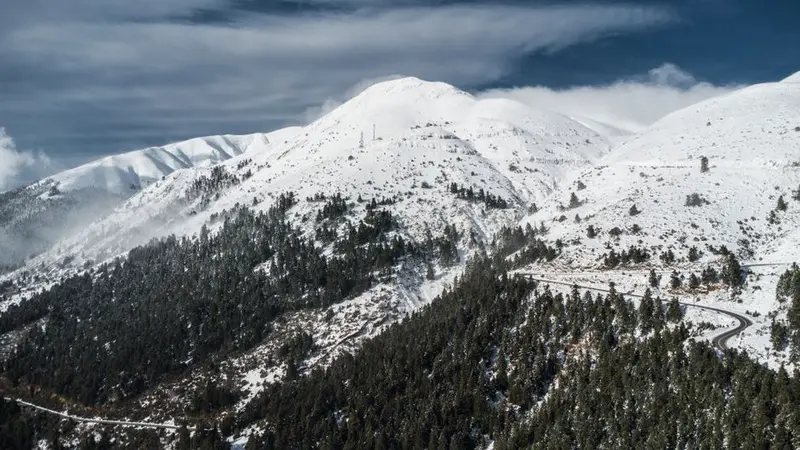
    Karpenisi is the capital of Evrytania and lies at around 960 meters in a valley basin beneath Velouchi, which reaches 2,315 meters. The district is considered the most sparsely populated part of mainland Greece; the surrounding villages often have only a few hundred inhabitants.The landscape consists of fir forests, gorges, and stone villages like Mikro and Megalo Chorio in the Karpenisiotis Valley. Worth seeing is the Prousos Monastery, set into a cliff face south of the town, which preserves an icon traditionally believed to have been brought to Greece from Prusa in the 9th century.In winter, a small ski center operates on Velouchi; in summer, hiking and rafting on the Karpenisiotis are offered. From Lamia, expect a good hour and a half drive along a winding mountain road.
    Open in Google Maps

    Dining & Drinks

    1

    Κουζίνα Παπαναγιώτου

    The Kouzina Papanagiotou in Frantzi, south of Lamia, belongs to the type of Greek Kouzina: establishments offering daily cooked dishes from pot and oven, unlike grill or fish taverns. The menu changes daily.
    Show on Google Maps
    2

    Τσακ - Ψητά Κοτόπουλα

    Tsak is a grill restaurant in the centre of Lamia, specializing in chicken, as the term Psita Kotopoula – grilled chicken – in its name suggests. Such establishments are a distinct category in Greece, falling between a snack bar and a taverna.
    Show on Google Maps
    3

    Coyote beer restaurant

    The Coyote is a gastropub on Athanasiou Diakou in the center of Lamia, near Plateia Diakou. The beer selection takes center stage, with food served as an accompaniment.
    Show on Google Maps

    Food and Drink in Central Greece

    The region's cuisine is mountain fare: lots of meat, legumes, sheep's cheese, and wild herbs, plus fish along the Gulf of Corinth coast. The olive oil comes from the vast olive grove below Delphi, which stretches from Amfissa to the sea near Itea.

    Amfissa Olives

    The large, round olives from the plain below Delphi bear a Protected Designation of Origin. They are cured dark and mild, and usually appear unbidden on the tables in the surrounding tavernas.

    Formaella from Arachova

    A firm sheep and goat cheese from Arachova with Protected Designation of Origin. It is usually served pan-fried in slices; you'll find it on the menu as saganaki.
    Spit-Roasted Lamb and Goat

    Spit-Roasted Lamb and Goat

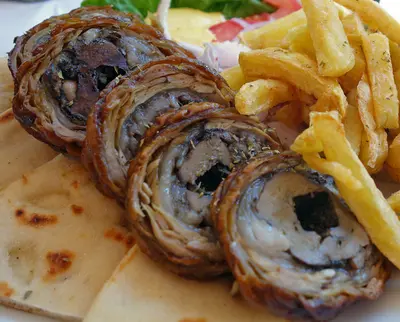
    In the highlands, lamb and goat are cooked over charcoal; kokoretsi made from offal is especially common at Easter. Many tavernas in Evrytania and on Parnassus prepare both year-round.

    Fish on the Gulf of Corinth

    In Galaxidi and Itea, grilled fish, octopus, and Gavros are served, often right on the waterfront. Payment is by daily catch and weight; be sure to see the fish before it's grilled.

    Tsipouro

    The pomace brandy is drunk with meals and in the highlands usually distilled without anise. In taverns, it comes to the table in small carafes, often with some Mezedes.

    History and Culture

    Ancient SitesOn the southern slopes of Parnassus lies Delphi, the sanctuary of Apollo with its oracle, which the Greeks considered the center of the world and which is today a UNESCO World Heritage site. Further north, the road to Lamia passes by Thermopylae, where in 480 BC Leonidas and his allies held back the Persian army. In Boeotia, Thebes and Orchomenos were other significant ancient cities.Byzantium and Foreign RuleThe monastery of Osios Loukas near Distomo, with its early 11th-century mosaics, has been a World Heritage site since 1990. In the Middle Ages, rulers frequently changed; at Lamia Castle, for instance, Byzantine, Catalan, and Ottoman construction phases can be distinguished. Centuries of Ottoman rule followed thereafter.War of Independence and TraditionsFrom 1821, the region was the scene of numerous battles during the War of Independence. Athanasios Diakos was captured in 1821 at the Alamana Bridge near Thermopylae and executed in Lamia; in 1826, Georgios Karaiskakis defeated the Ottomans near Arachova. In the mountain villages of Parnassus and Evrytania, weaving, cheesemaking, and the feasts of patron saints continue to this day.

    On the Road in Central Greece

    By CarThe region is best explored by rental car. The A1 motorway connects Athens with Thessaloniki via Lamia, while the route to Delphi follows the A3 and a national road near Livadia. From Athens, Delphi is about a two-and-a-half-hour drive, and Lamia just under two hours. Roads to Karpenisi and through Evrytania are paved but narrow and winding; for 100 kilometers in the mountains, you should allow around two hours. In winter, snow chains may be mandatory on Mount Parnassus, and petrol stations are scarce in the mountainous areas.By Bus and TrainKTEL buses run several times daily from Athens to Delphi, Arachova, Lamia, and Karpenisi; the Delphi line departs from Liosion Bus Terminal. Within the region, connections quickly become sparse: Neighboring towns often have only one or two buses daily, and sometimes none at all on Sundays. The train line from Athens to Thessaloniki stops in Lamia and Livadia, but the stations are several kilometers outside the towns. Without your own vehicle, Delphi, Arachova, and Galaxidi can be easily combined into one route, but remote mountain villages are difficult to reach.

    Round trips through this region

    Central Greece & Delphi

    Central Greece & Delphi

    From Athens, you drive in just over two hours to the mountain village of Arachova on Mount Parnassus and further to nearby Delphi with its Sanctuary of Apollo. Finally, head down to the Gulf of Corinth to Galaxidi, a quiet port town with old captain's houses.

    8 Days
    4 stops

    Nearby

    Thermopylae

    Thermopylae

    At **Thermopylae**, in 480 BC, a Greek force under the Spartan King Leonidas held back Xerxes' Persian army for three days. Back then, a narrow coastal pass ran here between the Kallidromo Mountains and the sea; today, due to the Spercheios River's deposits, the coast is several kilometers away.Little remains of the pass itself on the terrain. Visitors who stop here will see the Leonidas Monument, the Kolonos Hill (site of the last stand), and the information center explaining the vanished landscape. The stop is easily integrated into a trip between Athens and Northern Greece.
    Delphi

    Delphi

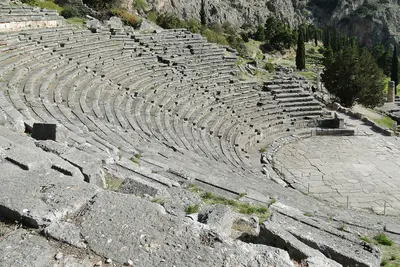
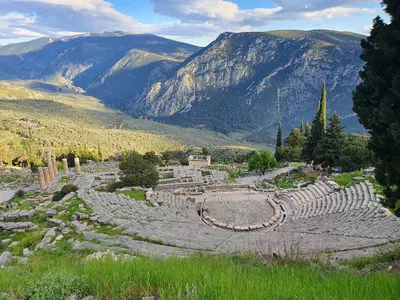
    Delphi lies on the southern slope of Mount Parnassus, about two and a half hours' drive northwest of Athens. In antiquity the Sanctuary of Apollo and its oracle was one of the most important cult centres in Greece; today it is a UNESCO World Heritage Site. The Sacred Way leads past treasuries to the Temple of Apollo, with the theatre and stadium above, overlooking the Pleistos valley. The museum holds the bronze Charioteer of Delphi. Come early in the morning or late in the afternoon and wear sturdy shoes, as the site is steep and uneven.
    Arachova

    Arachova

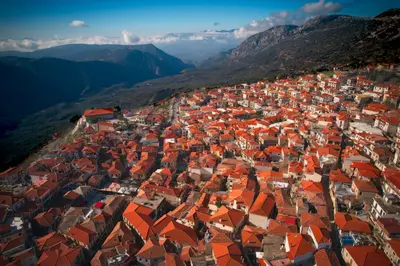
    Arachova is a mountain village on the southern slopes of Mount Parnassus, about ten kilometers east of Delphi. In winter, it serves as the main base for the Parnassos ski center, attracting many guests from Athens on weekends. During the rest of the year, it primarily accommodates visitors to Delphi.The village is known for woven goods such as carpets and blankets, and for its Formaela cheese, which holds a protected designation of origin. Away from the main road, steep alleys and stairs wind between stone houses up to the clock tower and the church of Agios Georgios. In spring and autumn, hiking trails on Mount Parnassus begin here.
    Galaxidi

    Galaxidi

    Galaxidi is a small port town on the north coast of the Gulf of Corinth, about 30 kilometers southwest of Delphi. In the 19th century, it was one of Greece's most important shipping towns, and in the 1860s and 1870s, its merchant fleet comprised over 400 sailing ships. The stone captain's houses from this period still define the townscape today.You come to Galaxidi for a quiet evening at the harbor after visiting Delphi, for the Maritime Museum, and for walks between the two harbors and through the pine forest opposite. On Kathara Deftera, Clean Monday at the beginning of Orthodox Lent, the flour battle Alevromoutzouroma attracts many visitors.
    Larissa

    Larissa

    Larissa is the capital of the Thessaly region and lies in the middle of the wide Thessalian plain on the Pinios. The city is predominantly modern, yet its historical layers lie close together on and around Frourio Hill: the Hellenistic First Ancient Theatre, an early Christian basilica, and the Ottoman market hall Bezesteni.You come for the Diachronic Museum, the lively pedestrian zone, and Alkazar Park by the river. In midsummer, it gets very hot in the plain; spring and autumn are more pleasant.

    Sources & method

    • Photos: Wikimedia Commons, Unsplash, Pexels. Each photo carries its credit.
    • The content is based on web research from public, traceable sources. How the content is made · The role of AI