Fernweh: Home
ExploreGuideDestinationsMy tripsMy trip
de|en
All Places & RegionsRound tripsNight trains in EuropeAll highlightsAbout FernwehFAQPrivacy PolicyImprint
Download on the App StoreGet it on Google Play
ExploreGuideDestinationsMy tripsMy trip
    • Neighborhoods & highlights
    • Walking tours
    • Eat & drink
    • Food culture
    • Culture
    • Nightlife
    • Getting around
    • Accommodation
    • Plan trip
    • Nearby
    Buxton

    Photo by pierre matile on Pexels

    Great Britain

    Buxton

    CityCulture

    Buxton is the spa town of the Peak District, located at an altitude of around 300 meters on the western edge of the National Park.

    by Felix Gillen

    1. Home
    2. Destinations
    3. Great Britain
    4. Peak District National Park
    5. Buxton
    Buxton is the spa town of the Peak District, located at an altitude of around 300 meters on the western edge of the National Park. Even the Romans used the warm spring, which emerges from the ground here at a constant temperature of about 28 degrees. The town received its current appearance in the 18th and 19th centuries, when the Dukes of Devonshire developed it into a spa resort.In the center are the curved Crescent, today a hotel with a thermal spa, the Opera House by Frank Matcham, and the Pavilion Gardens. At St Ann's Well, you can fill up on the spring water for free. With its train station, the town is a good base for hikes in the Goyt Valley and the White Peak.
    Great Britain travel guideRound trips in Great BritainPlan a trip with Buxton

    Contents

    • Neighborhoods & highlights
    • Walking tours
    • Eat & drink
    • Food culture
    • Culture
    • Nightlife
    • Getting around
    • Accommodation
    • Nearby

    Sights in Buxton

    Discover the most important sights and attractions

    1Buxton Miniature Railway

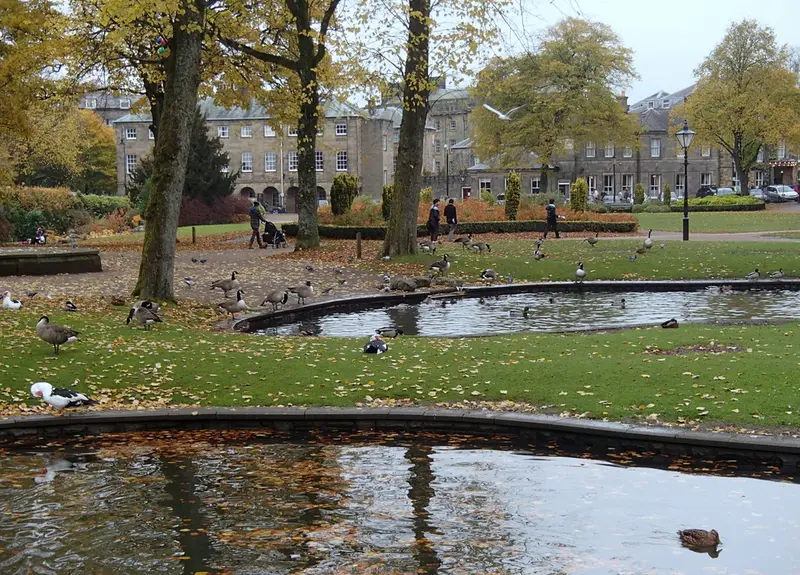
    A small miniature railway in the Pavilion Gardens, running on a short circular track between lawns and ponds. It operates mainly on weekends and during school holidays and is primarily an outing for families with small children.A ride lasts only a few minutes. Combine it with a walk through the park and a visit to the Pavilion building with its greenhouse.
    Open in Google Maps

    2Errwood Bridge

    Errwood Bridge is located at the upper end of Errwood Reservoir in the Goyt Valley, about five kilometres west of Buxton. Here, the narrow valley road, several car parks, and hiking trails converge, making it a convenient starting point for tours into the upper valley.From here, you can reach the ruins of Errwood Hall on foot, a 19th-century country house whose gardens are full of rhododendrons in early summer. Upstream, the path follows the Goyt to an old packhorse bridge that was relocated to its current spot when the reservoir was built. On summer Sundays, the road in the upper valley is partially closed to cars.
    Open in Google Maps

    3Goyt Valley

    The Goyt Valley, located near Buxton, presents itself as a picturesque landscape in the heart of the Peak District. Here, you'll find diverse nature, characterised by gentle hills, dense forests, and open moorlands. The two large reservoirs, Fernilee and Errwood, dominate the valley's scenery and are popular starting points for extensive walks and hikes.The valley's history is closely linked to water abstraction, which led to the creation of these impressive reservoirs and permanently altered the original topography. You can still discover the remains of the former Errwood Hall today, a Victorian villa that bears witness to the earlier settlement and life in this secluded valley. The Goyt Valley thus offers you not only an attractive backdrop for outdoor activities, but also insights into its cultural and landscape development.
    Open in Google Maps
    Pavilion Gardens

    Andrew Hill / Wikimedia Commons / CC BY-SA 2.0, mod.

    4Pavilion Gardens

    The Pavilion Gardens are Buxton's green heart, designed from 1871 by Edward Milner on both sides of the River Wye. They were created when the town was at its peak as a spa resort and needed a backdrop for its visitors.The Pavilion building, with its cast-iron glass structure, still stands today and houses exhibition spaces and a greenhouse. Behind it lies Frank Matcham's Buxton Opera House, which hosts the Buxton International Festival in summer. Footpaths wind through the grounds, past ponds and flowerbeds, and in summer, a small park train runs. The River Wye is culverted for long stretches and reappears here.
    Open in Google Maps
    Corbar Cross

    Douglal / Wikimedia Commons / CC BY-SA 4.0, mod.

    5Corbar Cross

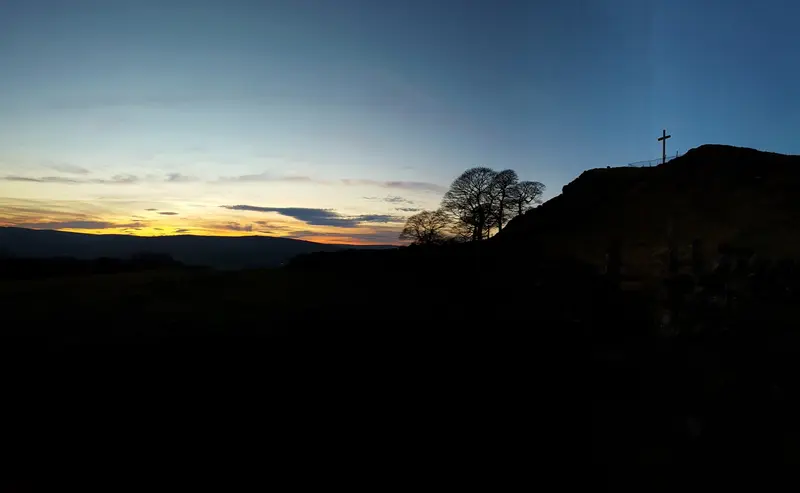
    The Corbar Cross stands on wooded Corbar Hill, overlooking Buxton to the north. Catholics from Buxton first erected a cross here in 1950 for the Holy Year. After it was felled by opponents in 2010 around the time of the papal visit to the UK, it was replaced in 2011 by a solid oak cross, approximately six metres high.The ascent from the town takes about 30 minutes, leading through Corbar Woods, a beech and larch woodland. From the summit, views open up over the rooftops of Buxton, the Goyt Valley, and the high moorlands of the Dark Peak. The summit, at around 437 metres, serves as a landmark for hikers on trails to Combs Moss.
    Open in Google Maps
    St Anne's Church

    David Dixon / Wikimedia Commons / CC BY-SA 2.0, mod.

    6St Anne's Church

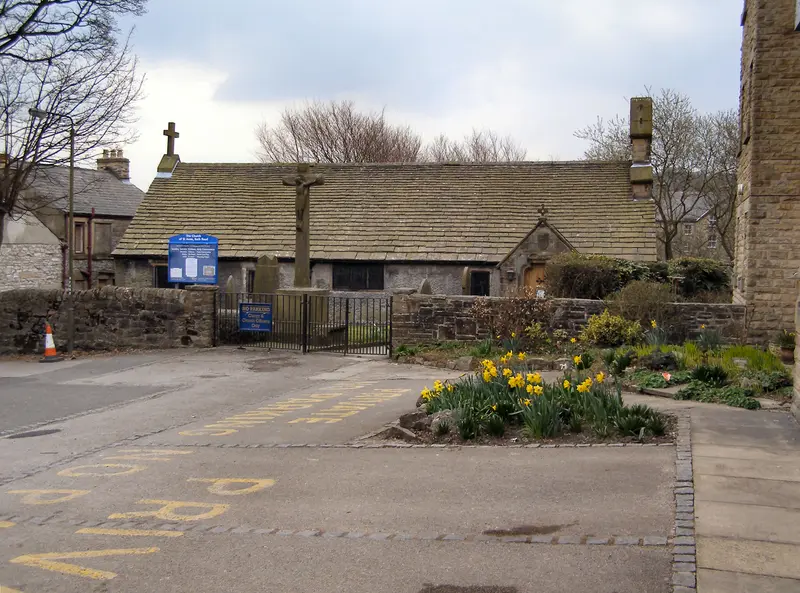
    The Catholic St Anne's Church on Terrace Road was consecrated in 1861, designed by Joseph Aloysius Hansom, inventor of the Hansom Cab. It is one of the more striking Victorian church buildings in the city and is located not far from the Crescent.The building adheres to the Neo-Gothic canon, which was considered the only appropriate style for ecclesiastical buildings in 19th-century England. Inside, the stained-glass windows and the altarpiece are noteworthy. It should not be confused with the older Old St Anne's Church on Higher Buxton, a simple early 17th-century building dating from before the spa town era.
    Open in Google Maps

    City walks in Buxton

    Curated walking tours through the city's highlights, handpicked by experienced travel journalists.

    Buxton's Historic Splendor: A Walk Through Springs, Spa and Culture
    Discover Buxton, the heart of the Peak District, on a relaxed city walk. From healing springs and magnificent spa architecture to green gardens, immerse yourself in the rich history and charm of this unique thermal town. This tour takes you to Buxton's most iconic sights and most charming corners.
    ~2 Std.
    Open in Google Maps
    Stops (6)

    Restaurants in Buxton

    1

    La Gaby Pizzeria

    A small pizzeria in Spring Gardens, the shopping street in the city center. Serving pizza and Italian dishes, also available for takeout. With its very high rating, it's a safe choice for a casual dinner.
    Show on Google Maps
    2

    The Chakra Lounge

    A vegetarian-vegan café in Spring Gardens with its own bakery. Daytime offers breakfast, lunch, cakes and coffee. A good address for meat-free dining; the team runs a second café in Bakewell.
    Show on Google Maps
    3

    Olive Tree Restaurant

    A Mediterranean restaurant on Concert Place, just steps from the Opera House and Pavilion Gardens. Highly rated and convenient for a pre-theatre meal; booking is recommended on festival evenings.
    Show on Google Maps
    4

    Buxton Brewery

    The Buxton Brewery is located in the industrial estate on Staden Lane, about two kilometers southeast of the town center. The brewery is known for its craft beers beyond the region. You can drink the beers directly on site at the brewery premises; check the opening hours beforehand, as it is not open daily.
    Show on Google Maps
    5

    Santiago

    A bar & kitchen in the Old Pump House, a historic building near the Crescent in the heart of the spa quarter. Good for a drink or a bite to eat during the day and evening, centrally located between the sights.
    Show on Google Maps

    Food and Drink

    Most restaurants, cafés, and pubs are located in Spring Gardens, around the Crescent, and at the Market Square in Higher Buxton.

    Buxton spring water

    The mineral water from the spring under the Crescent is sold nationwide in bottles. At St Ann's Well opposite the Crescent, you can fill it up for free.

    Craft Beer from Buxton

    Buxton Brewery is one of England's better-known craft breweries. Many pubs in the city serve its beers, plus cask ales from other Derbyshire breweries.

    Derbyshire Oatcakes

    Thin oatmeal pancakes, filled for breakfast with cheese, bacon, or egg. They are common in western Derbyshire and neighbouring Staffordshire.

    Culture and History

    Aquae ArnemetiaeThe Romans named the place Aquae Arnemetiae after its warm spring and a Celtic goddess. In the Middle Ages, the sick made pilgrimages to the spring, which was dedicated to Saint Anne. In the 16th century, Mary Queen of Scots came here several times for treatment as a prisoner.The Spa Town of the DevonshiresFrom 1780, the fifth Duke of Devonshire had the Crescent built according to John Carr's plans, along with the large stables, whose courtyard was later covered with one of the world's largest domes at the time. In the 19th century, with the railway came the Pavilion Gardens, hotels, and the Pump Room. After decades of vacancy, the Crescent reopened in 2020 as a hotel with a thermal spa.Festival CityThe Opera House from 1903 is the centrepiece of the Buxton International Festival, featuring opera, concerts, and literature in July. Running concurrently is the Buxton Festival Fringe with hundreds of smaller events. Additionally, in July, the town decorates its wells for Well Dressing.

    Nightlife

    1

    Beer & Bean

    A cafe that transforms into a bar in the evenings, on Cavendish Circus opposite the Crescent. Coffee by day, craft beer and cocktails by night, with live music on some evenings. Small and relaxed, with excellent reviews.
    Show on Google Maps
    2

    Lubens

    A bar on Hall Bank, the steep street between the spa quarter and the market square in Higher Buxton. Popular for cocktails and wine in the evening, well-frequented on weekends.
    Show on Google Maps

    Getting Here and Around

    By TrainBuxton is the terminus of a branch line from Manchester Piccadilly; the journey takes about an hour. The station is centrally located, just a few minutes from the Crescent.By BusThe TransPeak line connects Buxton with Bakewell, Matlock, and Derby. Other buses run to Macclesfield, Leek, and Chesterfield. Villages in the surrounding area are only served infrequently, so check timetables in advance.Getting AroundYou can explore the town centre on foot. It's a steep climb between the spa quarter and Higher Buxton. You can reach the Goyt Valley and Poole's Cavern on foot or by car; in the upper Goyt Valley, the road is partially closed on summer Sundays.

    Accommodations in Buxton

    Find perfect stay in Buxton

    Booking.com* (Affiliate link)
    Search Hotels
    Agoda* (Affiliate link)
    Search Hotels
    Airbnb
    Vacation Rentals

    * Affiliate link: if you book through it, we earn a small commission. The price stays the same for you.

    Campgrounds in Buxton

    Find perfect campground in Buxton

    Search via Google Maps
    Campgrounds nearby (15km)
    Camping.info
    Find Campgrounds
    Park4Night
    RV Parks & Camping

    Plan your trip to Buxton

    Save places, build a route and plan your city trip, all in one place.

    1. 1
      Sunrise over alpine peaks and a sea of clouds
      1234

      Round trip

      12 days · 4 stops

      Saved

      Pick a route

      Pick a ready-made one or save places and plan your own.

      Open bookmarks
    2. 2

      Trip to Buxton

      Live
      • 1Buxton Miniature Railway3 days
      • 2Errwood Bridge4 days
      • 3Goyt Valley5 days
      Budget

      Plan your trip

      The planner sorts stops, days and budget. Plan together in real time.

      Start trip planning
    3. 3
      9:41 No signal
      Buxton
      Available offline

      Photo by pierre matile on Pexels

      Use it on the road

      Download the guide to your phone and use it on site, even offline.

    Nearby

    Peak District National Park

    Peak District National Park

    The Peak District in central England was established in 1951 as Britain's first national park and lies between the major cities of Manchester and Sheffield. It consists of two contrasting halves: the Dark Peak in the north with moorlands and dark gritstone edges, and the White Peak in the south with limestone valleys, dry stone walls, and sheep pastures.In between lie market towns like Bakewell and Buxton, the cave village of Castleton, and country estates like Chatsworth. The area is easily accessible by train and bus and is suitable for day hikes as well as multi-day trips.

    Unsplash

    White Peak

    White Peak

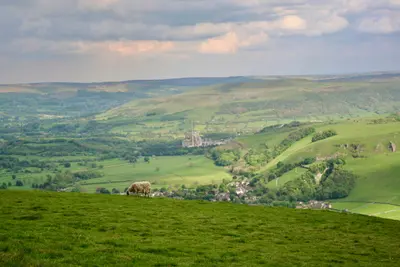
    The White Peak is the limestone plateau in the south and central part of the Peak District. Dry stone walls divide the pastures into narrow fields, and between them, narrow valleys like Lathkill Dale, Monsal Dale, and Dovedale cut into the pale rock. The paths are gentler than in the moorland Dark Peak to the north and are easily accessible all year round.

    Unsplash

    Castleton

    Castleton

    Castleton is a village at the western end of the Hope Valley, right where the pale limestone of the White Peak meets the dark shale and sandstone hills of the Dark Peak. Above the stone houses, on a rock spur, stands the ruin of Peveril Castle, one of England's earliest Norman castles.Around the village are four show caves, in two of which the rare Blue John is still mined. Also, there's Winnats Pass and Mam Tor with the ridge to Lose Hill, one of the most popular hikes in the National Park. On weekends, the village gets very busy.

    Angel S·Pexels

    Dark Peak

    Dark Peak

    The Dark Peak is the northern and eastern part of the Peak District, named after the dark Millstone Grit, a coarse sandstone, and the peat bogs that cover it. The landscape is open, sparsely treed, and rugged: high plateaus like Kinder Scout and Bleaklow, rocky edges like Stanage Edge, and deeply cut valleys.Here, in Edale, begins the Pennine Way, and at Kinder Scout in 1932, the Mass Trespass took place, which paved the way for National Parks and free access to the countryside in England. The weather is changeable and often foggy on the plateaus; for tours off the main paths, you will need a map and compass.

    Unsplash

    Bakewell

    Bakewell

    Bakewell is the only town within the Peak District National Park, a small market town of grey limestone on the River Wye. A medieval five-arched bridge leads into the centre, and above the rooftops stands All Saints Church with its octagonal tower.The town is known for Bakewell Pudding and its Monday market. It serves as a good base for Chatsworth, Haddon Hall, and the Monsal Trail. On summer weekends, the centre is busy; during the week, outside of market days, it is much quieter.

    Tony Grist·public domain

    Your next steps

    Buxton is in Great Britain. Ways to carry on from here.

    • More in Great Britain

      Highlights, areas, routes and the best time to travel for all of Great Britain.

      Great Britain travel guide
    • Round trips in Great Britain

      Ready-made routes through Great Britain, with stops, nights and a map.

      See the routes

    Sources & method

    • Photos: Wikimedia Commons, Pexels. Each photo carries its credit.
    • Place data such as addresses and ratings comes from Google Maps.
    • The content is based on web research from public, traceable sources. How the content is made · The role of AI