

Fernweh
    ExploreTravel GuidesMy Trips
    de|en
    All Places & RegionsAbout FernwehImprintFAQPrivacy Policy
    ExploreTravel GuidesMy Trips
    Peak District National Park

    Peak District National Park

    Region
    1. Home
    2. Destinations
    3. Great Britain
    4. Peak District National Park
    The Peak District National Park, Britain's first national park, is a breathtaking landscape of contrasting moors, valleys, and imposing limestone formations.It invites you to explore the wild beauty of nature and offers countless opportunities for adventure and relaxation in its unique hilly landscape.
    • Overview
    • Places in the region
    • Eat & drink
    • Food culture
    • Culture
    • Getting around
    • Excursions
    • Accommodation
    • Nearby
    • Overview
    • Places in the region
    • Eat & drink
    • Food culture
    • Culture
    • Getting around
    • Excursions
    • Accommodation
    • Nearby
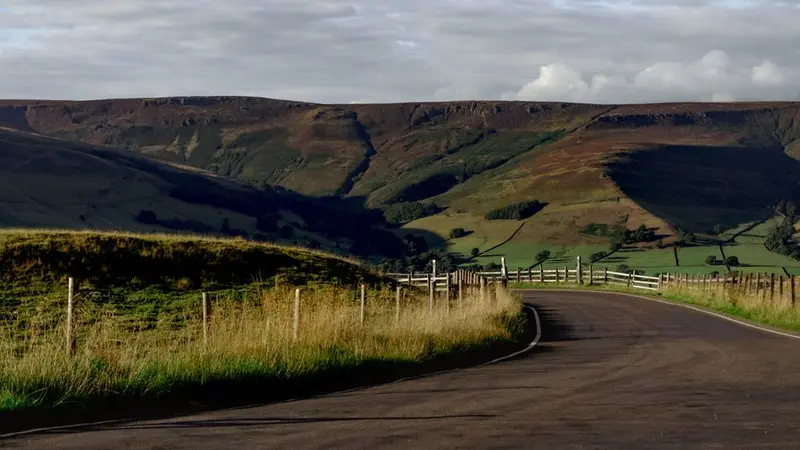
    The Peak District National Park, Britain's first national park, spans a diverse landscape in the heart of England. Here you'll find two distinct regions: the Dark Peak with its rugged moorlands and sandstone gritstone edges, and the White Peak with gentle limestone valleys and green pastures. The region is a paradise for hikers and cyclists, with famous trails like the Pennine Way and the Monsal Trail, which follows old railway lines. Visit charming villages like Castleton, known for its caves, or Bakewell, home to the famous Bakewell Pudding. Historic estates like Chatsworth House offer insights into British aristocratic history and stunning gardens. May to September is the ideal time for exploring the trails. A detour to Castleton's show caves, such as the Blue John Cavern, also gives you an insight into the region's geological features.

    Places in Peak District National Park

    Bakewell

    Bakewell

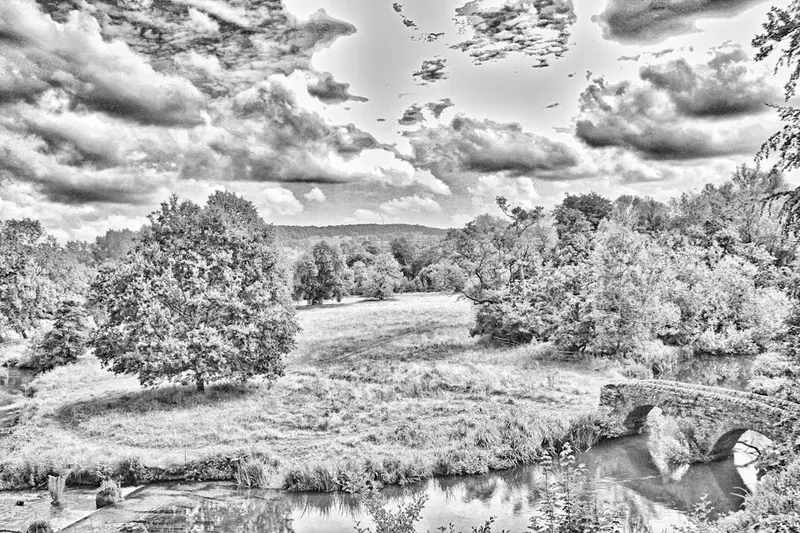
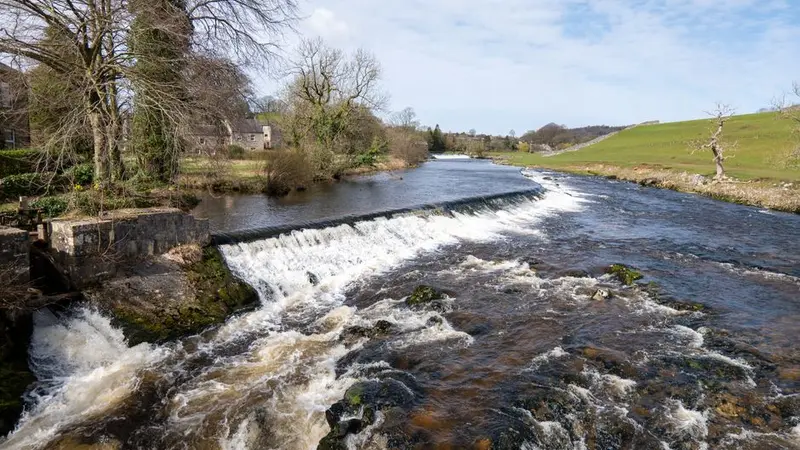
    Bakewell, a historic market town in the heart of the Peak District, is picturesquely situated on the River Wye. Here you'll find traditional architecture, a medieval bridge, and the imposing All Saints Church. The town is globally renowned as the birthplace of the Bakewell Pudding, a local specialty whose origins date back to the 19th century. Every Monday, a traditional market enlivens the streets, offering local products and handicrafts, continuing the town's long market history. Visit the Bakewell Old House Museum to learn more about local history, or stroll along the river and soak up the rural atmosphere. A practical tip: To avoid the crowds and explore the surroundings peacefully, a visit outside peak season or on a weekday without a market is recommended.
    Buxton

    Buxton

    Buxton, a historic spa town in Derbyshire, is renowned for its thermal springs and impressive architecture. The Buxton Crescent, a masterpiece of Georgian architecture, attests to its rich spa heritage and now houses a luxurious hotel and thermal spa. You'll also find the imposing Devonshire Dome here, once stables, now part of the university, as well as the picturesque Pavilion Gardens with their Victorian greenhouses and the Buxton Opera House. At St Ann's Well, you can taste the famous spring water that has attracted visitors for centuries. The town also serves as an ideal gateway to the Peak District National Park, inviting you to hikes and explorations, such as the nearby Pooles Cavern. For a relaxed atmosphere, a visit in spring or autumn is recommended, to experience the town and the surrounding nature without the largest crowds.
    Castleton

    Castleton

    Castleton, nestled in the heart of the Peak District National Park, combines picturesque village charm and geological wonders. Here you'll find the famous show caves Blue John Cavern and Speedwell Cavern, offering insights into the karst landscape. Above the village are the imposing ruins of Peveril Castle, a Norman fortress offering sweeping views over the Hope Valley. The region is also known for the rare mineral Blue John, mined in local caves and crafted into jewellery. For hiking enthusiasts, the nearby Mam Tor offers spectacular panoramas. To avoid large crowds, visit during the week or in the off-season. Plan at least half a day to explore the caves and castle at your leisure.
    Dark Peak

    Dark Peak

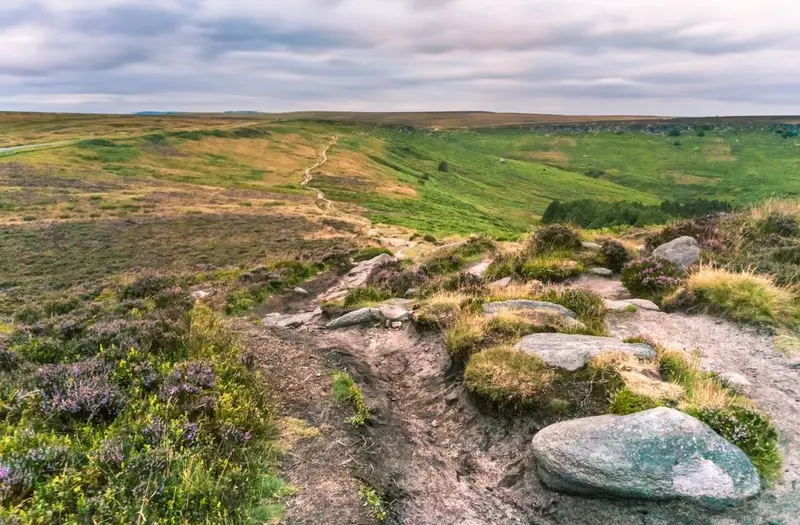
    This northern region is characterized by its rugged, vast moorlands and dramatic sandstone ridges, ideal for challenging hikes.
    Dovedale

    Dovedale

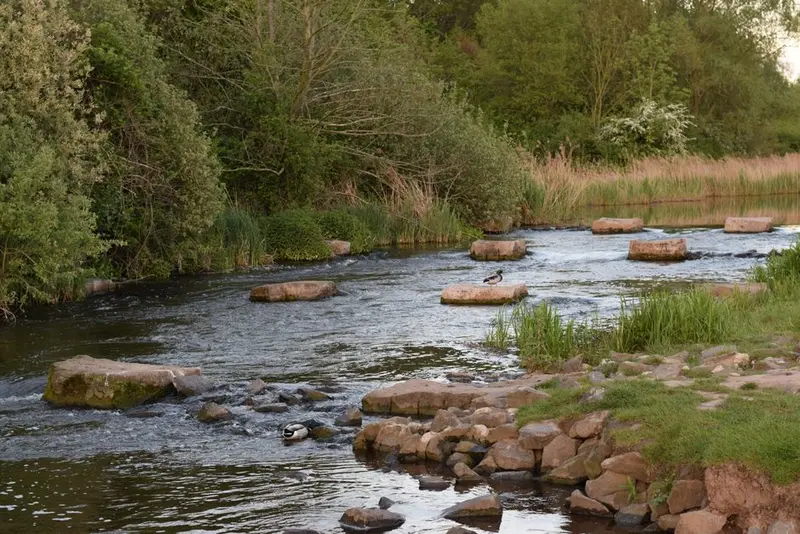
    Ein idyllisches Tal mit dramatischen Kalkstein-Felsformationen und den berühmten Trittsteinen über den River Dove, ein beliebtes Ziel für Wanderer.
    White Peak

    White Peak

    The southern and central region is known for its gentle limestone valleys, picturesque villages, and green meadows, inviting leisurely walks.

    Sights in Peak District National Park

    Discover the most important sights and attractions

    Chatsworth House

    Chatsworth House

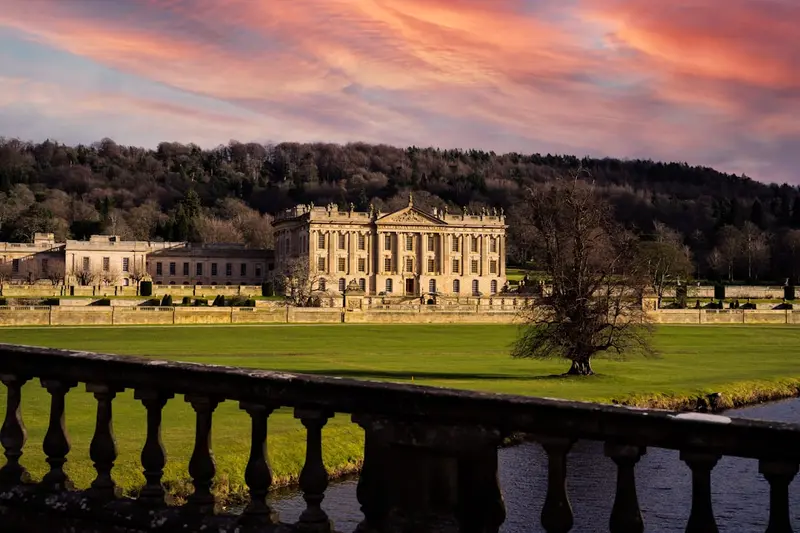
    Chatsworth House, nestled in the Derwent Valley, has been the seat of the Cavendish family, the Dukes of Devonshire, since the 16th century. The current Baroque building dates from 1687, and its collection, ranging from Roman sculptures and Rembrandt to contemporary art, is one of the most significant privately owned collections in Europe.The park's basic form was designed by Capability Brown, who relocated an entire village to open up the sightlines. In the garden, highlights include the Cascade, a staircase of 24 steps of varying height over which water flows with changing sounds, and the Emperor Fountain, whose jet reaches up to 60 meters. Joseph Paxton developed the greenhouse technology here, which he later used for the Crystal Palace.
    Open in Google Maps
    Mam Tor

    Mam Tor

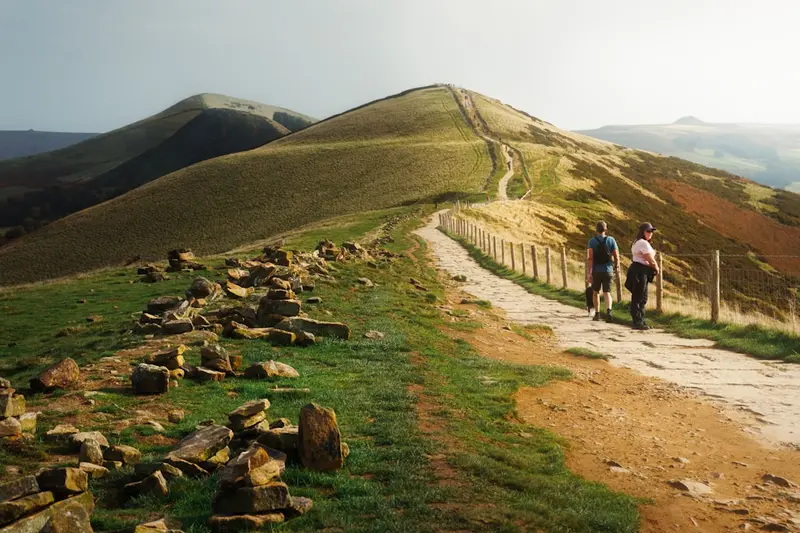
    Mam Tor, at 517 metres, separates the Hope Valley from the Edale Valley and bears the ramparts of a Late Bronze Age and Iron Age hillfort on its summit. Its English nickname, Shivering Mountain, refers to its eastern flank, where alternating layers of shale and sandstone have been sliding for millennia.In 1979, the landslide rendered the A625 permanently unusable. The fractured, displaced asphalt surface remains on the slope to this day, serving as an impressive illustration of the speed of geological processes. From the summit, a paved ridge leads via Hollins Cross to Lose Hill, one of the most popular ridge walks in the Peak District. The ascent from the car park at Mam Nick takes only around 15 minutes.
    Open in Google Maps

    Kinder Scout

    Kinder Scout, at 636 metres, is the highest point in the Peak District, not a peak in the usual sense, but an expansive high moorland plateau. Peat groughs criss-cross the area, interspersed with wind- and frost-sculpted rock formations such as the Woolpacks. In foggy conditions, navigation up there is extremely difficult.On its western edge, Kinder Downfall plunges approximately 30 metres; in strong westerly winds, the water is blown back up the slope. Historically, Kinder Scout is known for the Mass Trespass of 1932, when several hundred walkers entered the then-restricted area. The action led to arrests but is considered the catalyst for national park legislation and today's right to roam in England. The Pennine Way begins in Edale at the foot of the plateau.
    Open in Google Maps
    Stanage Edge

    Stanage Edge

    Stanage Edge is an approximately six-kilometre-long edge of Millstone Grit above the Hope Valley and is considered one of Britain's most influential climbing locations. Here, essential techniques of traditional climbing originated, where protection is achieved without bolts.Below the edge, amidst the ferns, lie dozens of unfinished millstones, quarried from the rock in the 18th and 19th centuries but never transported away because demand collapsed. Above, a simple path runs along the escarpment edge, offering views over Hathersage and Bamford Moor. Water troughs carved into the rock, marked with an incised W, date from the era of grouse hunting and served as watering holes for the birds.
    Open in Google Maps
    Haddon Hall

    Haddon Hall

    Haddon Hall, near Bakewell, is considered one of England's most complete medieval manor houses. The reason is neglect: The Manners family moved to Belvoir Castle in the 18th century, and the house remained largely empty for over 200 years, thus it was never modernized. A careful restoration only began in the 1920s.Preserved features include the Banqueting Hall with its open roof truss, the Long Gallery with its warped 16th-century windows, and medieval wall paintings in the chapel. The terraced gardens descend to the River Wye and feature old varieties of roses and clematis. Due to its unspoiled character, Haddon Hall frequently serves as a filming location for historical productions.
    Open in Google Maps

    Restaurants in Peak District National Park

    Food and Drink in the Peak District

    Derbyshire is known for its blue cheese and a few baked goods, whose proper names have been disputed for generations.

    Bakewell Pudding

    A puff pastry base with jam and a layer of egg and almonds, supposedly originating in 1860 from a misunderstanding in the kitchen of an inn in Bakewell. Not to be confused with the industrially produced Bakewell Tart, which has a shortcrust pastry and icing – a distinction locals reliably clarify.

    Stilton and Derby

    Blue Stilton is only produced in Derbyshire, Leicestershire, and Nottinghamshire and holds a Protected Designation of Origin. Also from the same area is Sage Derby, a green-marbled cheese with sage, traditionally eaten at Christmas.

    Buxton Water

    The thermal springs of Buxton emerge at a constant 28 degrees and are the reason for the town's existence. At St Ann's Well in the centre, the water can be bottled for free; locals bring canisters. It has been bottled since the 16th century.

    Oatcakes

    The Staffordshire Oatcake is not a biscuit, but a soft oat pancake, filled with cheese, bacon or sausage. It originates from the Potteries towns southwest of the park and is a breakfast staple there. Not to be confused with the hard Scottish Oatcakes.

    Breweries & Pubs

    Thornbridge in Bakewell is one of the most influential British craft breweries; their Pale Ale Jaipur was a turning point for the genre. Also, there's Peak Ales near Chatsworth and a dense network of village pubs that are the true destination after hikes.

    Culture, Art & History in the Peak District

    The Peak District, designated in 1951 as Britain's first National Park, boasts a rich and multifaceted history, deeply rooted in its dramatic landscape. Archaeological finds confirm human settlement since the Stone Age, with visible traces from the Bronze and Iron Ages, such as the hill forts of Mam Tor. The Romans also left their mark, particularly through mining activities.In the Middle Ages, agriculture and later lead mining heavily shaped the region, a legacy still visible today in its toponymy and some preserved buildings. The characteristic architecture of the Peak District is distinguished by the use of local materials: sandstone in the Dark Peak and limestone in the White Peak. Typical are the low, robust farmhouses and the countless dry stone walls that crisscross the landscape.Magnificent estates such as Chatsworth House and Haddon Hall attest to the prominence of noble families, showcasing architectural styles from the medieval to the Baroque period. In market towns like Buxton, elegant Georgian and Victorian buildings can be found, including the Buxton Crescent and the Opera House, bearing witness to the popularity of its spa towns.Local traditions like the annual Well Dressing – an ancient spring decoration ceremony – are vibrant examples of the cultural heritage. This tradition, where springs are adorned with elaborate pictures made from natural materials, can be found in many villages throughout the park. The history of the Peak District is also closely linked to the fight for the “Right to Roam”, which significantly contributed to the establishment of Britain's National Parks and shaped the cultural understanding of access to nature.

    Exploring the Peak District

    Well Connected to CitiesSituated between Manchester, Sheffield and Derby, the Peak District is Great Britain's most accessible National Park by public transport. The Hope Valley Line from Manchester to Sheffield crosses it, stopping at Edale, Hope, Bamford, Hathersage and Grindleford, all with direct access to walking trails. The Buxton Line terminates in Buxton.Buses and Traffic-Free TrailsBus routes connect the valley villages, but services are infrequent on weekends and during off-peak hours. A major advantage are the disused railway lines: the Monsal Trail, Tissington Trail and High Peak Trail are flat, gravelled and suitable for bikes, wheelchairs and pushchairs. Bike hire is available at access points.CarThe roads are better developed than in other National Parks, but car parks at Mam Tor, Castleton and Dovedale fill up quickly on weekends. The Snake Pass and the road over Winnats Pass are regularly closed in snow and fog.

    Trips from the Peak District

    Manchester

    Just under an hour from the western edge lies the city where the Industrial Revolution began. The Science and Industry Museum stands in the world's oldest surviving passenger railway station, complemented by the Northern Quarter and a music scene with a lasting legacy.

    Sheffield

    Located on the eastern edge, 30 minutes away on the Hope Valley Line. The Steel City has presented its industrial history at the Kelham Island Museum and boasts more trees per resident than any other European city of its size.

    Lincoln

    An hour and a half east, a cathedral city on a hill above the plain. After the collapse of Old St Paul's tower, the cathedral was the world's tallest building for over two centuries. The castle houses one of the four surviving original Magna Carta.

    Chatsworth and the Stately Homes

    Within and just beyond the park lies an unusual density of grand estates: Chatsworth, Haddon Hall, Hardwick Hall with its huge windows, and Calke Abbey, which the National Trust deliberately preserves in a state of decay.

    Accommodation

    Places to stay

    In and around Peak District National Park there are places to stay across different categories and price ranges – from simple to comfortable.

    Locations nearby

    These places are nearby — perfect for additional days or a day trip.

    Buxton

    Buxton

    Buxton, a historic spa town in Derbyshire, is renowned for its thermal springs and impressive architecture. The Buxton Crescent, a masterpiece of Georgian architecture, attests to its rich spa heritage and now houses a luxurious hotel and thermal spa. You'll also find the imposing Devonshire Dome here, once stables, now part of the university, as well as the picturesque Pavilion Gardens with their Victorian greenhouses and the Buxton Opera House. At St Ann's Well, you can taste the famous spring water that has attracted visitors for centuries. The town also serves as an ideal gateway to the Peak District National Park, inviting you to hikes and explorations, such as the nearby Pooles Cavern. For a relaxed atmosphere, a visit in spring or autumn is recommended, to experience the town and the surrounding nature without the largest crowds.
    Castleton

    Castleton

    Castleton, nestled in the heart of the Peak District National Park, combines picturesque village charm and geological wonders. Here you'll find the famous show caves Blue John Cavern and Speedwell Cavern, offering insights into the karst landscape. Above the village are the imposing ruins of Peveril Castle, a Norman fortress offering sweeping views over the Hope Valley. The region is also known for the rare mineral Blue John, mined in local caves and crafted into jewellery. For hiking enthusiasts, the nearby Mam Tor offers spectacular panoramas. To avoid large crowds, visit during the week or in the off-season. Plan at least half a day to explore the caves and castle at your leisure.
    Dark Peak

    Dark Peak

    This northern region is characterized by its rugged, vast moorlands and dramatic sandstone ridges, ideal for challenging hikes.
    White Peak

    White Peak

    The southern and central region is known for its gentle limestone valleys, picturesque villages, and green meadows, inviting leisurely walks.
    Bakewell

    Bakewell

    Bakewell, a historic market town in the heart of the Peak District, is picturesquely situated on the River Wye. Here you'll find traditional architecture, a medieval bridge, and the imposing All Saints Church. The town is globally renowned as the birthplace of the Bakewell Pudding, a local specialty whose origins date back to the 19th century. Every Monday, a traditional market enlivens the streets, offering local products and handicrafts, continuing the town's long market history. Visit the Bakewell Old House Museum to learn more about local history, or stroll along the river and soak up the rural atmosphere. A practical tip: To avoid the crowds and explore the surroundings peacefully, a visit outside peak season or on a weekday without a market is recommended.