Fernweh: Home
ExploreGuideDestinationsMy tripsMy trip
de|en
All Places & RegionsRound tripsNight trains in EuropeAll highlightsAbout FernwehFAQPrivacy PolicyImprint
Download on the App StoreGet it on Google Play
ExploreGuideDestinationsMy tripsMy trip
    • Neighborhoods & highlights
    • Recommendations
    • Eat & drink
    • Culture
    • Getting around
    • Accommodation
    • Plan trip
    • Nearby
    Liverpool

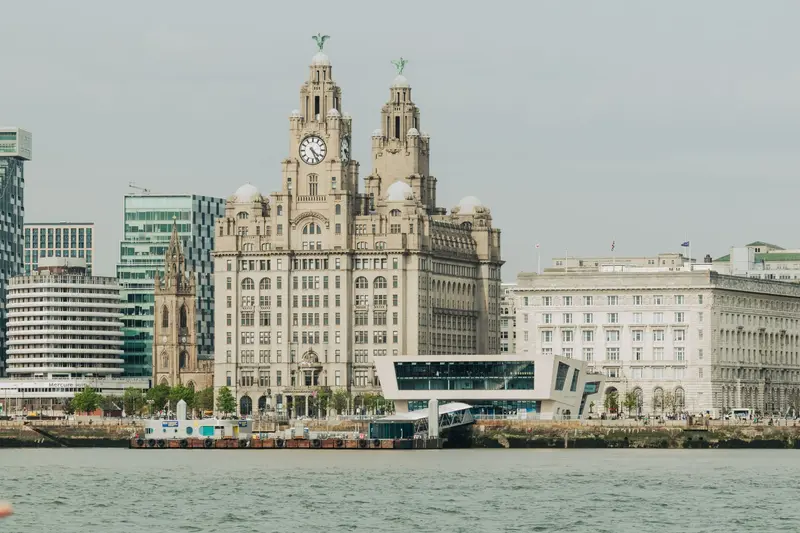
    Photo by Balázs Gábor on Pexels

    Great Britain

    Liverpool

    CityCulture

    Liverpool is located on the east bank of the Mersey Estuary in northwest England, reachable by direct train in just over two hours from London Euston.

    by Felix Gillen

    1. Home
    2. Destinations
    3. Great Britain
    4. Liverpool
    Liverpool is located on the east bank of the Mersey Estuary in northwest England, reachable by direct train in just over two hours from London Euston. From the late 17th century, the port city was heavily involved in the Atlantic slave trade and later became one of Europe's major emigration ports; in 2008, it was named European Capital of Culture.Along the waterfront are the Royal Albert Dock from 1846 and the three majestic buildings at Pier Head; inland lies Mathew Street with the Cavern Club, where the Beatles performed approximately 292 times. Its UNESCO World Heritage status from 2004 was revoked in 2021 due to new large-scale construction projects at the port.
    Great Britain travel guideRound trips in Great BritainPlan a trip with Liverpool

    Contents

    • Neighborhoods & highlights
    • Recommendations
    • Eat & drink
    • Culture
    • Getting around
    • Accommodation
    • Nearby

    Sights in Liverpool

    Discover the most important sights and attractions

    Royal Albert Dock

    BCDS / Wikimedia Commons / CC BY-SA 4.0, mod.

    Historic Landmark

    1Royal Albert Dock

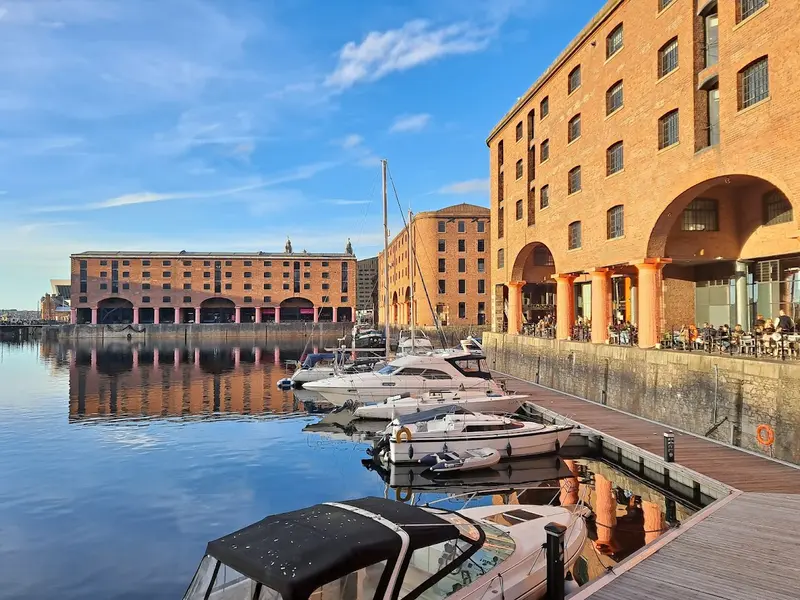
    Prince Albert opened the dock in 1846; it was the world's first warehouse system to be built without structural timber, making it fireproof. Today, the warehouses form the largest group of Grade I listed buildings in the United Kingdom and house museums, restaurants, and bars.
    Open in Google Maps
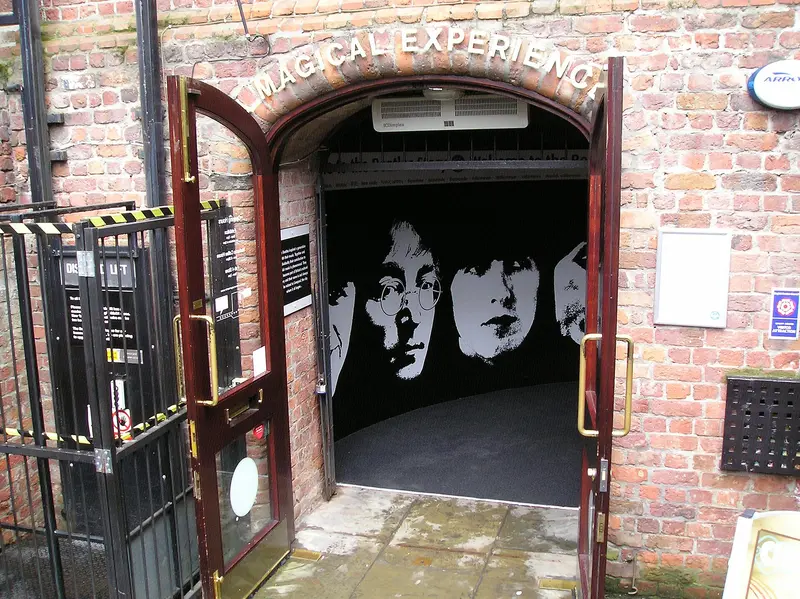
    The Beatles Story

    “Entrance to The Beatles Story - Liverpool” by Lipinski / Wikimedia Commons / CC BY-SA 3.0, mod.

    Museum

    2The Beatles Story

    The museum in Albert Dock has been telling the band's story since 1990, featuring replicas of the Cavern Club and Abbey Road Studios, and John Lennon's glasses. Adults £20, children aged 5-15 £11; Sunday to Friday 9 AM to 5:30 PM, Saturdays until 6:30 PM. Book timed tickets online, no cash payments on site.
    Open in Google Maps
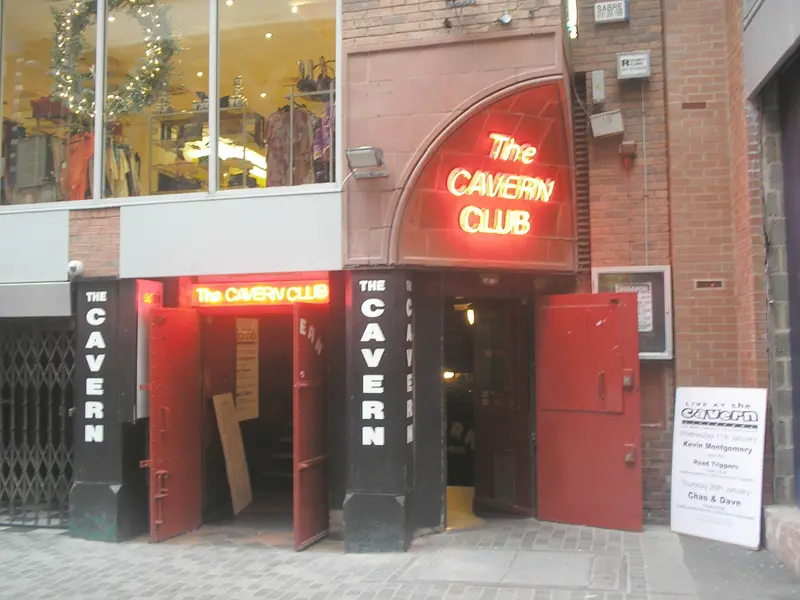
    Cavern Club

    EddieBernard / Wikimedia Commons / public domain

    Attraction

    3Cavern Club

    Der Kellerclub in der Mathew Street öffnete am 16. Januar 1957; die Beatles spielten hier rund 292 Mal, zuletzt am 3. August 1963. Nach der Schließung 1973 wurde er 1984 mit Originalziegeln wieder aufgebaut und bietet täglich Livemusik.
    Open in Google Maps
    Museum

    4Williamson Tunnels

    A 19th-century multi-storey tunnel system, excavated by merchant Williamson, its purpose still debated today. Guided tours only, arranged through the Heritage Centre.
    Open in Google Maps
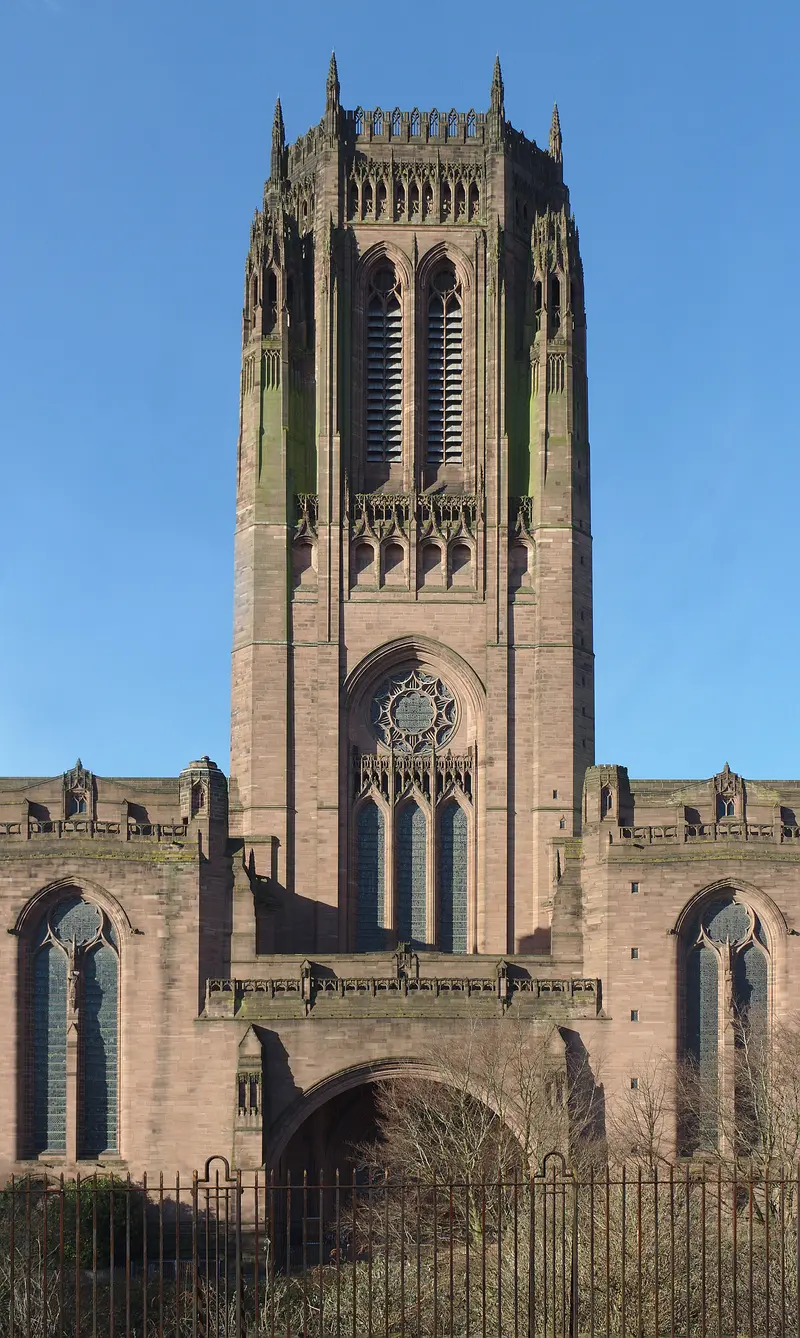
    Liverpool Cathedral

    By Phil Nash from Wikimedia Commons CC BY-SA 4.0 & GFDL Views / Wikimedia Commons / CC BY-SA 4.0, mod.

    Church

    5Liverpool Cathedral

    The Anglican Cathedral was built from 1904 to 1978 according to plans by Giles Gilbert Scott and is Britain's largest cathedral and church building. Its approximately 101 m high tower houses the world's highest and heaviest peal of bells; a lift ascends for a fee. Below lie St James' Gardens, a park in a former quarry with historic gravestones.
    Open in Google Maps
    Museum

    6Museum of Liverpool

    The Museum of Liverpool on Mann Island at Pier Head opened on 19 June 2011 in a striking new building. It tells the story of the port, city, and its people; exhibits include the early steam locomotive 'Lion'.
    Open in Google Maps

    Restaurants in Liverpool

    Port, Trade and Beatles

    Port City with a Dark HistoryLiverpool was granted city status in 1207. From the late 17th century, the city was heavily involved in the Atlantic slave trade; later it was one of the most important emigration ports. The Royal Albert Dock from 1846 showcases the wealth of this era.World Heritage LostIn 2004, the waterfront became a UNESCO World Heritage site as “Maritime Mercantile City”; on July 21, 2021, the title was revoked due to the Liverpool Waters building project and the new stadium at Bramley-Moore Dock. In 2008, Liverpool was European Capital of Culture.City of MusicAt the Cavern Club on Mathew Street, The Beatles performed approximately 292 times until August 1963; today, The Beatles Story at Albert Dock tells their story.

    Getting There and Around

    Getting ThereBy Avanti West Coast directly from London Euston to Liverpool Lime Street in just over two hours, the world's oldest continuously operating main station.Airport: Liverpool John Lennon Airport.LocallyThe city centre is walkable; for suburbs, use the Merseyrail suburban network.Tate Liverpool at Albert Dock is closed for renovation, with reopening planned for 2027.

    Accommodations in Liverpool

    Find perfect stay in Liverpool

    Booking.com* (Affiliate link)
    Search Hotels
    Agoda* (Affiliate link)
    Search Hotels
    Airbnb
    Vacation Rentals

    * Affiliate link: if you book through it, we earn a small commission. The price stays the same for you.

    Campgrounds in Liverpool

    Find perfect campground in Liverpool

    Search via Google Maps
    Campgrounds nearby (15km)
    Camping.info
    Find Campgrounds
    Park4Night
    RV Parks & Camping

    Plan your trip to Liverpool

    Save places, build a route and plan your city trip, all in one place.

    1. 1
      Sunrise over alpine peaks and a sea of clouds
      1234

      Round trip

      12 days · 4 stops

      Saved

      Pick a route

      Pick a ready-made one or save places and plan your own.

      Open bookmarks
    2. 2

      Trip to Liverpool

      Live
      • 1Royal Albert Dock3 days
      • 2The Beatles Story4 days
      • 3Cavern Club5 days
      Budget

      Plan your trip

      The planner sorts stops, days and budget. Plan together in real time.

      Start trip planning
    3. 3
      9:41 No signal
      Liverpool
      Available offline

      Photo by Balázs Gábor on Pexels

      Use it on the road

      Download the guide to your phone and use it on site, even offline.

    Nearby

    Conwy

    Conwy

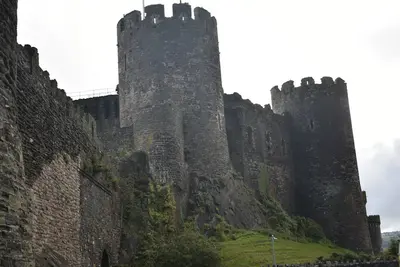
    Conwy, on the north coast of Wales, is one of Europe's most completely preserved fortified towns. Edward I had the castle and town walls built between 1283 and 1287 in just four years, as part of the iron ring of fortresses with which he secured the conquered Gwynedd. The master builder was James of St. George from Savoy.The town walls are preserved intact for 1.3 kilometers, with 21 towers and three gates, and are largely walkable. The castle, with its eight towers, stands on a rock above the Conwy estuary. Both have been UNESCO World Heritage Sites since 1986.On the quay stands the Smallest House in Great Britain, 3.05 meters high and 1.8 meters wide, inhabited until 1900. Three bridges span the river side by side, including Thomas Telford's suspension bridge from 1826, whose towers are deliberately modelled on the castle's battlements.

    Martina Jorden·Unsplash

    Eryri (Snowdonia) National Park

    Eryri (Snowdonia) National Park

    Eryri, officially Snowdonia until the end of 2022, is Wales' oldest national park, covering 2,130 square kilometres of mountains, lakes, and coastline in the country's northwest. Here stands Yr Wyddfa, Snowdon, Wales' highest mountain at 1,085 metres, surrounded by glacial valleys, old slate quarries, and villages where Welsh is the everyday language.Unlike German national parks, Eryri is a cultural landscape: around 26,000 people live here, over half of whom speak Welsh, and its slopes have been grazed for centuries. Six marked paths lead up Yr Wyddfa, along with a rack railway from Llanberis. The rock is predominantly of Ordovician volcanic origin, shaped by glaciers that left behind characteristic cirques and U-shaped valleys.Slate mining is also a defining feature. The quarries of Blaenau Ffestiniog and Llanberis once roofed half of Europe; the landscape, with its grey spoil heaps, has been on the World Heritage List since 2021. Yr Wyddfa is heavily frequented, while the Carneddau in the north and the Rhinogydd in the south are quieter.
    Lina Kivaka·Pexels

    Buxton

    Buxton

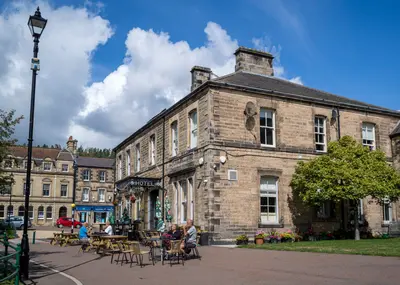
    Buxton is the spa town of the Peak District, located at an altitude of around 300 meters on the western edge of the National Park. Even the Romans used the warm spring, which emerges from the ground here at a constant temperature of about 28 degrees. The town received its current appearance in the 18th and 19th centuries, when the Dukes of Devonshire developed it into a spa resort.In the center are the curved Crescent, today a hotel with a thermal spa, the Opera House by Frank Matcham, and the Pavilion Gardens. At St Ann's Well, you can fill up on the spring water for free. With its train station, the town is a good base for hikes in the Goyt Valley and the White Peak.

    pierre matile·Pexels

    Dark Peak

    Dark Peak

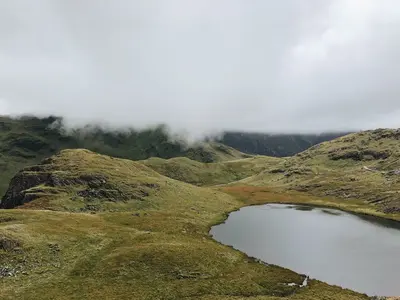
    The Dark Peak is the northern and eastern part of the Peak District, named after the dark Millstone Grit, a coarse sandstone, and the peat bogs that cover it. The landscape is open, sparsely treed, and rugged: high plateaus like Kinder Scout and Bleaklow, rocky edges like Stanage Edge, and deeply cut valleys.Here, in Edale, begins the Pennine Way, and at Kinder Scout in 1932, the Mass Trespass took place, which paved the way for National Parks and free access to the countryside in England. The weather is changeable and often foggy on the plateaus; for tours off the main paths, you will need a map and compass.

    Unsplash

    Peak District National Park

    Peak District National Park

    The Peak District in central England was established in 1951 as Britain's first national park and lies between the major cities of Manchester and Sheffield. It consists of two contrasting halves: the Dark Peak in the north with moorlands and dark gritstone edges, and the White Peak in the south with limestone valleys, dry stone walls, and sheep pastures.In between lie market towns like Bakewell and Buxton, the cave village of Castleton, and country estates like Chatsworth. The area is easily accessible by train and bus and is suitable for day hikes as well as multi-day trips.

    Unsplash

    Your next steps

    Liverpool is in Great Britain. Ways to carry on from here.

    • More in Great Britain

      Highlights, areas, routes and the best time to travel for all of Great Britain.

      Great Britain travel guide
    • Round trips in Great Britain

      Ready-made routes through Great Britain, with stops, nights and a map.

      See the routes

    Sources & method

    • Photos: Wikimedia Commons, Pexels. Each photo carries its credit.
    • Place data such as addresses and ratings comes from Google Maps.
    • The content is based on web research from public, traceable sources. How the content is made · The role of AI