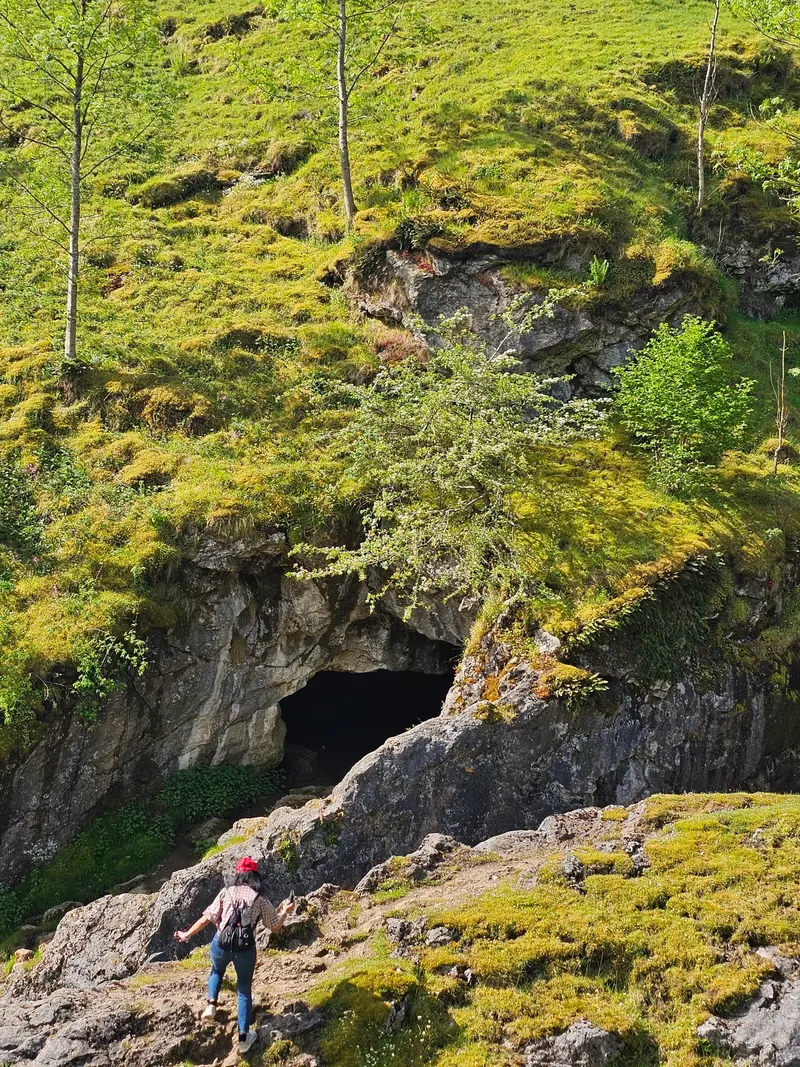
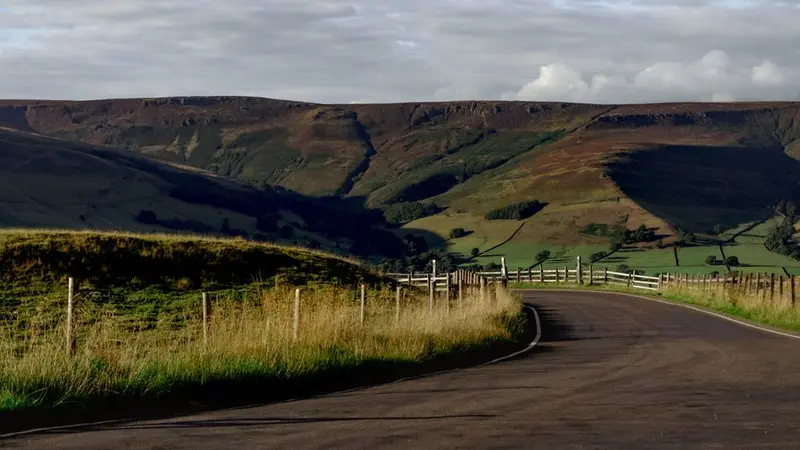
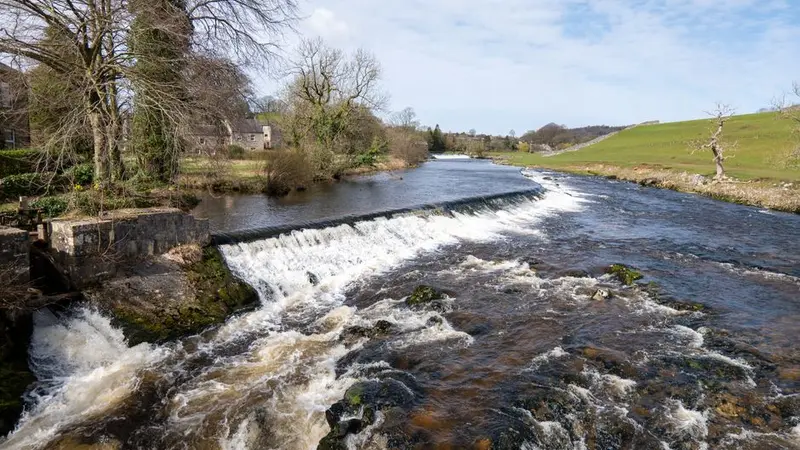
This northern region is characterized by its rugged, vast moorlands and dramatic sandstone ridges, ideal for challenging hikes.
Places in Dark Peak
The Dark Peak forms the northern, higher part of the Peak District. Its name comes from the bedrock: Millstone Grit, a dark, coarse sandstone, over which metre-thick peat layers have formed. The result is vast, treeless uplands, criss-crossed by deep erosion channels, the Groughs, where it's easy to lose your way.The largest areas are Kinder Scout and Bleaklow, both over 600 metres high and both names that carry weight in British walking history: Here, the Mass Trespass took place in 1932, which led to National Park legislation, and here the Pennine Way begins.The area is within sight of Manchester and Sheffield, yet it remains surprisingly empty once you leave the car parks. The weather is harsh, fog is frequent, and mobile phone reception isn't everywhere. Map and compass are essential equipment here.
Sehenswürdigkeiten
Discover the most important sights and attractions
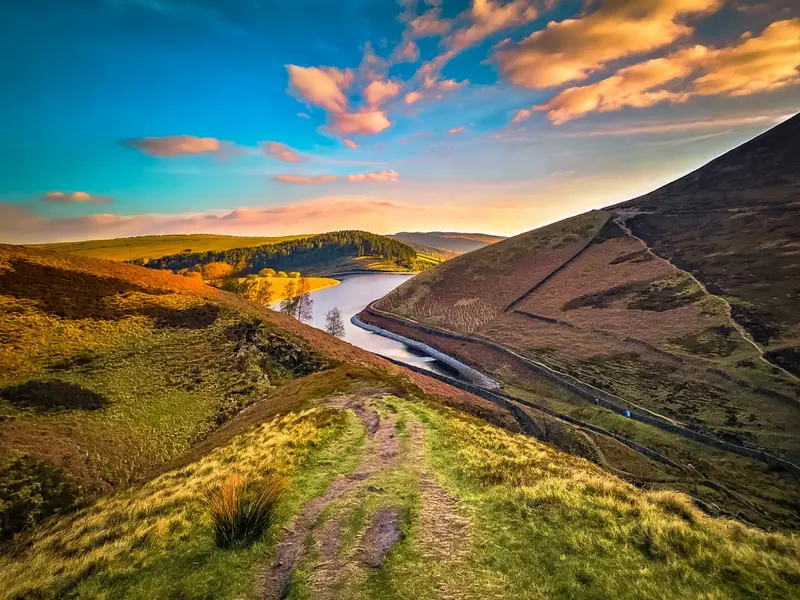
Kinder Reservoir
The Kinder Reservoir is a striking feature of the rugged moorland landscape in the Dark Peak, a significant part of the Peak District in Great Britain. It was created as an artificial lake and primarily serves to supply drinking water to the surrounding communities. When you visit the area, you'll be greeted by a vast, open landscape, characterized by the dark waters of the reservoir and the surrounding high moors. The region is a popular destination for hikers and nature lovers, who will find numerous trails here to explore the unspoiled nature. From the shores of the reservoir, you're afforded expansive views over the heather landscape, which unfolds a dramatic beauty, especially in changing weather. It is an ideal starting point for hikes into the higher elevations, including the well-known Kinder Scout. The tranquility and vastness of the surroundings invite you to soak in the unique atmosphere of this British high moorland landscape.
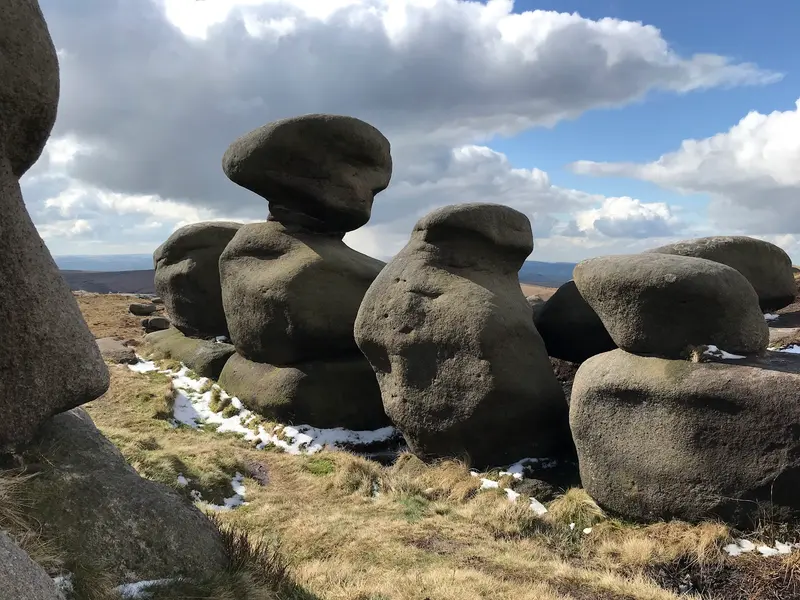
The Woolpacks are a striking rock formation in the heart of the Dark Peak, a region known for its rugged landscapes and unique geological features. Here you will find a collection of large, rounded sandstone blocks, shaped by natural erosion over long periods.These rocks are scattered across the moorland, offering an impressive sight. Their shape indeed resembles stacked wool bales, which gave them their distinctive name. The surroundings are ideal for hikes and provide wide views over the surrounding heather landscape.It is a place that impressively showcases the forces of nature and invites you to linger and explore. The Woolpacks are a popular destination for nature photographers and hikers who appreciate the quiet and vastness of the British moorland.
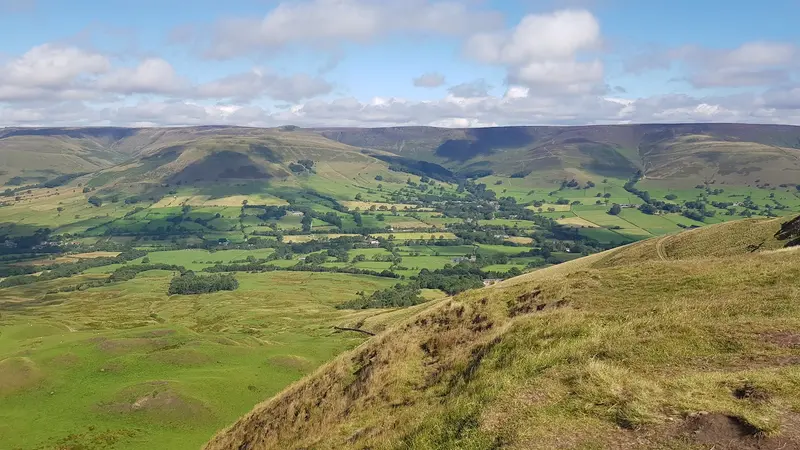
The Dark Peak is a distinctive part of the Peak District National Park in Great Britain and is managed by the National Trust. Here you'll find a landscape shaped by expansive moorlands, rugged gritstone rocks, and deep valleys. This region is renowned for its often dramatic and wild beauty, which particularly draws hikers and nature lovers. The characteristic dark rocks and peat moors lend the area its name and contribute to its unique atmosphere. The National Trust works here to preserve the delicate ecosystems and ensure public access. You can explore the vast heather landscape on numerous trails, enjoying the silence and seclusion. The area also provides habitat for diverse wildlife, especially various bird species.
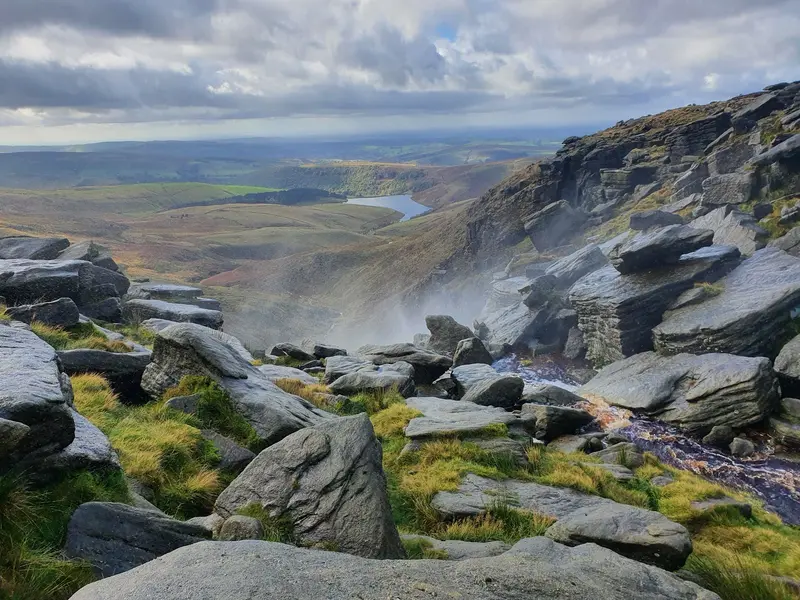
The Kinder Downfall is a striking waterfall in the heart of the Dark Peak, a part of the Peak District in Great Britain. You'll find it on the edge of the Kinder Scout plateau, the highest point in this region. What's special about Kinder Downfall is that its water is often blown upwards by strong winds, creating the impression that the waterfall is flowing against gravity. This impressive natural spectacle attracts hikers and nature lovers who appreciate the rugged beauty of the landscape. The surroundings are characterized by vast moorlands and rocky formations, forming a unique backdrop. The waterfall is a popular hiking destination and offers an unparalleled experience of the Peak District's wild nature.
The Odin Mine in the Dark Peak is a significant testament to Britain's mining history. It is considered one of the oldest lead mines in the region and played a vital role in the local economy for many centuries. Here you will find the remnants of a once thriving industry, set within the characteristic landscape of the Peak District.Visible traces include old spoil heaps and the entrances to former adits, bearing witness to the intense labor of past generations. The site conveys an impression of the harsh conditions and techniques employed in historical mining. The surroundings invite you to connect industrial history with the natural beauty of the landscape. A visit to the Odin Mine offers you a fascinating perspective on the industrial heritage and the development of mining in this area.
In Dark Peak you'll find local restaurants, cafés and markets with regional specialities. Taste your way through the dishes typical of the region.
Culture & History
Dark Peak is shaped by its history, local traditions and the everyday life of its people. Architecture, customs and regional character define the place.
Excursions & Activities
Recommended activities
Around Dark Peak there are rewarding day trips and activities – from sights and nature to the surrounding area.
Accommodations in Dark Peak
Accommodation
Places to stay
In and around Dark Peak there are places to stay across different categories and price ranges – from simple to comfortable.
These places are nearby — perfect for additional days or a day trip.
Castleton
Castleton, nestled in the heart of the Peak District National Park, combines picturesque village charm and geological wonders. Here you'll find the famous show caves Blue John Cavern and Speedwell Cavern, offering insights into the karst landscape. Above the village are the imposing ruins of Peveril Castle, a Norman fortress offering sweeping views over the Hope Valley. The region is also known for the rare mineral Blue John, mined in local caves and crafted into jewellery. For hiking enthusiasts, the nearby Mam Tor offers spectacular panoramas. To avoid large crowds, visit during the week or in the off-season. Plan at least half a day to explore the caves and castle at your leisure.
Peak District National Park
The Peak District National Park, Britain's first national park, is a breathtaking landscape of contrasting moors, valleys, and imposing limestone formations.It invites you to explore the wild beauty of nature and offers countless opportunities for adventure and relaxation in its unique hilly landscape.
Buxton
Buxton, a historic spa town in Derbyshire, is renowned for its thermal springs and impressive architecture. The Buxton Crescent, a masterpiece of Georgian architecture, attests to its rich spa heritage and now houses a luxurious hotel and thermal spa. You'll also find the imposing Devonshire Dome here, once stables, now part of the university, as well as the picturesque Pavilion Gardens with their Victorian greenhouses and the Buxton Opera House. At St Ann's Well, you can taste the famous spring water that has attracted visitors for centuries. The town also serves as an ideal gateway to the Peak District National Park, inviting you to hikes and explorations, such as the nearby Pooles Cavern. For a relaxed atmosphere, a visit in spring or autumn is recommended, to experience the town and the surrounding nature without the largest crowds.
Bakewell
Bakewell, a historic market town in the heart of the Peak District, is picturesquely situated on the River Wye. Here you'll find traditional architecture, a medieval bridge, and the imposing All Saints Church. The town is globally renowned as the birthplace of the Bakewell Pudding, a local specialty whose origins date back to the 19th century. Every Monday, a traditional market enlivens the streets, offering local products and handicrafts, continuing the town's long market history. Visit the Bakewell Old House Museum to learn more about local history, or stroll along the river and soak up the rural atmosphere. A practical tip: To avoid the crowds and explore the surroundings peacefully, a visit outside peak season or on a weekday without a market is recommended.
White Peak
The southern and central region is known for its gentle limestone valleys, picturesque villages, and green meadows, inviting leisurely walks.